“I felt like a fourth grade nothing.”
— Peter feels overlooked and unimportant compared to his younger brother, Fudge.

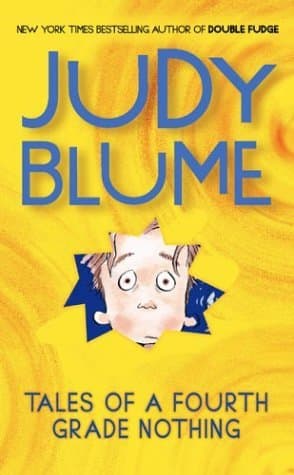
Judy Blume (1972)
Genre
Children's / Young Adult
Reading Time
60 min
Key Themes
See below
Sign in to track this book
Peter Hatcher navigates the chaotic, often humiliating, reality of being an older brother to the mischievous, mashed-potato-smearing toddler known as Fudge, whose antics consistently steal the spotlight and Peter's pet turtle.
Peter Hatcher, a nine-year-old fourth grader in New York City, introduces his new pet turtle, Dribble. He won Dribble at his friend Jimmy Fargo's birthday party and is very proud of him, keeping Dribble in a bowl on his dresser. Peter's biggest problem is his two-and-a-half-year-old brother, Farley Drexel Hatcher, whom everyone calls Fudge. Fudge constantly causes chaos and seeks attention. Peter often feels ignored by his parents, Warren and Anne Hatcher, who dote on Fudge. This chapter sets up Peter's internal struggle with feeling like a 'fourth grade nothing' compared to his younger brother.
Peter, his mother, and Fudge go to a shoe store for new shoes for Fudge. Fudge refuses to cooperate, throwing a dramatic temper tantrum. He kicks, screams, and throws his new shoes across the store, making a huge scene. Peter is embarrassed by his brother's behavior and tries to stay away. His mother, Anne, is clearly stressed but eventually calms Fudge down by promising him balloons. This incident shows Peter's embarrassment and the constant public spectacle Fudge creates, further making Peter feel secondary to his brother's needs and disruptions.
The Hatcher family goes to eat at Hamburger Heaven. Fudge refuses to eat the food, especially his mashed potatoes. Peter's parents try different ways to get him to eat, including bribing him and making airplane noises with the spoon. When these fail, Fudge takes matters into his own hands, spitting out and smearing mashed potatoes on the walls and floor, creating a huge mess. Peter is again embarrassed and frustrated by his brother's actions, which get all the attention from his parents and the restaurant staff. This event highlights Fudge's picky eating and his ability to disrupt any public outing.
Peter's father, Warren Hatcher, works in advertising and arranges for Fudge to try out for a commercial for Toddle-Bike, a children's tricycle. To Peter's annoyance, Fudge gets the part. During filming, Fudge is difficult, refusing to cooperate and acting up on set. Peter is brought along to try and get Fudge to perform, which he eventually does by making funny faces. Peter feels upset that Fudge, despite his bad behavior, gets opportunities like this, while Peter himself is rarely noticed. This adds to Peter's feeling of being a 'fourth grade nothing' compared to his attention-grabbing brother.
It's Fudge's third birthday, and the Hatcher apartment is full of young children for his party. The party is chaotic, with kids running wild, crying, and making a mess. Fudge himself is overwhelmed and difficult. Peter is asked to help his mother manage the partygoers, which he finds tiring and stressful. He wishes for the days when his own birthday parties were more orderly and focused on him. This chapter emphasizes the constant demands Fudge places on the family and how Peter's life is often controlled by his brother's needs and events.
Peter loses his two front teeth, an exciting moment for him. However, his excitement is overshadowed by Fudge's latest actions. Fudge decides he wants to be like Peter and tries to pull out his own teeth, resulting in him knocking out two of his front teeth by falling off a chair. While Peter's tooth loss is natural, Fudge's is self-inflicted and, once again, draws all the attention and sympathy from their parents. Peter feels his personal milestone is lessened by Fudge's dramatic and attention-seeking imitation, reinforcing his feeling of being overlooked.
Fudge, inspired by a bird he saw, decides he wants to fly. He climbs onto Peter's dresser, intending to jump and fly like a bird. Peter, despite his annoyance with Fudge, tries to stop him, but Fudge jumps anyway, falling and knocking out his two front teeth. He is rushed to the emergency room, where he gets his jaw wired shut. Peter feels a mix of guilt and relief that Fudge is injured, as it means a temporary break from his constant disruptions. This dramatic event highlights Fudge's impulsive nature and the constant danger he poses to himself.
While Fudge is recovering with his wired jaw, a new neighbor, Sheila Tubman, moves into the building. Sheila is a girl from Peter's class who often annoys him. However, Sheila's younger brother, Tootsie, becomes friends with Fudge, giving Fudge a distraction. This gives Peter a brief period of peace and quiet, as Fudge is busy with his new playmate. This chapter offers a small break for Peter, showing that even amidst the chaos, there can be moments of calm when Fudge's attention is somewhere else.
The most shocking event happens when Peter discovers that Fudge has swallowed his beloved pet turtle, Dribble. Peter is upset and furious. His parents rush Fudge to the hospital, where doctors manage to get Dribble out, who is miraculously unharmed. Peter is at first furious with Fudge, but the relief that Dribble is safe is huge. This incident is the worst thing Fudge does to Peter, as he directly harms something Peter cares about. It shows the height of Peter's frustration and the extent of Fudge's impulsive and destructive behavior.
After the Dribble incident, Peter is still upset, but his parents apologize for Fudge's behavior. To make up for it, they buy Peter a new dog, which he names Tootsie (after Sheila's brother, not Fudge's new friend). This gesture makes Peter feel truly seen and appreciated by his parents. He realizes that despite Fudge's constant actions, his parents do care about him and his feelings. This moment marks a change for Peter, as he begins to understand that while Fudge will always be Fudge, he is not truly a 'fourth grade nothing' and is loved by his family.
The Protagonist
Peter learns to cope with his brother's antics, developing patience and a deeper understanding of his parents' love for him despite the chaos.
The Antagonist (to Peter's peace of mind)
Fudge remains a chaotic toddler throughout the book, his actions driving Peter's development rather than his own.
The Supporting
She struggles to balance the needs of two very different children, eventually recognizing Peter's need for individual attention.
The Supporting
He supports his family and, like his wife, comes to understand Peter's need for individual recognition.
The Supporting
Dribble's existence and near-demise are central to Peter's emotional journey and understanding of his brother's impact.
The Supporting
Jimmy remains a static, supportive friend to Peter.
The Supporting
Sheila remains a consistent, slightly irritating presence in Peter's life.
The main theme is Peter's constant struggle with his younger brother, Fudge. Peter feels like a 'fourth grade nothing' because Fudge's actions always take attention from him. Scenes like Fudge's shoe store tantrum, the mashed potato incident, and especially the Dribble swallowing event show Peter's frustration, embarrassment, and jealousy. He dislikes the special treatment Fudge gets and how his own successes or milestones are overshadowed by his brother's chaos. This theme explores the complex emotions of an older sibling dealing with a younger, demanding one.
“My brother, Fudge, is a real pain. He's only two and a half. But already he's a world-famous troublemaker.”
Peter constantly seeks recognition from his parents and a sense of his own identity separate from being 'Fudge's older brother.' He is proud of Dribble, his pet turtle, as something that is only his. When Fudge gets chosen for a commercial, Peter feels ignored despite having to help Fudge perform. His excitement about losing his teeth is lessened when Fudge's self-inflicted tooth loss takes center stage. This theme explores Peter's wish to be seen and valued for who he is, not just in relation to his attention-grabbing sibling. The gift of the new dog at the end shows his individual worth being recognized.
“Sometimes I think my parents forget that I'm me. They only remember that I'm Fudge's older brother.”
The novel quietly explores how parental love and attention are given, especially between children with different needs. Peter's parents, Anne and Warren, are often busy managing Fudge's demanding behavior, which makes Peter feel neglected. However, their love for Peter is clear, even if it's sometimes overshadowed by the immediate crisis Fudge creates. The final act of buying Peter a new pet shows their understanding of his feelings and their effort to show him he is equally loved and valued, despite the constant need to attend to Fudge.
“I knew my mother loved me. But I also knew she loved Fudge. A lot. Maybe even more.”
Peter's journey throughout the book is about growing up and learning to handle things he cannot control. He faces the difficulties of navigating family dynamics, dealing with embarrassment, and developing patience. His experiences with Fudge force him to mature and understand the complexities of relationships. By the end, Peter doesn't magically love Fudge's actions, but he gains a more balanced view of his brother and his own place within the family, marking a step in his emotional development.
“Nobody told me that having a little brother would be such a big pain.”
The story is told entirely from Peter Hatcher's perspective.
This device allows the reader to experience Peter's frustration, embarrassment, and eventual growth directly through his thoughts and feelings. We understand why he feels like a 'fourth grade nothing' because we are privy to his internal monologue and his reactions to Fudge's antics. This subjective viewpoint makes Peter a highly relatable character and underscores the theme of sibling rivalry, as we only see Fudge through Peter's exasperated eyes.
The plot is a series of distinct, often humorous, incidents.
The book is structured as a collection of short, self-contained chapters, each detailing a specific incident involving Fudge. This episodic nature highlights the relentless and varied ways Fudge disrupts Peter's life, creating a cumulative effect of Peter's mounting frustration. While each chapter has its own mini-climax (like the shoe store tantrum or the mashed potato incident), they all build towards the ultimate transgression of Dribble's swallowing and Peter's eventual emotional breakthrough.
Peter's pet turtle represents his personal space and individuality.
Dribble, Peter's pet turtle, symbolizes Peter's autonomy, responsibility, and the things that are uniquely his. He is a source of quiet joy and a refuge from Fudge's chaos. When Fudge swallows Dribble, it's not just a physical act; it's a symbolic violation of Peter's personal space and a direct attack on his sense of self. Dribble's survival and the subsequent gift of a new pet underscore the restoration of Peter's individuality and his parents' recognition of it.
Fudge's antics are often presented with comedic exaggeration.
The book uses humor and exaggeration to make Fudge's disruptive behavior entertaining rather than purely infuriating. Fudge's extreme tantrums, bizarre eating habits, and dangerous stunts (like trying to fly) are often described with a lighthearted, almost farcical tone, even as Peter expresses his genuine annoyance. This comedic approach makes the story accessible and enjoyable for young readers, allowing them to laugh at the chaos while still sympathizing with Peter's plight.
“I felt like a fourth grade nothing.”
— Peter feels overlooked and unimportant compared to his younger brother, Fudge.
“My brother, Fudge, is a real pain. He's only two and a half, but he gets into everything.”
— Peter introduces his mischievous younger brother, setting the stage for their adventures.
“Fudge ate Dribble.”
— Fudge swallows Peter's pet turtle, Dribble, leading to a frantic trip to the hospital.
“I named him Dribble because he was so small and I thought he might dribble out of his shell.”
— Peter explains the naming of his beloved pet turtle.
“My mother kept saying, 'He's just a baby, Peter. He doesn't know any better.' But I knew better. He knew exactly what he was doing.”
— Peter's frustration with his parents' leniency towards Fudge's antics.
“My father said, 'He's going through a stage.' I wondered how many stages he had to go through before he turned into a normal person.”
— Peter's exasperation with his father's explanations for Fudge's behavior.
“Fudge started to cry. Then he screamed. He screamed so loud I thought the windows would break.”
— Fudge's dramatic tantrum when he doesn't get his way.
“I got a picture of a giant turtle for my birthday. It's not the same as a real one, but it's better than nothing.”
— Peter's bittersweet acceptance of a replacement gift after Dribble's demise.
“I decided right then and there that I would never, ever, ever have a little brother.”
— Peter's firm resolve after one of Fudge's particularly annoying incidents.
“My mother said, 'Peter, don't you love your brother?' I told her I loved him, but I didn't have to like him all the time.”
— Peter's honest feelings about his complex relationship with Fudge.
“Fudge was always watching me. Like a hawk. A tiny, two-year-old hawk.”
— Peter's observation of Fudge's constant attention and imitation.
“I thought about running away. But where would I go? And who would feed Dribble?”
— Peter contemplates escaping his family troubles but is held back by his responsibilities.
“It was a good thing I was bigger than Fudge. Otherwise, he'd probably try to eat me too.”
— Peter's humorous, slightly morbid thought about Fudge's tendencies.
“Sometimes I wished I had a sister. At least a sister wouldn't try to fly off the jungle gym and land on her head.”
— Peter compares Fudge's risky behavior to what he imagines a sister would be like.
“And even though Fudge was a pain, he was still my brother. And I guess I still loved him. A little bit.”
— Peter's ultimate, grudging acceptance and affection for his brother.
Ready to see how well you understood this book? Take our interactive quiz with 10 questions.
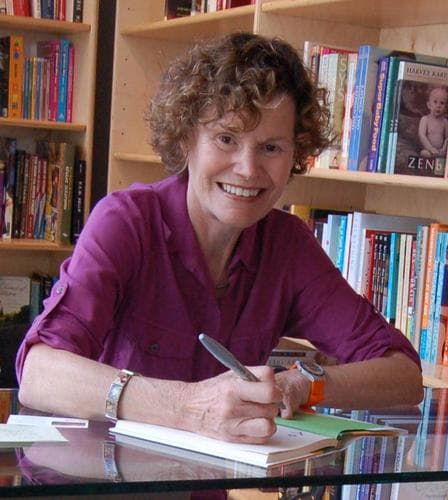
Judith Blume is an American writer of children's, young adult, and adult fiction. Blume began writing in 1959 and has published more than 25 novels. Among her best-known works are Are You There God? It's Me, Margaret. (1970), Tales of a Fourth Grade Nothing (1972), Deenie (1973), and Blubber (1974). Blume's books have significantly contributed to children's and young adult literature. She was named one of the 100 most influential people in the world by Time magazine in 2023.

Dan Gemeinhart
4.5
Kate O'Hearn
4.4

Jeanne Birdsall
4.4

Jen Wang
4.4
Wendelin Van Draanen
4.3

John Marsden
4.3

Chris Van Allsburg
4.3
Jennifer A. Nielsen
4.2