“Only in silence the word, only in darkness the light, only in dying life: bright the hawk's flight on the empty sky.”
— From 'The Creation of Éa', a foundational poem of Earthsea.

Ursula K. Le Guin (2001)
Genre
Fantasy / Science Fiction / Young Adult
Reading Time
280 min
Key Themes
See below
Sign in to track this book
Five tales explore Earthsea's hidden histories, forgotten magic, and the human hearts navigating its dangerous beauty.
In early Earthsea, when magic was less organized, a young man named Otter can find lost things and people. Mages increasingly sell their services, diminishing the art. Otter feels a pull towards a deeper understanding of magic than the superficial displays around him. He leaves home, driven to find a true teacher who can guide his talent. His journey is one of self-discovery and a quest for authentic magical knowledge, setting him apart from the growing 'marketplace' of magic.
Otter's quest leads him to Roke island, not yet the magic center it will become. There, he meets the reclusive wizard Medra, a powerful but humble practitioner of ancient magic. Medra sees Otter's potential and takes him as an apprentice. Under Medra, Otter learns not just spells, but the principles of balance, naming, and the interconnectedness of all things in Earthsea. Medra teaches him that true magic is about understanding and maintaining equilibrium, not wielding power for personal gain, unlike the commercial magic Otter saw before. This training prepares Otter to help establish the future School on Roke.
Diamond, a sensitive and artistic young man from a wealthy family in the West Reach, feels disconnected from his family's conventional expectations. He is drawn to the subtle, often misunderstood world of magic, a path his family views with suspicion. His interest leads him to the mysterious witch Darkrose, a woman of powerful, untamed magic who lives on the edges of society. Their connection is immediate and deep, growing into a forbidden love. Diamond's family, especially his mother, tries to dissuade him, arranging a marriage to a noblewoman, but Diamond's heart is already with Darkrose and the magical life she represents.
Despite family and societal pressure, Diamond chooses to give up his noble inheritance and expected future for Darkrose and magic. He knows that to truly be with Darkrose and follow his calling, he must shed his old identity and embrace a new life. This decision is made with deep conviction that his true path is with Darkrose and her knowledge. He leaves his family and wealth, showing a deep personal change and a commitment to a life defined by love and magic, rather than status.
This story explores the youth of Ogion, the future Dragonlord, Master of Roke, and Ged's mentor. As a young man, Ogion is an apprentice to the powerful, ancient wizard Heleth, who lives as a hermit. Heleth teaches Ogion the deep, silent magic of Earthsea, focusing on names, nature's rhythms, and the energies that bind the world. Unlike more showy sorcery, Heleth's teaching emphasizes a deep connection to the earth, teaching Ogion to listen to the stones and bones of the world. This apprenticeship shapes Ogion into the wise, grounded, patient wizard from earlier tales, instilling in him a deep respect for the balance of life and death.
A major earthquake devastates an Earthsea region, causing widespread destruction. Ogion, still an apprentice, and Heleth respond. They do not just fix physical damage; their magic involves healing the land's spirit. They work to soothe the earth's pain, re-establish its natural balance, and mend cracks in the world's fabric. This task forces Ogion to face nature's raw power and the inevitability of change. Through this experience, he further learns lessons of balance and interconnectedness, deepening his understanding of true magic's role in maintaining equilibrium.
Irioth is a powerful wizard, a former Roke student, who has retreated to the isolated High Marsh, living as a hermit. He carries a deep burden from a past misuse of his magic, an incident where he accidentally caused suffering with a spell gone wrong. This mistake left him with profound guilt and a fear of using his power, leading to his solitary life. He spends his days thinking about magic's nature and its potential for harm, a contrast to the confident mages of Roke. His reclusiveness is a form of penance, and he guards the marsh, subtly influencing its ecosystem.
Two young mages, needing a specific spell or knowledge, venture into the High Marsh seeking Irioth's help. Their request forces Irioth to re-engage with the world he left and confront the reasons for his exile. He is torn between his fear of repeating past mistakes and his duty as a mage to help others. This encounter tests Irioth, leading him to a moment of redemption where he must decide whether to use his power responsibly or remain paralyzed by fear. His decision shows a renewed understanding of the balance between power and responsibility.
Irian, a young woman from the dry lands of the Kargad Empire, arrives on the sacred island of Roke, determined to enter the School of Roke. The school, however, is strictly for men, a tradition in Earthsea's magical society. Irian, whose true name is 'Dragonfly,' has a natural, untrained magical gift, a wildness that defies easy categorization. Her presence challenges the established order and the male-dominated structure of the wizarding world. She is driven by an inner need to understand and master her magic, despite societal barriers.
Irian's persistent attempts to enter Roke, combined with her undeniable magical skill, create a problem for the Archmage and the Masters of the school. Her existence as a powerful female mage challenges the basic rules of their institution. The Masters, especially the conservative ones, resist change, fearing disruption of ancient traditions. However, some, like Archmage Ged, see the potential and need to re-evaluate their strict rules. The story explores the tension between tradition and change, leading to a confrontation that forces the wizards to consider if their understanding of magic and its practitioners has been too narrow.
As the debate over Irian's admission continues, an older, more ancient evil stirs beneath Roke – a powerful, forgotten serpent-like being connected to the island's magic. This entity represents a primal, untamed aspect of Earthsea's power. Irian, with her wild, intuitive magic, senses and confronts this being. In doing so, she taps into a power that goes beyond Roke's structured magic, revealing a deeper connection to the world's raw forces. Her actions not only save Roke from disaster but also force the Masters to admit that magic is not only for men, leading to a shift in the School's traditions and a more inclusive understanding of magical power.
The Protagonist
Otter transforms from an untrained, intuitive boy into a foundational figure of the Roke School, guided by Medra's deep wisdom.
The Supporting
Medra serves as a catalyst for the establishment of ethical magic, his wisdom laying the groundwork for future generations.
The Protagonist
Diamond evolves from a constrained nobleman into a man who embraces his true self and a life of magic and love, rejecting societal expectations.
The Protagonist
Darkrose remains true to her nature, her presence acting as a transformative force for Diamond.
The Protagonist
Ogion develops from a diligent apprentice into a wise mage deeply attuned to the earth, preparing him for his future role as a master and mentor.
The Supporting
Heleth serves as a wise, guiding force, passing on ancient knowledge to the next generation of powerful mages.
The Protagonist
Irioth moves from self-imposed exile and guilt towards a path of cautious re-engagement and a renewed understanding of his responsibilities as a mage.
The Protagonist
Irian transforms from an outsider challenging tradition to a catalyst for revolutionary change within the wizarding world, revealing a deeper, more inclusive understanding of magic.
The Supporting
Ged, as Archmage, grapples with the tension between tradition and the evolving nature of magic, ultimately opening Roke to new possibilities.
These stories explore magic's many sides in Earthsea, going beyond simple spells to include understanding balance, naming, and interconnectedness. In 'The Finder,' Otter seeks authentic magic beyond commercial displays. 'The Bones of the Earth' shows Ogion learning the deep, silent magic of the earth. 'Darkrose and Diamond' highlights magic as an intuitive, wild force outside of structured institutions. 'On the High Marsh' explores responsibility and harm in power, through Irioth's guilt. 'Dragonfly' challenges magic's definition and who can wield it, questioning Roke's rigid traditions.
“To change a thing is to break it, if you do not know the whole of it. And to know the whole of it, you must know its true name.”
A main tension throughout the collection is the conflict between old traditions and the need for change. 'The Finder' subtly introduces this by showing magic becoming commercialized, hinting at a loss of old ways. 'Darkrose and Diamond' shows a personal rejection of societal tradition for individual truth. Most clearly, 'Dragonfly' directly confronts the patriarchal traditions of the Roke School, as Irian's presence forces the Archmage and Masters to rethink their old rules about who can learn magic. The stories suggest that holding too tightly to tradition can stop growth and understanding.
“The past is a road, not a prison.”
The stories consistently show the deep responsibility that comes with magical power and the often-unforeseen results of misusing it. Irioth in 'On the High Marsh' is a clear example, living in exile due to a past magical error that caused suffering. This theme highlights that magic is not just a tool but a force that needs great care and ethical thought. The training of Otter and Ogion by their mentors, Medra and Heleth, heavily stresses understanding world balance and the possible effects of disrupting it, reinforcing that true mastery involves deep wisdom and duty.
“Power is a heavy burden, and the weight of it can break a man, or make him a monster.”
Many characters go on journeys of self-discovery, often redefining their identity. Otter in 'The Finder' leaves home to find a true magical path, shaping who he is. Diamond in 'Darkrose and Diamond' makes a major choice to leave his noble identity for love and a life of magic, embracing his true self. Irian in 'Dragonfly' strongly asserts her identity as a mage, challenging social norms and revealing a deeper, wilder part of herself. These personal quests highlight the importance of inner truth over external expectations, and how one's true name and self are linked to their magical potential.
“A man's true name is his being, and to know it is to know his power.”
The ultimate source of power and control over a thing or being.
In Earthsea, knowing the true name of a person, animal, or object grants a wizard profound power over it. This device is central to the magic system, emphasizing understanding and respect for the essence of things. It's taught by Medra to Otter in 'The Finder' and is a foundational aspect of Ogion's training in 'The Bones of the Earth.' The true name represents the deepest reality of something, contrasting with its common, everyday name, and its careful use underscores the theme of responsibility in magic.
The central institution of wizardry in Earthsea, a symbol of tradition and knowledge.
Roke is the sacred island and the site of the most esteemed wizarding school. In 'The Finder,' we see its nascent beginnings, with Otter contributing to its early structure. In 'Dragonfly,' Roke becomes a symbol of established tradition and its resistance to change. Its all-male policy is challenged by Irian, making it a focal point for the conflict between ancient customs and the need for evolution. The school represents both the pinnacle of magical learning and the potential for stagnation if it fails to adapt.
A physical and spiritual journey undertaken by a protagonist, leading to self-discovery.
Many characters undertake significant journeys that are both literal travels and metaphorical quests for self-knowledge and purpose. Otter's journey in 'The Finder' is a quest for authentic magical understanding and a true master. Diamond's choice in 'Darkrose and Diamond' is a journey away from his family's expectations towards a life true to himself. These journeys are often solitary, fraught with challenges, and ultimately lead to profound personal growth and a deeper understanding of the world and one's place within it.
The fundamental cosmic equilibrium that mages strive to maintain.
The concept of 'Balance' is a pervasive plot device and philosophical underpinning of Earthsea magic. It's the idea that all actions, especially magical ones, have consequences that can disrupt the world's harmony. Medra teaches Otter about maintaining this balance, and Ogion's work in 'The Bones of the Earth' directly involves restoring it after an earthquake. Irioth's guilt in 'On the High Marsh' stems from upsetting the balance. This device serves as a moral compass for characters, guiding their actions and highlighting the ethical implications of wielding power.
“Only in silence the word, only in darkness the light, only in dying life: bright the hawk's flight on the empty sky.”
— From 'The Creation of Éa', a foundational poem of Earthsea.
“Power is a heavy thing. It is not a toy. It is not a tool to be used lightly.”
— Spoken by Ogion the Silent to young Ged, warning him about the responsibility of magic.
“To light a candle is to cast a shadow.”
— A common proverb in Earthsea, reflecting the balance of good and evil, light and dark.
“The true name of a thing is the thing itself.”
— Fundamental principle of magic in Earthsea, explaining the power of true names.
“A wizard's power of naming things is not a naming of what is already there, but a creation of what is there. The wizard creates the world by naming it.”
— Explaining the profound connection between language, magic, and reality.
“The past is a road to the future. The future is a road to the past. The present is a gate.”
— A philosophical reflection on time and its interconnectedness.
“It is not possible to buy a hawk, or a friend, or a wizard. You must earn them.”
— A lesson about value and earning respect, rather than acquiring through wealth.
“All roads lead to the same end, but some are longer than others, and some are more beautiful.”
— A reflection on life's journeys and the different paths one can take.
“The greatest evil is to do nothing.”
— A call to action and a warning against apathy in the face of injustice.
“The world is not a problem to be solved, but a mystery to be lived.”
— A perspective on embracing the unknown and the complexities of existence.
“Death is the price of life. It is the balance.”
— A fundamental truth about the cycle of life and death, and the natural order.
“The sea is the oldest of all things, and the deepest. It remembers all.”
— A poetic description of the sea's ancient wisdom and its connection to history.
“True magic is not power over things, but power with things.”
— A nuanced understanding of magic as collaboration and harmony, not domination.
“The only way to get rid of a shadow is to turn and face it.”
— A metaphor for confronting one's fears and inner demons.
Ready to see how well you understood this book? Take our interactive quiz with 10 questions.
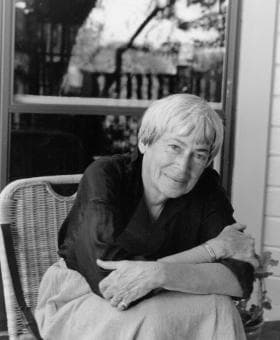
Ursula Kroeber Le Guin was an American author best known for her works of speculative fiction, including science fiction works set in her Hainish universe, and the Earthsea fantasy series. She was first published in 1959, and her literary career spanned nearly sixty years, producing more than twenty novels and over a hundred short stories, in addition to poetry, literary criticism, translations, and children's books. Frequently described as an author of science fiction, Le Guin has also been called a "major voice in American Letters". Le Guin said she would prefer to be known as an "American novelist".







