“It was a good thing that the world was mostly made of air, because otherwise, she thought, it would be too heavy to turn.”
— Rosie's philosophical musings about the world.

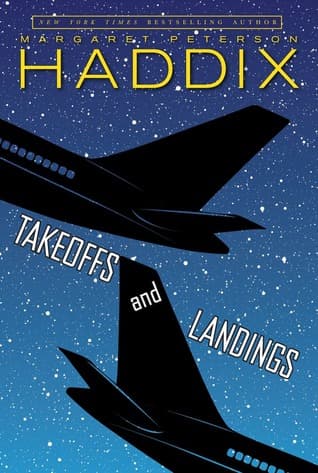
Margaret Peterson Haddix (2001)
Genre
Children's / Young Adult
Reading Time
240 min
Key Themes
See below
Sign in to track this book
Two estranged siblings are forced on a cross-country road trip with their motivational speaker mother, where resentment over their father's death eight years prior finally erupts, revealing family secrets.
Eight years after their father's death, teenagers Chuck and Lori, who live with their grandparents and younger siblings, are invited by their mother, Beth, to join her on a two-week cross-country speaking tour. Beth has been mostly absent from their lives, focusing on her career since her husband passed. Lori is openly angry and at first refuses, while Chuck, wanting to please, reluctantly agrees, hoping to avoid conflict. Their grandparents encourage them to go, seeing it as a chance to reconnect. Lori eventually agrees, but her anger toward her mother is clear, setting a tense mood for the trip.
The trip begins, and the car is quiet with unspoken tension, especially from Lori. Their first stop is Dallas, where they attend one of Beth's speeches. Chuck and Lori are surprised by their mother's confident and inspiring stage presence, which is very different from the quiet, somewhat reserved woman they know at home. Beth speaks about overcoming hardship and finding purpose, topics that ironically highlight her perceived abandonment of her children. This experience leaves the siblings confused about their mother's true self and what she prioritizes.
As the trip continues, Lori's resentment turns into direct arguments with Beth. She accuses her mother of leaving them and questions her honesty as a speaker when she cannot connect with her own children. Beth struggles to reply, often becoming silent or offering vague explanations. Chuck, caught in the middle, tries to help but mostly stays quiet, holding onto his own hurt and confusion. He watches his mother and sister, wanting a solution but unsure how to find one, showing his role as the quiet observer and peacemaker.
Halfway through the trip, the family visits the Grand Canyon. The stunning beauty of the landscape briefly breaks through their emotional walls. For a short time, they truly connect, admiring the view together. This shared moment suggests that healing and reconciliation are possible, showing that despite anger and distance, a family bond remains. However, the moment passes quickly, and the underlying tension soon returns, reminding them that real healing needs more than just a shared view.
Chuck and Lori start noticing their mother's increasingly secretive behavior. Beth often takes private phone calls, speaking softly, and seems distracted and nervous. She also makes unexpected detours from their planned route, giving unclear excuses. This mysterious conduct makes the siblings suspicious, making them wonder if there is more to their mother's life and the trip than they realize. They begin to guess what she might be hiding, adding more intrigue and distrust to their already strained relationship.
During a stop, Chuck and Lori accidentally hear a news report about a small plane that went missing. The report reminds Chuck of their father's death eight years earlier, also in a plane crash. This coincidence, combined with their mother's secretive behavior, makes them want to know more about their father's accident. They realize how little they know about that day and begin to question the official story, suspecting their mother might be keeping important information about their past.
Beth suddenly changes their planned route, driving them to a small, remote town. She gives no clear reason for this change, only saying it is important. The siblings are confused and frustrated by her secrecy and lack of communication. This unexpected detour increases their suspicion and worry, making them feel like they are being pulled into something they do not understand, and confirming their belief that their mother is hiding something significant from them.
In the remote town, Beth finally tells the truth about their father's death. She confesses that their father was not just a passenger in the plane crash; he was the pilot, flying an experimental plane. More surprisingly, she admits she was supposed to be on that flight with him. A last-minute change prevented her from boarding, leaving her with deep guilt and a strong sense of responsibility for his death, which she has kept secret for years.
The truth shatters Chuck and Lori's understanding of their family history. They are overwhelmed by their mother's grief and guilt, realizing that her constant travel and speaking were a way for her to cope with her trauma and perhaps escape memories of their father. The truth explains her emotional distance and secretive nature. While the initial shock is huge, this shared vulnerability opens a path for understanding and empathy, making them rethink their long-held resentments and their mother's actions.
With the truth finally out, emotions pour out. Lori's anger turns to sadness and a new understanding of her mother's pain. Chuck also expresses his own hidden grief and confusion. They begin to talk openly about their father, their feelings, and the years of unspoken hurt. Beth apologizes for her absence and her inability to communicate, explaining that grief had consumed her. This honesty marks the start of their healing, as they begin to forgive each other and themselves, moving toward a more connected future.
The family returns home, not as the broken unit that left, but as people who have faced their past and begun to heal. While the pain of their father's death remains, the shared experience of the trip and the revelation of Beth's secret have brought them closer. Lori's anger has softened into empathy, and Chuck's quietness has changed into active participation in their family's emotional life. They understand their mother's reasons better, and Beth, in turn, is ready to be more present in her children's lives. The journey, though hard, ultimately strengthened their bonds.
The Protagonist
Lori's arc moves from intense anger and bitterness to understanding, empathy, and ultimately, forgiveness for her mother.
The Protagonist
Chuck evolves from a silent observer to an active participant in the family's healing, finding his voice and expressing his own grief.
The Supporting/Protagonist
Beth moves from emotional distance and secret-keeping to vulnerability, honesty, and a renewed commitment to her children.
The Supporting
They remain consistent, supportive figures throughout the narrative.
The Mentioned
His character's impact is revealed through the unfolding of the truth about his death.
The theme of grief and loss is central to the story, coming from the father's sudden death. Beth's inability to cope leads to her emotional withdrawal and constant travel, while Lori's grief appears as anger and Chuck's as quietness. The story shows how unprocessed grief can break family bonds and how different people deal with deep loss. The revelation of the father's experimental plane and Beth's near-involvement highlights the lasting and complex nature of their shared sorrow and guilt.
““It's like we're all flying in separate planes, and no one knows where anyone else is going.””
A major theme is the lack of communication within the family and the harm caused by keeping secrets. Beth's inability to tell her children the truth about her husband's death creates a large emotional distance. Lori's anger comes from this lack of openness, and Chuck's quietness is a sign of the unspoken truths. The story shows how secrets, even those meant well, can grow and destroy trust, and how open, honest communication is necessary for healing and rebuilding relationships.
““The silence between them was a physical thing, a wall built up brick by brick over eight years.””
The entire road trip is a journey toward reconciliation and forgiveness. Lori's path from intense anger to empathy for her mother, and Beth's path from guarded secrecy to honest vulnerability, show this theme. The story's climax, where the truth is revealed, forces all characters to confront past hurts and choose to forgive, both themselves and each other. It highlights the difficult but rewarding process of rebuilding broken family relationships.
““Forgiveness wasn't about forgetting; it was about finally understanding.””
The contrast between Beth's public image as a charismatic speaker and her private, guilt-ridden, and distant self explores identity. Chuck and Lori are confused by this duality, struggling to connect the inspiring woman on stage with the absent mother. This theme questions the genuineness of identity, especially when shaped by trauma, and highlights the struggle to combine different parts of oneself. It shows how people create facades to cope with pain and societal expectations.
““She was a different person up there, a stranger who looked just like their mother.””
A physical journey mirroring an emotional one.
The cross-country road trip serves as a classic plot device, forcing the characters into close proximity and away from their usual environments. This physical journey mirrors their emotional journey towards understanding and reconciliation. The confined space of the car and the isolation from external distractions compel them to confront their unresolved issues. Each stop along the way, whether for a speech or a scenic view, provides a backdrop for internal reflection and external conflict, ultimately leading to a breakthrough.
The hidden truth about the father's death.
The secret surrounding the father's death is the central mystery that drives the plot. It creates tension, fuels the children's resentment and suspicion, and explains Beth's emotional distance. The gradual unveiling of clues and the eventual full revelation of the secret provide the story's climax, forcing the characters to re-evaluate their past and their relationships. This device effectively builds suspense and provides a powerful catalyst for character development and thematic exploration.
A profession that ironically highlights the family's dysfunction.
Beth's profession as a motivational speaker is a significant plot device, creating a stark contrast between her public message of overcoming adversity and her private struggle to connect with her own children. It highlights the hypocrisy and irony of her situation, making Lori's anger more potent. The speeches themselves often contain themes that resonate with the family's internal struggles, providing moments of poignant reflection and foreshadowing, while also emphasizing Beth's chosen coping mechanism.
The inciting incident and recurring symbol of loss.
The plane crash that killed the father is not just the inciting incident but also a recurring symbol of loss, vulnerability, and the unexpected turns of life. The news report about another missing plane reignites the children's curiosity, serving as a plot trigger. The details surrounding their father's crash – particularly that he was piloting an experimental plane and Beth was meant to be with him – are the core of the hidden truth, making the plane crash a powerful and tragic symbol throughout the narrative.
“It was a good thing that the world was mostly made of air, because otherwise, she thought, it would be too heavy to turn.”
— Rosie's philosophical musings about the world.
“You can't just wish for things to happen. You have to make them happen.”
— A lesson Rosie learns about agency.
“The best way to get over a fear is to fly right into it.”
— Rosie confronting her apprehension about flying.
“Sometimes the most important things are the ones you can't see.”
— Reflecting on intangible values and connections.
“Every landing is just a takeoff for somewhere new.”
— A central metaphor of the book about transitions.
“Home wasn't a place on a map; it was a feeling, a collection of people.”
— Rosie's evolving understanding of what home means.
“Grown-ups were always saying things like 'It's for your own good,' which usually meant 'It's for my own convenience.'”
— Rosie's observations about adult logic.
“The world was full of stories, if you just knew how to listen for them.”
— Encouraging an observant and imaginative approach to life.
“It's hard to be brave when you're not sure what you're being brave for.”
— Rosie's internal struggle with purpose.
“Even the smallest things could change everything, like a single feather catching the wind.”
— Highlighting the impact of small actions or events.
“Sometimes you had to let go of one thing to grab onto another.”
— A lesson about making choices and moving forward.
“The air felt different when you were above the clouds, lighter, like you could float forever.”
— Rosie's sensory experience of being in an airplane.
“Secrets were like balloons: sooner or later, they always floated to the surface.”
— Rosie's realization about the nature of secrets.
Ready to see how well you understood this book? Take our interactive quiz with 10 questions.

Biography coming soon.

Dan Gemeinhart
4.5

Kate O'Hearn
4.4

Jeanne Birdsall
4.4

Jen Wang
4.4

Wendelin Van Draanen
4.3

John Marsden
4.3

Chris Van Allsburg
4.3
Jennifer A. Nielsen
4.2