“There are some things in life you can’t get back. Your virginity, your youth, and a really good night’s sleep after you’ve had a nightmare.”
— Rosie reflecting on irreversible losses.


Sue Grafton (2007)
Genre
Thriller / Mystery
Reading Time
9-10 hours
Key Themes
See below
Sign in to track this book
A sociopath uses a stolen identity and charm to infiltrate homes, leaving Kinsey Millhone in a race to uncover the truth before more lives are lost.
Kinsey Millhone, a private investigator in Santa Teresa, California, is in a professional slump in late 1987. Her routine involves jogging, managing finances, and avoiding her landlord, Henry Pitts. A new client, Lisa, is concerned about her elderly neighbor, Pete Wolinsky, who has vanished. Pete, a reclusive man, usually follows a strict schedule, and Lisa cannot reach him. Kinsey takes the case, thinking it is a simple missing persons investigation. She visits Pete's house, finding it locked with no signs of forced entry, which deepens the mystery.
At the same time, the story introduces Solana Rojas, a manipulative woman who recently stole the identity of a deceased acquaintance. Using this stolen identity, Solana gets a job as a live-in caregiver for Agnes Gray, a wealthy elderly woman. Solana's goal is to isolate Agnes, control her finances, and inherit her estate. Solana plans carefully, charming Agnes and her family while subtly undermining anyone who might pose a threat. She observes Agnes's routines and weaknesses, setting up her long-term exploitation.
Kinsey's investigation into Pete Wolinsky's disappearance continues. She interviews Pete's few acquaintances, learning he was a quiet man with no close family. He recently sold a valuable coin collection, which interests Kinsey, as it suggests a sudden amount of cash. Kinsey also finds out Pete hired a new caregiver, Solana Rojas, shortly before he vanished. The name sounds familiar, but Kinsey cannot place it. The lack of a clear reason for Pete's departure and inconsistent information from those who knew him make Kinsey suspect there is more to the case.
Solana Rojas continues her plan with Agnes Gray. She slowly starts controlling Agnes's access to the outside world, intercepting calls and mail, and discouraging visits from Agnes's children, especially her suspicious daughter, Nora. Solana convinces Agnes to give her power of attorney, claiming it will simplify finances. She then begins taking money from Agnes's accounts, making it seem like Agnes is spending more. Solana's charm and apparent devotion keep Agnes from realizing the manipulation, while Nora's concerns are dismissed by her siblings. The tension grows as Solana's deceit tightens around Agnes.
Kinsey's investigation leads her to the caregiver agency that placed 'Solana Rojas' with Pete Wolinsky. She finds out the agency had a different 'Solana Rojas' on their books—the deceased woman whose identity Solana stole. This difference immediately raises a red flag. Further checking shows that the same 'Solana Rojas' who cared for Pete is now working for Agnes Gray. Kinsey feels a growing sense of dread, realizing the woman is not who she claims to be and her involvement with both Pete and Agnes is suspicious. The cases, initially separate, start to connect, pointing to one dangerous person.
Kinsey works to expose Solana Rojas. She finds the family of the deceased Solana Rojas, confirming the identity theft. Kinsey also uncovers Solana's real name, Renie, and a history of petty crimes and scams, mostly targeting the elderly. The more Kinsey learns, the clearer it becomes that Solana is a professional predator, skilled at charming her way into vulnerable people's lives and exploiting them. Kinsey realizes that both Pete Wolinsky and Agnes Gray are likely victims of a sophisticated scam, and Agnes is in immediate danger. The stakes are higher as Kinsey understands the true evil she faces.
With the truth about Solana, Kinsey tries to warn Agnes Gray's family, especially Nora, who had already worried. However, Solana has so effectively isolated Agnes and manipulated her children that Nora struggles to convince her siblings of the danger. Solana has carefully built an image of a devoted caregiver, making Kinsey's accusations seem unbelievable. Kinsey faces the challenge of proving Solana's malevolence before it is too late for Agnes. The legal and bureaucratic obstacles in removing a caregiver, especially one who has gained trust, are significant, adding to the urgency of Kinsey's mission.
Kinsey's investigation leads her back to Pete Wolinsky's house. With a search warrant, she carefully examines the property, finding a hidden compartment in the basement. Inside, she discovers Pete's remains, confirming her worst fears: Pete was murdered. This discovery solidifies Solana's criminal nature and elevates her from a con artist to a murderer. Kinsey realizes that Agnes Gray is not just being defrauded, but her life is also in grave danger. The pressure increases as Kinsey understands that Solana is capable of extreme violence and will stop at nothing to achieve her goals. The case shifts from a missing person to a murder investigation, with Agnes as the next potential victim.
With evidence of Pete's murder, Kinsey and the police move to apprehend Solana Rojas at Agnes Gray's home. A tense confrontation occurs. Solana, a master manipulator, tries to maintain her innocent facade, but the evidence is overwhelming. However, in a moment of distraction, Solana manages to escape. Her escape shows her cunning, leaving Kinsey and the police frustrated but determined to find her. Solana's disappearance means she is still a threat, possibly seeking new victims or trying to disappear completely.
Agnes Gray is safely removed from Solana's care, physically unharmed but emotionally shaken by the betrayal. Her family begins the process of fixing the financial damage Solana caused. Despite the rescue, the question of Solana's whereabouts remains. Kinsey, relieved for Agnes, is bothered that Solana is free, a dangerous predator still at large. The case ends with a sense of unfinished business, showing the nature of such crimes and the difficulty in bringing every perpetrator to justice. Kinsey reflects on the vulnerability of the elderly and how easily trust can be exploited.
The Protagonist
Kinsey starts in a professional slump, but her investigation into Pete Wolinsky's disappearance reignites her drive, pushing her to confront a new level of calculated evil.
The Antagonist
Solana's arc shows her escalating from identity theft and fraud to murder, demonstrating her unchecked depravity.
The Victim/Supporting
Pete's arc is tragically cut short, serving as a stark warning of Solana's danger.
The Victim/Supporting
Agnes's arc details her gradual isolation and exploitation, culminating in her rescue from Solana's clutches.
The Supporting
Nora struggles to be heard by her family, but eventually works with Kinsey to save her mother.
The Supporting
Henry remains a constant, supportive presence in Kinsey's life, offering domestic stability.
The Supporting
Lisa's initial concern for Pete propels Kinsey into the central mystery.
The novel shows how easily elderly individuals, especially those isolated or in declining health, can become targets for exploitation. Both Pete Wolinsky and Agnes Gray are trusting and vulnerable, making them susceptible to Solana Rojas's tactics. The theme explores the breakdown of social protections and the challenges families face in protecting loved ones, as seen in Nora's struggle to convince her siblings of Solana's danger. It makes the reader confront the reality of elder abuse.
“What surprised me was the depth of the betrayal. It wasn't just a matter of money; it was a violation of trust so profound it bordered on sacrilege.”
Identity theft is the main crime in the story, allowing Solana Rojas to easily enter her victims' lives. The novel details how Solana uses a stolen identity to get jobs, build trust, and avoid detection. This theme explores how easily one can shed an old life and take on a new one, exploiting the system's reliance on documents and appearances. It suggests that evil can hide behind respectability, making it hard to uncover until much damage is done, as Kinsey finds when tracing Solana's past.
“She was a chameleon, changing her skin to fit the environment, leaving no trace of the creature she'd been before.”
Solana Rojas is a chilling portrayal of a sociopath, driven by self-interest and lacking empathy. The novel explores her manipulation, showing her calculated charm, her ability to lie easily, and her indifference to the suffering she causes. This theme explores how such individuals operate in society, often undetected until their destructive patterns are clear. Kinsey's confrontation with Solana's lack of remorse highlights the terrifying nature of true evil, which operates outside normal human understanding.
“There was no flicker of conscience in her eyes, no hint of regret. Just a cold, calculating assessment of her next move.”
The pursuit of justice is central to Kinsey's mission, but the novel also explores the limitations of legal and bureaucratic systems when dealing with cunning criminals like Solana. Kinsey faces hurdles in getting warrants, convincing skeptical family members, and ultimately apprehending Solana, who escapes. This theme questions whether legal frameworks are always enough to combat sophisticated deception and psychological manipulation. It suggests that while justice can sometimes win, some criminals can evade it, leaving a sense of unease and unfinished business.
“The law was a blunt instrument, sometimes too slow, sometimes too blind, to catch someone as slippery as Solana.”
Alternating chapters between Kinsey's first-person and Solana's third-person viewpoints.
The novel employs a dual narrative structure, with most chapters told from Kinsey Millhone's first-person perspective, offering her characteristic wit and investigative process. Interspersed are chapters from Solana Rojas's third-person omniscient perspective, revealing her thoughts, motivations, and meticulous planning. This device creates dramatic irony, as the reader is privy to Solana's malevolent intentions long before Kinsey, building excruciating tension and suspense. It allows for a deep psychological exploration of the villain while keeping the protagonist's journey of discovery central.
The reader knows Solana's true nature and intentions before Kinsey does.
Dramatic irony is heavily utilized through the dual narrative. The reader is introduced to Solana Rojas's true, sinister nature and her calculated plans for exploiting her victims from her very first chapter. This knowledge creates a constant sense of dread and urgency, as the reader watches Kinsey piece together the puzzle, often feeling helpless as Kinsey unknowingly approaches danger or as Agnes Gray falls further under Solana's spell. The suspense is derived not from 'what will happen,' but 'when will Kinsey figure it out,' and 'will she be in time?'
Initial suspicions about Pete Wolinsky's disappearance are misleading.
When Pete Wolinsky first goes missing, Kinsey explores various mundane possibilities: he might have gone on an unexpected trip, had a medical emergency, or simply chosen to disappear. The initial focus on his reclusive nature and lack of close ties serves as a red herring, diverting attention from the true, sinister cause of his absence. This device effectively misleads both Kinsey and the reader, making the eventual discovery of Solana's involvement and Pete's murder all the more shocking and impactful, highlighting the depth of Solana's deception.
Subtle hints and growing unease signal impending danger.
Foreshadowing is employed through Kinsey's growing unease about the 'Solana Rojas' name and the inconsistencies in the case. Early in the narrative, Kinsey senses something is off about Pete's disappearance, and later, the discrepancies in Solana's background create a mounting sense of dread. The chapters from Solana's perspective, detailing her meticulous plans for Agnes, also serve as direct foreshadowing of the danger Agnes faces. This device builds suspense and prepares the reader for the inevitable, chilling revelations about Solana's true nature and intentions.
“There are some things in life you can’t get back. Your virginity, your youth, and a really good night’s sleep after you’ve had a nightmare.”
— Rosie reflecting on irreversible losses.
“She was like a cat, always landing on her feet, no matter how high the fall.”
— Describing Rosie's resilience.
“The past is never really gone. It’s just waiting for the right moment to ambush you.”
— Rosie's thoughts on the lingering effects of past events.
“People always think they want the truth, until they get it.”
— Rosie's cynical observation about human nature.
“A lie, once told, takes on a life of its own. It grows, it multiplies, and eventually, it devours you.”
— Rosie contemplating the destructive nature of lies.
“There’s a thin line between helping someone and enabling them.”
— Rosie considering her involvement in other people's problems.
“Fear is a powerful motivator. It can make you do things you never thought you were capable of.”
— Rosie's understanding of the role of fear in people's actions.
“Sometimes the most dangerous people are the ones who seem the most harmless.”
— Rosie's realization about the true nature of her antagonists.
“Grief is a strange thing. It comes in waves, and just when you think you’ve drowned, you find yourself on solid ground again.”
— Rosie's internal thoughts on coping with loss.
“The hardest part of getting older isn’t the wrinkles, it’s the realization that time is running out.”
— Rosie's personal reflection on aging.
“Every secret has a shelf life.”
— Rosie's belief that secrets inevitably come to light.
“You can’t fix other people. You can only fix yourself.”
— Rosie's pragmatic view on personal responsibility.
“There's a special kind of loneliness that comes from being surrounded by people who don't truly know you.”
— Rosie feeling isolated despite her interactions.
“Justice is a luxury not everyone can afford.”
— Rosie's cynical view on the legal system and fairness.
Ready to see how well you understood this book? Take our interactive quiz with 10 questions.
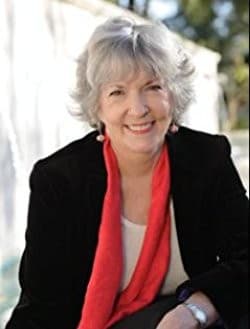
Biography coming soon.







