“There are some things you can’t outrun. Some things you can’t bury.”
— Kate Burkholder reflects on her past and the secrets of Painters Mill.

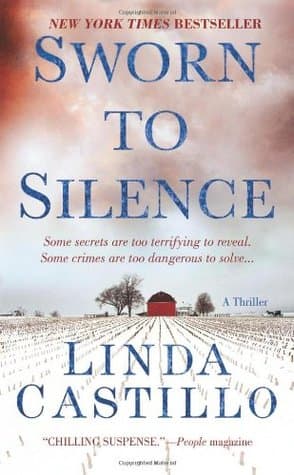
Linda Castillo (2009)
Genre
Thriller / Mystery
Reading Time
360 min
Key Themes
See below
Sign in to track this book
An Amish-raised police chief, haunted by a past massacre, must revisit the secrets of her community to catch a new killer, even if it means betraying everything she once held sacred.
Police Chief Kate Burkholder, a former Amish girl who left the community after a traumatic event, returns to her hometown of Painters Mill, Ohio, after years working in big-city law enforcement. She is called to a snowy field where the body of a young Amish woman, Martha Hostetler, has been found murdered. The scene is similar to a series of murders that occurred in Painters Mill sixteen years prior, committed by the 'Slaughterhouse Killer' – a case that was never solved and deeply affected Kate. The discovery makes Kate confront her painful past and the secrets she has kept from both her Amish family and the 'English' world.
Because of the nature of Martha Hostetler's murder and its resemblance to past killings, the FBI is called. Agent John Tomasetti, a homicide investigator, arrives in Painters Mill. Tomasetti is initially unsure of Kate's ability to handle the case, given her personal connection to the community and the past crimes. However, he soon sees her investigative skills and insight into the Amish way of life. Despite their professional differences, an attraction begins to develop between Kate and Tomasetti, adding to Kate's emotional state as she deals with the resurfacing trauma.
As Kate and Tomasetti investigate Martha Hostetler's life, they find details about her secret 'English' boyfriend, Jacob Miller, who becomes an early suspect. However, before they make progress, another Amish woman, Salome Miller, is found murdered, again matching the 'Slaughterhouse Killer.' Painters Mill is afraid, and the pressure on Kate to solve the case grows. The pattern of the killings, targeting young Amish women, suggests a disturbed individual with a community connection, stirring Kate's buried memories.
The similarities between the current murders and the past 'Slaughterhouse Killer' case are too strong to ignore. Kate realizes that to catch the new killer, she must revisit the original case, a period she has tried to forget. This makes her confront her hidden role in the events sixteen years ago. She was not just a victim; she was a witness, and she knows more than she has ever told anyone, including her fellow officers or the FBI. Her silence, a pact made with other Amish girls, has protected a secret that now threatens everything.
Through flashbacks, Kate remembers the night the 'Slaughterhouse Killer' first struck. She and a group of other young Amish girls, including Martha, Salome, and her best friend Sarah Miller, had secretly gone to an 'English' party. They were attacked by a man named Daniel Fisher, who they believed was the killer. In self-defense, the girls fought back, and Fisher was killed. Fearing the consequences of their actions and the shunning they would face from their Amish community for being at an 'English' party and for the violence, they made a pact to bury Fisher's body and never speak of what happened, leaving the murders unsolved.
As the investigation continues, Kate and Tomasetti discover that the current killer is not the original 'Slaughterhouse Killer,' but someone seeking revenge for Daniel Fisher's death. They learn that Fisher had a brother, Jonas, who was protective of him. Jonas Fisher, now an adult, believes his brother was murdered and is systematically targeting the girls he believes were responsible, starting with Martha Hostetler and Salome Miller, who were part of the group that killed Daniel. He is recreating the original killer's methods to mislead suspicion and get his revenge.
The realization that Jonas Fisher is the killer pushes Kate to a breaking point. She knows she must break her sixteen-year-old vow of silence to save the remaining girls, including her childhood best friend, Sarah Miller. In a tense confession, Kate tells Tomasetti the entire truth: the 'English' party, Daniel Fisher's attack, their act of self-defense, and the burial of his body. This confession is a betrayal of her Amish past and the trust of her friends, but Kate understands it is the only way to stop Jonas Fisher and bring peace to Painters Mill.
With Kate's confession, Tomasetti and the Painters Mill police race to protect Sarah Miller. However, Jonas Fisher is ahead and abducts Sarah. Kate, using her knowledge of the local area and Jonas's family history, tracks them to an isolated, abandoned slaughterhouse – a place that connects to the 'Slaughterhouse Killer' name. A violent confrontation occurs between Kate and Jonas Fisher. Kate, using her strength and training, subdues and apprehends Jonas, saving Sarah's life and ending his terror.
Afterward, the truth about Daniel Fisher's death and the girls' pact of silence is revealed to the Painters Mill community. While some Amish residents struggle with their daughters' actions, there is also understanding and a slow path toward healing. Kate faces the consequences of breaking her silence, but she also finds some peace. Her relationship with Tomasetti deepens, built on trust and shared trauma. She has saved her community, but at a personal cost, changing her place between the Amish and 'English' worlds.
The Protagonist
Kate begins as a haunted figure trying to outrun her past but evolves into someone who confronts her deepest secrets, breaking a silence to bring justice and find a measure of personal peace.
The Supporting
Tomasetti moves from an objective, somewhat skeptical outsider to a trusted partner and lover, providing stability and support for Kate as she navigates her past.
The Mentioned
Her murder reopens old wounds and sets the entire plot in motion, leading to the unraveling of a long-held secret.
The Mentioned
Her death serves to escalate the plot and reveal the killer's methodical revenge plan.
The Supporting
Sarah is a living embodiment of Kate's past, initially resistant to confronting it, but ultimately reliant on Kate to save her from the consequences of their shared secret.
The Mentioned
His death in the past is the pivotal event that creates the central mystery and propels the revenge plot in the present.
The Antagonist
Jonas Fisher's arc is one of escalating revenge, culminating in his confrontation and defeat by Kate Burkholder.
The Supporting
Introduced as a suspect, he is cleared, serving to highlight the hidden connections between the Amish and English communities and the challenges of the investigation.
The main theme is the destructive impact of keeping secrets, especially the sixteen-year-old pact of silence among the Amish girls. Kate Burkholder's life is shaped by this secret, leading to her leaving the Amish community and carrying guilt. The current murders are a direct result of this buried truth, showing how unresolved past events can erupt into the present. The theme explores the dilemma of silence versus truth and the price paid for both.
“Some secrets are too terrible to reveal . . . Some crimes are too unspeakable to solve . . .”
Kate Burkholder struggles with her identity, torn between her Amish background and her career as an 'English' police chief. She feels like an outsider in both worlds, never fully belonging. Her return to Painters Mill makes her confront this internal conflict, as she must navigate the customs of her former community while upholding the law. The theme explores the struggle of individuals caught between two cultures and the search for belonging.
“She had left the Amish world, but the Amish world had never truly left her.”
The novel explores the lasting effects of trauma, both individual and communal. Kate's past experience with the 'Slaughterhouse Killer' and the cover-up left her with emotional scars. The new murders reopen these old wounds, making her relive the terror. Painters Mill also bears the scars of the past, living with a fragile peace. The story suggests that true healing begins when the truth is revealed and faced, no matter how painful.
“The past wasn't dead; it wasn't even past. It was here, in Painters Mill, breathing down her neck.”
The story shows a contrast between the pursuit of justice, represented by Kate Burkholder's role as a police chief, and the destructive path of revenge, shown by Jonas Fisher. Jonas believes he is delivering justice for his brother's death, but his actions are brutal and misguided, continuing a cycle of violence. Kate, despite her personal involvement and the moral questions of the past, works to uphold the law and bring the killer to account, showing the difference between legal and personal retribution.
“He wasn't after justice. He was after blood.”
The tension between the conservative Amish community and the modern 'English' world provides a background to the story. Kate, being from both, understands this divide. The secret 'English' party attended by the Amish girls sixteen years ago is an example of this clash, leading to tragic consequences. The investigation requires understanding both cultures, as traditional Amish values of separation and non-resistance often conflict with 'English' law enforcement methods.
“The gap between her two worlds sometimes felt as wide as the Grand Canyon.”
Interweaves present-day investigation with past traumatic events
The narrative frequently shifts between the present-day murder investigation in Painters Mill and Kate Burkholder's fragmented memories and vivid flashbacks to the events sixteen years prior. These flashbacks are crucial in slowly revealing the truth about the original 'Slaughterhouse Killer' case and Kate's involvement. This device builds suspense, allows the reader to piece together the puzzle alongside Kate, and deepens the understanding of her character's internal conflict and trauma.
Misleading clues and suspects to divert attention from the real killer
The novel employs several red herrings to complicate the investigation and maintain suspense. Initially, Jacob Miller, Martha Hostetler's secret 'English' boyfriend, is presented as a strong suspect. The initial assumption that the 'Slaughterhouse Killer' has returned also serves as a red herring, as the true killer is later revealed to be someone else entirely, driven by a different motive. These diversions keep both Kate and the reader guessing, making the eventual reveal of Jonas Fisher more impactful.
Kate's suppressed memories create gaps in the initial understanding of the past
While Kate Burkholder is the primary point-of-view character, her narrative about the past is initially incomplete and suppressed due to trauma and the pact of silence. She doesn't fully remember or consciously reveal the entire truth of what happened sixteen years ago until forced to confront it. This creates a partial unreliability, as the reader's understanding of the past is filtered through Kate's fragmented and painful recollections, gradually unfolding as she allows herself to remember.
Represents violence, hidden horrors, and the dark underbelly of the community
The abandoned slaughterhouse, central to both the original and current crimes, serves as a powerful symbol. It represents the brutal, visceral violence that shatters the perceived innocence of Painters Mill. It also symbolizes the hidden horrors and 'dirty work' that the community, particularly the Amish, tries to keep secret. The final confrontation taking place in such a location underscores the raw, animalistic nature of the revenge and the breaking of the community's peaceful facade.
A literal agreement that drives the core conflict and mystery
The 'Pact of Silence' is a literal agreement made by Kate and her Amish friends sixteen years prior, to bury Daniel Fisher's body and never speak of what happened. This isn't just a thematic element but a concrete plot device that directly causes the current murders. It dictates Kate's actions, her internal struggle, and ultimately, her decision to break it, which resolves the main conflict. It's the engine of the mystery, revealing how a past decision dictates present-day consequences.
“There are some things you can’t outrun. Some things you can’t bury.”
— Kate Burkholder reflects on her past and the secrets of Painters Mill.
“The past is never really gone. It just waits for the right moment to surface.”
— A recurring theme as Kate's past in the Amish community comes back to haunt her.
“Sometimes the greatest evil wears the most innocent face.”
— Kate realizes the true nature of the killer, often hidden in plain sight.
“Silence can be a weapon. Or a cage.”
— Reflecting on the Amish community's practice of 'sworn to silence' and its implications.
“You can leave the Amish, but the Amish never truly leave you.”
— Kate's internal struggle with her upbringing and her current life as a police chief.
“Fear is a powerful motivator. It can make people do terrible things, and it can keep them silent.”
— Kate investigates the reasons behind the community's reluctance to speak out.
“Some wounds never heal. You just learn to live with the scars.”
— Kate's personal reflections on the trauma she experienced in her youth.
“The truth has a way of coming out, no matter how deeply buried.”
— As the investigation progresses, hidden secrets are slowly uncovered.
“Justice isn't always fair. Sometimes it's just about survival.”
— Kate grapples with the harsh realities of law enforcement and moral ambiguity.
“The darkness inside us is often the hardest to confront.”
— Kate confronts her own demons while pursuing a killer.
“Sometimes you have to break the rules to do what's right.”
— Kate's willingness to bend protocols to achieve justice for the victims.
“Trust is a fragile thing, easily shattered, and almost impossible to fully repair.”
— Kate's experience with broken trust within her community and personal relationships.
“The dead can't speak, but they leave behind whispers.”
— Kate interprets clues and evidence left by the victims.
Ready to see how well you understood this book? Take our interactive quiz with 10 questions.

Biography coming soon.







