“The worst part about being a superhero isn't the villains or the danger. It's the expectation.”
— Echo musing on the burdens of her powers early in the story.

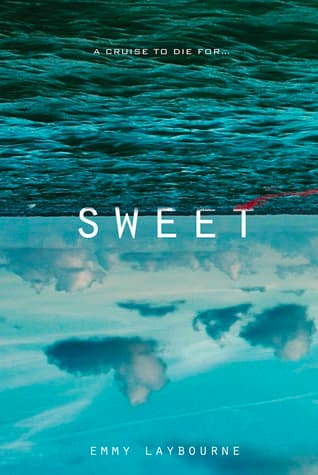
Emmy Laybourne (2015)
Genre
Thriller / Science Fiction / Young Adult / Romance
Reading Time
272 min
Key Themes
See below
Sign in to track this book
On a luxury cruise promising miraculous weight loss, a new diet sweetener transforms a celebrity-filled dream vacation into a terrifying nightmare of bizarre behavior and deadly side effects, forcing an unlikely duo to fight for survival.
Laurel, a self-conscious teenager, reluctantly joins her best friend Viv on the luxurious 'Cruise to Lose.' This celebrity-filled voyage is sponsored by the new diet sweetener, Solu. Viv is excited to be there, eager to try Solu and meet stars, especially Tom Forelli. Laurel, however, is immediately seasick and uneasy, making her an unwilling participant. She feels embarrassed, particularly during an awkward encounter with Tom Forelli, who seems kind despite her clumsiness. Laurel's discomfort grows due to the many thin, beautiful people on board, which highlights her own insecurities.
After the initial events, the Solu sweetener is introduced and given to the eager passengers. Most guests, including Viv, begin adding Solu to their drinks and food, reporting immediate and impressive weight loss. A wave of euphoria sweeps through the ship as people celebrate their shrinking waistlines and new energy. Laurel, still battling seasickness and generally distrusting quick fixes, avoids taking Solu. She watches the dramatic changes in Viv and other passengers, noting their growing confidence and almost manic happiness. This begins to feel unsettling. Tom Forelli, though a celebrity host, also expresses private concerns about the rapid effects.
As days pass, the initial euphoria around Solu begins to fade. While weight loss continues, passengers start acting strangely. They develop intense cravings for specific foods, often unhealthy and in large quantities, despite their shrinking bodies. Their personalities shift, becoming more aggressive, irritable, and volatile. Viv, in particular, becomes fixated on food and dismissive of Laurel's concerns. Laurel, still Solu-free, notices the disturbing changes in everyone. Tom Forelli also sees these alarming side effects and begins to question Solu's safety and ethics, leading him to seek Laurel's opinion.
The bizarre behavior of Solu users quickly turns into aggression and violence. Passengers become territorial over food, leading to brawls and irrational attacks. The ship, once a luxurious paradise, becomes a chaotic and dangerous place. Laurel and Tom, both untainted by Solu, find themselves isolated and targeted as they try to understand and survive the growing madness. Viv, now fully under Solu's influence, is almost unrecognizable, showing violent tendencies and no regard for Laurel's safety. The crew, many of whom have also taken Solu, are either incapacitated or contributing to the chaos, making the ship ungovernable.
Driven by desperation and a need for answers, Laurel and Tom investigate Solu's true nature. They access confidential information and discover the horrifying truth: Solu doesn't just burn fat; it causes the body to consume itself, starting with fat and moving to muscle and other tissues. The intense cravings are the body's desperate attempt to replenish lost energy, and the aggression results from extreme metabolic stress and brain chemistry disruption. They realize Solu is not a miracle cure but a biological weapon, slowly turning its users into ravenous, self-cannibalizing monsters. This realization strengthens their resolve to escape and expose the truth.
With the ship descending into anarchy, Laurel and Tom realize their only hope is to escape. They make several harrowing attempts, navigating through aggressive, emaciated Solu users who now resemble zombies. They face direct threats from Viv and other once-friendly faces, who are driven by insatiable hunger and violent impulses. Their attempts are full of danger, close calls, and the heartbreaking realization that many people they knew are beyond saving. They find a few other non-Solu users who become allies, but their numbers are dwindling, and the ship itself is becoming a death trap.
Just as their situation seems most dire, a military vessel appears on the horizon, a beacon of hope in the nightmare. Laurel and Tom, along with a small group of survivors, desperately try to signal the ship, fearing they might be mistaken for the infected. The military, aware of the potential biological threat, approaches cautiously. The survivors must prove they are untainted by Solu to be rescued, adding another layer of tension. The sight of the rescue ship energizes their efforts, giving them strength to fight through the last pockets of resistance from the Solu-crazed passengers.
During their desperate dash for rescue, Laurel confronts Viv, who is now a terrifying shadow of her former self, emaciated and violently aggressive. The encounter is heartbreaking, as Laurel tries to appeal to the friend she once knew. But Viv is too far gone, her mind and body ravaged by Solu. Laurel must make an agonizing decision, prioritizing her own survival and the safety of others over the impossible task of saving Viv. This confrontation is a moment for Laurel, forcing her to accept the tragic loss of her friend and the irreversible damage caused by the sweetener. It solidifies her resolve to expose the truth.
The military successfully evacuates Laurel, Tom, and the few other uninfected survivors from the 'Cruise to Lose.' The rescue operation is tense and precise, focusing on containing the Solu-infected individuals and the ship itself to prevent a global pandemic. The survivors are immediately quarantined and debriefed, providing information about the horrors they witnessed. The 'Cruise to Lose,' now a floating biological hazard, is secured and isolated, a monument to corporate greed and scientific hubris. Laurel and Tom emerge as key witnesses, their personal trauma linked to the urgent need to expose the Solu corporation.
After their escape, Laurel and Tom begin recovery and debriefing. They are crucial to the investigation into the Solu corporation, providing firsthand accounts of the sweetener's devastating effects. The experience has changed them profoundly, forging a deep bond. They are determined to expose Solu and prevent similar tragedies, grappling with the trauma of what they witnessed and the loss of their friends and innocence. The world is on the brink of a major scandal, and Laurel and Tom, once ordinary teens, are now reluctant heroes, forever marked by the 'Cruise to Lose.'
The Protagonist
Laurel transforms from an insecure, seasick girl into a courageous survivor and a key witness against the Solu corporation, finding her voice and inner strength.
The Co-protagonist
Tom evolves from a celebrity host focused on career revival to a courageous survivor and moral compass, using his platform to expose corporate evil.
The Supporting/Antagonist (due to Solu)
Viv's arc is tragic, as she rapidly descends from an enthusiastic participant to a mindless, violent victim of Solu, ultimately losing her life and identity.
The Antagonist (corporate entity)
The Solu Corporation remains a static, malevolent force, representing the dangers of unchecked corporate ambition and scientific malpractice, culminating in its eventual exposure.
The Supporting/Mentioned
Dr. Arnault's 'arc' is one of exposure, as his facade of benevolence crumbles to reveal a deeply unethical and dangerous scientist.
The novel shows how pursuing profit and scientific 'advancement' without ethics can lead to catastrophe. The Solu Corporation knowingly develops and distributes a deadly substance, putting financial gain over human life. This turns a luxury cruise into a human experiment. Dr. Arnault embodies scientific hubris, believing his creation is above moral scrutiny. This theme is clear in the rapid descent of the cruise from an opulent vacation to a horrifying biohazard, all from Solu's unethical practices. The book is a cautionary tale against the allure of quick fixes driven by corporate greed.
“People would kill to be thin. But will they die for it, too?”
A central theme is the intense societal pressure to be thin and the lengths people will go to achieve it. The 'Cruise to Lose' itself shows this, attracting thousands eager for a miracle cure. Characters like Viv are driven by a desire for quick weight loss and celebrity approval, which highlights the vulnerabilities Solu exploits. Laurel's initial insecurities about her body contrast with the extreme measures others take, and her acceptance of her body ultimately saves her. The novel critiques beauty standards that push individuals to endanger their health for an idealized physique, showing the devastating physical and psychological toll.
“It was impossible not to feel like a whale among so many beautiful, thin people.”
As passengers consume Solu, they undergo a terrifying transformation, losing not only their physical health but also their humanity and individual identities. Their personalities devolve into aggressive, food-obsessed creatures, driven by primal instincts. Viv's transformation is the most poignant example, as Laurel watches her best friend become a stranger, without empathy or recognition. This theme explores how external factors, in this case, a chemical substance, can strip away a person's essence, reducing them to mere biological functions. It highlights the preciousness of human connection and the horror of its erosion.
“The person I knew, the friend I loved, was gone. Only a hungry ghost remained.”
Amidst the horror, the novel highlights the capacity for human survival and resilience. Laurel and Tom, initially ordinary teenagers, adapt to an increasingly dangerous environment, showing courage, resourcefulness, and quick thinking. They navigate a ship filled with deranged individuals, make life-or-death decisions, and fight for their lives. Their ability to maintain their moral compass and work together in the face of overwhelming odds shows the strength of the human spirit. This theme demonstrates the instinct to live and protect others, even when confronted with unimaginable terror and loss.
“We're going to get through this. Together.”
The central object that drives the plot and motivates character actions.
The Solu sweetener acts as the primary MacGuffin in the story. It is the catalyst for the entire plot, drawing characters like Viv and Laurel to the cruise and initiating the horrific events. Its promise of effortless weight loss is the initial motivation for most passengers, while its deadly side effects drive the conflict and the survivors' struggle for escape and exposure. The sweetener itself is less important for its chemical composition and more for its function in moving the story forward and revealing the true nature of the Solu Corporation and its victims.
A confined environment that intensifies tension and traps characters.
The luxurious 'Cruise to Lose' ship serves as a classic isolated setting, effectively trapping the characters and escalating the horror. Its remote location at sea prevents easy escape or outside intervention, creating a sense of claustrophobia and increasing the stakes. The ship's transformation from a symbol of opulence to a floating death trap mirrors the characters' descent into chaos. This isolation forces Laurel and Tom to rely solely on themselves and each other, amplifying the tension and the feeling of being hunted as the Solu-infected passengers take over.
Hints and clues that suggest future events or outcomes.
Laurel's immediate seasickness and her inherent skepticism about Solu serve as early foreshadowing. Her physical discomfort prevents her from taking the sweetener, which ultimately saves her life, hinting that there is something inherently wrong with the product. Her initial unease and observations of the other passengers' overly enthusiastic reactions subtly suggest that the 'miracle' might have a darker side. This early discomfort primes the reader for the eventual reveal of Solu's true, horrifying nature, making Laurel's initial feelings of being an outsider ironically her greatest asset.
When the audience knows more about the situation than the characters.
The very name of the cruise, 'Cruise to Lose,' and its marketing slogans like 'lose five percent of your body weight in just days,' are imbued with dramatic irony. While passengers eagerly anticipate 'losing' weight, the audience, given the book's genre and description, understands that they will 'lose' much more: their health, their minds, and ultimately their lives. This irony creates a sense of dread and tragic inevitability as the characters unknowingly embrace their doom, highlighting the sinister undertones of the corporation's promises and the public's gullibility.
“The worst part about being a superhero isn't the villains or the danger. It's the expectation.”
— Echo musing on the burdens of her powers early in the story.
“Sometimes the greatest power is knowing when not to use yours.”
— A lesson Echo learns about restraint.
“Fear can be a compass, pointing you towards what you truly value.”
— Echo reflecting on her motivations when facing a difficult choice.
“Trust is a fragile thing, easily broken, and almost impossible to fully mend.”
— Echo's thoughts after a betrayal.
“You can't save everyone, but you can always try to save someone.”
— A recurring theme as Echo grapples with the scope of her abilities and responsibilities.
“The line between hero and villain is often just a matter of perspective.”
— Echo questioning the nature of good and evil in her world.
“Love isn't a weakness; it's the strongest fuel you have.”
— Echo realizing the strength she draws from her connections.
“Even the quietest whispers can change the course of a storm.”
— A metaphor for the impact of small actions.
“Secrets have a way of poisoning everything they touch.”
— Echo dealing with the consequences of hidden truths.
“Sometimes the monster isn't under the bed; it's in the mirror.”
— Echo's internal struggle with her own potential for darkness.
“The future isn't written; it's built, one choice at a time.”
— Echo embracing her agency in shaping her destiny.
“Being extraordinary doesn't make you invulnerable. It just makes the falls hurt more.”
— Echo experiencing personal setbacks despite her unique abilities.
“Hope is a stubborn thing. Even when you try to drown it, it finds a way to float.”
— Echo's enduring optimism in dire circumstances.
Ready to see how well you understood this book? Take our interactive quiz with 10 questions.







