“Even the mightiest stars eventually burn out.”
— A recurring thought about the nature of power and its impermanence.

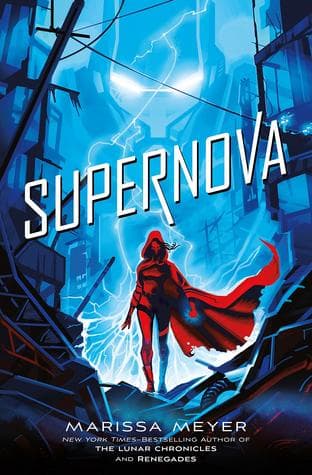
Marissa Meyer (2019)
Genre
Young Adult / Romance
Reading Time
12-15 hours
Key Themes
See below
Sign in to track this book
As Gatlon City teeters on the brink, Nova and Adrian must unmask a resurrected enemy and reconcile their hero-villain identities before love, loyalty, and their entire world are obliterated.
After the Renegade parade, Nova (Nightmare) attends a secret Anarchist meeting where Phobia, the new leader, takes charge and plans their next moves against the Renegades. Phobia shows her power to cause fear and distrust, wanting to break Gatlon City's faith in its heroes. Meanwhile, Adrian Everhart (Sentinel) and the other Renegade council members deal with Ace Anarchy's symbol reappearing and growing public unrest. Adrian is especially worried, as he saw Ace die and suspects a trick. Nova continues her double life, gathering information for the Anarchists while acting as a loyal Renegade, struggling with her divided loyalties and her feelings for Adrian.
Adrian tries to find the truth behind Ace Anarchy's return, sure that someone is pretending to be him. He asks Nova for help, unaware of her true identity. Together, they follow clues left by the mysterious 'Ace,' which often lead them to old Anarchist hideouts and symbols. Nova, while pretending to help, subtly guides their investigation away from anything that might expose her or her Anarchist allies. During their search, they find signs that Ace Anarchy might have had a backup plan or an heir, making the mystery more complex. Their shared investigation brings them closer, increasing the romantic tension, even as Nova's guilt grows.
The Renegade Council, especially Captain Chromium and other senior members, becomes more paranoid and distrustful, influenced by Phobia's subtle effect on the city. They start to suspect traitors and add more security. At the same time, Adrian's younger brother, Max, who can absorb and copy others' powers, starts to have severe, unpredictable power changes. His condition worsens, causing him great pain and making him dangerous to himself and others. Adrian tries to find a cure for Max, believing it might be linked to the original experiments that gave Max his powers, further straining his family.
Nova keeps gathering information for Phobia, but her loyalty wavers as she sees the chaos and fear Phobia causes in the city. She discovers that Phobia is Evie, a former Anarchist child thought to have died during Ace Anarchy's original defeat. Evie, driven by revenge, plans to use her fear powers to dismantle the Renegades from within, creating a power vacuum she wants to fill. Nova realizes how ruthless Evie is and begins to question if the Anarchist cause, under Evie's leadership, truly matches her own ideas of justice and equality, especially as she sees the suffering it causes.
Adrian's search for a cure for Max leads him to old Renegade files and Dr. True's research. He uncovers a secret: Max's powers are not natural but resulted from Dr. True's illegal experiments, using Ace Anarchy's genetic material. This means Max is Ace Anarchy's biological son, conceived in a lab. This discovery shatters Adrian's understanding of his family and the Renegades' moral standing. He confronts his adoptive parents, Captain Chromium and Dreadnought, who confirm the truth, revealing the Renegade organization's dark side and their desperate actions to create powerful allies.
Through several close calls and detective work, Adrian finally unmasks Nova as Nightmare, the Anarchist. The revelation devastates him, as he struggles to accept the woman he loves is the villain who caused so much trouble. He feels betrayed by Nova and by his own judgment. The confrontation is emotional, with Nova trying to explain her actions and Adrian unable to see past the deception. This discovery creates a deep rift between them, threatening their personal relationship and the fragile peace they had unknowingly created between their groups. Adrian vows to bring Nightmare to justice.
Phobia starts her final plan: to expose the truth about Ace Anarchy's supposed return. She arranges a public broadcast, revealing that the 'Ace Anarchy' terrorizing the city is Max, manipulated by her and suffering from his unstable powers. She uses Max to broadcast a message of anarchy and distrust, further eroding public faith in the Renegades. This shocks the city and the Renegades, who must face the dark secret of Max's origins and their leaders' ethical compromises. The city descends into widespread panic and rioting as the lines between hero and villain blur.
The city erupts into a full-scale battle as the Renegades try to stop the chaos and catch Phobia, while the Anarchists support her. Max, now fully unleashed and controlled by Phobia, becomes a weapon, absorbing and reflecting powers, causing great destruction. Nova, torn between her Anarchist past and her growing understanding of Phobia's tyranny, finds herself fighting with Adrian and the Renegades, trying to protect citizens and stop Phobia. The battle is fierce, with former allies becoming enemies, and Gatlon City threatening to fall apart.
During the battle, Nova chooses justice and protection over revenge. She confronts Phobia, trying to reason with her and stop her. Phobia, full of hatred, refuses, leading to a direct fight between the two former allies. Nova uses her skills and powers to counter Phobia's fear abilities, aiming to expose Phobia's manipulation and defeat her. This moment marks Nova's complete break from her Anarchist identity and her full acceptance of a more complex view of heroism and villainy, even as she deals with her past actions.
In a key moment, Max, regaining some control, sacrifices himself to stop Phobia's rampage and protect Gatlon City, absorbing a huge amount of destructive energy. His sacrifice is a turning point, letting the Renegades subdue Phobia and start to restore order. Afterward, the city deals with the revelations about Ace Anarchy, Max, and the Renegade Council's ethical failures. Nova and Adrian, though still hurt, begin the long process of healing and understanding, realizing that good and evil are more complex than they imagined. The future of Gatlon City, and their relationship, is uncertain but hopeful.
After the battle, the truth about Max's origins and the Council's hiding of Dr. True's unethical experiments comes out, causing public anger and a lack of trust in the Renegades. Captain Chromium and other senior Council members must step down or face scrutiny. A new, more open leadership is set up, committed to fixing problems within the organization and rebuilding public trust. This reform marks a big change in the Renegades' approach to justice and governance, recognizing the need for more accountability and the dangers of unchecked power, even for heroes. Adrian takes a more important role, supporting these changes.
Nova, now committed to being a hero, works to help rebuild Gatlon City and make up for her past actions as Nightmare. She uses her skills and knowledge to help the new Renegade leadership, proving her loyalty. Adrian, though still deeply hurt by her betrayal, sees her true efforts and begins to understand her reasons. Their shared experiences and Max's sacrifice slowly bridge the gap between them. Forgiveness is hard, but they gradually start to rebuild their relationship, based on a new understanding of truth, trust, and the grey areas of morality. Their bond becomes stronger, forged by their shared trauma.
As Gatlon City heals, Nova and Adrian become key figures in its future. They work together, blending their views to create a new path for prodigies, one that values cooperation, accountability, and compassion over strict hero or villain labels. The city starts to embrace a more integrated approach to its gifted citizens, building understanding and preventing new Anarchist movements driven by anger. Nova, no longer Nightmare but not fully a Renegade, finds her unique place as a bridge between worlds, while Adrian tries to ensure Max's sacrifice was not in vain. Their story ends with a hopeful, though challenging, vision for Gatlon City's future.
The Protagonist
Nova evolves from a vengeful Anarchist seeking to destroy the Renegades to a nuanced hero who recognizes the flaws in both factions and strives to build a better, more just world.
The Protagonist
Adrian's journey sees him mature from an idealistic, somewhat naive hero into a more pragmatic and understanding leader, capable of confronting the moral ambiguities of his world and forgiving past betrayals.
The Supporting/Antagonist
Max's arc is tragic, as he is revealed to be a victim of scientific hubris and manipulation, ultimately finding agency through a selfless act that defines his legacy.
The Antagonist
Phobia's arc is one of escalating villainy, driven by unyielding revenge, ultimately leading to her defeat and the exposure of her destructive ideology.
The Supporting
Captain Chromium faces a reckoning for his past actions, leading to a fall from grace and the dismantling of the old Renegade order he represented.
The Supporting
Dreadnought, alongside Captain Chromium, experiences the downfall of the old Renegade guard and the painful exposure of their long-held secrets.
The Supporting
Smokescreen remains a steadfast ally to Nova, adapting to her changing loyalties and continuing to support her quest for a better world.
The Supporting
Ruby remains a loyal and supportive friend to Adrian, adapting to the changing political landscape of Gatlon City while maintaining her strong moral compass.
The Supporting
Danna continues to provide emotional support and a steadying presence for her friends as the Renegade world undergoes profound changes.
The Supporting
Oscar remains a steadfast and reliable member of Adrian's team, adapting his tactical skills to the evolving threats facing Gatlon City.
The novel makes the lines between heroes and villains unclear, constantly challenging the reader's idea of right and wrong. Nova, an Anarchist, wants justice, while the Renegades, supposedly heroes, are shown to have done unethical things and hidden secrets, such as Dr. True's experiments on Max. Characters like Adrian realize that even 'good' intentions can lead to harm, and 'evil' can come from understandable pain. This theme ends with Nova's choice to fight for a new, more balanced justice, rather than just destroying the Renegades, showing that true heroism is in understanding and compassion. The whole conflict is based on both sides believing they fight for justice.
“"There were no heroes or villains, only people with different perspectives, fighting for what they believed in."”
Both the Renegades and the Anarchists show how unchecked power can lead to corruption and moral decay. The Renegade Council's decision to hide Max's origins and Dr. True's unethical experiments shows how even 'heroes' can misuse authority to keep control and reputation. On the Anarchist side, Phobia's ruthless pursuit of revenge, using her fear powers to destabilize the city, shows how a desire for justice can turn into tyranny. The novel suggests that any group, regardless of its initial goals, can become corrupt when power is unchallenged or absolute. This theme is central to the eventual restructuring of Gatlon City's government.
“"Absolute power corrupts absolutely, and Gatlon City was about to learn that lesson the hard way."”
Many characters, especially Nova and Adrian, struggle with their true identities versus the roles they are expected to play. Nova constantly lives a dual life as Nightmare and Nova Artino, trying to figure out which persona truly represents her and what she believes. Adrian also struggles with being the son of legendary Renegades and the secret artist Sentinel. The discovery of Max's true origins makes Adrian re-evaluate his family's past and his own identity. The journey of self-discovery is about accepting one's complex past and creating an authentic path forward, even if it means questioning strong beliefs. Nova's final choice to fight for a balanced future is her ultimate act of self-definition.
“"Who are you when no one is watching? Who are you when everyone is watching? The answer was often two different people, battling for the same soul."”
A main conflict in the novel is the difference between seeking true justice and giving in to revenge. Nova's initial reasons as an Anarchist are driven by a desire to avenge her family and punish the Renegades. Phobia shows this theme most strongly, her entire plan driven by vengeful hatred. However, as Nova sees the destructive results of Phobia's actions and experiences real connections with Adrian and other Renegades, she starts to understand that revenge only continues cycles of violence. Her arc shows a shift from personal vengeance to a broader, more compassionate view of justice that aims to heal and rebuild rather than destroy. Max's sacrifice, in particular, highlights how destructive revenge is.
“"Revenge was a poison, a fire that consumed everything in its path, leaving only ash and more hatred."”
Characters maintain hidden personas, creating dramatic irony and internal conflict.
The pervasive use of secret identities is central to the plot. Nova lives a double life as the Anarchist Nightmare and the aspiring Renegade Nova Artino, creating constant tension and dramatic irony as she interacts with Adrian, who is also Sentinel. This device allows for exploration of identity, loyalty, and betrayal. It fuels much of the romantic tension and the ultimate heartbreak when identities are revealed, forcing characters to confront the gap between perception and reality. The entire premise of the series relies on these hidden personas.
Max's unique powers and genetic connection to Ace Anarchy drive much of the plot's mystery and conflict.
Max's unstable power to absorb and mimic other prodigies' abilities, coupled with the secret of his genetic connection to Ace Anarchy, serves as a crucial plot device. It's the catalyst for Adrian's investigation into Dr. True's past, exposes the Renegade Council's dark secrets, and becomes the central tool used by Phobia to destabilize Gatlon City. The mystery surrounding Max's condition and lineage propels the narrative forward, unraveling the established order and forcing both factions to confront uncomfortable truths about their origins and ethics.
The narrative primarily follows Nova, whose Anarchist perspective colors the initial portrayal of events and characters.
While not explicitly an unreliable narrator, Nova's perspective as an Anarchist influences the early understanding of the Renegades and the 'villains.' Her deep-seated bias against the Renegades shapes how the reader initially perceives their actions and motivations. As the story progresses and Nova uncovers more truths, her perspective shifts, forcing the reader to re-evaluate prior assumptions. This implicit unreliability allows for gradual reveals and reinforces the theme of ambiguity, as the 'truth' is revealed to be far more complex than any single character's initial worldview.
Max's sudden, selfless act resolves the immediate crisis and provides a path to victory.
In the climax of the battle, Max, who has been largely a victim of his powers and manipulation, suddenly regains enough agency to make a critical, selfless sacrifice. He absorbs a massive amount of destructive energy, effectively neutralizing Phobia's ultimate weapon and turning the tide of the battle. While his condition has been central to the plot, his sudden ability to exert control and make such a profound decision at the peak of chaos functions as a Deus Ex Machina, providing a powerful emotional resolution to the immediate threat and allowing the heroes to win, though at a great cost.
“Even the mightiest stars eventually burn out.”
— A recurring thought about the nature of power and its impermanence.
“Sometimes, the only way to save someone is to let them go.”
— Nova's internal struggle with her loyalty to Adrian and her mission.
“A hero's greatest weakness is often their own compassion.”
— Reflecting on Adrian's inherent goodness and how it could be exploited.
“Hope is a dangerous thing. It can make you believe in the impossible, even when you know better.”
— Nova's cynical view of hope, given her past experiences.
“The line between villain and hero is often blurred by perspective.”
— A central theme of the series, as characters' motivations are complex.
“You can't choose your family, but you can choose who you fight for.”
— Nova's decision to align herself with certain individuals over others.
“True strength isn't about how much power you have, but how you choose to use it.”
— A lesson learned by several characters throughout the story.
“Love isn't always logical. Sometimes it just... is.”
— Adrian's internal thoughts about his feelings for Nova, despite their circumstances.
“The greatest deceptions are often born from the deepest affections.”
— Highlighting the complex web of lies and love within the narrative.
“Sometimes, the hardest battles are fought within yourself.”
— Nova's internal conflict between her past and her growing feelings.
“A secret is only safe as long as no one knows it exists.”
— The constant threat of discovery for many characters' hidden identities.
“Even the most broken pieces can be put back together, if you have the right glue.”
— A metaphor for healing and the importance of connection.
“The future is not set in stone. We are the ones who carve it.”
— A message of agency and the ability to shape one's destiny.
“What defines us is not our powers, but our choices.”
— A crucial realization for both prodigies and non-prodigies.
Ready to see how well you understood this book? Take our interactive quiz with 10 questions.

Biography coming soon.