“I'm not a baby! I'm a person!”
— Fudge expresses his frustration about being treated like a baby by his family.

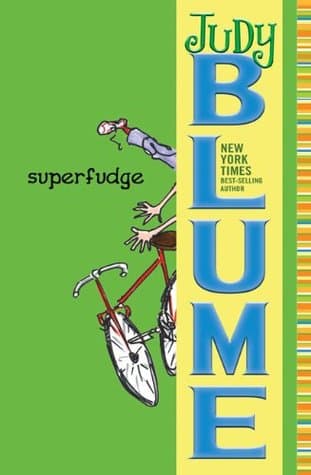
Judy Blume (1972)
Genre
Children's / Young Adult
Reading Time
150 min
Key Themes
See below
Sign in to track this book
Peter Hatcher's life is hilariously upended by the arrival of his new baby sister, Tootsie, and the further outrageous antics of his younger brother, Fudge, as their family moves to Princeton for a year.
Peter Hatcher, almost twelve, is enjoying life in New York City when his parents share two big pieces of news. First, his mother is pregnant again, which Peter dislikes, fearing another disruptive sibling like his younger brother, Fudge. Second, they plan to move the family, including Fudge and their dog, Turtle, to Princeton, New Jersey, for a year. Peter is upset about leaving his friend, Jimmy Fargo, and his comfortable life. Fudge, always wanting attention, seems unaware of Peter's distress, excitedly looking forward to a new baby and a new house, while Peter deals with the unwanted changes.
The Hatcher family moves to a rented house in Princeton. Peter at first feels alone and unhappy, missing New York and Jimmy. He finds the local kids different and struggles to fit in. However, he soon becomes friends with Alex Ramsey, a quiet, smart boy, and Joanne, a more outgoing girl who lives next door. Peter also starts school, where he learns new routines and meets teachers, slowly getting used to his new place despite his initial dislike. Fudge, meanwhile, quickly settles in, exploring the new neighborhood and making his own friends, often involving Peter in his adventures.
Fudge starts kindergarten at the local elementary school. His energetic and often naughty nature quickly makes him a memorable, if challenging, student. He tells made-up stories, questions everything, and often interrupts class, annoying his teacher, Mrs. Muldour. Peter, as the older brother, is often asked by his parents to help manage Fudge, from walking him to school to settling his arguments. This extra responsibility stresses Peter, who wishes he could just be a normal kid without always watching his younger brother.
The new baby's arrival is near, and Peter remains worried. His mother goes into labor, and after a tense wait, his baby sister is born. Peter's parents name her Tamara Roxanne, but Fudge, in his usual way, immediately calls her 'Tootsie,' a name that sticks. Tootsie's arrival brings new challenges and adjustments for the family. Fudge is at first interested in the baby but quickly becomes jealous of the attention she gets, leading to more antics and demands for his parents' focus, while Peter tries to keep some peace amid the baby's cries and Fudge's actions.
Fudge's jealousy of Tootsie grows stronger. He feels ignored and acts out, demanding more attention from his parents. This leads to a scary event: one day, Tootsie is missing from her crib. The Hatcher household is in a panic as everyone searches for the baby. Peter is scared, fearing the worst. The search eventually goes to Fudge's room, where Tootsie is found unharmed, tucked into one of Fudge's dresser drawers, covered in stamps. Fudge, trying to 'mail' her back to the hospital, had hidden her. The incident, while resolved, leaves the family shaken and shows how strong Fudge's sibling rivalry is.
After the Tootsie incident, Peter's parents see he needs something of his own and surprise him with a new puppy, a male named Uncle Feather (named by Fudge). This new pet brings Peter much joy and a sense of responsibility. The family slowly gets into a new routine, with Tootsie growing and Fudge continuing his antics, though perhaps with a little more understanding from his parents. Peter finds himself enjoying his new friendships and even starting to like Princeton. The year away from New York, at first dreaded, begins to feel more like a new chapter, with the family growing closer through their shared experiences and challenges.
As the year in Princeton ends, the Hatcher family starts preparing to move back to their apartment in New York City. Peter thinks about his experiences, realizing how much he has changed and grown. He has made new friends, adjusted to a new place, and even developed a reluctant liking for Tootsie, despite Fudge's continued actions. The move back is met with mixed feelings; while Peter is eager to reunite with Jimmy Fargo, he also feels a bit sad about leaving Alex and Joanne. The family packs their things, including their dog, Turtle, and the new puppy, Uncle Feather, ready for the next part of their lives.
Upon returning to New York City, Peter's first goal is to reunite with his friend, Jimmy Fargo. The two boys excitedly catch up, sharing stories of their year apart. Peter tells about the move to Princeton, Tootsie's birth, and Fudge's various adventures, including the 'mailing' incident. Jimmy, in turn, tells Peter about his experiences in their old neighborhood. Their friendship stays strong, and they quickly go back to their familiar routines, showing that some bonds can last through distance and change. Peter feels relieved and comfortable being back home with his friend.
Even back in New York, Fudge's energetic and often wild personality stays the same. He continues to be a handful, finding new ways to get into trouble and demand attention. Peter, now better at handling his younger brother, still finds himself often annoyed by Fudge's actions, which include drawing on walls, making up wild stories, and generally disrupting the peace. Despite the challenges, Peter has learned to cope and even find some humor in Fudge's unique character, solidifying his role as the responsible older brother who, deep down, cares for his troublesome sibling.
The Protagonist
Peter learns to accept change, embrace new friendships, and develops a deeper, albeit still complicated, love for his siblings.
The Supporting
Fudge remains largely unchanged in his core personality, but his interactions with his new sister highlight his struggle with jealousy and his unique way of expressing himself.
The Supporting
As an infant, her arc is primarily defined by the impact she has on her older brothers and parents.
The Supporting
He maintains his role as a steady parental figure, adapting to the growing family.
The Supporting
She navigates the challenges of pregnancy and motherhood with three children, demonstrating resilience and love.
The Supporting
His character remains consistent as Peter's loyal best friend.
The Supporting
Alex helps Peter transition to life in Princeton, becoming a significant new friend during the year away.
The Supporting
Joanne helps Peter adjust to his new surroundings and feel more at home in Princeton.
The Supporting
Turtle remains a loyal and comforting companion to Peter throughout the family's moves and changes.
The Supporting
Uncle Feather becomes a source of happiness and a symbol of Peter's growing maturity and capacity for care.
The main theme is Peter's struggle to deal with big life changes: a new baby, a family move to a new town, and new schools. He at first resists these changes, holding onto his familiar life in New York and his friendship with Jimmy. However, over the year in Princeton, Peter slowly learns to adapt, make new friends like Alex and Joanne, and even grudgingly accept his new sister. This theme shows the challenges and growth that come from leaving one's comfort zone and accepting the unexpected.
“I didn't want to move. I didn't want a new baby. I didn't want anything to change.”
The relationships between Peter and Fudge, and later Peter, Fudge, and Tootsie, are central. Peter constantly feels burdened by Fudge's actions and the responsibility of being the older brother. Fudge's strong jealousy of Tootsie, leading to the 'mailing' incident, clearly shows sibling rivalry. The book explores how Peter handles these relationships, from annoyance and resentment to a growing sense of protective love and acceptance. This shows the complex emotions in sibling bonds and the growth that comes with added responsibility.
“Fudge thinks everything belongs to him. And if he doesn't think it belongs to him, he thinks he can still do whatever he wants with it.”
Despite the constant chaos from Fudge and the adjustments needed for a new baby and a move, the underlying theme is the Hatcher family's strong love. Peter's parents, while sometimes annoyed, consistently show love and patience (mostly) towards their children. The family learns to deal with challenges together, finding humor in tough situations and ultimately growing closer. Tootsie's birth and the shared relief after her 'disappearance' show the deep bonds and affection that hold the family together, even amid their individual struggles.
“Even with Fudge and a new baby, our family was still my family. And I guess I wouldn't trade them for anyone.”
Peter, almost twelve, is becoming a teenager, dealing with typical pre-teen worries like friendships, independence, and his changing identity. The added pressures of a new baby and a move make him grow up faster, taking on more responsibility and handling complex emotions. His longing for his old life and his struggle to accept the new reflect the inner conflict of growing up and the challenges of leaving childhood behind, while still being tied to his younger siblings' needs.
“Sometimes I felt like I was the only normal person in our whole crazy family.”
Provides an intimate, often exasperated, perspective on family life.
The entire story is told from Peter Hatcher's point of view. This narrative choice allows readers to fully experience Peter's frustrations, joys, and anxieties, particularly regarding his younger brother Fudge. His internal monologues reveal his longing for a normal life, his resentment towards Fudge, and his gradual acceptance of his family's eccentricities. This perspective makes Peter a highly relatable character for young readers who may also feel overshadowed by siblings or challenged by family changes, offering a direct window into his emotional journey.
Used to lighten difficult situations and highlight Fudge's unique personality.
Judy Blume employs humor, often through exaggeration, to make the daily chaos of the Hatcher household entertaining rather than purely stressful. Fudge's outlandish statements, his creative misinterpretations of the world, and his dramatic antics (like trying to 'mail' Tootsie) are presented with a comedic flair. This device helps balance the more serious themes of sibling rivalry and Peter's struggles, making the book enjoyable and accessible for its target audience. The humor often arises from the stark contrast between Peter's desire for order and Fudge's inherent chaos.
Represents change, increased responsibility, and the expansion of family love.
Tootsie, the new baby, serves as a powerful symbol of the changes thrust upon Peter and the family. Her arrival forces Peter to confront his anxieties about losing his place and taking on more responsibility. For Fudge, she symbolizes a rival for attention, sparking his most dramatic acts of jealousy. Ultimately, Tootsie represents the expansion of the family and the capacity for love to grow, as both Peter and Fudge, in their own ways, come to accept and even cherish their new sister, symbolizing growth and adaptation for the entire Hatcher unit.
A narrative device to introduce new challenges and facilitate Peter's growth.
The year-long move to Princeton, New Jersey, functions as a significant plot device. It removes Peter from his comfort zone in New York, forcing him to confront unfamiliar surroundings, make new friends, and adjust to a different school. This geographical shift acts as a catalyst for Peter's personal growth, pushing him to be more independent and adaptable. It also intensifies the family's dynamic by placing them in a new environment without their usual support systems, highlighting their reliance on each other and ultimately strengthening their bonds.
“I'm not a baby! I'm a person!”
— Fudge expresses his frustration about being treated like a baby by his family.
“Sometimes I think my parents are the weirdest people in the world.”
— Peter reflects on his parents' behavior, a common sentiment in the book.
“You can't just wish for things. You have to work for them.”
— A lesson Peter learns or imparts about effort and responsibility.
“Fudge is a pain, but he's my pain.”
— Peter expresses mixed feelings about his younger brother Fudge.
“Why does everything have to change?”
— Peter questions the changes in his life, such as moving or new siblings.
“I'm not moving! You can't make me!”
— Peter's reaction to the news that his family is moving to a new city.
“Being the oldest isn't always easy.”
— Peter reflects on the challenges of being the older sibling.
“Sometimes you have to laugh to keep from crying.”
— A humorous or poignant moment in the story about dealing with difficulties.
“Fudge, you are impossible!”
— Peter exclaims in frustration over Fudge's antics.
“Family is family, even when they drive you crazy.”
— A theme in the book about accepting family despite annoyances.
“I wish I had a normal brother.”
— Peter expresses a common wish regarding Fudge's behavior.
“Growing up means learning to deal with surprises.”
— A lesson Peter learns from his experiences with change.
“Why can't things just stay the same?”
— Peter laments the constant changes in his life.
“Fudge may be small, but he has big ideas.”
— Acknowledging Fudge's creative and often troublesome plans.
Ready to see how well you understood this book? Take our interactive quiz with 10 questions.

Judith Blume is an American writer of children's, young adult, and adult fiction. Blume began writing in 1959 and has published more than 25 novels. Among her best-known works are Are You There God? It's Me, Margaret. (1970), Tales of a Fourth Grade Nothing (1972), Deenie (1973), and Blubber (1974). Blume's books have significantly contributed to children's and young adult literature. She was named one of the 100 most influential people in the world by Time magazine in 2023.

Dan Gemeinhart
4.5

Kate O'Hearn
4.4

Jeanne Birdsall
4.4

Jen Wang
4.4
Wendelin Van Draanen
4.3

John Marsden
4.3

Chris Van Allsburg
4.3
Jennifer A. Nielsen
4.2