“Mariposa is not a real town. On the contrary, it is about seventy or eighty of them.”
— Opening line describing the fictional town of Mariposa.

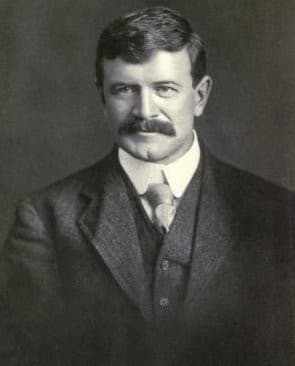
Stephen Leacock (1900)
Genre
Historical Fiction
Reading Time
120 min
Key Themes
See below
Sign in to track this book
Take a trip through Mariposa, where the quirky small-town residents paint a picture of early 20th-century Canadian life, one delightful story at a time.
The book starts with the narrator describing the train's arrival in Mariposa, an important event for the small, quiet town. He describes Mariposa as a place where time moves slowly, and life is shaped by simple pleasures and unique characters. We meet people like Mr. Smith, the station agent, and get a sense of the relaxed, provincial atmosphere. The narrator sets a nostalgic, affectionate, and slightly ironic tone, preparing for the stories that follow. He shows the town's self-contained nature and how its citizens approach their daily routines, even if those routines include small problems and misunderstandings.
Mr. Smith, who owns the Mariposa House hotel, faces a difficult financial situation. His hotel, though central to town life, is not doing well, and Smith owes a lot of money to the Commercial Bank. Mr. Peter Pupkin, the bank manager, is a man who thinks he is important and follows strict financial rules. The story humorously describes Pupkin's attempts to collect the debt and Smith's various, often funny, ways to avoid paying, such as offering Pupkin free drinks and engaging him in long, distracting conversations. This episode shows how informal and personal business and finance are in Mariposa, where professional dealings are closely connected with social relationships.
The Mariposa Belle, the town's steamboat, takes its yearly trip across Lake Wissanotti. Captain Jefferson Thorpe, the barber and owner, proudly steers the boat, filled with Mariposa's best citizens. But because of a mistake – a leaky boiler and the captain's wrong estimate of the lake's depth – the steamboat gets stuck a short distance from shore. The passengers, at first scared, soon realize the water is only waist-deep. The 'disaster' becomes a funny event as everyone wades ashore, with Captain Thorpe pretending to be a hero. The event, a minor inconvenience, becomes a famous story in Mariposa, growing bigger with each retelling.
Josh Smith, who owns the Mariposa House hotel, decides to run for Member of Parliament. His campaign is less about policy and more about his popularity and the townspeople's general good will. The narrator humorously describes the election process in Mariposa, where political rallies are social events, and candidates' speeches are often rambling and lack serious content. Smith's campaign is run by a committee of local figures, including Mr. Pupkin and Judge Pepperleigh, who care more about appearances and enjoying the festivities than about serious political debate. The episode makes fun of the superficiality of local politics and the charming innocence of the voters.
Miss Minerva Doakes, a stylish and educated woman from the city, visits her aunt in Mariposa. Her presence immediately attracts the town's single men, especially Mr. Pupkin, the bank manager, and the local lawyer, Mr. Macartney. The narrator playfully describes their awkward attempts to court Miss Doakes, showing their provincial manners and her sophisticated indifference. The episode is a gentle satire on small-town courtship rituals and the perceived superiority of city life. In the end, Miss Doakes stays somewhat distant, leaving the Mariposa men to their unreturned admiration and the town to its usual social rhythms.
After his interest in Miss Doakes, Mr. Pupkin, the bank manager, focuses on other Mariposa women, especially Zena Pepperleigh, Judge Pepperleigh's daughter. The narrator describes Pupkin's earnest but often clumsy attempts at courtship, which involve carefully planned but unromantic outings and conversations. His social awkwardness and focus on his status as bank manager often overshadow his true feelings. This chapter further explores Mariposa's social dynamics, where everyone knows everyone else's business, and romantic pursuits are watched and discussed by the whole community. Pupkin's persistent, if awkward, efforts provide much of the chapter's humor.
Jefferson Thorpe, the town barber and owner of the Mariposa Belle, is a man who likes big, if unwise, financial plans. He constantly looks for ways to get rich quickly, often investing in questionable ventures and relying on bad advice. The narrator tells of Thorpe's various speculative efforts, such as buying shares in a non-existent gold mine or investing in a miraculous hair tonic, all of which always result in losses. Despite his many failures, Thorpe remains hopeful, showing the lasting, if misguided, spirit of enterprise in Mariposa. His financial problems are a running joke, illustrating the town's mix of ambition and innocence.
The Mariposa Fire Brigade, a volunteer group, is a source of pride and occasional amusement for the town. The narrator describes their annual parade, an event with patriotism, ill-fitting uniforms, and a general sense of disorganized good intentions. The brigade's equipment, especially the old fire engine, is more symbolic than useful, and their drills are often more theatrical than effective. This chapter humorously shows the Mariposa residents' dedication to civic duty, even if their methods are unusual. The parade is a grand show, embodying the town's charming mix of earnestness and inefficiency.
The arrival of the Rev. Mr. Drone, a new clergyman for the Presbyterian church, brings something unusual to Mariposa. Mr. Drone believes strongly in spiritualism and tries to introduce his congregation to séances and talking with the dead. The townspeople, at first curious, react with a mix of doubt, fascination, and slight alarm. The narrator humorously describes the awkward attempts at spiritual manifestations and the confusion among the Mariposa residents, who are more used to traditional religious services. The episode gently makes fun of religious fads and the difficulty of bringing new ideas into a traditional community.
The narrator looks more closely at the provincial election process in Mariposa, focusing on Lancelot Pooh-Bah, a local figure who takes his political duties with great, if somewhat misguided, seriousness. Pooh-Bah, often seen as a general helper, becomes deeply involved in organizing campaign events and ensuring the 'correct' democratic process. The chapter satirizes the manipulation and superficiality of political campaigns, where promises are vague, and public opinion is easily swayed by local personalities and loud rallies. The Mariposa citizens approach the elections with lasting enthusiasm, no matter the actual political importance.
The long-standing, friendly rivalry between Mr. Smith of the Mariposa House and Mr. Pupkin, the bank manager, is explored further. Their relationship includes business dealings, social interactions, and a subtle sense of competition. Smith's constant attempts to avoid paying his debts and Pupkin's equally persistent efforts to collect them are a recurring funny part of the story. The narrator details their various interactions, from Smith's clever evasions to Pupkin's stern statements, all within Mariposa's close-knit community. Their 'hostility' is ultimately a source of amusement, showing the small but endearing quarrels that define small-town life.
In the last chapter, the narrator thinks about his time in Mariposa and the lasting impression the town and its people have made on him. He describes his eventual departure from Mariposa but stresses that the town remains a cherished memory, a symbol of a simpler, more authentic way of life. He repeats his affection for the unique qualities and genuine warmth of the Mariposa residents, from Judge Pepperleigh to Jefferson Thorpe. The narrator suggests that while Mariposa might seem small to outsiders, it has a unique spirit and lasting charm that makes it a special place, a small example of human nature with all its flaws and good qualities. The book ends with gentle nostalgia and a deep appreciation for the 'little town'.
The Protagonist/Observer
The narrator's arc is less about personal change and more about deepening his understanding and appreciation for Mariposa, culminating in a nostalgic farewell.
The Supporting
He remains largely unchanged, a consistent source of humor through his financial struggles and social maneuvering.
The Supporting
Pupkin's arc involves a series of social and romantic mishaps, which he endures with persistent, if sometimes awkward, dignity.
The Supporting
Thorpe consistently pursues new, often disastrous, financial schemes, showing no real change in his optimistic, speculative nature.
The Supporting
He remains a consistent, respected figure, a symbol of Mariposa's established social structure.
The Supporting
She remains an enigmatic figure, her brief presence serving to highlight the provinciality of Mariposa's social scene.
The Supporting
Her role is primarily as an object of affection, not undergoing significant personal change.
The Supporting
He remains the proud, if sometimes misguided, captain and entrepreneur, consistently finding humor in his endeavors.
The Mentioned
His presence is temporary, sparking a brief, humorous social event before the town returns to its usual ways.
The entire collection is full of nostalgia, as the narrator looks back at Mariposa from a distance, seeing its charm and simplicity in an ideal way. Events like the steamboat disaster or Mr. Smith's financial troubles, while possibly serious, are told with a gentle, humorous tone that lessens their impact. The narrator often compares Mariposa's 'real' life with the perceived complexities of city life, suggesting he prefers the former. This theme is clear in the loving descriptions of the town's characters and their unchanging routines, showing Mariposa as a timeless haven.
“I like Mariposa, and I like the people who live in it. It is not a place where one could make a fortune, but it is a place where one could spend a lifetime.”
Leacock celebrates the unique charm and qualities of small-town living. Mariposa is shown as a small example of humanity, where everyone knows everyone else, and life moves at a slower, more personal pace. The humor often comes from the contrast between big ambitions and provincial realities, such as Josh Smith's political campaign or Jefferson Thorpe's financial plans. The community's interconnectedness, where business and personal lives are closely linked, is a recurring idea, showing the warmth and closeness of a small town, despite its occasional absurdities.
“Mariposa is not a place where one could make a fortune, but it is a place where one could spend a lifetime.”
A main theme is the lasting good nature of people, even when individuals are prone to various mistakes and small deceptions. Characters like Mr. Smith (avoiding debts) or Jefferson Thorpe (making risky investments) are never criticized but presented with affectionate humor. Their flaws are part of their charm, and their struggles are often more funny than sad. The town as a whole accepts these flaws, creating a community where small misdeeds are overlooked for general friendliness and mutual understanding. This theme shows a gentle optimism about human character.
“It is wonderful how little things become great things in a little town.”
Leacock uses gentle satire to comment on various social and political institutions, such as banking, local politics, and even religion. The Commercial Bank, run by Mr. Pupkin, operates on personal relationships rather than strict financial rules. Political campaigns, like Josh Smith's, are more about social events and personal popularity than serious policy debates. The Mariposa Belle disaster makes fun of the inefficiency of local business. This satire is never harsh or cynical; instead, it shows the endearing inefficiencies and human elements that shape these institutions in a small, close-knit community.
“In Mariposa, we had no politics, only elections.”
A collection of self-contained vignettes rather than a continuous plot
The book is structured as a series of twelve largely independent episodes or 'sketches,' each focusing on a particular event, character, or aspect of Mariposa life. While characters recur, there isn't a single overarching plot that progresses linearly. Instead, each chapter offers a complete, humorous narrative, contributing to a cumulative portrait of the town. This episodic nature allows Leacock to explore different facets of Mariposa without being constrained by a conventional plot, emphasizing the enduring, cyclical nature of small-town life rather than dramatic change.
An unnamed, omniscient yet personal narrator who guides the reader
The use of an unnamed, first-person narrator who claims to have lived in Mariposa (or at least observed it closely) is crucial. He acts as both an intimate participant and a slightly detached, reflective observer. This allows for subjective commentary, nostalgic reflection, and ironic humor. The narrator often addresses the reader directly, sharing his insights and affection for the town, creating a sense of shared experience and intimacy. His presence lends authority and a consistent, benevolent tone to the entire collection, shaping the reader's perception of Mariposa.
Gentle, affectionate humor often derived from exaggeration and understatement
Leacock's primary stylistic device is his distinctive brand of humor, which is gentle, often ironic, and rooted in exaggeration and understatement. He finds comedy in the mundane, the small-town aspirations, and the minor mishaps of his characters (e.g., the Mariposa Belle disaster). The humor is never mean-spirited but rather affectionate, highlighting human folly with a knowing smile. Irony is frequently used to contrast the characters' self-perception or grand ambitions with their more humble realities, creating comic effect without diminishing their inherent good nature.
Characters embodying recognizable small-town roles and personalities
Leacock populates Mariposa with a cast of characters who, while specific, also function as recognizable archetypes of small-town life. There's the perpetually indebted hotelier (Mr. Smith), the aspiring but clumsy bank manager (Mr. Pupkin), the well-meaning but misguided speculator (Jefferson Thorpe), and the respected judge (Judge Pepperleigh). These archetypes contribute to the universality of the stories, allowing readers to recognize similar figures in their own experiences, while also making the specific Mariposa setting feel authentic and relatable. They represent different facets of human nature within a confined social setting.
“Mariposa is not a real town. On the contrary, it is about seventy or eighty of them.”
— Opening line describing the fictional town of Mariposa.
“The great advantage of a hotel is that it's a refuge from home life.”
— Narrator discussing the Mariposa Belle hotel.
“In Mariposa, if you want to know what a man is, you ask his wife.”
— Observation about social dynamics in the town.
“A bank in a small town is a place where they lend you an umbrella in fair weather and ask for it back when it begins to rain.”
— Commentary on the Mariposa bank's practices.
“It is not good to be too clever in Mariposa. It is not even safe.”
— Warning about fitting into the town's social norms.
“The whole of life in Mariposa is like that—a series of little episodes that don't seem to mean much at the time, but that you remember afterwards.”
— Reflection on the town's seemingly trivial events.
“In Mariposa, the people are all just as good as they can be, and just as bad as they have to be.”
— Description of the town's moral character.
“The great thing about a small town is that everybody knows what you are doing, and before you've done it.”
— Observation on the lack of privacy in Mariposa.
“There is no such thing as a secret in Mariposa. Everything is known, even the things that aren't true.”
— Further commentary on the town's gossip culture.
“The art of conversation in Mariposa consists not in saying anything new, but in saying the same thing over and over again.”
— Description of social interactions in the town.
“In Mariposa, the past is always present, and the present is always past.”
— Reflection on the town's timeless and unchanging nature.
“The beauty of Mariposa is that nothing ever happens, and yet everything happens.”
— Paradoxical statement about the town's eventful uneventfulness.
“A man in Mariposa is judged not by what he does, but by what he doesn't do.”
— Observation on social judgment and inactivity.
“The sun always shines in Mariposa, even when it rains.”
— Metaphorical description of the town's optimistic facade.
Ready to see how well you understood this book? Take our interactive quiz with 10 questions.
Biography coming soon.







