“Life goes on, whatever you do, whatever you are.”
— Chris reflects on the continuity of life amidst personal tragedy.

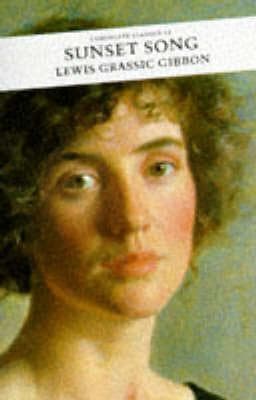
Lewis Grassic Gibbon (1982)
Genre
Historical Fiction
Reading Time
360 min
Key Themes
See below
Sign in to track this book
In early 20th-century Aberdeenshire, a young woman's love for her ancestral land conflicts with the demands of farming and the devastation of World War I, shaping her resilience through loss.
The story introduces Chris Guthrie as a young girl growing up on a farm in Kinraddie, a fictional parish in Aberdeenshire, Scotland. Her childhood is marked by the severe discipline of her father, John Guthrie, a devout but cruel man, and the quiet suffering of her mother, Jean. Chris, along with her siblings Will and Murdo, experiences the constant hard work of farm life. She attends school, where her intelligence and love for learning are clear, but she is always pulled between her desire for education and the inescapable demands of the land. Her early experiences shape her deep connection to the Scottish soil and the challenging, yet beautiful, Mearns landscape.
The harsh realities of farm life and John Guthrie's tyranny affect the family. Chris's mother, Jean, driven to despair by her husband's cruelty and constant pregnancies, poisons herself and her twin babies. This shocking event deeply impacts Chris. Soon after, her brother Will, unable to endure their father's harshness, leaves for Argentina, never to return. Murdo also departs for Glasgow. Chris is left alone with her increasingly frail and isolated father. This period forces Chris to take on greater responsibilities, managing the household and farm work, further strengthening her practical skills and resilience.
John Guthrie suffers a debilitating stroke, leaving him helpless. Chris, despite years of abuse, nurses him out of duty and a complex mix of pity and resentment. His illness and subsequent death leave her as the sole owner and manager of Blawearie farm. This inheritance is a major moment for Chris; it is both a burden and an opportunity. She is now responsible for the land she loves, but also for the demanding life it entails. This period solidifies her independence and her deep connection to the Mearns, as she decides to stay and work the land herself.
After her father's death, Chris meets Ewan Tavendale, a kind, strong, and handsome young farmer from a neighboring croft. Their relationship grows, marked by mutual respect, shared love for the land, and growing affection. Ewan embodies a gentler masculinity than her father, and Chris finds a partner who understands her deep connection to the soil. They marry, and Chris moves to Ewan's smaller croft, Blawearie, as his wife. Their early married life is filled with happiness, hard work, and the promise of a future together, deeply rooted in the agricultural community of Kinraddie.
Chris and Ewan build a loving and productive life together on the farm. They work side-by-side, tending to the land and their animals, experiencing nature's rhythms and the satisfaction of their labor. Their bond deepens, and Chris becomes pregnant. However, World War I begins to spread across Europe, slowly reaching the quiet, isolated community of Kinraddie. News of the war reaches them through newspapers and local gossip, initially seeming distant, but gradually becoming a more pressing concern for the young men of the parish, including Ewan.
Despite Chris's initial reluctance and fears, Ewan feels a strong sense of duty and is eventually persuaded to enlist in the army. His departure is painful for Chris, who is now left to manage the farm alone with their young son, Ewan junior. The war, however, profoundly changes Ewan. He returns home on leave a different man: hardened, cynical, and brutalized by his experiences in the trenches. The gentle, loving husband Chris knew is replaced by an aggressive, almost cruel stranger, a transformation that deeply wounds and alienates Chris.
Ewan's changed nature leads to increasing conflict and emotional distance between him and Chris. He struggles to reintegrate into civilian life and the peaceful rhythm of the farm. Eventually, unable to cope with the mental scars of war, Ewan deserts the army, seeing himself as a conscientious objector to further fighting. He is hunted by military police. Tragically, Ewan is killed while resisting arrest, shot down in a confrontation. Chris is left a widow, devastated not only by his death but by the loss of the man he once was, and the tragic circumstances of his end.
Following Ewan's death, Chris faces the immense challenge of raising her young son and managing the farm alone. She endures a period of deep grief and desolation, feeling the weight of her losses. However, the strong sense of community in Kinraddie provides her with much-needed support. Her neighbors, particularly the minister, Mr. Gibbon, and the older women of the parish, offer practical help and emotional comfort. This period shows Chris's resilience and the lasting strength of the rural community, which supports its members in hardship.
After some time, Chris meets Robert Duncan, a thoughtful and kind local farmer. Robert is a widower himself and understands Chris's grief and her deep connection to the land. Their relationship develops slowly, built on shared experiences, mutual respect, and quiet companionship. Robert represents a potential for new happiness and stability in Chris's life, a chance to rebuild after her profound losses. He is a gentle and understanding presence, contrasting sharply with the memory of Ewan's war-hardened persona.
Chris eventually accepts Robert Duncan's proposal of marriage. This decision is not made lightly; she struggles with her lingering love for Ewan and her strong independence. However, she recognizes Robert's steady nature and his genuine affection for her and her son. Their marriage signifies Chris's acceptance of life's continuing journey and her willingness to embrace new beginnings while still honoring her past. It represents a promise of stability and shared life on the land, a return to the rhythms of farm life that she holds so dear.
As the story concludes, the community of Kinraddie faces significant changes. The minister, Mr. Gibbon, is leaving the parish, symbolizing the passing of an old order and the erosion of traditional rural life. The war has left its mark, and modernization is slowly encroaching. Chris, now married to Robert, shows resilience and continuity. She looks to the future with hope and a deep understanding of life's cyclical nature, of death and rebirth on the land. She remains rooted in Kinraddie, embodying the Mearns' spirit.
The Protagonist
Chris evolves from a young girl enduring a harsh childhood to an independent woman who finds love and loss, ultimately becoming a symbol of endurance and the enduring spirit of the land.
The Antagonist/Supporting
He remains largely static in his cruelty, though his eventual stroke and helplessness reveal a vulnerability that elicits complex emotions from Chris.
The Supporting
Her arc is one of decline and tragic end, serving as a stark warning and a catalyst for Chris's own resilience.
The Supporting
Ewan's arc is tragic, from a loving husband to a war-damaged, alienated individual, culminating in his death.
The Supporting
Robert offers stability and a future, helping Chris to move forward without erasing her past.
The Supporting
Mr. Gibbon serves as a consistent moral compass and observer, his departure signifying the end of an era.
The Supporting/Mentioned
Will's arc is one of escape and disappearance, symbolizing the allure of leaving the Mearns.
The Supporting
Long Rob remains a consistent, supportive presence, representing the enduring spirit of the community.
The land itself is almost a character in *Sunset Song*, a constant presence that shapes the lives, identities, and destinies of the Kinraddie folk. Chris's deep connection to the Mearns soil is central to her being, providing both hardship and profound spiritual nourishment. It represents continuity and resilience against the fleeting nature of human lives and historical events like war. Scenes of Chris working the fields, feeling the soil, and observing the changing seasons vividly illustrate this bond, showing how the land sustains and grounds her through all her losses.
“And the land was the land, it was still and forever, it would bide when the folk were gone.”
The novel explores the tension between ancient, unchanging rural Scotland and encroaching modernity, symbolized by education, emigration, and especially World War I. The harsh, patriarchal traditions of John Guthrie's generation clash with Chris's desire for learning and a more equitable life. The war shatters Kinraddie's isolation, bringing external brutality and changing the men who return. The minister, Mr. Gibbon, leaving at the end, signifies the fading of old community structures, leaving Chris to navigate a changing world while holding onto the essence of the old.
“She was Chris, Chrissie Jean, and the land was in her and she was in the land.”
The lives of women in Kinraddie are depicted with realism, highlighting their resilience in the face of hardship and patriarchal oppression. Jean Guthrie's tragic fate shows the devastating impact of male cruelty and societal expectations on women. In contrast, Chris embodies women's strength and endurance, not only physically in working the land but emotionally in surviving profound loss and rebuilding her life. The novel subtly critiques the limited roles and severe expectations placed upon women, while celebrating their unwavering spirit and their vital role in sustaining families and communities.
“It was her body and her life and she knew it, and she'd make it serve her, not some man.”
World War I is a brutal force that shatters Kinraddie's peaceful isolation and irrevocably changes its people. The war transforms Ewan Tavendale from a loving husband into a traumatized, aggressive stranger, leading to his tragic death. This theme explores not just the physical casualties of war, but the profound psychological and emotional damage inflicted upon soldiers and their families. It highlights how war can corrupt even the gentlest souls and disrupt life's fundamental rhythms, forcing communities to confront external horrors they previously only heard about.
“And the War came to Kinraddie, and the young men went, and they came back changed, or they didn't come back at all.”
Chris's struggle to define herself is a core theme. She grapples with her dual identity as 'Chris-the-woman' (her educated, introspective self) and 'Chris-the-peasant' (her practical, earth-bound self), reflecting her connection to both intellectual pursuits and the physical demands of farm life. Her journey is also about finding where she belongs – whether in the wider world or rooted in the Mearns. Despite opportunities to leave, her deep love for the land and her community ultimately anchors her to Kinraddie, making her a symbol of the enduring Scottish spirit and the profound sense of belonging to a specific place.
“It was the land that held her, the land that gave her life and took it back again.”
Chris's internal monologue alongside a communal voice.
The novel employs a unique narrative structure where Chris's deeply personal, introspective voice (often in Scots dialect) alternates with a more detached, communal, and historical narrative voice that describes the Mearns and its people. This device allows for both intimate psychological insight into Chris's mind and a broader, almost anthropological perspective on the community and its traditions. It highlights Chris's internal conflict between her individual desires and the collective expectations of her environment, enriching the thematic exploration of identity and belonging.
The Mearns landscape as a living entity.
The land in 'Sunset Song' is more than just a setting; it functions as a powerful symbol and almost a character in itself. It represents continuity, resilience, and the eternal cycle of life and death, contrasting with the transient nature of human suffering and historical events. The changing seasons, the toil of farming, and the physical characteristics of the Mearns reflect Chris's emotional states and the broader themes of the novel. It is the source of both hardship and profound spiritual connection, anchoring Chris and the community.
Nature reflecting future events and emotional states.
The novel frequently uses descriptions of the natural world and the changing seasons to subtly foreshadow events or reflect the emotional atmosphere. For instance, harsh winters can symbolize periods of suffering or isolation, while the promise of spring offers hope. The wildness of the landscape often mirrors the untamed aspects of human nature or the impending chaos of war. This device deepens the connection between Chris's inner world and her external environment, reinforcing the theme of the land's influence on human lives.
Use of Scots dialect to ground the narrative in its setting.
Lewis Grassic Gibbon extensively uses the rich Scots dialect, particularly in Chris's internal thoughts and the dialogue of the Kinraddie folk. This linguistic choice is a crucial plot device that immerses the reader in the specific cultural and geographical context of the Mearns. It authenticates the characters, reflects their close connection to the land, and emphasizes the unique identity of the community. The shift between dialect and more formal English in the narrative voice also underscores Chris's dual nature and her bridging of different worlds.
“Life goes on, whatever you do, whatever you are.”
— Chris reflects on the continuity of life amidst personal tragedy.
“She was Chris Caledonia, and she was the land, and she was the folk that had toiled on it.”
— A description of Chris's deep connection to the land and her heritage.
“There was a God, she knew, and a Heaven, and a Hell, but she had never seen them.”
— Chris's pragmatic view on religion and the unseen.
“And the folk that were left, they were like the stones of the field, they were hard and enduring.”
— A reflection on the enduring nature of the Scottish farming community.
“The old ways were dying, but the land was still there, waiting.”
— Chris observes the changing times and the unchanging land.
“You couldn't escape the land, not truly, not if you were born of it.”
— Chris's realization about the inescapable bond with her native soil.
“It was a hard life, but it was a good life, if you had the heart for it.”
— A summary of the challenges and rewards of agricultural life.
“And the wind sang a song, a song of the old days, and the folk that were gone.”
— The wind as a metaphor for memory and the past.
“She had seen sorrow, and she had seen joy, and she had seen the world turn.”
— Chris's accumulated wisdom from experiencing life's cycles.
“The hills were always there, silent witnesses to the coming and going of men.”
— The unchanging landscape observing human transience.
“You could never truly know a man, not even if you loved him.”
— Chris's insight into the complexities and unknowability of human relationships.
“The English tongue was a foreign thing, though she spoke it well enough.”
— Chris's internal reflection on the distinction between her native Scots and English.
“And the sun set, as it always did, over the fields of Kinraddie.”
— A recurring image symbolizing the end of a day, and perhaps an era, in Kinraddie.
Ready to see how well you understood this book? Take our interactive quiz with 10 questions.

Biography coming soon.







