“The past is never dead. It's not even past.”
— Reflecting on the town's history and the recurring evil.

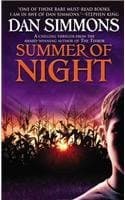
Dan Simmons (1991)
Genre
Thriller / Fantasy / Mystery
Reading Time
1500 min
Key Themes
See below
Sign in to track this book
In the summer of 1960, five boys in Elm Haven, Illinois, discover a history of missing children and an old evil threatening their town, forcing them to face horrors beyond childhood fears.
The summer of 1960 begins in Elm Haven, Illinois, for a group of twelve-year-old boys: Dale Stewart, Mike O'Rourke, Jim Harlen, Harlen 'Hoagie' Hoaglund, and Kevin Riley. On the last day of school, a strange atmosphere is in town. The boys see unsettling signs, including a rendering-plant truck that seems to follow them and an old man, Mr. Karmen, who gives them a warning. Later, their classmate, Tubby Cooke, vanishes after a bicycle race. His disappearance darkens the start of their summer vacation, suggesting an evil in their small town. The boys are unnerved, but adults initially think he ran away.
The boys' curiosity leads them to explore the abandoned Old Central School, a forbidden place. Inside, they find evidence of its past, including old textbooks, strange symbols, and a sense of dread. Jim Harlen, a reader, finds local legends and newspaper clippings detailing other child disappearances over the decades, all linked to the school. These stories, with the school's atmosphere, convince the boys that Tubby's disappearance is part of a recurring pattern connected to the school. They begin to suspect a supernatural force.
As summer continues, the boys encounter more unsettling events. They find unexplained, perfectly round holes appearing in the ground around Elm Haven, often with an oily residue. These holes seem connected to the school. More disturbing, they hear the bell of the abandoned Old Central School ringing at odd times, a sound that frightens them. Kevin Riley, the most sensitive of the group, starts having disturbing nightmares and visions, sensing the presence growing stronger. The boys realize the school is a conduit for something old and evil.
A strange, silent man in a World War I uniform, called 'the Soldier,' is seen around town, watching the boys and the school. His presence is ominous. The boys, scared but united, decide they must act. Inspired by adventure stories, they make a blood pact in the woods, vowing to confront the evil in Elm Haven and protect their town. This pact strengthens their bond and their commitment to face whatever horror awaits them, even if it means risking their lives. They feel a responsibility that no adult seems to take on.
The entity within the Old Central School becomes more active and aggressive. During a visit to the school, the boys are attacked. Hoagie Hoaglund is almost pulled into one of the mysterious holes that appear inside the school, saved by his friends. The school's windows shatter, doors slam, and an oppressive force tries to trap them. This encounter confirms their fears: the school is alive with a predatory evil, and it is hunting them. The boys realize the danger is greater than they first thought.
Through research, shared experiences, and Kevin's psychic impressions, the boys learn the truth. The Old Central School is not just haunted; it is a living entity, a 'Man' or 'Boiler Man' in its basement boiler room. This entity, an ancient force, feeds on the souls and fears of children, using the school as its physical form. The bell's chimes are its calls, the holes its pathways, and the boiler its heart, needing to be fed with the life force of the young. They understand Tubby Cooke was its latest victim.
As summer ends, the entity's power increases, and the boys know they must act. They plan their final assault on the Old Central School, gathering makeshift weapons and preparing themselves. During this time, they meet the Soldier again, and his tragic story is revealed. He is not a threat but a tormented soul, a former victim or guardian trying to protect the children, or perhaps a manifestation of a past attempt to fight the evil. In a moment, the Soldier sacrifices himself, giving the boys time and weakening the entity through his act, giving them a chance to strike at its core.
Armed with their resolve and knowledge of the entity's weaknesses, the boys go into the basement of the Old Central School. The boiler room is a hellish place, filled with heat, steam, and the presence of the Boiler Man. They confront the grotesque, mechanical-organic entity that is the 'Man,' a creature of pipes, rust, and energy. Each boy uses his strengths – Dale's leadership, Mike's courage, Jim's intellect, Hoagie's resourcefulness, and Kevin's psychic sensitivity – to fight the creature, enduring its psychic attacks and physical forms.
In a difficult battle, the boys exploit the Boiler Man's weaknesses. Jim, remembering details about its nature, guides them. Hoagie, with his practical skills, helps damage its physical parts. Mike and Dale confront its forms. Kevin, channeling his psychic energy, launches a mental attack. Through their combined efforts and courage, they critically wound and destroy the Boiler Man, causing the entity to collapse and the school to crumble around them. The evil that plagued Elm Haven for generations is finally vanquished.
The boys escape the collapsing Old Central School, emerging into the fading summer light, exhausted but victorious. The school burns, taking the last of the evil with it. Tubby Cooke's body is found, confirming his fate, but the town is free. Summer ends, and the boys, though they try to return to normal, are forever changed by their ordeal. Their bond is strong, forged in shared terror and triumph. They carry the memories and lessons of that summer, knowing they faced an evil and survived, facing a changed future.
The Protagonist
Dale transforms from a somewhat hesitant boy into a decisive and courageous leader, accepting the heavy burden of responsibility.
The Protagonist
Mike learns to channel his impulsiveness into focused courage, becoming a vital protector for the group.
The Protagonist
Jim's intellectual curiosity evolves into vital strategic thinking, proving knowledge is a powerful weapon against evil.
The Protagonist
Hoagie's practical skills become essential tools in fighting the supernatural, highlighting the importance of everyday ingenuity.
The Protagonist
Kevin learns to harness his psychic sensitivity, transforming it from a source of fear into a powerful weapon against the evil.
The Antagonist
The school transforms from a forbidden, spooky place into an active, malevolent antagonist that is ultimately destroyed.
The Supporting
The Soldier's arc moves from mysterious observer to a tragic figure who makes a pivotal sacrifice for the boys.
The Mentioned
Tubby's arc is tragic; he is the initial victim whose disappearance propels the protagonists into action.
The Supporting
Mr. Karmen serves as an early harbinger of the impending doom, his warnings growing in significance as the plot unfolds.
The summer of 1960 marks the end of childhood for the five boys. The horrors they face force them to confront death, evil, and fear, removing their innocence. Their games become deadly, their fears real, and the summer turns into a battle for survival. This theme is clear in their blood pact, their shift from play to grim determination, and the lasting changes in their personalities by the book's end. They emerge from the ordeal as different, older, and forever marked individuals, having crossed a threshold no child should.
“''Childhood was a land of sun and shadow, of innocence and fear. But for the boys of Elm Haven, that summer, the shadows grew long and cold, and innocence was burned away in the furnace of the Old Central School.''”
The novel explores evil as an old, pervasive, and corrupting force. The Boiler Man is an entity that feeds on fear and life, appearing through the Old Central School. It is an evil that preys on the vulnerable, especially children, and has a cyclical nature, returning over generations. The novel looks at the idea that evil can hide in plain sight, within familiar structures, and that its horror is its ability to corrupt and destroy innocence. The entity's mechanical-organic form suggests a perversion of life.
“''It wasn't a ghost. It wasn't just a monster. It was the school itself, the very stone and mortar, alive with a hunger as old as the earth.''”
The story shows the power of friendship and loyalty. The five boys, each with distinct personalities and strengths, form a strong bond forged in shared fear and courage. They rely on each other's talents – Dale's leadership, Mike's bravery, Jim's intellect, Hoagie's practicality, and Kevin's sensitivity – to survive and defeat the evil. Their blood pact symbolizes their commitment. This theme shows that collective strength, trust, and support are essential in overcoming challenges, especially when adults fail to see or act.
“''They were just five boys, but together, they were a force, a shield, a weapon against the ancient darkness.''”
A theme is the inability of adults to see and confront the evil in Elm Haven. Parents and other adults are mostly unaware, dismissive, or paralyzed by their fears and routines, leaving the children to face the terror alone. This makes the boys take on adult responsibilities, becoming the only ones who can save their town. This theme highlights the children's unique perspective and their courage, contrasting it with the often-blind or complacent adult world, making their heroism more meaningful.
“''The adults saw only what they wanted to see, or what they were capable of seeing. It was up to the children to see the monsters in the dark.''”
The novel explores how the past, especially traumatic events, continues to influence the present. The evil in the Old Central School is old, with a history of disappearances going back decades. Jim's research into old newspaper clippings and local legends reveals this cyclical nature of the evil. The boys' experiences become lasting memories that will shape their lives forever, showing how certain events from the past, especially profound trauma, are never truly forgotten but become part of one's identity and the fabric of a place.
“''Some things don't just happen and then go away. Some things stay, buried deep, waiting for the right moment to come back.''”
The central symbolic and literal antagonist of the story.
The Old Central School acts as the primary plot device, serving as both the physical setting for much of the horror and the literal manifestation of the antagonist. It is where the boys discover clues, face direct threats, and ultimately confront the Boiler Man. The school is imbued with a malevolent sentience, its decaying structure reflecting the corrupting evil within. Its bell tolls ominously, signaling the entity's activity, and its very architecture becomes a character in itself, trapping and luring its victims. It serves as a focal point for all the sinister events.
A ritualistic vow solidifying the boys' commitment and bond.
The blood pact is a classic narrative device used to symbolize the unbreakable bond and unwavering commitment among the five boys. By cutting their palms and mingling their blood, they formally swear an oath to face the evil together, no matter the danger. This ritual elevates their friendship from mere childhood camaraderie to a sacred, life-or-death alliance. It provides a powerful moment of unity and determination, reinforcing their collective agency and courage in the face of adult ignorance and overwhelming dread, driving them towards their ultimate confrontation.
A narrative tool for foreshadowing and revealing the nature of the evil.
Kevin Riley's burgeoning psychic abilities, manifesting as vivid dreams and waking visions, serve as a crucial plot device for foreshadowing events and revealing the true nature of the Boiler Man and the Old Central School. His terrifying impressions provide the boys (and the reader) with fragmented but vital information about the entity's history, its hunger, and its weaknesses. This device allows the supernatural elements to be gradually unveiled, building suspense and offering insights that rational investigation alone could not provide, making Kevin indispensable to the group's understanding of their foe.
A recurring, unsettling symbol of pervasive, hidden horror.
The rendering plant truck is a recurring, unsettling symbol that appears at key moments, often preceding or coinciding with sinister events. It represents the pervasive, hidden horror lurking beneath the surface of the seemingly normal town. Its foul smell and association with processing discarded animal parts subtly link to the gruesome nature of the evil consuming children. It's a mundane object imbued with an ominous quality, reminding the boys that evil isn't always confined to a single location but can manifest in unexpected, everyday forms, contributing to the atmosphere of dread.
The personification of the ancient evil, a grotesque fusion of mechanical and organic horror.
The 'Boiler Man' is the personification of the ancient evil entity residing in the Old Central School's basement. This grotesque, mechanical-organic creature, a fusion of pipes, rust, and malevolent consciousness, is a powerful and terrifying plot device. It gives a physical form to the abstract evil, making it tangible and therefore conquerable, while also representing a perversion of industrial progress and natural life. Its unique nature requires the boys to combine their different strengths to defeat it, making the final confrontation a truly epic battle against a uniquely conceived antagonist.
“The past is never dead. It's not even past.”
— Reflecting on the town's history and the recurring evil.
“We're all just kids playing in the dark, trying to find the light switch.”
— Mike O'Rourke contemplating their fight against the ancient evil.
“Sometimes the monsters are real, and they live right next door.”
— A realization about the seemingly ordinary townspeople hiding dark secrets.
“Memory is a tricky thing. It can save you or it can haunt you forever.”
— Dale Stewart reflecting on childhood memories and trauma.
“The summer sun can hide the darkest shadows.”
— Describing the contrast between idyllic summer days and lurking horror.
“Fear is a weapon, and they know how to use it.”
— The children realizing how the ancient entity manipulates their fears.
“In every small town, there are secrets buried deeper than the dead.”
— Hinting at the hidden history and mysteries of Elm Haven.
“Friendship is the only armor we have against the night.”
— The bond between the group of kids as they face supernatural threats.
“The bell tolls for those who listen, and for those who don't.”
— Referencing the ominous school bell that signals danger.
“Childhood ends when you see the world for what it really is.”
— The loss of innocence as the children confront evil.
“Darkness doesn't just live in the night; it grows in the hearts of men.”
— A philosophical observation about human nature and evil.
“We fight not because we are brave, but because we have no choice.”
— The children's determination to survive and protect each other.
“The old stories are true, and they're hungry for new ones.”
— The ancient evil feeding on the fears and lives of the townspeople.
“In the heart of summer, winter never really leaves.”
— Symbolizing the persistent coldness of evil amidst warmth.
Ready to see how well you understood this book? Take our interactive quiz with 10 questions.

Dan Simmons is an American science fiction and horror writer. He is the author of the Hyperion Cantos and the Ilium/Olympos cycles, among other works which span the science fiction, horror, and fantasy genres, sometimes within a single novel. Simmons's genre-intermingling Song of Kali (1985) won the World Fantasy Award. He also writes mysteries and thrillers, some of which feature the continuing character Joe Kurtz.







