BookBrief
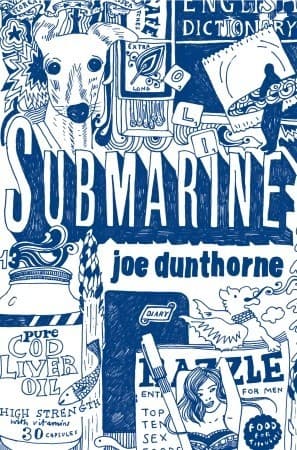
Submarine cover
Archivist's Choice

Submarine

Joe Dunthorne (2008)

Genre

Young Adult / Romance

Reading Time

420 min

Key Themes

See below

Track Your Reading

Sign in to track this book

Armed with a thesaurus and a vivid imagination, precocious Oliver Tate navigates the treacherous, hormone-fueled waters of adolescence, attempting to salvage his parents' crumbling marriage while simultaneously pursuing the enigmatic Jordana Bevan and losing his own virginity.

Synopsis

Oliver Tate, an eccentric and precocious fifteen-year-old in Swansea, Wales, navigates adolescence while attempting to understand and manipulate the adult world. He has two missions: saving his parents' struggling marriage and winning the affection of his equally quirky classmate, Jordana Bevan. Oliver watches his parents, especially his father's quiet depression, and creates elaborate plans based on pop psychology to reignite their romance. These plans often lead to disastrous and comedic results. At the same time, he pursues an awkward, intense relationship with Jordana, grappling with first love and intimacy. His efforts to fix his family are complicated by his mother's ex-lover, a surfing instructor, who threatens to pull his parents further apart. As Oliver's plans unravel, leading to confrontations and revelations about his father's true struggles and Jordana's own vulnerabilities, he must confront the limits of his understanding and the messy realities of human emotion. Through these experiences, Oliver gradually sheds his detached, analytical persona, becoming more mature and empathetic. This leads to a tentative reconciliation with his parents and an uncertain, but hopeful, future with Jordana.
Reading time
420 min
Difficulty
Medium
Pacing
Moderate
Mood
Quirky, Humorous, Introspective, Melancholy, Romantic
✓ Read this if...
You enjoy coming-of-age stories with a unique, dryly humorous, and introspective teenage narrator.
✗ Skip this if...
You prefer fast-paced plots or dislike quirky, self-absorbed protagonists.

Plot Summary

The Aspiring Social Scientist and His Parents' Plight

Oliver Tate, a precocious and introspective fifteen-year-old in Swansea, Wales, introduces himself as a keen observer of human behavior, particularly his parents. He believes his parents, Jill and Lloyd Tate, are having marital difficulties, an assessment reinforced by his mother's increasing emotional distance and his father's quiet, melancholic demeanor. Oliver sees it as his duty to understand and potentially fix their situation. He begins meticulously documenting their interactions, searching for clues to their unhappiness, and formulating strategies to rekindle their romance. His initial efforts are clumsy and based on pop-psychology theories, showing his naivete despite his intellectual aspirations.

Jordana Bevan: An Object of Obsession

Concurrently with his parental observations, Oliver becomes intensely infatuated with Jordana Bevan, a girl at his school known for her distinctive style and enigmatic personality. He is drawn to her unconventional nature and her habit of carrying a plastic bag containing her own vomit, a detail he finds both disturbing and fascinating. Oliver attempts to initiate a relationship with Jordana, using a series of awkward and often ill-conceived strategies to capture her attention. Their interactions are a mix of juvenile taunts and nascent romantic tension, with Oliver's internal monologues revealing his deep insecurity and inexperience in matters of the heart.

The Surfing Instructor and the Marital Threat

Oliver's investigation into his parents' marriage takes a concerning turn with the reappearance of Graham Purvis, a New Age surfing instructor and an old flame of his mother, Jill. Graham's presence immediately unsettles Oliver, who sees him as a direct threat to his parents' relationship. Jill begins spending more time with Graham, taking surfing lessons and engaging in activities that exclude Lloyd. Oliver intensifies his spying, convinced that Graham is seducing his mother and will ultimately break up his family. He views Graham as a rival and a symbol of the external forces threatening his carefully constructed world.

A Developing Relationship with Jordana

Despite the anxieties surrounding his parents, Oliver's relationship with Jordana slowly progresses. Their dates are unconventional, involving activities like watching derelict buildings burn or exploring the local area. Jordana reveals more about her own troubled family life, including her mother's illness and her brother's difficulties, which creates a bond of shared vulnerability between them. Oliver is captivated by her honesty and her unique perspective, even as he struggles to navigate the physical and emotional complexities of their burgeoning romance. He finds himself increasingly drawn into her world, sometimes neglecting his 'mission' to save his parents.

Oliver's Misguided Parental Interventions

Driven by his intense desire to prevent his parents' divorce, Oliver devises a series of elaborate and often misguided schemes. He attempts to make his mother jealous by fabricating a secret admirer for his father, and he tries to rekindle their physical intimacy by leaving suggestive items around the house. These interventions are invariably clumsy and ineffective, often leading to awkward encounters or further distancing his parents. His attempts highlight his youthful misunderstanding of adult relationships and the complex emotional landscape of marriage, showing that his 'social scientist' approach is far from mature.

The Truth About His Father's Depression

Oliver eventually learns that his father, Lloyd, is suffering from severe depression. This revelation shifts Oliver's perspective, moving beyond his initial focus on his mother's perceived infidelity. He observes his father's withdrawal, his lack of enthusiasm, and his quiet despair. This understanding adds a new layer of complexity to his parents' marital issues, as he realizes that the problem is not solely about his mother and Graham, but also about his father's internal struggles. Oliver feels a renewed sense of responsibility, though he remains unsure how to effectively help his father.

A Crisis Point: Jordana's Revelation

Jordana, in a moment of vulnerability, reveals a deeply personal and painful secret to Oliver: she has a skin condition that makes her feel insecure. She shows him a scar on her leg, challenging his idealized perception of her and testing the depth of his affection. Oliver, initially taken aback, struggles to respond appropriately, revealing his own immaturity and discomfort with such raw honesty. This moment is a significant turning point in their relationship, forcing Oliver to confront the realities of intimacy and acceptance beyond superficial attraction. His reaction, though imperfect, shows a burgeoning capacity for empathy.

The Confrontation and Aftermath

Oliver, convinced that Graham Purvis is the primary cause of his parents' marital woes, confronts him directly. The confrontation is awkward and ineffective, further demonstrating Oliver's inability to control adult situations. Following this, his relationship with Jordana experiences a significant strain, partly due to his preoccupation with his parents and partly due to their differing emotional needs. They have a difficult period, leading to a temporary breakup, which leaves Oliver heartbroken and forces him to confront the pain of loss and the fragility of relationships, both romantic and familial.

Oliver's Growing Maturity

Through the trials of his parents' struggles, his relationship with Jordana, and his own internal conflicts, Oliver gradually begins to mature. He starts to realize that he cannot control the actions or feelings of others, especially adults. His 'social scientist' approach gives way to a more nuanced understanding of human emotions and the messy realities of life. He learns that love, relationships, and even sadness are far more complex than his earlier theories suggested. This period marks a shift from his self-centered observations to a more empathetic and less judgmental perspective.

Reconciliation and Uncertain Futures

Oliver and Jordana eventually reconcile, their bond strengthened by their shared experiences and vulnerabilities. Their renewed relationship is more mature, built on a deeper understanding and acceptance of each other's flaws. While his parents' marriage remains fragile and their future uncertain, Oliver accepts that he cannot 'fix' them. He comes to terms with the idea that their happiness is not his responsibility. The novel concludes with Oliver having navigated the tumultuous waters of adolescence, emerging with a greater sense of self-awareness and a more realistic view of the world, ready to face the complexities ahead.

Principal Figures

Oliver Tate

The Protagonist

Oliver evolves from a detached, analytical observer to a more empathetic and emotionally mature individual, learning to accept the complexities of life he cannot control.

Jordana Bevan

The Love Interest

Jordana maintains her unique identity while allowing herself to be vulnerable with Oliver, fostering a more authentic connection.

Jill Tate

The Supporting

Jill explores personal desires and a renewed sense of self, complicating her family dynamics.

Lloyd Tate

The Supporting

Lloyd's struggle with depression is gradually revealed, becoming a focal point of Oliver's empathy.

Graham Purvis

The Antagonist/Supporting

Graham's presence instigates conflict and forces the Tate family to confront underlying issues.

Chips

The Supporting

Chips remains a stable, if sometimes misguided, friend to Oliver.

Jordana's Mother

The Mentioned

Not applicable, as she is a background character.

Jordana's Brother

The Mentioned

Not applicable, as he is a background character.

Themes & Insights

The Transition from Innocence to Experience

The novel charts Oliver's journey from childhood to the realities of adolescence and adulthood. Initially, Oliver views the world through a naive, analytical lens, attempting to categorize and control emotions and relationships as if they were scientific experiments. His 'mission' to save his parents' marriage and his pursuit of Jordana are driven by a simplistic understanding of love and happiness. As the story progresses, he is confronted with the messiness of his parents' marital issues, his father's depression, and the raw vulnerability of Jordana. These experiences force him to shed his innocence and embrace the often painful, unpredictable nature of human emotion and connection. He learns that life cannot be neatly theorized or controlled, leading to a more mature, albeit less certain, perspective.

“I suppose you could say I’m a social scientist. I observe people. I learn from them. I try to improve them.”

Oliver Tate

The Complexity of Love and Relationships

A central theme is the multifaceted nature of love, explored through both Oliver's romance with Jordana and his parents' struggling marriage. Oliver's initial understanding of love is superficial, focused on grand gestures and idealized notions. His relationship with Jordana forces him to confront the less glamorous aspects of intimacy, including vulnerability, insecurity, and the need for genuine empathy. Similarly, his parents' marriage, initially seen as a simple case of infidelity, is revealed to be far more intricate, involving his father's depression and his mother's search for personal fulfillment. The novel shows that love is not a fixed state but a dynamic, often challenging, process that requires understanding, compromise, and acceptance of imperfections.

“Love, it turns out, is not a science. It is not something you can control. It is a messy, unpredictable thing.”

Oliver Tate (internal monologue)

The Search for Identity and Self-Discovery

Both Oliver and his mother, Jill, are on parallel journeys of self-discovery. Oliver grapples with defining himself amidst his intellectual aspirations, his romantic desires, and his family's turmoil. He tries on different personas – the social scientist, the protective son, the cool boyfriend – as he attempts to find where he belongs. Jill, in her mid-life crisis, seeks to reclaim a sense of self and excitement that she feels has been lost in her marriage. Her pursuit of surfing and her connection with Graham Purvis are manifestations of her desire to rediscover her identity outside of her roles as wife and mother. The novel suggests that self-discovery is an ongoing process, often spurred by challenging circumstances and internal conflicts.

“I was trying to find out who I was. I was trying to find out who my parents were. It was all a bit confusing.”

Oliver Tate

Mental Health and Hidden Struggles

The theme of mental health is subtly yet powerfully explored through Lloyd Tate's depression. Initially, Oliver misinterprets his father's withdrawal, attributing it to marital disinterest. The gradual revelation of Lloyd's depression highlights how internal struggles can be hidden, even from those closest to us, and how they can impact family dynamics. The novel sheds light on the difficulty of recognizing and addressing mental health issues, especially from a teenager's perspective. It emphasizes the importance of empathy and understanding when faced with the invisible battles others may be fighting.

“Sometimes I think my dad’s just sad. Not sad because of Mum, just… sad.”

Oliver Tate

Communication and Misunderstanding

A pervasive theme is the breakdown and struggle for effective communication within the Tate family. Oliver, despite his observational skills, frequently misinterprets his parents' actions and motivations due to a lack of open dialogue. His parents, in turn, struggle to communicate their feelings to each other and to their son, leading to silent resentments and escalating misunderstandings. Oliver's attempts to 'fix' things are often based on flawed assumptions born from this lack of communication. The novel illustrates how unspoken anxieties and unaddressed issues can fester and create deeper rifts within relationships, emphasizing the critical role of honest and open dialogue.

“It’s amazing how much you can miss when you’re not really listening.”

Oliver Tate

Plot Devices & Literary Techniques

First-Person Narrative (Oliver's Voice)

The entire story is filtered through the unique, often unreliable, perspective of Oliver Tate.

The novel is told entirely from Oliver Tate's first-person perspective, which is crucial to its tone and humor. Oliver's precocious, analytical, and frequently naive voice shapes every event, allowing the reader direct access to his elaborate theories, insecurities, and misinterpretations. This subjective lens creates dramatic irony, as the reader often understands more about the adult world than Oliver does. It also makes Oliver a highly engaging and relatable protagonist, as his internal monologues are both insightful and comically flawed, capturing the essence of an adolescent mind trying to make sense of a confusing world.

Dramatic Irony

The reader is often aware of truths that Oliver, due to his youth and limited perspective, fails to grasp.

Dramatic irony is a key comedic and narrative device. Oliver's detailed observations and elaborate theories about his parents' marriage and Jordana's behavior are often hilariously off the mark, or only partially correct. The reader, possessing a more mature understanding of adult relationships and human psychology, can see the true motivations and complexities that Oliver misses. For example, Oliver's belief that Graham Purvis is a nefarious seducer, or his initial inability to recognize his father's depression, creates a humorous tension and highlights Oliver's youthful naivete, while also foreshadowing later revelations.

Symbolism of Water/Submarine

Water and the 'submarine' metaphor represent isolation, emotional depths, and the unknown.

The recurring imagery of water, the sea, and the novel's title, 'Submarine,' serve as powerful symbols. The 'submarine' metaphor represents Oliver's internal world – his isolation, his deep dives into observation, and his feeling of being submerged in the confusing emotional depths of adolescence and his family's problems. The sea itself, particularly the Swansea coastline, symbolizes the vast, unpredictable, and sometimes dangerous 'murky waters' of life and relationships that Oliver is attempting to navigate. Surfing, as pursued by Jill and Graham, represents freedom and facing the unknown, contrasting with the often stifling atmosphere Oliver perceives at home.

Epistolary Elements (Oliver's 'Notes')

Oliver's meticulous documentation and theories, presented as internal notes, structure his observations.

Though not a fully epistolary novel, Oliver's habit of meticulously documenting his observations, theories, and 'missions' functions as an internal epistolary element. These 'notes' or analytical frameworks provide structure to his narrative and reveal his self-styled identity as a 'social scientist.' They highlight his attempt to bring order and logic to the chaotic emotional world around him. This device showcases his intellectual precocity while simultaneously underscoring his emotional immaturity, as his rigid categorizations often fail to capture the nuanced realities of human experience.

Critical analysis

Notable Quotes

I am not a fan of the phrase 'it is what it is'. It implies that we are helpless, that we should just accept things as they are. But I believe we have the power to change things, to make them better.

Oliver's internal monologue about his philosophy on life and change.

The greatest tragedy in life is not that we die, but that we fail to live.

Oliver reflecting on his desire to experience life fully, despite his anxieties.

Love is like a submarine. You can stay submerged for a long time, but eventually, you have to come up for air.

Oliver's metaphorical description of his relationship with Jordana.

I often wonder if people are just pretending to be normal, and if underneath it all, everyone is as strange and confused as I am.

Oliver's internal thoughts about social conformity and his own sense of otherness.

Sometimes I think my parents communicate exclusively through the medium of passive aggression.

Oliver's observation of his parents' strained relationship.

There are two types of people in this world: those who can extrapolate from incomplete data, and those who cannot.

Oliver's slightly arrogant, intellectual musing.

I was trying to find the precise moment when I stopped being a child and started being a person who could make terrible decisions.

Oliver reflecting on a pivotal moment of self-awareness and poor judgment.

It's hard to be a romantic when you're constantly aware of how ridiculous you look.

Oliver's struggle to balance his romantic ideals with his self-consciousness.

My parents' marriage was like a complex mathematical equation that no one could solve, least of all them.

Oliver's analytical and somewhat detached view of his parents' marital problems.

Perhaps the greatest trick the devil ever pulled was convincing the world that being normal was a good thing.

Oliver's cynical view on societal pressure to conform.

The only way to truly understand someone is to listen to what they don't say.

Oliver's insight into non-verbal communication and human connection.

I had a theory that if you walked around with enough confidence, people would eventually believe you were confident, even if you weren't.

Oliver's attempt at faking confidence as a social strategy.

Sometimes, the most profound things are said in the quietest voices.

Oliver's appreciation for subtle expressions and hidden meanings.

Being in love is like being a character in a very complicated, slightly embarrassing play.

Oliver's theatrical and self-deprecating view of being in a relationship.

Quiz

Test Your Knowledge

Ready to see how well you understood this book? Take our interactive quiz with 10 questions.

10
Questions
~5
Minutes
?
Best Score

Key Questions (FAQ)

Oliver Tate is primarily concerned with two major conflicts: his parents' failing marriage, which he attempts to 'fix' through amateur psychological interventions, and his burgeoning, often awkward, romantic relationship with his quirky classmate, Jordana Bevan. He views both as mysteries to be solved through his self-styled social scientific methods.

About the author