“It was the only way to be sure. Sure of what? Sure that I wouldn't hurt anyone. Sure that I wouldn't become a monster.”
— Fiona reflects on why she chose to undergo the 'Stung' procedure.

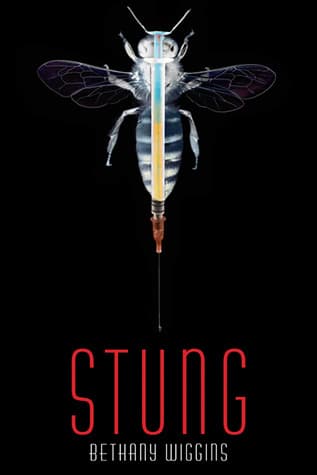
Bethany Wiggins (2013)
Genre
Fantasy / Science Fiction / Young Adult / Romance
Reading Time
300 min
Key Themes
See below
Sign in to track this book
Waking in a ruined world with a mysterious tattoo, Fiona must hide her branded hand and fight for survival among mutated beasts and a walled society that hunts her kind.
Fiona wakes up disoriented in her abandoned, decaying home, unable to remember how she got there or what happened. Her neighborhood is desolate and silent. She finds a strange, detailed tattoo on her right hand, a mark she doesn't remember getting. When she goes outside, she finds a world destroyed by an unknown event. Buildings are crumbling, and there's no sign of life. She soon learns that her world is divided: those with the tattoo, the 'Stung,' are mindless, violent creatures, while the 'unbranded' live in a protected city. Fiona is branded, yet she feels normal, a dangerous oddity.
Fiona quickly learns how harsh the outside world is, barely escaping attacks from feral Stung. She discovers that some branded people, like herself, have kept their minds. She meets a group of these thinking branded survivors, led by a young man named Bowen. Bowen explains that they are also Stung but haven't gone mad; they live in hiding, trying to understand their condition. Fiona is cautious but finds a temporary safe place and a sense of belonging among them, as they all face the threat of being hunted by the unbranded.
Needing answers and supplies, Fiona and Bowen decide to enter the heavily protected city of the unbranded. They use their knowledge of the old city's infrastructure to navigate the sewers and bypass the walls. Inside, Fiona is overwhelmed by the contrast between the city's orderly, sterile environment and the chaos outside. While watching the unbranded citizens, she sees a familiar face: her childhood friend, Trent. Trent is now a high-ranking guard, and seeing him rekindles Fiona's hope of understanding her past and the true nature of the 'sting'.
Fiona manages to contact Trent, who is shocked to see her alive and not feral despite her brand. Trent explains that the world was destroyed by a genetically engineered bee virus meant to cure diseases. Instead, it mutated and caused the 'sting' that turned people into mindless creatures. He reveals that Fiona's family was taken into the city before the full collapse, but her father, a scientist involved in the bee project, was imprisoned. Trent, now part of the city's leadership, is conflicted but agrees to help Fiona gather information, hinting at a larger conspiracy within the city's ruling council.
Believing her father holds important information about the sting and a possible cure, Fiona convinces Bowen and Trent to help her find him within the city's secure facilities. They navigate the city's complex security systems, using Trent's insider knowledge and Bowen's resourcefulness. Their search leads them to the city's research labs, where Fiona's father, Dr. Lane, worked. The journey is dangerous, as they must avoid patrols and the watchful eyes of the city's ruthless leader, Commander Vance, who strictly controls all information about the sting.
Fiona finally finds her father, Dr. Lane, held in a makeshift prison within the research facility. He is disheveled and full of guilt but alive. Dr. Lane confesses the full truth: the 'cure' was not a virus but a genetic modification delivered by bees meant to improve human immunity. However, a rogue group, led by Commander Vance, deliberately corrupted the project, turning the 'sting' into a weapon to reduce the population and create a new, controlled society. He reveals that Fiona herself was part of an early, experimental group of children who were stung, which explains why she kept her mind.
Dr. Lane explains the sting's mechanism. He says that most of the population received a version of the sting that caused rapid brain damage, turning them feral. However, a small percentage, like Fiona and Bowen's group, received a variant that, while branding them, also gave them increased resistance or even a mild, beneficial mutation, allowing them to keep their intelligence and even gain enhanced senses. This makes them valuable, not just dangerous, in Vance's eyes, and explains why Vance wants to capture them for further experiments. The tattoo itself is a biological marker of this genetic change.
Through her father's revelations and further investigations within the city, Fiona uncovers Commander Vance's chilling plan. Vance intentionally engineered the sting to create a 'purified' human race. He believes the feral Stung are a necessary culling, and the sentient branded, like Fiona, are the next stage of human evolution, a resource to be controlled and used. Vance plans to use the sentient branded to breed a new, 'superior' society, free from the perceived weaknesses of the old world. His vision is a totalitarian regime built on genetic manipulation and ruthless control.
Realizing the full extent of Vance's evil, Fiona, Bowen, and Trent form a fragile but determined alliance. Their immediate goal is to expose Vance's crimes to the unbranded citizens, who know little of the truth, and to find a way to escape the city with Dr. Lane. They gather evidence, including Dr. Lane's research notes and Vance's communications, to prove his malicious intent. The escape is carefully planned, involving navigating the city's advanced security, outsmarting Vance's loyal guards, and coordinating with Bowen's group outside the walls for a possible meeting.
The escape plan leads to a tense confrontation with Commander Vance. Fiona, using the gathered information, publicly confronts Vance, exposing his lies and the true nature of the sting to the unbranded citizens. A struggle follows, with Vance determined to capture Fiona and prevent his plan from falling apart. In the chaos, Fiona faces a difficult choice: destroy Vance and his research, potentially losing any hope of a cure, or try to save her father's work to help both branded and unbranded. The city descends into chaos as the truth is revealed, and the old order begins to crumble.
After the confrontation, Commander Vance's regime collapses. The unbranded citizens, horrified by the truth, turn against their former leader. Fiona, Bowen, Dr. Lane, and Trent lead the effort to bring order to the chaos. They establish a new community, integrating both sentient branded and unbranded individuals, working together to rebuild society. While a full cure for the feral Stung remains unknown, Dr. Lane dedicates himself to finding a solution. Fiona and Bowen, now closer than ever, commit to building a future where both groups can coexist, using their unique strengths in a world forever changed.
The Protagonist
Fiona transforms from a confused survivor into a courageous leader, accepting her identity and fighting for a better future for all.
The Supporting
Bowen learns to trust and cooperate with unbranded individuals, broadening his perspective on survival and community.
The Supporting
Trent moves from a position of passive obedience to actively aiding Fiona, choosing morality over perceived duty.
The Antagonist
Vance remains unyielding in his beliefs, ultimately leading to his downfall as his crimes are exposed.
The Supporting
Dr. Lane moves from a state of despair and imprisonment to actively working for redemption and a cure.
The Mentioned
They remain a constant threat, their condition unchanged throughout the narrative, symbolizing the ongoing challenge for a cure.
Fiona struggles with her identity as a branded person who keeps her mind, feeling caught between two worlds. She does not fit with the feral Stung, nor is she accepted by the unbranded. Her journey is about finding a place where she belongs, first with Bowen's group, and eventually in a new society that accepts both branded and unbranded. This theme appears when she first finds her tattoo and deals with its implications, and later when she chooses to advocate for coexistence despite the risks, as seen in her confrontation with Vance.
““I was Stung. Marked. But I wasn’t a monster. I was still me. And that was the most dangerous secret of all.””
The 'sting' comes from a scientific effort – a genetically engineered bee virus meant to cure diseases – that goes horribly wrong because of manipulation and a desire for power. Dr. Lane's initial good intentions are corrupted by Commander Vance, leading to a global disaster. This theme is explored through Dr. Lane's guilt and Vance's chilling reason for using the virus as a tool for social engineering. The story warns about the ethical concerns of genetic manipulation and playing God, shown by the destruction outside the city walls.
““We tried to fix humanity, to make it better. Instead, we unleashed its destruction.””
The world is sharply divided between the 'branded' and the 'unbranded,' leading to extreme prejudice and violence. The unbranded fear and hunt the branded, seeing them all as mindless monsters, even those who retain their humanity. This theme is central to Fiona's fight for survival and her search for acceptance. The fortified city walls physically show this division, and the unbranded citizens' lack of knowledge about the truth fuels their prejudice, as seen in their immediate hostility towards any perceived 'Stung' threat.
““They called us monsters, but they were the ones who built walls and hunted their own kind.””
Despite the dystopian setting and the overwhelming challenges, the story has a strong sense of hope for a better future. Fiona, Bowen, and their allies refuse to give up, actively working to expose the truth and build a more inclusive society. The creation of a new community that integrates both sentient branded and unbranded individuals symbolizes this hope. The ending, focusing on collaboration and Dr. Lane's ongoing search for a cure, reinforces the idea that even after great destruction, humanity can find a way to heal and rebuild, rather than repeat past mistakes.
““The old world was gone. But we could build a new one, together, one sting at a time.””
Fiona's initial lack of memory about the past and the 'sting'.
Fiona's amnesia serves as a crucial plot device, allowing the reader to discover the post-apocalyptic world and its rules alongside her. It creates immediate mystery and suspense, as Fiona and the reader piece together the fragmented history. Her memory loss also heightens her vulnerability and drives her quest for answers, making her journey of self-discovery intertwined with the unraveling of the world's secrets. It is gradually resolved as she encounters Trent and her father.
A physical mark signifying the 'sting' and societal division.
The tattoo is the central symbol and a potent plot device. It's a visible marker of the 'sting,' immediately identifying individuals as either 'Stung' or 'unbranded.' For Fiona, it's a source of both danger and unique identity. It drives the fear and prejudice within the society and is directly linked to Commander Vance's genetic experiments. The tattoo's presence on Fiona, despite her sanity, creates a compelling internal and external conflict, making her a dangerous anomaly in the eyes of both sides.
A physical barrier separating the 'unbranded' from the outside world.
The heavily fortified walled city functions as a significant plot device, representing the societal division and the illusion of safety and order. It's a symbol of the unbranded's attempt to isolate themselves from the perceived chaos of the outside world. The city's impenetrable nature creates tension and challenges for Fiona and Bowen to infiltrate, and its internal hierarchy and secrets are crucial to the unfolding plot. It also highlights the stark contrast between the city's controlled environment and the lawlessness outside.
The catalyst for the apocalypse and the 'sting'.
The genetically engineered bee virus is the inciting incident of the entire story. Initially intended as a cure, its mutation and deliberate corruption by Vance create the 'Stung' and the post-apocalyptic world. It provides the scientific basis for the conflict and the different manifestations of the 'sting.' The virus's origin and manipulation by Vance are key revelations that drive the plot and expose the antagonist's true intentions, making it the ultimate source of both destruction and potential for a new beginning.
“It was the only way to be sure. Sure of what? Sure that I wouldn't hurt anyone. Sure that I wouldn't become a monster.”
— Fiona reflects on why she chose to undergo the 'Stung' procedure.
“The world had broken, and we were just living in the pieces, trying to make them fit back together.”
— Fiona observes the post-apocalyptic state of the world.
“Sometimes the greatest love isn't about holding on, but about letting go.”
— A poignant realization about love and difficult choices.
“Memories are tricky things. They can be a comfort, or a curse.”
— Fiona struggles with fragmented memories and their impact.
“We were all just trying to find our way back to ourselves, to the people we were before the world changed.”
— Fiona muses on the universal struggle of the survivors.
“Fear can make you do terrible things, but it can also make you incredibly brave.”
— Fiona contemplates the dual nature of fear in dire situations.
“There's a difference between living and just existing.”
— A character distinguishes between true life and mere survival.
“The truth isn't always pretty, but it's always necessary.”
— Fiona faces a harsh reality that she must accept.
“Hope is a dangerous thing. It can keep you going, or it can break your heart.”
— A character reflects on the double-edged sword of hope.
“Even in the darkest places, there's always a flicker of light.”
— A moment of optimism amidst the bleakness.
“Love isn't about perfection. It's about finding someone who understands your imperfections and loves you anyway.”
— Fiona's evolving understanding of true love.
“Sometimes the monster isn't outside, but inside you.”
— Fiona grapples with her own inner demons and past actions.
“The future isn't written. We write it with every choice we make.”
— A character emphasizes the power of free will and decisions.
“What good is freedom if you're too afraid to live it?”
— A challenge to a character who is hesitant to embrace a new life.
Ready to see how well you understood this book? Take our interactive quiz with 10 questions.







