“The patient is not a disease, but a person.”
— A doctor's core philosophy.

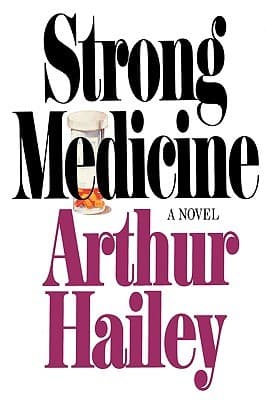
Arthur Hailey (1984)
Genre
Thriller / Historical Fiction / Mystery
Reading Time
10-12 hours
Key Themes
See below
Sign in to track this book
A woman at the top of a pharmaceutical company finds a frightening conspiracy when a new drug's promise of healing conflicts with corporate greed, forcing her to choose between her job and exposing a deadly secret.
Celia Jordan, a bright young woman, joins Fairley & Sons, a pharmaceutical company, as a medical sales representative in New York. Her first excitement is soon lessened by aggressive sales tactics and the pressure to push specific drugs, regardless of their suitability for every patient. She meets Dr. Andrew Jordan, a respected doctor and her future husband, who is doubtful of pharmaceutical representatives. Celia quickly learns how the industry works, dealing with doctor-patient relationships and company demands, while seeing the ethical challenges many in the industry face. Her early experiences set the stage for her growing understanding of the company's operations and potential conflicts.
Celia's natural talent for sales, hard work, and intelligence quickly move her up at Fairley. She goes from sales to product management, learning more about drug development, marketing, and the huge financial risks involved. During this time, she marries Dr. Andrew Jordan, further connecting her personal life with the medical world. Her promotions show her the internal politics and power struggles within Fairley, as well as the strong personalities of its top executives, including the ambitious President, Dr. Paul Fairley. Celia starts to see problems in the company's seemingly perfect image.
Fairley & Sons begins developing 'Vasorin,' a promising drug for a serious heart condition. The potential market for Vasorin is huge, and the company invests vast resources in its research and clinical trials, expecting it to be a massive success. Celia, now in a senior role, becomes deeply involved in the project, seeing the intense pressure on research teams to deliver results quickly. The scientific community, including Dr. Andrew Jordan, watches with interest, hoping for a real breakthrough that could save lives, while the company focuses on the large profits.
As Vasorin moves through its clinical trials, subtle but worrying problems appear. Some trial participants have unexpected side effects, which are at first dismissed as isolated events or blamed on other things. Dr. Andrew Jordan, through his medical practice, also hears reports that raise concerns. Within Fairley & Sons, a few researchers and medical staff express their worries, but management often downplays or suppresses their concerns, eager to get the drug to market. Celia, now with more internal information, starts to feel a growing unease about the trial data's integrity and the company's priorities.
With billions of dollars at stake, Fairley & Sons' executive leadership, especially Dr. Paul Fairley, pushes hard to fast-track Vasorin's approval through regulatory bodies like the FDA. This involves presenting the best data while possibly downplaying or leaving out less favorable results. Celia sees firsthand how information is manipulated and how they try to influence regulators. She struggles with her conscience, torn between loyalty to the company that has given her so much and her growing belief that something is wrong with the drug's safety. The ethical stakes rise dramatically.
Driven by her increasing suspicion and a commitment to patient safety, Celia starts her own quiet investigation into Vasorin's clinical trial data. Using her access and understanding of the company's systems, she finds alarming discrepancies, inconsistencies, and evidence of data manipulation. She realizes that the potential side effects are far more serious and widespread than officially stated. Her findings confirm her worst fears: the company is knowingly, or negligently, pushing a potentially dangerous drug to market. This discovery puts her in a difficult position, as she now has information that could ruin Fairley & Sons and expose widespread corporate misconduct.
With her evidence, Celia confronts key executives at Fairley & Sons, including Dr. Paul Fairley, hoping to stop Vasorin's launch. She presents her findings, expecting a responsible reaction. Instead, she is met with dismissal, denial, and veiled threats to her career and reputation. She realizes how committed the company is to protecting its investment, even if it means risking patient lives. Her husband, Andrew, also faces professional problems for his concerns about the drug. This period is a turning point, as Celia understands she cannot fight the system from inside and must look for outside help.
After trying internal channels and facing strong corporate pressure, Celia makes the difficult choice to become a whistleblower. She understands the huge personal and professional risks, including possible legal battles, public scrutiny, and the end of her career. She carefully gathers and confirms all her evidence, preparing to go public with the truth about Vasorin's dangers. This decision is not easy, as it puts her directly against one of the most powerful pharmaceutical companies in the world, a company she once believed in. Her resolve is strengthened by her ethical values and concern for public health.
Celia Jordan's actions lead to the public revelation of the hidden data and dangers of Vasorin. News reports, regulatory investigations, and public outcry follow. The scandal shakes Fairley & Sons, causing its stock price to drop, key executives to resign, and investigations into its practices. The public is shocked by the greed and negligence exposed within the pharmaceutical industry. Celia, while praised by some as a hero, also faces strong criticism from those loyal to the company and a relentless legal and PR campaign to discredit her. Her life is permanently changed by her decision.
After the Vasorin scandal, Fairley & Sons undergoes major changes and faces large lawsuits. Celia Jordan, despite the personal cost, keeps her integrity. Her husband, Andrew, supports her, and their relationship grows stronger. The novel ends with Celia finding a new purpose, perhaps working in ethical oversight or advocacy, using her knowledge of the pharmaceutical industry to promote more transparency and patient safety. The event is a warning, showing the ongoing conflict between profit and ethics in developing life-saving drugs. Celia's journey shows the power of individual conscience against corporate power.
The Protagonist
Celia transforms from a loyal corporate employee into a courageous whistleblower, sacrificing her career to expose corporate malfeasance and uphold ethical standards in medicine.
The Supporting
Andrew maintains his ethical medical practice, serving as a moral anchor for Celia and a voice of reason against corporate pressure.
The Antagonist
Paul Fairley's relentless pursuit of profit leads to his downfall and the tarnishing of his company's reputation.
The Supporting
Benita attempts to uphold scientific integrity within the corrupt corporate environment, facing professional marginalization for her efforts.
The Supporting
Bernie guides Celia through her early career, representing the entrenched but not entirely corrupt elements of the pharmaceutical sales force.
The Supporting
Seagrave uses legal maneuvering to protect Fairley & Sons, ultimately facing the consequences of the company's ethical failures.
The Supporting
Thornton struggles to balance scientific integrity with corporate demands, ultimately succumbing to pressure and contributing to the Vasorin scandal.
This is the main theme of 'Strong Medicine.' The novel clearly shows how big financial incentives in the pharmaceutical industry can corrupt scientific integrity and ethical choices. Characters like Celia Jordan and Dr. Andrew Jordan represent the ethical side, putting patient well-being first, while Dr. Paul Fairley and other executives represent the constant pursuit of profit, even at the cost of human lives. The development and attempted launch of Vasorin, despite clear warnings of its danger, clearly illustrate this conflict, forcing characters to choose between personal gain and moral responsibility.
“"Billions of dollars in profits will make men and women do many things--lie, cheat, even kill."”
The novel explores the great power of multinational pharmaceutical companies and how hard it is to hold them accountable. Fairley & Sons, with its vast resources, legal teams, and influence, can suppress opposing views, manipulate data, and pressure regulatory bodies. Celia Jordan's journey highlights the difficulty and personal sacrifice involved in challenging such a powerful entity. The theme emphasizes how company structures can allow unethical behavior and how important individual courage and outside oversight are for ensuring justice and public safety.
“"The company's powerful new drug promises a breakthrough in treating a deadly disease. But Celia Jordan knows it may deliver a nightmare."”
Celia Jordan's story is defined by her struggle between loyalty to Fairley & Sons, the company that gave her a career, and her growing moral objections to its practices. This theme is clear as she uncovers the truth about Vasorin and faces the difficult decision of becoming a whistleblower. Other characters also deal with this tension, with different outcomes. The novel examines the personal cost of upholding one's conscience in an environment that demands complete company loyalty, showing the psychological and professional pressures involved.
“"She had to choose between the company that had given her everything and the truth that could cost her everything."”
'Strong Medicine' looks at how truth can be hidden, manipulated, and suppressed within a company driven by financial motives. The novel details how clinical trial data is selectively presented, side effects are downplayed, and internal concerns are silenced to ensure a drug's market success. Celia's investigation involves sifting through layers of deception to uncover the real dangers of Vasorin. This theme highlights the importance of transparency, independent verification, and the relentless search for objective truth, especially in industries that affect public health.
“"Now one beautiful woman will be caught in the cross fire between ethics and profits."”
A central character uncovers and exposes corporate wrongdoing.
The entire plot revolves around Celia Jordan's transformation from a rising corporate star to a whistleblower. This device allows the author to gradually reveal the hidden corruption within Fairley & Sons through Celia's perspective as she gains access to more information. It builds tension as Celia grapples with her conscience and the immense risks involved in exposing a powerful entity. The whistleblower narrative provides a strong moral core to the story, highlighting individual courage against systemic unethical practices and driving the main conflict.
Characters face difficult choices between moral principles and personal/professional gain.
Ethical dilemmas are pervasive throughout the novel, particularly for Celia Jordan. She constantly faces choices that pit her integrity against her career advancement, company loyalty, and even personal safety. Other characters, like Dr. Benita Sanchez and Dr. Philip Thornton, also encounter ethical crossroads where they must decide whether to speak out or conform. This device creates internal and external conflict, making the characters more complex and human, and underscores the central theme of the battle between ethics and profit in the pharmaceutical industry.
A character covertly gathers evidence of wrongdoing within their own organization.
As Celia Jordan grows suspicious of Vasorin's safety, she undertakes a discreet, almost espionage-like investigation within Fairley & Sons. She uses her access and knowledge of company systems to uncover hidden data and confirm her fears. This device adds elements of suspense and mystery, as Celia must navigate corporate politics and potential surveillance to gather the evidence needed to expose the truth. It amplifies the sense of danger she faces and demonstrates the lengths to which corporations might go to protect their secrets.
Focus on the dangers of medical malpractice and pharmaceutical corruption.
The novel uses elements common to medical thrillers, centering on a dangerous drug and the ethical breaches in its development and marketing. The suspense arises from the potential harm to countless patients if Vasorin is released, and the race against time to expose the truth before disaster strikes. The detailed descriptions of drug trials, regulatory processes, and the devastating side effects of the drug contribute to the genre's characteristic tension, grounding the corporate drama in life-or-death consequences for ordinary people.
“The patient is not a disease, but a person.”
— A doctor's core philosophy.
“Behind every great fortune is a crime.”
— A cynical observation about wealth acquisition.
“The greatest danger in medicine is not ignorance, but the illusion of knowledge.”
— Highlighting the perils of overconfidence in medical practice.
“Power, like a drug, can corrupt even the best of intentions.”
— Reflecting on the corrupting influence of authority.
“In the pursuit of profit, some companies will cross any line.”
— Critique of corporate ethics in the pharmaceutical industry.
“Science without conscience is the ruin of the soul.”
— A warning about unchecked scientific ambition.
“The truth has a way of surfacing, no matter how deeply it's buried.”
— A hopeful sentiment about justice and revelation.
“Fear is a powerful motivator, often more so than hope.”
— An insight into human psychology and decision-making.
“Every drug has side effects; the trick is to make sure the cure isn't worse than the disease.”
— A pragmatic view on pharmaceutical development.
“Sometimes, the most important battles are fought not in the operating room, but in the boardroom.”
— Highlighting corporate influence on medical practice.
“The human body is a marvel, but also incredibly fragile.”
— A reflection on the dual nature of human physiology.
“To save one life is to save the world entire.”
— An echo of a profound ethical principle.
“A secret shared is a secret no longer.”
— A simple truth about confidentiality and information.
“The greatest breakthroughs often come from challenging the established order.”
— Encouraging innovation and critical thinking.
Ready to see how well you understood this book? Take our interactive quiz with 10 questions.
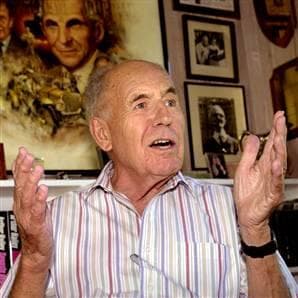
Arthur Hailey was a British-Canadian novelist renowned for his meticulously researched, fast-paced thrillers often set in specific industries. His major works, including 'Airport,' 'Hotel,' and 'Strong Medicine,' became international bestsellers, captivating readers with their detailed portrayals of complex professional environments and gripping narratives.







