“The ball was a dazzling spectacle, a kaleidoscope of silks and jewels, but his eyes, and mine, were drawn to the shadows.”
— Describing the initial grand ball where the mystery begins.

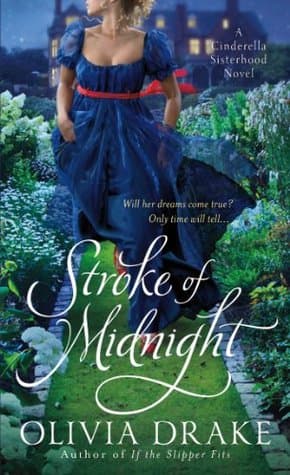
Olivia Drake (2013)
Genre
Historical Fiction / Mystery / Romance
Reading Time
7-8 hours
Key Themes
See below
Sign in to track this book
A disgraced woman returns to London under an assumed identity, only to find herself entangled with the earl who once accused her father and now insists on marrying her to protect her amateur sleuthing.
Laura Falkner, now 'Miss Smith,' arrives in London from Bath. She lived in exile for seven years after her father, Sir Alistair Falkner, was accused of stealing a priceless sapphire necklace from the Earl of Copley. Her goal is to find the truth and clear her father's name. She becomes a companion to the elderly Lady Josephine, a role she believes will give her access to high society and potential clues. Laura is determined to prove her father's innocence, believing he was framed, and reclaim their family's honor, despite the risks of her secret return.
Upon meeting Lady Josephine's nephew, Laura is shocked. He is Alexander Ross, the Earl of Copley, whose family accused her father of theft. Alex, the man she once loved and who played a part in her family's disgrace, is now her employer's closest relative. Their first meeting is tense. Alex senses something familiar in 'Miss Smith' but cannot place it. Laura tries to stay calm and keep her disguise, knowing that being near Alex is both a dangerous problem and a possible key to solving the mystery of the stolen necklace.
Laura, as 'Miss Smith,' begins quietly investigating the necklace theft. She remembers details from that night seven years ago, when Sir Alistair was accused. She watches Alex, trying to understand his feelings and involvement. Laura starts to notice problems in the official story. Some details do not match her memories or the information she gets from Lady Josephine's household. Her father always said he was innocent, and Laura is more convinced than ever that a deeper conspiracy is happening.
Alex, increasingly curious and suspicious of 'Miss Smith,' begins his own quiet investigation into her background. He feels a strong connection to her, despite her disguise, and worries she might be involved in something illegal. When Laura's true identity is accidentally revealed during a dangerous incident where she finds a key clue, Alex is both angry and relieved. To protect her from the dangers of her investigation and restore her reputation, he makes a drastic decision: he proposes a marriage of convenience. Laura is initially dismayed and resistant.
Laura, seeing no other safe way to continue her investigation and restore her family's honor, reluctantly agrees to marry Alex. Their marriage is tense, marked by unresolved anger, lingering affection, and unspoken truths. They share a physical intimacy that rekindles their old flame, but emotional barriers remain. Laura is determined to prove her father's innocence from within Copley's household. Alex struggles to trust her completely, fearing she might still be hiding something or that her actions could endanger them both. Their union is a battleground of love and suspicion.
Despite their difficult relationship, Laura and Alex begin to work together, reluctantly at first, to solve the necklace puzzle. Laura's sharp observations combined with Alex's resources lead them to new evidence. They find coded letters, hidden compartments, and suspicious transactions. These suggest the theft was not a simple act but part of a larger criminal enterprise involving forgery and smuggling. Their investigation uncovers a network of individuals, far more dangerous than they first thought.
As Laura and Alex investigate further, they realize the true culprit is not an outsider but someone seemingly above suspicion within their social circle. The evidence gathered by Laura and confirmed by Alex points to Lord Ashworth, a respected nobleman close to Alex's family and known for his charity. Ashworth, driven by greed, orchestrated the theft and framed Sir Alistair, using his position to manipulate events and cover his tracks. His web of deceit begins to unravel.
Laura and Alex, with clear evidence, confront Lord Ashworth. The confrontation is tense and dramatic. Ashworth initially denies everything and tries to escape. However, with Laura's quick thinking and Alex's planning, Ashworth is cornered. Faced with overwhelming proof, he confesses. He details how he framed Sir Alistair and covered it up. The confession clears Sir Alistair's name and exposes Ashworth's criminal network.
With Lord Ashworth's confession and the stolen sapphire necklace found, Sir Alistair Falkner's name is cleared. The truth is publicly revealed, vindicating the Falkner family and restoring their honor. Laura feels relief, having completed her mission. Her father, who had been living in despair, can finally return to society without accusation. The years of exile and disgrace are over, and justice is served.
With the necklace mystery solved and all secrets revealed, the emotional barriers between Laura and Alex finally fall. The trust they built through their shared investigation, combined with their strong attraction, changes their marriage of convenience into a true partnership. Alex apologizes for his past doubts, and Laura forgives him, understanding the pressures he faced. They acknowledge their enduring love, a bond forged in adversity and strengthened by their shared pursuit of justice, looking forward to a future together free from the past.
The Protagonist
Laura transforms from a woman consumed by her quest for vengeance and justice to one who embraces love and partnership, learning to trust and forgive.
The Protagonist/Love Interest
Alex evolves from a man blinded by societal expectations and past judgments to one who trusts his heart and actively seeks justice, finding redemption and true love.
The Supporting
Lady Josephine remains largely static, serving as a catalyst and a source of subtle guidance for Laura.
The Mentioned/Supporting
Sir Alistair's arc is one of vindication and restoration, as his name is finally cleared, and he can return to society.
The Antagonist
Lord Ashworth's arc is one of exposure and downfall, as his carefully constructed web of lies unravels.
The Supporting
Mrs. Higgins's role is largely static, serving as a reliable fixture in the household and an occasional source of insight.
The main theme is Laura's quest to clear her father's name and restore her family's honor. This goal drives her every action, from her disguise to her marriage of convenience. The novel shows the impact of false accusations and how far people will go to correct a wrong. Sir Alistair Falkner's eventual vindication, achieved through Laura and Alex's efforts, highlights truth over deceit and the importance of fighting for justice. This theme is clear when Laura risks her life for evidence and when Alex, who was part of the system that condemned her father, works to expose the real culprit.
““Seven years. Seven years I’ve waited for this. Seven years to prove he was innocent.””
The novel explores the complexities of love, especially how it can last and be rekindled despite past hurts. Laura and Alex's relationship starts with resentment and mistrust, due to Alex's role in her father's disgrace. Their journey together forces them to face painful memories, communicate, and forgive each other. The theme shows that true love requires understanding, empathy, and a willingness to let go of past grievances to build a future. Their reconciliation, after the truth is revealed, symbolizes forgiveness and the strength of love that overcomes adversity.
““He had hurt her, yes, but he had also loved her. And that love, she realized, had never truly died.””
The theme of identity and deception is central to Laura's initial journey. Her disguise as 'Miss Smith' is not just a plot device; it symbolizes her hidden past and her carefully built facade. The novel examines how identity can be shaped by society, false accusations, and personal choice. Laura's struggle to maintain her alias while dealing with her true feelings for Alex shows her internal conflict between her assumed identity and her real self. Lord Ashworth's unmasking further supports this theme, showing how a respectable public persona can hide a darker, criminal identity, emphasizing the dangers of judging by appearances.
““She was Miss Smith, a quiet companion. But beneath the plain gown and demure demeanor beat the heart of Laura Falkner, a woman on a mission.””
This theme mainly appears in Alexander Ross's story. Alex first lives with the guilt of contributing to Laura's family's downfall, even if unintentionally. His journey to redemption involves not just helping Laura clear her father's name, but actively dismantling the injustice he once supported. The novel suggests that redemption is earned through proactive efforts to right wrongs and that everyone deserves a second chance, especially in matters of the heart. His willingness to marry Laura, protect her, and genuinely seek the truth allows him to make amends for past mistakes and ultimately regain Laura's love and trust, offering them both a second chance at happiness.
““Perhaps, he thought, it wasn't too late to set things right. Not for her father, but for them.””
Laura's use of an assumed identity to infiltrate society.
Laura's disguise as 'Miss Smith' is a crucial plot device. It allows her to re-enter London society undetected, gaining access to the Copley household and its secrets without immediately revealing her true, scandalous identity. This creates initial tension and suspense, as readers wonder when and how her cover will be blown. It also facilitates her direct proximity to Alex, forcing their interaction and rekindling their connection while simultaneously creating an emotional barrier. The disguise enables her investigation and sets the stage for the dramatic reveal of her true self, propelling the narrative forward.
The central object around which the entire mystery revolves.
The Copley sapphire necklace serves as the primary MacGuffin and the catalyst for the entire plot. Its theft seven years prior is the event that disgraced Laura's father and exiled her family, initiating her quest for justice. The necklace's significance goes beyond its monetary value; it represents the lost honor of the Falkner family and the unresolved conflict between Laura and Alex. Its eventual recovery is not just a resolution to the mystery but a symbolic restoration of order and truth, allowing the characters to find peace and reconciliation.
A forced marriage that transforms into a genuine loving union.
The marriage of convenience between Laura and Alex is a classic romance plot device. Initially proposed by Alex to protect Laura's reputation and ensure her safety, it forces the two protagonists into an intimate domestic setting despite their unresolved conflicts and mutual mistrust. This close proximity, combined with their shared investigation, compels them to confront their past, communicate, and gradually rebuild their emotional and physical connection. The device effectively accelerates their reconciliation, allowing their rekindled love to develop amidst the ongoing mystery, transforming a practical arrangement into a deep, lasting bond.
The initial narrative relies on a seemingly established, but ultimately false, historical account.
While not a single unreliable character, the plot relies on the 'unreliable narrative' of the past – the widely accepted story of Sir Alistair's guilt. This societal consensus, initially believed by Alex, serves as a powerful barrier that Laura must overcome. The device highlights how easily public opinion and circumstantial evidence can be manipulated to create a false truth. Laura's mission is to challenge and dismantle this established, but ultimately unreliable, historical account, forcing characters and readers alike to question what they've been led to believe and seek out the true, hidden facts.
“The ball was a dazzling spectacle, a kaleidoscope of silks and jewels, but his eyes, and mine, were drawn to the shadows.”
— Describing the initial grand ball where the mystery begins.
“A lady's reputation is her most fragile possession, easily shattered by a whisper, impossible to mend.”
— Lady Charlotte reflecting on societal expectations and gossip.
“He moved with the predatory grace of a wolf, dangerous and undeniably compelling.”
— Charlotte's first observations of Lord Ashworth.
“Beneath the veneer of polite society, passions simmered, waiting for a spark to ignite them.”
— General observation about the hidden lives of the aristocracy.
“Trust was a luxury she could ill afford, especially with a man who held so many secrets.”
— Charlotte's internal conflict regarding Lord Ashworth.
“The truth, like a stubborn stain, would eventually reveal itself, no matter how carefully it was hidden.”
— As the investigation into the mystery deepens.
“Sometimes, the greatest darkness lies not in the unknown, but in the hearts of those we believe we know best.”
— A realization made as a character's true nature is revealed.
“His touch was a revelation, a silent promise of heat and danger she hadn't known she craved.”
— A moment of physical intimacy between Charlotte and Ashworth.
“A woman's wit was often her only weapon in a world designed to disarm her.”
— Charlotte using her intelligence to navigate a difficult situation.
“The past was a relentless hunter, always catching up, always demanding its due.”
— Referring to the lingering consequences of past events.
“Love, she discovered, was not always gentle, but sometimes fierce, demanding, and utterly irresistible.”
— Charlotte's evolving understanding of her feelings for Ashworth.
“Every shadow held a secret, and every secret, a potential danger.”
— As the characters delve deeper into the mystery surrounding the ball.
“She was no fragile flower, but a woman forged in fire, capable of standing her ground.”
— Charlotte asserting her strength and resilience.
“The stroke of midnight marked not an end, but a beginning, a threshold to a world forever changed.”
— Reflecting on the pivotal moment of the ball and its aftermath.
Ready to see how well you understood this book? Take our interactive quiz with 10 questions.

Biography coming soon.







