“There are some things you can’t outrun, no matter how fast you are.”
— Early in the story, hinting at the inescapable nature of the protagonist's past or the overarching threat.

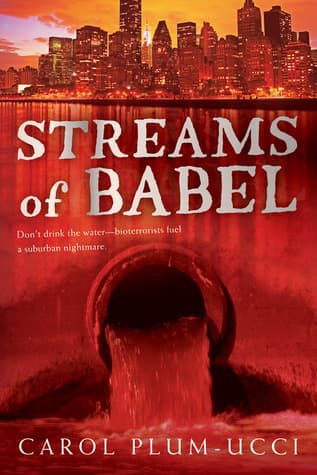
Carol Plum-Ucci (2008)
Genre
Thriller / Mystery / Science Fiction / Young Adult
Reading Time
9-10 hours
Key Themes
See below
Sign in to track this book
A New Jersey suburb poisons itself with every glass of water. A Pakistani teen hacker races against time to decipher extremist chatter about 'Red Vinegar' and prevent a bioterror attack.
Trinity Falls, New Jersey, a quiet suburb, is shaken when two healthy women, Beth Ann Miller and her neighbor, die within twenty-four hours from sudden brain aneurysms. Beth Ann's son, Jesse, a high school student, is devastated. The mysterious and rapid deaths immediately alarm government agencies, especially Homeland Security, who suspect a bioterrorist attack rather than a coincidence. They quickly arrive in town, starting a covert investigation. Halfway across the world in Pakistan, sixteen-year-old computer genius Hafiz, a virtual spy for the U.S., intercepts encrypted extremist chatter about 'Red Vinegar' and its deployment in 'Colony One,' a coded reference he struggles to decode but knows means a Western target.
Hafiz, working from his command center in Pakistan, searches deeper into extremist networks. He discovers 'Red Vinegar' is a slow-acting neurotoxin designed to mimic natural causes of death, specifically brain aneurysms. 'Colony One' refers to Trinity Falls, New Jersey. The toxin is in the town's water supply. Hafiz realizes the danger and tries to tell his U.S. government contact, Agent Miller. However, because of his classified virtual espionage and the skepticism about his age and methods, his urgent warnings are initially met with bureaucratic delays and disbelief, slowing the authorities' response as they try to understand the threat.
Jesse Miller is reeling from his mother Beth Ann's sudden, inexplicable death. While grieving, he notices unusual activity in Trinity Falls: more federal agents, hushed adult conversations, and a general unease the authorities try to hide. He also sees several people, including his friend Ben, complain of headaches and nausea, symptoms that match officials' vague explanations about a 'viral outbreak.' Jesse's curiosity and deep personal loss push him to question the official story, seeking answers beyond what the government will say, even as he struggles with his own emotions.
As more Trinity Falls residents report symptoms and a few more die from mysterious aneurysms, Homeland Security confirms Hafiz's intelligence about the contaminated water supply. To prevent panic and the potential spread of the perceived 'contagion,' they implement a strict quarantine, sealing off Trinity Falls. They release carefully worded public statements, blaming the deaths and illnesses on an unknown, virulent virus, while secretly working to identify and neutralize the bioweapon. This deliberate hiding of the truth creates fear and distrust among residents, who feel trapped and uninformed, further fueling Jesse's suspicions about the crisis's true nature.
Unconvinced by the government's 'viral outbreak' explanation, Jesse and his best friend Ben start their own investigation. They connect the sudden deaths to everyone drinking Trinity Falls' tap water. Jesse remembers his mother's meticulous habits, including her preference for bottled water, which makes her death even more puzzling. They gather stories from other residents with similar, vague symptoms. Their amateur investigation leads them to realize the deaths are not random or viral, but from deliberate poisoning, with the town's water supply as the source. This discovery puts them at odds with authorities and in potential danger.
Frustrated by Agent Miller and the U.S. government's slow and inadequate response, Hafiz realizes time is running out for Trinity Falls. He understands the implications of Red Vinegar and the terrorists' plan. Taking a huge personal risk, he leaks crucial, anonymized information about the bioweapon and contaminated water to an independent online news source. He hopes to bypass bureaucracy and force the government to act. This act of defiance endangers him with both the U.S. intelligence community and the terrorist groups he spies on, but he believes it is the only way to save lives.
Hafiz's leaked information, along with rising deaths and unrest in Trinity Falls, finally forces the U.S. government to end its cover-up. Homeland Security must publicly admit the town's water supply is contaminated with a neurotoxin bioweapon. This admission causes widespread panic and outrage among residents, who feel betrayed by their government. The revelation confirms Jesse and Ben's suspicions and the true horror of their situation, turning their grief and confusion into anger and a desperate fight for survival.
With the truth exposed, the scientific community mobilizes to identify the neurotoxin and develop an antidote. However, Red Vinegar is complex and slow-acting, making its effects insidious and its reversal challenging. Trinity Falls residents continue to sicken, experiencing severe headaches, memory loss, and neurological decline. Doctors and scientists work under immense pressure, knowing every hour without a cure means more suffering and potential deaths. The town becomes a living laboratory, a desperate race against time to save its inhabitants from a silent, invisible killer.
As the crisis deepens, Jesse discovers his mother, Beth Ann, knew of the potential threat and took precautions, including drinking bottled water. However, a single moment of forgetfulness, or a lapse in judgment, led to her fatal exposure. This realization is a profound blow, adding guilt to his grief. He also learns his best friend, Ben, shows increasingly severe Red Vinegar symptoms. Faced with the toxin's devastating effects on his community and loved ones, Jesse decides to help authorities, despite his earlier distrust, hoping to find a solution and save others.
Even as the crisis unfolds in Trinity Falls, Hafiz continues his virtual espionage, tracking the online chatter and digital footprints of the terrorist cell responsible for the Red Vinegar attack. His relentless efforts provide crucial intelligence to Agent Miller and the U.S. government, helping them pinpoint the perpetrators' location and identities. Through a coordinated international effort, the terrorist cell is apprehended, preventing further attacks. Hafiz's bravery and tech skills prove instrumental in dismantling the network, though he remains a shadowy, unsung hero.
After intense research, scientists develop an antidote for the Red Vinegar neurotoxin. It is quickly distributed to Trinity Falls residents, stopping the illness and offering hope for recovery. While many recover fully, some, like Ben, suffer lasting neurological damage, showing the attack's devastating impact. The town begins the arduous process of physical and psychological healing, dealing with the trauma of being targeted and the betrayal of the government's initial secrecy. The contaminated water system is purged, and new safety protocols are implemented, but the scars of the bioterrorist attack remain.
In the aftermath, Trinity Falls slowly rebuilds, but it is forever changed. Residents live with the memory of fear and loss, and some face uncertain long-term health effects. Jesse, though deeply scarred, gains a new understanding of resilience and the complexities of global threats. Hafiz, still in Pakistan, continues his work as a virtual spy, a silent guardian in a world increasingly vulnerable to technological and biological warfare. The novel ends with the understanding that while the immediate crisis is over, the fragmented and often misunderstood channels of global communication and conflict will continue to pose ongoing challenges for humanity.
The Protagonist
Jesse transforms from a grieving son into a tenacious amateur investigator, ultimately accepting the harsh realities of the attack and contributing to the community's recovery.
The Protagonist
Hafiz evolves from an overlooked intelligence source to a crucial, albeit anonymous, figure whose actions directly save countless lives, proving the power of individual agency.
The Supporting
Agent Miller moves from skepticism to trust in Hafiz, ultimately becoming a key figure in coordinating the U.S. response and apprehending the terrorists.
The Supporting
Ben's journey highlights the direct, devastating impact of the bioweapon, transforming him from a supportive friend into a symbol of the attack's victims.
The Mentioned
Her death is the inciting incident, and her memory drives Jesse's actions throughout the narrative.
The Antagonist
Their actions drive the central conflict, and their eventual apprehension marks a major victory against the global threat they represent.
The novel shows how easily a secure, suburban society can be targeted and crippled by an invisible, insidious threat. The contamination of Trinity Falls' water supply highlights the fragility of essential infrastructure and the widespread panic that can follow. The 'Red Vinegar' weapon, designed to mimic natural causes, exploits society's trust in its systems and its inability to detect non-obvious dangers. This theme is clear from the first deaths, initially dismissed as medical anomalies, to the widespread illness that takes hold before the true nature of the threat is understood, showing how a sophisticated attack can turn everyday life into a nightmare.
“One day, you're drinking water from your tap, the next, it's a poison. How do you fight something you can't even see?”
The book explores the complex ethical dilemmas of government secrecy, intelligence gathering, and the public's right to know. Agent Miller's initial reluctance to fully trust Hafiz and the government's decision to cover up the bioterrorism attack, framing it as a viral outbreak, raise questions about justifying withholding information for 'public order.' Hafiz's decision to leak information, despite risks, forces the truth into the open, highlighting the tension between national security and transparency. The secrecy fuels public distrust and fear, ultimately worsening the crisis in Trinity Falls and showing that withholding information can be as dangerous as the threat itself.
“They thought they were protecting us, but all they did was make us sicker, and angrier.”
The novel emphasizes the modern world's interconnectedness, where a terrorist act conceived in one part of the globe (Pakistan) can have devastating consequences in a seemingly unrelated suburban town (New Jersey). Hafiz's role as a virtual spy shows how technology bridges vast distances, enabling both surveillance and attack. The 'streams of Babel' metaphor refers to fragmented global communication and the challenges of understanding and responding to threats across cultures and geographies. The plot demonstrates that national borders offer little protection against determined adversaries operating digitally, making the world a smaller, more dangerous place.
“The world is smaller now. Their hatred, their poison, it can travel across oceans in a whisper, or in a drop of water.”
A major theme is the capacity of young people, like Jesse and Hafiz, to drive change and discovery when adults are complacent or institutions are slow. Jesse, driven by personal grief, questions the official story and uncovers clues adults miss. Hafiz, a teenage computer genius, has skills that make him essential to intelligence efforts, even as he struggles for recognition and trust. Their youth lets them see situations with fresh eyes, unburdened by bureaucracy or cynicism, playing key roles in uncovering the truth and mitigating the crisis, proving age is not a barrier to heroism.
“Sometimes, the ones they least expect are the ones who see the clearest.”
Alternating viewpoints between Jesse in the U.S. and Hafiz in Pakistan.
The novel employs a dual narrative structure, switching between Jesse Miller's ground-level experience in Trinity Falls and Hafiz's remote virtual espionage in Pakistan. This device effectively builds suspense by showing different facets of the crisis simultaneously. It highlights the global nature of the threat and the disparity in information access. Jesse's perspective grounds the story in the human cost and immediate impact, while Hafiz's provides the broader intelligence context, revealing the larger game at play and the behind-the-scenes efforts to combat the terrorists. This contrast deepens the reader's understanding of both the personal and geopolitical stakes.
The initial misdirection that the deaths are due to a natural virus.
The government's initial explanation of a 'viral outbreak' serves as a significant red herring. This misdirection is intended to prevent mass panic and maintain control, but it also obscures the true nature of the bioterror attack from the public and even some investigators. This device heightens tension and frustration for characters like Jesse, who instinctively distrust the official story. It also underscores the government's ethical dilemma in managing information during a crisis, ultimately making the revelation of the water contamination more impactful and the sense of betrayal more acute for the residents of Trinity Falls.
A neurotoxin designed to mimic natural causes of death over time.
The 'Red Vinegar' neurotoxin is a crucial plot device. Its slow-acting nature and ability to mimic natural brain aneurysms create a terrifying sense of stealth and inevitability. This device allows the terrorists to inflict widespread damage before detection, generating a creeping dread rather than immediate catastrophe. It also complicates the investigation, as early symptoms are vague and easily dismissed, delaying intervention. The delayed onset of severe symptoms and the challenge of finding an antidote underpins the race against time, making the threat feel more insidious and difficult to combat than an immediate, visible attack.
The coded reference used by terrorists to identify their target.
The term 'Colony One' is a cipher used by the terrorist cell to refer to Trinity Falls. This plot device creates initial mystery and urgency for Hafiz as he races to decipher its meaning. It highlights the clandestine nature of modern terrorism and the use of coded language to avoid detection. The eventual revelation of 'Colony One' as Trinity Falls personalizes the threat, connecting the abstract world of intelligence to the very real, immediate danger faced by the town's residents. It also underscores Hafiz's unique skill set in breaking down these digital barriers.
“There are some things you can’t outrun, no matter how fast you are.”
— Early in the story, hinting at the inescapable nature of the protagonist's past or the overarching threat.
“The truth isn't always pretty, but it's always necessary.”
— A character grappling with a difficult revelation, emphasizing the importance of honesty.
“Sometimes the greatest dangers are the ones you can't see.”
— As the characters begin to uncover a hidden conspiracy, realizing the subtle nature of the threat.
“Fear is a powerful weapon, but hope is stronger.”
— A moment of resilience amidst despair, highlighting the internal struggle of the characters.
“We are all connected, whether we want to be or not.”
— Reflecting on the interconnectedness of society and the impact of individual actions.
“The past is a ghost that haunts the present.”
— A character struggling with past traumas and their influence on current events.
“Silence can be louder than any scream.”
— Describing the oppressive atmosphere of a controlled environment or the unspoken threats.
“What you don't know can definitely hurt you.”
— A warning about the dangers of ignorance when facing a complex and dangerous situation.
“Even in the darkest places, a flicker of light can survive.”
— A moment of optimism or discovery of a hidden ally in a seemingly hopeless situation.
“The future is not written, it's forged by our choices.”
— Emphasizing the agency of the characters and the impact of their decisions on the unfolding events.
“Trust is a luxury few can afford.”
— In a world rife with betrayal and deception, highlighting the difficulty of forming alliances.
“Sometimes you have to break the rules to do what's right.”
— A character making a morally ambiguous decision for the greater good.
“The world is a maze, and we're all just trying to find our way out.”
— A metaphor for the complex and confusing challenges faced by the protagonists.
“Knowledge is power, but it can also be a burden.”
— A character grappling with a dangerous piece of information that puts them in jeopardy.
Ready to see how well you understood this book? Take our interactive quiz with 10 questions.







