BookBrief
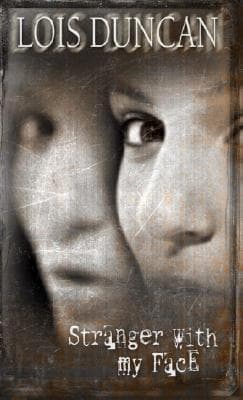
Stranger with My Face cover
Archivist's Choice

Stranger with My Face

Lois Duncan (1981)

Genre

Thriller / Fantasy / Mystery / Young Adult

Reading Time

235 min

Key Themes

See below

Track Your Reading

Sign in to track this book

A chilling doppelgänger mystery unfolds as Laurie discovers her identical twin, long thought dead, has returned to usurp her life and identity.

Synopsis

Laurie Stratton, a high school student, finds her life unraveling when people claim to see her in places she hasn't been, doing things she hasn't done. Her boyfriend swears he saw her on the beach with another guy, and her family insists they see her when she's been out for hours. This mystery leads Laurie to an unsettling truth: an identical girl, Lia, is not only impersonating her but seems to be a supernatural doppelganger. As Lia becomes more aggressive, Laurie discovers a dark family secret involving her mother's past and a twin sister who died at birth, whose spirit has now returned. With help from her Aunt Sarah, who has psychic abilities, Laurie must uncover Lia's true nature and stop her before Lia takes over her life. The climax sees Laurie confronting Lia at a remote lighthouse, where she uses her will and family's love to banish the vengeful spirit and reclaim her identity.
Reading time
235 min
Difficulty
Easy
Pacing
Moderate
Mood
Suspenseful, Mysterious, Eerie, Introspective
✓ Read this if...
You enjoy classic YA thrillers with a supernatural twist, focusing on identity, family secrets, and psychological suspense.
✗ Skip this if...
You prefer modern horror or thrillers without a strong paranormal element, or find the pacing of older YA books too slow.

Plot Summary

The First Sightings

Laurie Stratton's normal life in the small coastal town of St. Jude, Florida, begins to unravel. Her boyfriend, Gordon, claims he saw her on the beach with another boy, despite Laurie having been at home. Soon after, her younger brother, Bruce, and her parents, Mary and Paul, also report seeing 'Laurie' in places she couldn't be, or acting strangely. These incidents cause confusion and tension in the Stratton household, as Laurie denies these encounters. She dismisses them as misunderstandings or pranks, but the frequency of the sightings makes them hard to ignore. The doppelgänger always appears just out of reach, a fleeting glimpse that leaves a chilling impression.

Confronting the Imposter

One evening, while home alone, Laurie has a direct and terrifying encounter with the imposter. She sees 'herself' looking back at her from the living room window, a reflection that doesn't mirror her own movements. Later, she finds 'herself' sitting in her bedroom, watching her. This chilling confrontation confirms to Laurie that the sightings are not just mistaken identities or pranks; there is someone, or something, that looks exactly like her. The doppelgänger vanishes as quickly as it appears, leaving Laurie deeply shaken and convinced that her sanity, or her life, is at stake. She tries to explain this to her family, but they struggle to fully grasp the horror of her experience.

A Family Secret Unveiled

Pressed by Laurie's distress and the undeniable evidence of the doppelgänger, Laurie's parents, Mary and Paul Stratton, reveal a long-held family secret. They confess that Laurie is a twin, and her sister, Lia, was given up for adoption at birth. This revelation explains the physical resemblance but raises more questions about Lia's sudden appearance and her intentions. The parents explain that Lia was born with a severe heart condition, and they believed they couldn't provide the specialized care she needed, leading to the painful decision to give her up. This news affects Laurie deeply, who feels betrayed by her parents' deception and struggles to process the existence of a twin she never knew.

Lia's Background

Laurie's parents provide what little information they have about Lia's life. They explain that Lia was adopted by a woman named Sarah Blain, who became a single mother. Laurie also learns that Lia has had a difficult life, marked by illness and emotional instability. Sarah Blain, referred to as 'Aunt Sarah,' eventually moved to St. Jude, coincidentally living not far from the Strattons. This proximity explains how Lia would know about Laurie and her family. The parents express regret and guilt over their decision, but also a deep concern for both their daughters. Laurie begins to understand why Lia might be seeking her out, and the potential danger she might pose.

The Diaries and the Supernatural

Seeking more answers, Laurie reads her mother's old diaries, hidden in the attic. She discovers entries detailing her mother's own unsettling experiences with a 'stranger with her face' during her youth. The diaries reveal a family history of psychic abilities and a recurring phenomenon of an astral projection or spiritual double appearing when a family member is in emotional distress or peril. This revelation shifts Laurie's understanding of Lia from a physical imposter to a potentially supernatural entity, or at least someone with a strong psychic connection to her. The diaries hint at a generational 'gift,' where strong emotions can cause one's spiritual double to manifest.

The Nature of Lia's Manifestation

Through further investigation and reflection on the diary entries, Laurie comes to understand that Lia is not physically present but is manifesting as an astral projection – a spiritual double that looks exactly like her. Lia, having grown up sickly and weak, yearns for a healthy, normal life, and believes that by taking over Laurie's physical body, she can finally achieve it. Lia's appearances become more frequent and intrusive, a desperate attempt to assert her presence and eventually displace Laurie. This realization adds a new layer of terror, as Laurie grapples with the idea that her own sister, a spiritual entity, is trying to steal her life and body.

The Warnings of Aunt Sarah

Laurie, needing direct answers, seeks out Aunt Sarah, Lia's adoptive mother. Aunt Sarah, a reclusive woman, confirms Laurie's suspicions about Lia's astral projection abilities. She explains that Lia has always been frail and sickly, leading her to develop powerful psychic abilities, particularly the ability to project her consciousness. Aunt Sarah reveals that Lia has been obsessed with Laurie for years, having seen her from afar and envied her healthy life. She warns Laurie that Lia's power is growing, and her ultimate goal is to completely inhabit Laurie's body, effectively taking over her life and leaving Laurie's consciousness trapped or dissipated.

The Growing Threat

As Lia's manifestations intensify, Laurie experiences moments of disorientation and feeling 'outside' her own body. Lia begins to mimic Laurie's actions, speak her thoughts, and even influence her decisions. The doppelgänger is no longer just an observer but an active participant, subtly trying to erode Laurie's sense of self and control. Laurie feels her grip on reality weakening, fearing she might lose herself completely to Lia's will. These incidents often occur when Laurie is emotionally vulnerable or physically tired, making her more susceptible to Lia's influence. The threat escalates from mere sightings to a direct psychic assault on Laurie's being.

The Confrontation at the Lighthouse

The climax of the story takes place at the St. Jude lighthouse, a local landmark. Lia, in her astral form, draws Laurie there for a final confrontation. Lia, fueled by years of resentment and longing, attempts a full-scale takeover of Laurie's body. Laurie, despite her fear, fights back with all her mental and emotional strength, refusing to surrender her identity. The struggle is purely psychic, a battle of wills for control of Laurie's physical form. Lia projects images of the life she could have, tempting Laurie to give in, but Laurie's love for her family and her own life gives her the resolve to resist.

Lia's Demise and Resolution

During the intense psychic struggle at the lighthouse, Lia's fragile and sickly physical body back at Aunt Sarah's house gives out. With her physical body gone, Lia's astral projection loses its anchor and dissipates, freeing Laurie from her sister's grasp. The connection is severed, and Lia is truly gone. Laurie is left traumatized but triumphant, having successfully defended her identity and her life. The experience leaves an indelible mark on Laurie, who now understands the complexities of her family history and the thin veil between the physical and spiritual worlds. She begins the long process of healing and accepting her unique heritage, cherishing her life anew.

Principal Figures

Laurie Stratton

The Protagonist

Laurie transforms from a typical, somewhat naive teenager into a strong, self-aware young woman who understands and accepts the supernatural elements of her heritage.

Lia

The Antagonist

Lia remains largely static in her desire to possess Laurie's life, but her attempts escalate in intensity until her ultimate dissipation.

Mary Stratton

The Supporting

Mary moves from secrecy and guilt to open honesty and support for Laurie, confronting her past decisions.

Paul Stratton

The Supporting

Paul's initial skepticism gives way to acceptance and support as the supernatural elements become undeniable.

Gordon

The Supporting

Gordon moves from confusion and slight jealousy to unwavering support and belief in Laurie.

Aunt Sarah (Sarah Blain)

The Supporting

Aunt Sarah remains a static character, a sorrowful guardian of Lia and a source of information for Laurie.

Bruce Stratton

The Supporting

Bruce remains a consistent, observant family member, witnessing events but not fully understanding their depth.

Themes & Insights

Identity and Self-Possession

The central theme is Laurie's struggle to maintain her sense of self against Lia's attempts to usurp her identity. This is explored through the literal threat of Lia taking over Laurie's body, forcing Laurie to define who she is beyond her physical appearance. The doppelgänger forces Laurie to confront questions of individuality and what truly makes a person 'them.' For example, when Lia mimics Laurie's actions or thoughts, Laurie must actively resist and assert her own will to prevent her identity from being eroded.

How could I know who I was if someone else looked exactly like me, and everyone else thought it was me?

Laurie Stratton (internal monologue)

The Supernatural vs. Reality

The novel blurs the lines between the mundane and the supernatural, initially presenting the doppelgänger as a mystery that could have rational explanations (pranks, mistaken identity) before fully embracing the psychic and astral projection elements. This theme questions the limits of human perception and belief. Laurie's family initially struggles to accept the impossible, mirroring the reader's own journey from skepticism to belief. The discovery of Mary's diaries, detailing past family experiences, solidifies the supernatural as a genuine force within their world.

There were things beyond the realm of ordinary human experience, things that could not be explained away by logic and reason.

Narrator

Family Secrets and Their Consequences

The entire conflict is rooted in the long-held family secret of Lia's existence and adoption. The parents' decision, made with good intentions, ultimately leads to years of suffering for Lia and a terrifying ordeal for Laurie. This theme explores how secrets, even those meant to protect, can cause emotional damage and unforeseen consequences across generations. The revelation of the secret forces the family to confront their past and the moral implications of their choices, leading to a deeper, albeit painful, understanding among them.

Secrets were like poisons. They festered and grew, and eventually they poisoned everything around them.

Laurie Stratton (internal monologue)

Envy and Desire

Lia's motivation is a deep envy for Laurie's healthy body and normal life, stemming from her own life of illness and isolation. This theme explores the destructive power of unfulfilled desires and the corrosive nature of envy. Lia's longing is so intense that it manifests physically, driving her to attempt to steal Laurie's life. It highlights the human tendency to desire what others have, sometimes to a dangerous degree, and the tragedy that can arise from such profound yearning.

She wanted my life. She wanted my body. She wanted to be me.

Laurie Stratton (internal monologue)

Plot Devices & Literary Techniques

The Doppelgänger

A mysterious double of Laurie, initially seen by others, later revealed as an astral projection.

The doppelgänger is the central plot device, driving the entire mystery and conflict. Initially, its appearances create confusion and fear, making Laurie question her sanity. It serves as a physical manifestation of the hidden family secret and Lia's desperate desire. As the story progresses, the doppelgänger evolves from a mere visual anomaly into a psychic threat, representing Lia's attempt to literally steal Laurie's identity and life. Its gradual escalation in presence and power builds suspense and terror.

Astral Projection

Lia's psychic ability to project her consciousness outside her body.

Astral projection is the supernatural mechanism through which Lia manifests as the doppelgänger. This device explains how Lia, despite her physical frailty and distance, can appear to others and interact with the physical world. It elevates the conflict from a simple case of mistaken identity to a battle for spiritual and physical possession. The concept of astral projection also provides a framework for the generational psychic abilities hinted at in Mary's diaries, linking Lia's powers to a family heritage.

The Hidden Diaries

Mary Stratton's old journals, revealing family history and psychic experiences.

Mary Stratton's diaries function as a crucial expositional device. They serve as the primary source for Laurie to uncover the truth about her family's psychic past and the nature of the doppelgänger phenomenon. Without the diaries, Laurie and the reader would be left without a concrete explanation for the supernatural events. The diaries not only reveal the family secret of Lia's adoption but also provide historical context and validate Laurie's increasingly bizarre experiences, shifting the narrative from mystery to supernatural thriller.

The Lighthouse

A symbolic location for the final confrontation between Laurie and Lia.

The lighthouse serves as a powerful symbolic setting for the climax. Lighthouses traditionally represent guidance, warning, and a beacon in the dark, which mirrors Laurie's journey to understand and overcome the threat. Its isolation and elevated position create an ideal, dramatic stage for the psychic battle between the sisters. The lighthouse also acts as a point of convergence for the various threads of the plot, bringing Laurie and Lia together for their final, defining struggle for self-possession.

Critical analysis

Notable Quotes

The feeling wasn't exactly fear, not the kind of fear she'd felt when a dog had snarled at her or a car had swerved too close. This was a different kind of fear, a cold, creeping certainty that something was terribly wrong.

Laurie's initial unease when she starts experiencing strange occurrences.

It was her face. Her own face. But the eyes were different. Older. Colder. And there was a faint, almost imperceptible smirk on the lips.

Laurie sees her reflection in the mirror, but it's not quite her.

Maybe it wasn't just a dream. Maybe it was a memory. Or a warning.

Laurie reflects on a vivid dream she had, hinting at its significance.

How could a person be in two places at once? It just wasn't possible. Not in the real world.

Laurie struggles to comprehend the impossible events unfolding around her.

There was a reason for everything. A logical explanation. There had to be.

Laurie tries to rationalize the strange occurrences, holding onto her belief in logic.

It was like looking into a funhouse mirror, only the distortion was subtle, almost invisible, until you really looked.

Describing the uncanny resemblance and slight differences between Laurie and Lia.

She was an echo. A shadow. A whisper of what might have been.

Laurie's developing understanding of Lia's true nature.

Sometimes the things you couldn't see were the most dangerous.

A realization about the invisible threats she faces.

What if the person looking back at you wasn't really you at all?

A core question of the book, as Laurie grapples with her identity.

The past wasn't always dead. Sometimes it just lay dormant, waiting for its chance to resurface.

Reflecting on the way past events impact the present.

She had to find out the truth, no matter how terrifying it might be.

Laurie's determination to uncover the mystery.

It was more than just a resemblance. It was a connection. A bond forged in another lifetime.

Laurie's growing awareness of the deep link between her and Lia.

Some secrets were meant to stay buried. But others, like this one, demanded to be unearthed.

The inevitability of the truth coming to light.

She was no longer just Laurie. She was a part of something larger, something ancient and powerful.

Laurie's transformation and understanding of her unique role.

Quiz

Test Your Knowledge

Ready to see how well you understood this book? Take our interactive quiz with 10 questions.

10
Questions
~5
Minutes
?
Best Score

Key Questions (FAQ)

Laurie's central mystery begins when her boyfriend, Gordon, claims he saw her on the beach with another guy, despite Laurie being at home. This is quickly followed by her family insisting they've seen her around the house or coming and going when Laurie knows she's been elsewhere for extended periods, leading her to question her own sanity and reality.

About the author