“Thou art God.”
— Jubal Harshaw explains Mike's nature and the concept of God to him.


Robert A. Heinlein (2014)
Genre
Fantasy / Spirituality / Science Fiction / Philosophy
Reading Time
600 min
Key Themes
See below
Sign in to track this book
Raised by Martians, Valentine Michael Smith returns to Earth as an innocent alien prophet, challenging humanity's deepest-held beliefs about love, sex, and religion with his otherworldly perspective on 'grokking' the universe.
Twenty-five years after the first Earth expedition to Mars vanished, the *Envoy* arrives, finding a lone human survivor: Valentine Michael Smith. Born on the *Proserpine* during the initial mission, Michael was raised entirely by Martians after his parents and the rest of the crew died. He has an alien understanding of the world, having absorbed Martian language, culture, and psychic abilities. Upon his discovery, he is sedated and brought back to Earth, where his existence immediately causes a global sensation and a complex legal battle over his identity and the vast wealth from the *Proserpine* crew's estates. He is placed under strict government control, his mind and body studied intensely, isolated from human society.
Confined to a heavily guarded hospital, Michael is a prisoner of his own fame. Nurse Jill Boardman, a resourceful and intelligent woman, becomes his primary caretaker. Suspecting the government is manipulating Michael and hiding information, Jill uses her medical access to sneak into his room. She shares a glass of water with him, an act she learns is a deeply sacred bonding ritual on Mars, signifying absolute trust and a sharing of self. This simple but profound act creates an unbreakable psychic link between them, allowing Michael to begin understanding human concepts and emotions through her, and giving Jill a glimpse into his alien perspective. She becomes his first true human connection and confidante.
Realizing Michael's life is in danger and that he is being used, Jill plans a daring escape from the hospital. With the help of her secret contacts, she smuggles Michael out, bypassing extensive security. Her destination is the secluded, sprawling estate of Jubal Harshaw, a brilliant, eccentric, and cynical polymath – doctor, lawyer, philosopher, and author. Jubal's home is a safe place where Michael can be protected from government interference and begin to truly learn about humanity, away from the media frenzy and political schemes surrounding him. Jill trusts Jubal's intellect and moral sense to guide Michael.
At Jubal's estate, Michael begins an intensive education in human culture, language, and societal norms. Jubal, along with his secretaries and staff, patiently teaches Michael about everything from slang and humor to history, religion, and sex. Michael, initially literal and lacking human context, struggles with concepts like lying, greed, and love, often taking things at face value. His Martian upbringing makes him see humanity's flaws and contradictions with unsettling clarity. During this time, he also witnesses a murder, causing him to 'grok' death for the first time, a profound and disturbing experience that deepens his understanding of life's fragility and the human condition.
After learning human language and culture, Michael decides to share his Martian wisdom with humanity. He liquidates his vast inheritance from the *Proserpine* crew, using the immense wealth to establish the Church of All Worlds. This new religion is based on Martian principles of 'grokking,' water-sharing (which develops into a deeper form of communal living), absolute honesty, and the celebration of life, love, and pleasure, including polyamory and open sexuality. The Church's teachings challenge traditional human taboos and societal structures, advocating for a return to a more natural, interconnected state of being, where individuals truly 'grok' each other and the universe.
The radical ideas of the Church of All Worlds, particularly its embrace of free love and its challenge to conventional morality and religious dogma, provoke outrage and hostility from conservative groups, established churches, and the government. Michael's followers are called immoral and dangerous cultists. The Church's gatherings are disrupted, its members harassed, and its properties vandalized. Michael himself becomes a target of intense hatred and fear. Despite the persecution, the Church continues to grow, attracting diverse followers who are unhappy with mainstream society and seeking a deeper, more authentic connection to life and each other.
As the Church grows, Michael increasingly shows his extraordinary Martian psychic abilities. He can telekinetically manipulate objects, control biological processes, and even 'discorporate' individuals, causing them to vanish instantly, their physical form dissolving into the universe. These powers, initially used subtly, become more open as he faces persecution. He explains that these abilities are not magic but a natural extension of 'grokking' the true nature of reality and the interconnectedness of all things. He also begins to identify himself as an avatar of a higher being, a 'fair witness' for the universe, and eventually, a manifestation of God, a claim that further frightens many.
The escalating tensions reach a violent peak. During a public appearance, Michael is confronted by a fanatical mob, incited by religious fundamentalists and fear-mongering media. Despite his powers, Michael chooses not to defend himself in a way that would harm his attackers, instead accepting his fate. He is brutally murdered by the crowd, becoming a martyr for the Church of All Worlds. His death, however, is not the end of his influence. It energizes his followers and further solidifies the Church's message of love, acceptance, and the rejection of fear and hatred. His final act is a demonstration of ultimate sacrifice and compassion, similar to historical religious figures.
After Michael's death, Jubal Harshaw, initially a skeptic and observer, fully accepts Michael's teachings and takes over leadership of the Church of All Worlds. He dedicates himself to preserving and spreading Michael's message, ensuring that his sacrifice was not in vain. Jubal, with his intellect and speaking skill, becomes the intellectual and spiritual successor, guiding the Church through its continued growth and challenges. The Church, now with a martyred figurehead, continues to spread its influence, changing human society's understanding of love, religion, and community, moving towards a more enlightened and integrated future.
Following his death, Michael is revealed to have 'discorporated,' ascending to a higher state of being. He becomes one of the 'Angels' mentioned throughout the narrative – discorporated beings who watch over and subtly guide humanity. He is joined by other individuals who have 'grokked' deeply enough to shed their physical forms, including some of his closest followers. From this higher plane, they continue to influence events, ensuring the survival and growth of the Church of All Worlds and the spread of Martian wisdom. This implies a cyclical nature of existence and a greater cosmic order, where consciousness transcends physical death and continues its journey.
The Protagonist
From a naive Martian orphan, Michael evolves into a spiritual leader and ultimately a martyr, transcending human limitations to become an 'angel' guiding humanity.
The Supporting
From a detached cynic, Jubal transforms into a deeply committed believer and the intellectual torchbearer of Michael's philosophy.
The Supporting
From a skeptical nurse, Jill becomes Michael's spiritual sister, lover, and a key figure in the Church of All Worlds, embracing a radical new way of life.
The Supporting
From a cynical journalist, Ben becomes a dedicated follower and media advocate for Michael's Church.
The Supporting
Pat maintains her strong, independent character, adapting to Michael's teachings within the framework of Jubal's established household.
The Supporting
Duke remains a steady, grounding presence, quietly grokking the unfolding events and embracing Michael's teachings without much fanfare.
The Antagonist
Foster remains a static antagonist, representing the forces of dogma and intolerance that clash with Michael's progressive teachings.
The Mentioned
The Martians remain a consistent, guiding influence, representing an ideal state of evolved consciousness.
The novel explores the fluidity and subjectivity of God and religion. Michael, raised by Martians, initially has no concept of human religion, yet through his teachings, he embodies a form of divinity, eventually claiming to be 'God.' The Church of All Worlds questions traditional dogma, promoting a pantheistic view where God is in all things, and 'grokking' is the path to understanding. The story contrasts Michael's inclusive, loving, and experiential faith with the rigid, hypocritical, and fear-based religions of Earth, particularly the Fosterites, showing the dangers of organized religion when it loses its spiritual core. Michael's eventual martyrdom is like historical religious figures, suggesting a cyclical nature to spiritual revelation and persecution.
“'Thou art God.'”
A central theme is the redefinition of human relationships, particularly love, sex, and marriage. Michael's Martian upbringing leads him to view these concepts without human taboos or possessiveness. The Church of All Worlds advocates for 'free love,' polyamory, and the sharing of partners, not as promiscuity, but as a deeper form of 'water-sharing' and 'grokking' – a complete and honest merging of selves. This challenges the restrictive, often hypocritical, norms of Earth society. Jubal's household, with its open relationships, serves as a progressive example, while the societal backlash against Michael's teachings shows humanity's deep-seated anxieties and possessiveness surrounding these intimate bonds.
“'Love is that condition in the human spirit so profound that it allows you to give and receive from another human being.'”
'Grok' is a Martian word meaning to understand so thoroughly that the observer becomes a part of the observed – to merge, to identify, to comprehend completely and intuitively. It is more than intellectual understanding; it is an existential merging. Michael's journey is about teaching humans to 'grok' each other, life, and the universe, shedding their superficial perceptions and prejudices. This concept supports all of Michael's teachings, from water-sharing and free love to the acceptance of death and the interconnectedness of all existence. The failure to 'grok' leads to misunderstanding, fear, and conflict, while true 'grokking' leads to harmony and enlightenment.
“'Grok' means to understand so thoroughly that the observer becomes a part of the observed – to merge, to identify, to comprehend completely and intuitively.”
The novel constantly contrasts humanity's potential for love, creativity, and enlightenment with its flaws: fear, greed, prejudice, and a tendency towards violence and dogmatism. Michael's innocent Martian perspective shows these contradictions, as he struggles to reconcile the beauty he sees with the ugliness of human society. The Church of All Worlds represents a vision of humanity achieving its higher potential, shedding its limitations to embrace a more integrated, loving, and self-aware existence. Jubal, as a seasoned observer of humanity, expresses both the profound beauty and tragic folly of the human condition, offering a balanced, though often cynical, perspective on our species' journey.
“'A human being should be able to change a diaper, plan an invasion, butcher a hog, conn a ship, design a building, write a sonnet, balance accounts, build a wall, set a bone, comfort the dying, take orders, give orders, cooperate, act alone, solve equations, analyze a new problem, pitch manure, program a computer, cook a tasty meal, fight efficiently, die gallantly. Specialization is for insects.'”
A Martian ritual symbolizing ultimate trust, sharing, and spiritual bonding.
Sharing water on Mars is a profound act of trust and a sacred bond, signifying that two individuals are now 'water-brothers' or 'water-sisters,' sharing their very essence. For Michael, it's the most intimate form of connection. When Jill Boardman shares water with him, it creates an unbreakable psychic link and becomes the foundation of their relationship. In the Church of All Worlds, this ritual evolves into a symbolic act of communal living and spiritual merging, emphasizing the interconnectedness of all beings and the breaking down of possessiveness and fear, representing the purest form of 'grokking' another being.
Michael's psionic ability to cause objects or beings to vanish instantly, dissolving into the universe.
Discorporation is one of Michael's most powerful and unsettling Martian abilities. It allows him to make anything, or anyone, disappear instantly, leaving no trace. Initially, it's a mysterious power, but Michael later explains it as a complete 'grokking' of the object or person, causing them to return to the universal consciousness, effectively 'dying' without pain. This ability serves several functions: it demonstrates Michael's immense power, provides a mechanism for removing threats, and ultimately offers a profound philosophical statement about the nature of death and the interconnectedness of all matter and energy, hinting at a higher state of being for those who are 'grokked' into nothingness.
An individual trained to observe and report only objective facts, without interpretation or judgment.
A 'fair witness' is a concept introduced early in the novel, referring to a person rigorously trained to report only what they observe directly, without inference, emotion, or opinion. This device highlights the human tendency to interpret and distort reality. Michael, with his Martian objectivity, initially acts as a kind of fair witness for humanity, seeing things as they are. The concept also foreshadows Michael's eventual ascension to an 'angel' or 'fair witness' of the universe, suggesting a higher state of being where pure observation and understanding are paramount. It challenges the reader to question their own biases and interpretations of events.
The range of mental powers Michael possesses, including telepathy, telekinesis, and precognition.
Michael's psionic abilities are a direct result of his Martian upbringing. These powers include telepathy (reading and projecting thoughts), telekinesis (moving objects with his mind), and a form of precognition or intuitive understanding of future events. These abilities are not presented as magic but as natural extensions of a highly evolved consciousness that 'groks' the universe deeply. They serve to emphasize Michael's alienness, provide dramatic plot points, and illustrate the potential of the human (or Martian-human) mind when freed from conventional limitations. They also allow Michael to perform acts that humans perceive as miraculous, contributing to his divine persona.
“Thou art God.”
— Jubal Harshaw explains Mike's nature and the concept of God to him.
“A human being should be able to change a diaper, plan an invasion, butcher a hog, conn a ship, design a building, write a sonnet, balance accounts, build a wall, set a bone, comfort the dying, take orders, give orders, cooperate, act alone, solve equations, analyze a new problem, pitch manure, program a computer, cook a tasty meal, fight efficiently, die gallantly. Specialization is for insects.”
— Jubal Harshaw's famous 'competent man' speech to Mike.
“The greatest sin a man can commit against himself is to remain unaware, to remain in the dark.”
— Jubal Harshaw discusses the importance of awareness and understanding.
“Love is that condition in the human spirit so profound that it allows one to remain open, or to feel open, even in the face of the most profound disappointments.”
— Jubal Harshaw defines love for Mike.
“Groking is when you are one with the object. You grok it. It is you. You are it.”
— Mike tries to explain the Martian concept of 'grokking' to humans.
“Fairness does not mean everyone gets the same. Fairness means everyone gets what they need. And the only way to get what you need is to be aware of what you need.”
— Jubal Harshaw explains the concept of fairness.
“In the absence of clearly defined goals, we become strangely loyal to performing daily trivia until ultimately we become enslaved by it.”
— Jubal Harshaw's observation on human behavior.
“A desire not to be seen as a fool, the desire to be accepted, is a powerful motivator.”
— Jubal Harshaw reflects on human social dynamics.
“Ignorance is the root of all evil.”
— A recurring theme, often expressed by Jubal or Mike.
“The purpose of life is to be useful, to be honorable, to be compassionate, to have it make some difference that you have lived and lived well.”
— Jubal Harshaw's advice on living a meaningful life.
“To say 'I am God' is not a boast but a statement of fact.”
— Mike's understanding of his own nature and the divine.
“The only way to be completely free is to own nothing.”
— Jill expresses a realization about freedom and possessions.
“But the truth is, a man can't be happy until he's free. And a man can't be free until he's wise. And a man can't be wise until he's aware.”
— Jubal Harshaw's chain of reasoning about happiness.
“Peace is not the absence of conflict, but the ability to cope with conflict.”
— Jubal Harshaw's pragmatic view on peace.
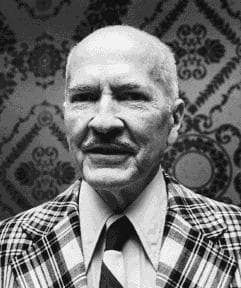
Robert Anson Heinlein was an American science fiction author, aeronautical engineer, and naval officer. Sometimes called the "dean of science fiction writers", he was among the first to emphasize scientific accuracy in his fiction, and was thus a pioneer of the subgenre of hard science fiction. His published works, both fiction and non-fiction, express admiration for competence and emphasize the value of critical thinking. His plots often posed provocative situations which challenged conventional social mores. His work continues to have an influence on the science-fiction genre, and on modern culture more generally.







