“The problem with being fifty-one is that you are no longer a young man, but you are not yet an old man. You are in the middle, and the middle is a very dangerous place to be.”
— Hank Devereaux reflecting on his age and career stage.

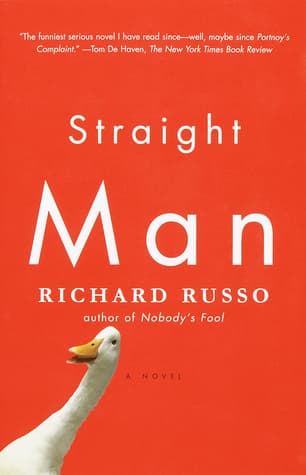
Richard Russo (1997)
Genre
Literary Fiction
Reading Time
520 min
Key Themes
See below
Sign in to track this book
An English department chairman navigates a week of academic absurdity, family chaos, and personal crises, all while trying to keep his career intact.
William Henry Devereaux, Jr., known as Hank, the chairman of the English department at West Central Pennsylvania University, begins a new week of chaos. The department faces severe budget cuts, leading to faculty anxiety and infighting. In frustration, Hank sends an anonymous memo to the media, threatening to kill a duck every day until the budget is restored. This absurd act, intended as a protest, backfires, drawing negative attention to the university and placing Hank in the crosshairs of Dean Teddy Weems and President Horne. The incident quickly becomes a local media sensation, further complicating strained relationships within the department.
The English department holds a contentious faculty meeting to discuss the budget cuts and the fallout from the 'duck memo.' During the meeting, the visiting feminist poet, Gracie DuBois, who has a history of animosity towards Hank, confronts him aggressively. Their argument escalates, and Gracie slashes Hank's nose with a pen, leaving him bleeding and further humiliated. This public assault adds to Hank's misfortunes and provides more reason for the university administration to question his fitness as department chair. The incident also highlights deep-seated resentments and ideological divides within the department.
Following the attack, Hank goes to the hospital for his injured nose. While recovering, he feels increasingly isolated and paranoid. His wife, Lily, who works in the university administration, seems distant and preoccupied. Hank suspects Lily might be having an affair with Dean Teddy Weems, a man he dislikes and distrusts. This suspicion, fueled by his own insecurities and professional stress, begins to bother him, adding personal anxiety to his tumultuous week. His thoughts reveal his love for Lily, but also his fear of losing her.
Amidst the chaos, Hank discovers that his secretary, Ruby, is an aspiring writer. He finds her manuscript and, to his surprise, finds it exceptionally good — perhaps even better than his own published work. This realization is a blow to Hank's ego, as he sees himself as a serious writer whose academic career has overshadowed his creative ambitions. Ruby's hidden talent forces Hank to confront his own literary mediocrity and the compromises he has made, adding another layer of existential dread to his challenging week. It also sparks a reluctant admiration for Ruby.
The media attention surrounding the 'duck incident' intensifies, with local and even national news outlets picking up the story. Hank becomes an unwilling celebrity, the subject of ridicule and speculation. This public spectacle further divides the English department, with some faculty members openly critical of Hank's actions and others attempting to defend him, though weakly. The increased scrutiny from the university administration, particularly President Horne, puts Hank's job in jeopardy. The incident becomes a microcosm of larger struggles within academia, highlighting issues of funding, ego, and public perception.
Driven by his suspicions about Lily and his frustration with the budget cuts, Hank confronts Dean Teddy Weems. The confrontation is tense and accusatory, with Hank attempting to assert his authority while subtly probing Weems about his relationship with Lily. Weems, always a smooth operator, deflects Hank's accusations and maintains his composure, further infuriating Hank. The encounter leaves Hank feeling no closer to the truth about Lily and even more convinced of Weems's underhanded tactics. This interaction underscores the power imbalance and personal animosity between the two men.
Hank receives an enigmatic message from his estranged father, William Devereaux, Sr., a once-renowned literary theorist, requesting a meeting at an abandoned amusement park. This unusual location and the sudden re-emergence of his father, with whom Hank has a complex and strained relationship, add to the week's bizarre events. Hank's father has a history of philandering and academic notoriety, and Hank harbors deep-seated resentment and admiration for him. The impending meeting creates a sense of foreboding and anticipation, suggesting a significant turning point in Hank's personal journey.
Hank meets his father, William Devereaux, Sr., at the desolate amusement park. The confrontation is emotionally charged, with Hank airing years of resentment and frustration about his father's academic successes, his womanizing, and his general self-absorption. His father, now older and seemingly more vulnerable, attempts to explain his past actions and their impact on Hank's life. This meeting is a moment for Hank, forcing him to confront the complex legacy of his father and the ways it has shaped his own identity and career path. The discussion is a mixture of anger, understanding, and a bittersweet reconciliation.
During the intense discussion at the amusement park, Hank and his father begin to achieve a fragile understanding. His father reveals aspects of his own struggles and regrets, shedding new light on his past behavior. This cathartic exchange allows Hank to process some of his long-held grievances and to see his father not just as a flawed figure, but as a complex human being. The conversation also touches upon the nature of academia, ambition, and the compromises one makes in life. This partial reconciliation provides Hank with a sense of closure and a clearer perspective on his own future.
After the tumultuous week, Hank faces the consequences of the 'duck incident' and the ongoing departmental strife. While his job as chairman remains precarious, he gains a new sense of clarity and resolve. The confrontations with his father, Dean Weems, and the discovery of Ruby's writing talent force him to re-evaluate his priorities and accept the realities of his life. He begins to find peace with his chosen path as an academic and a writer, understanding that true fulfillment might lie in embracing the imperfections and absurdities of his existence rather than constantly fighting against them. The novel concludes with Hank looking towards an uncertain but more self-aware future.
The Protagonist
Hank moves from a state of resentful stagnation and self-pity to a more accepting and self-aware understanding of his life and career, finding a fragile peace with his academic path.
The Supporting
Lily remains a steadfast presence, navigating Hank's crises with patience and subtle strength, ultimately helping him to confront his issues.
The Supporting
Introduced as a distant, idealized, and resented figure, he becomes more humanized through his confrontation with Hank, revealing his own vulnerabilities and regrets.
The Antagonist
Weems remains a consistent antagonist, his ambition and bureaucratic efficiency serving as a constant irritant and threat to Hank.
The Supporting
Initially a background figure, Ruby's character develops as her hidden talent for writing is revealed, challenging Hank's perceptions and self-image.
The Supporting
Gracie serves as a catalyst for Hank's physical and emotional distress, her confrontation marking a low point in his week.
The Supporting
Horne remains a distant, authoritative figure, reacting to Hank's antics with increasing exasperation and threats of disciplinary action.
The novel satirizes the petty squabbles, bureaucratic inefficiency, and inflated egos common in university life. From the English department's budget crisis, which leads to Hank's ludicrous 'duck memo,' to the ideological battles between faculty members like Gracie DuBois and Hank, Russo exposes the often-ridiculous nature of academic politics. The pursuit of knowledge, supposedly the core mission, frequently gets lost amidst personal grievances, grant applications, and the constant threat of budget cuts. The university setting becomes a microcosm for larger societal absurdities, where intellectual pursuits are undermined by mundane concerns.
“''Only in academe could a grown man, a department chairman no less, threaten to execute a duck and still expect to be taken seriously... or at least not be arrested.'”
Hank Devereaux is a character grappling with unfulfilled literary ambitions and the compromises he has made. He sees himself as a 'straight man' — a comedic foil to life's absurdities, but also a person whose own aspirations have been sidelined. His discovery of Ruby's superior writing talent, his resentment towards his famous father, and his general dissatisfaction with his academic career all contribute to a sense of midlife malaise. The novel explores the pain of realizing one might not achieve youthful dreams and the struggle to find meaning and acceptance in current circumstances. This theme resonates with anyone who has looked back at their life and questioned their choices.
“'He was a straight man, after all, a necessary conduit for the truly funny, tragic, and absurd people in the world.'”
Hank's relationship with his father, William Devereaux, Sr., is central to the novel. His father, a brilliant but philandering literary theorist, casts a long and complicated shadow over Hank's life. Hank simultaneously admires, resents, and feels overshadowed by his father's academic success and personal notoriety. The novel explores how parental figures, especially those with larger-than-life personalities, can shape their children's paths and identities, often creating a cycle of unresolved issues. The confrontation at the abandoned amusement park is a moment where Hank attempts to break free from this legacy, seeking understanding and peace.
“'He was a man who had spent his life both following and fleeing his father's formidable shadow.'”
Hank's marriage to Lily forms the emotional core of the novel, even as his own insecurities and paranoia threaten to unravel it. His baseless suspicions about Lily and Dean Weems highlight his fears of abandonment and inadequacy. Despite his flaws, Hank loves Lily, and their relationship is portrayed with both tenderness and honesty. The novel explores the complexities of long-term marriage — the unspoken understandings, the moments of doubt, and the enduring commitment that can withstand even the most absurd external pressures. It suggests that true intimacy requires vulnerability and trust, qualities Hank struggles to maintain amidst his personal chaos.
“'He loved her so much it hurt, and sometimes that pain manifested itself as a suspicion he couldn't control.'”
The story is told primarily through Hank Devereaux's subjective and often self-deprecating voice.
The novel is narrated from Hank Devereaux's perspective, offering readers direct access to his witty, cynical, and often paranoid internal monologue. This allows for an intimate portrayal of his anxieties, frustrations, and unfulfilled desires, making him a highly relatable character despite his absurd predicaments. The subjective narration also creates dramatic irony, as the reader often understands the reality of situations (e.g., Lily's fidelity) better than Hank does, who is frequently lost in his own self-pity and misinterpretations. This narrative choice immerses the reader in Hank's unique worldview and fuels much of the novel's humor and pathos.
The novel uses humor and exaggeration to critique academic life and human foibles.
Russo employs satire and dark humor to highlight the absurdities of academia and the human condition. Hank's threat to execute a duck, the dramatic faculty meetings, and his internal monologues filled with self-deprecating jokes and cynical observations all contribute to the novel's comedic tone. This humor, however, is often tinged with pathos, preventing the satire from becoming purely farcical. It allows the reader to laugh at Hank's predicaments while simultaneously empathizing with his underlying pain and struggles. The humor serves as a coping mechanism for Hank and a critical lens through which to view the world.
Hank's anonymous memo about killing a duck serves as the inciting incident for the week's chaos.
The anonymous memo Hank sends, threatening to kill a duck daily until the English department's budget is restored, acts as the primary catalyst for the entire plot. This absurd act, intended as a desperate protest, immediately spirals out of control, drawing unwanted media attention, intensifying administrative scrutiny, and exacerbating faculty tensions. It forces Hank into a series of confrontations and self-reflections that drive the narrative forward. Without this initial, outlandish gesture, Hank's week would likely have remained one of quiet desperation rather than public humiliation and profound personal reckoning.
The setting for the climactic confrontation between Hank and his father.
The abandoned amusement park serves as a highly symbolic setting for the pivotal confrontation between Hank and his father. Its decaying rides and faded grandeur mirror the decline of his father's once-illustrious career and the 'ruined' aspects of their relationship. The park evokes a sense of lost childhood, broken dreams, and the bittersweet passage of time, providing a poignant backdrop for their discussion of past regrets and the complex legacy of their family. The setting enhances the emotional weight of their reconciliation, emphasizing themes of memory, decay, and the search for meaning amidst the wreckage of the past.
“The problem with being fifty-one is that you are no longer a young man, but you are not yet an old man. You are in the middle, and the middle is a very dangerous place to be.”
— Hank Devereaux reflecting on his age and career stage.
“Academic life is a kind of extended adolescence; the longer you stay, the harder it is to leave.”
— Hank's cynical view of university careers.
“Every man is a straight man in his own story, even if he's the clown in everyone else's.”
— A central theme of the book, relating to self-perception and role.
“The truth, like most truths, was complicated and unsatisfying.”
— Hank's thought on the complexity of situations.
“One of the great pleasures of middle age is watching your children become adults and realizing that they are better people than you are.”
— Hank's quiet reflection on his daughter, Julie.
“The trick to surviving in academia, he'd often thought, was to never actually teach anything. Just talk about it.”
— Hank's jaded perspective on the role of professors.
“Sometimes the only way to get through a day is to pretend it’s a performance, and you’re just playing a part.”
— Hank's coping mechanism for difficult situations.
“He often wondered if he was merely a footnote in his own life.”
— Hank's feelings of insignificance amidst the chaos.
“The past, he knew, was a country where everyone spoke a language he no longer understood.”
— Hank contemplating changes over time and his own aging.
“There was a fine line between being a man of principle and being a stubborn ass.”
— Hank's internal debate about his own actions and character.
“All of life, he concluded, was an elaborate effort to maintain some semblance of order in the face of absolute chaos.”
— Hank's philosophical musings on the human condition.
“He had always believed that a good argument was like a good fight: it cleared the air, even if it left a few bruises.”
— Hank's approach to conflict and confrontation.
“Humiliation, he'd discovered, was a surprisingly renewable resource.”
— Hank's frequent experiences with embarrassing situations.
“The greatest gift you can give your children is your absence, so they can learn to live without you.”
— A darkly humorous and cynical thought of Hank's about parenting.
Ready to see how well you understood this book? Take our interactive quiz with 10 questions.
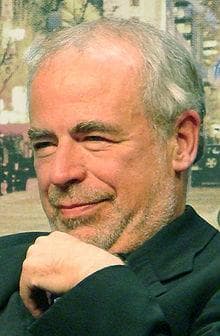
Richard Russo is an American novelist, short story writer, screenwriter, and teacher. In 2002, he was awarded a Pulitzer Prize in Fiction for his novel Empire Falls.







