
Biography coming soon.

Edward Bloor (2002)
Genre
Fantasy / Children's / Mystery / Young Adult
Reading Time
12 Minutes
Key Themes
See below
Sign in to track this book
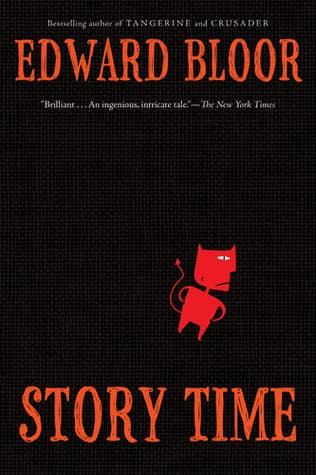
At a "prestigious" magnet school promising the best education, two students uncover a sinister plot involving demonic forces and a deadly obsession with standardized tests.
Siblings George and Kate Anderson are nervous about their transfer to the Whittaker Magnet School, known for its academic excellence. Their father, a firm believer in the school's methods, insists they attend. When they arrive, the school feels sterile and almost dystopian. Classes are in windowless rooms, and the curriculum focuses heavily on test preparation. Students must drink a foul-tasting protein shake, supposedly for better performance, which George and Kate find suspicious. They quickly realize Whittaker is far from a normal school, and its pursuit of perfect test scores seems to have an unsettling cost.
Soon after arriving, George and Kate hear whispers among students about strange events. Students disappear without explanation, and the faculty's responses are vague. The most common rumor involves a 'demon' or evil entity in the school, responsible for the disappearances. This demon supposedly preys on students who fail to meet the school's impossible academic standards. George and Kate are initially skeptical, but they become increasingly disturbed as more students vanish and fear grows among their peers. These stories seem to be more than just gossip.
Feeling isolated by Whittaker's oppressive environment, George and Kate find comfort with a small group of rebellious students. This group includes the artistic Trixie and the insightful Miguel, who openly question the school's methods and the official explanations for the disappearances. They share suspicions about the protein shakes, locked doors, and constant surveillance. These friendships give George and Kate allies and a different view of the school, creating a sense of resistance against the institution's conformity and secrecy.
Through their investigations and talks with friends, George and Kate uncover a hidden program called 'Story Time.' This is not an elective but a punishment for students who perform poorly on tests or act non-conformist. Under the stern Ms. Perdue, students are forced to write stories, often on school-assigned themes. The process is grueling and mentally draining; students emerge withdrawn and changed, or sometimes do not emerge at all. The true purpose of 'Story Time' remains a mystery, increasing George and Kate's alarm.
Ms. Perdue, a seemingly ordinary but intensely focused teacher, becomes a focus of George and Kate's suspicions. She supervises the 'Story Time' program, and her demeanor suggests a deep commitment to Whittaker's ideology. Students who have been through her program say she is unyielding and manipulative, seemingly draining them of their individuality. George and Kate suspect she is more than just a teacher; she seems to be a key enforcer of the school's agenda, possibly connected to the 'demon' and the disappearances. Her presence casts a long shadow over the school, embodying its oppressive atmosphere.
As George and Kate look deeper into Whittaker's mysteries, they connect 'Story Time,' the disappearing students, and the 'demon.' They believe the demon is not a supernatural entity but a manifestation of the stories students are forced to create. The intense emotional and psychological energy put into these mandated narratives, especially those born of fear and conformity, seems to create a malevolent force. The school, through Ms. Perdue, is essentially harvesting students' creative output and emotional essence, turning it into something destructive.
Driven by their suspicions, George and Kate, often with their friends' help, infiltrate restricted areas of the school. They discover a hidden chamber or series of rooms connected to 'Story Time.' Here, they see unsettling evidence of the demon's presence: strange energy fluctuations, disturbing images that mirror the forced narratives, and perhaps remnants of the disappeared students. This discovery confirms their theory that the demon is tied to the school's creative process, a physical manifestation of suppressed imagination and forced narratives, solidifying the horror of Whittaker's methods.
George and Kate, with their discoveries, confront Ms. Perdue. Under pressure, she reveals the true, horrifying purpose of Whittaker Magnet School. The school's high test scores are a facade. The 'Story Time' program, fueled by protein shakes that dull critical thinking and enhance suggestibility, extracts and harnesses students' creative energy. This energy, channeled through their forced narratives, creates a powerful, malevolent entity—the 'demon'—which Ms. Perdue and the school's unseen masters intend to control for their own purposes, perhaps to manipulate society or gain power.
Understanding that the demon is a product of suppressed and manipulated creativity, George and Kate realize that fighting it with traditional methods will fail. Instead, they must combat it with the very source of its power: stories and imagination, used in a positive, freeing way. They rally their friends, encouraging them to reclaim their creative voices and write stories of their own choosing—stories of hope, defiance, and individuality. This collective act of uncoerced storytelling becomes their weapon, aiming to overwhelm and dismantle the demon's power, which thrives on fear and forced conformity.
In a dramatic showdown, George, Kate, and their allies unleash their collective, unchained creativity. They write and tell vibrant, diverse stories filled with personal meaning, directly opposing the drab, fear-driven narratives that power the demon. This torrent of genuine imagination creates a chaotic energy that destabilizes the demon. The entity, unable to withstand the influx of authentic, positive narrative power, begins to unravel. Ms. Perdue and the school's administrators, stripped of their control over the students' minds and creative output, find their entire system collapsing, exposed and defeated by the very forces they sought to exploit.
With the demon vanquished and 'Story Time' dismantled, Whittaker Magnet School's dark secrets are fully exposed. The oppressive atmosphere lifts, and the students, including those who had 'disappeared,' are freed, though scarred by their experience. The true nature of the school's 'academic excellence'—built on exploitation and suppressed individuality—is revealed to the wider world. George and Kate, having played a key role in this liberation, emerge as heroes, forever changed by their ordeal. The school is likely shut down, and the students begin the long process of healing and rediscovering their true selves and their love for learning.
The Protagonist
George transforms from a compliant, somewhat passive student into a resourceful and determined leader, actively fighting against the oppressive system. He learns to trust his instincts and the power of imagination.
The Protagonist
Kate learns to channel her vivid imagination from a source of vulnerability into a powerful weapon against the school's forced conformity, becoming a key figure in the final confrontation.
The Antagonist
Ms. Perdue remains steadfast in her villainy, serving as the primary enforcer of the school's system. Her arc culminates in her defeat and the exposure of her complicity, but not necessarily a change of heart.
The Supporting
Trixie begins as a frustrated individual and grows into a vital member of the resistance, using her artistic talents to help fight against the demon.
The Supporting
Miguel evolves from a wary observer to an active participant in the rebellion, using his intellect to unravel the school's mysteries.
The Supporting
Mr. Anderson remains largely unaware of the true horrors within Whittaker until the very end, serving as a symbol of the well-intentioned but misinformed public.
The Antagonist
The Demon is created and grows in power throughout the story, eventually being defeated and dissolved by the counter-force of authentic, liberating student imagination.
The Antagonist
The administration's true nature is gradually exposed as the protagonists uncover the school's secrets, leading to their ultimate downfall and the collapse of their system.
The novel examines the harmful effects of an education system focused only on standardized test scores and rote learning. Whittaker Magnet School, with its windowless classrooms, protein shakes, and 'Story Time' program, is a dystopian example of this issue. It shows how such a system can stifle creativity, individuality, and critical thinking, turning students into data points instead of fostering real intellectual growth. The 'demon' itself is a literal manifestation of the destructive power in suppressing authentic learning and personal expression for artificial metrics.
“The Whittaker Way. It's about efficiency, precision, and quantifiable results. We don't waste time on 'fluff' here. Every minute is optimized for success.”
In contrast to the oppressive educational system, the novel celebrates the freeing power of imagination and authentic storytelling. While the school tries to control and weaponize creativity through forced narratives, George and Kate discover that genuine, uncoerced stories are the key to resistance and freedom. The demon, born from manipulated narratives, is ultimately defeated by the students' collective act of creating their own, heartfelt stories. This theme emphasizes that imagination is not trivial but a fundamental human need and a powerful force for change and self-expression.
“They want our stories, but not our own stories. They want to tell us what to write. But real stories, the ones that come from inside you, those are the ones that matter.”
A central conflict in 'Story Time' is the struggle between the school's demand for absolute conformity and the students' need for individuality. Whittaker actively suppresses unique personalities, creative impulses, and dissenting thoughts, aiming to mold every student into a compliant, high-scoring automaton. The 'disappearances' and the 'Story Time' program are extreme methods of enforcing this conformity. The protagonists and their allies, by daring to question, investigate, and ultimately express their true selves, fight for the right to be individual in a system that seeks to erase it, highlighting the importance of personal identity.
“They don't want us to think, George. They want us to be exactly the same, like little robots humming the same tune.”
Fear is a constant element at Whittaker Magnet School, used by the administration as a primary tool for control. The rumors of the 'demon,' the unexplained disappearances, and the psychological pressure of the 'Story Time' program all create an atmosphere of dread that keeps students compliant. The school manipulates this fear to extract creative energy and maintain absolute authority. The novel explores how fear can paralyze individuals and entire communities, making them susceptible to manipulation, and conversely, how overcoming that fear through courage and solidarity is essential for reclaiming agency.
“The fear in this school... it's like another subject they teach. And we're all getting straight A's.”
A mysterious beverage designed to suppress and enhance.
The daily protein shake served to all students at Whittaker is a crucial plot device. Initially presented as a health supplement for academic performance, it quickly becomes suspicious. It is implied to have properties that suppress critical thinking, dull emotions, and make students more suggestible, thus priming them for the 'Story Time' program and the extraction of their creative energy. It symbolizes the insidious ways an oppressive system can chemically and psychologically manipulate its subjects, blurring the lines between nourishment and control, and contributing to the overall sense of unease and dread within the school.
A punitive, creativity-draining program.
The 'Story Time' program is the central plot device, serving as the engine of the school's true purpose. It is where students are sent for poor performance or non-conformity, forced to write specific narratives under duress. This program is not just a punishment but a mechanism for harvesting and manipulating student creativity, which in turn powers the 'demon.' It represents the perversion of education and the exploitation of children's minds. Its existence drives the mystery and provides the key to understanding the demon and the school's ultimate agenda, leading directly to the climax.
A metaphorical and literal manifestation of suppressed creativity.
The 'demon' functions as both a literal entity and a powerful metaphor. Literally, it is a malevolent force born from the forced, fear-driven narratives of the 'Story Time' program, responsible for the disappearances and the oppressive atmosphere. Metaphorically, it represents the destructive consequences of an education system that stifles individuality and creativity, turning the very essence of human imagination into something harmful. Its ambiguous nature keeps the reader guessing, while its defeat signifies the triumph of authentic self-expression over institutional control.
A symbol of isolation and lack of perspective.
The ubiquitous windowless classrooms at Whittaker Magnet School are a subtle yet effective plot device. They immediately establish the school's oppressive and isolated atmosphere. Symbolically, they represent the students' lack of connection to the outside world, their limited perspective, and the school's deliberate attempt to control their environment and information. This physical confinement mirrors the intellectual and emotional confinement imposed by the curriculum, emphasizing the theme of suppressed freedom and the absence of natural light and natural thought.
Ready to see how well you understood this book? Take our interactive quiz with 10 questions.
Biography coming soon.







