“It was a simple matter of survival, a matter of getting through the next few hours without being eaten by something with more teeth than brains.”
— Skink reflecting on the dangers of the Florida wilderness.

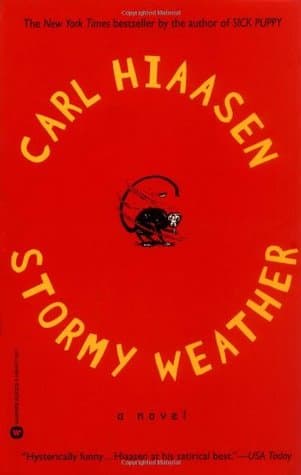
Carl Hiaasen (1995)
Genre
Thriller / Mystery
Reading Time
388 min
Key Themes
See below
Sign in to track this book
In the chaotic wake of a Florida Keys hurricane, a law school dropout chases a Gaboon viper and storm-shocked monkeys, while a seductive con artist and a shotgun-toting salesman navigate their own hilariously disastrous schemes.
Hurricane Andrew, a Category 5 storm, devastates South Florida. This event immediately draws a varied group of people, all hoping to use the chaos for personal gain. Among them are scam artists eager to defraud insurance companies and opportunists looking to profit from rebuilding. The storm also displaces many exotic animals from private collections and zoos, adding to the strange atmosphere. This initial destruction sets off the intertwined plots, as characters gather in the damaged areas, each with their own unique, and often questionable, goals.
Maxine, a beautiful and clever con artist, travels to Florida with her accomplice, a slow-witted handyman named Snapper. They plan to exploit the post-hurricane chaos by faking property damage and filing false insurance claims. Maxine's charming manipulation and Snapper's unwitting help are key to their operation. They target properties with real damage, exaggerating it or creating entirely new claims. This scheme puts them in conflict with other characters, including those genuinely trying to help or those with their own illegal designs on hurricane relief funds.
Arkady, a former aide to a corrupt Florida governor, arrives in South Florida with a camera, intending to film a documentary about the hurricane's aftermath. His real goal, however, is to expose the widespread fraud and corruption he expects to follow the disaster, especially involving his former boss. Arkady is accompanied by an escaped Gaboon viper, which he is trying to return to its owner. His efforts to document the post-storm reality lead him to meet various shady characters and uncover evidence of the very schemes he set out to expose, often putting him in dangerous situations.
Edie Marsh, a newlywed on her honeymoon with her husband, Dave, finds herself stranded after Hurricane Andrew. Dave is obsessed with observing the hurricane's eye and its effects, making Edie feel ignored. She soon meets Avila, a sleazy mobile home salesman who sees a chance to exploit the desperate need for housing. Avila, a symbol of opportunistic greed, tries to sell Edie and other displaced people overpriced and often poor-quality mobile homes. Edie's growing frustration with Dave and her desperate situation make her vulnerable to Avila's schemes, pulling her deeper into the chaotic post-storm environment.
Arkady's Gaboon viper, a highly venomous snake, escapes its container during the post-hurricane turmoil. This escape adds another layer of danger and absurdity, as the snake moves through the devastated landscape, occasionally encountering unsuspecting characters. The search for the viper becomes a recurring side plot, connecting with the main story threads. The dangerous reptile symbolizes the wild and unpredictable nature of the hurricane's aftermath, adding a thrilling and darkly comedic element to the story as characters narrowly avoid or unknowingly interact with the deadly creature.
Avila, the dishonest mobile home salesman, takes advantage of the widespread home destruction. He aggressively markets his mobile homes, often to desperate and vulnerable hurricane victims. His sales tactics are predatory, and he uses intimidation or outright fraud to close deals. Avila's ambition to create a mobile home empire in the disaster zone puts him at odds with Arkady, who is documenting the corruption, and other characters caught in his web of deceit. His actions highlight the exploitation that often follows major disasters.
Maxine's elaborate insurance fraud scheme, initially successful, begins to fail as the immediate post-hurricane chaos lessens. The large number of fraudulent claims and increased scrutiny from insurance adjusters and law enforcement make her operation harder to maintain. Her accomplice, Snapper, with his clumsy nature, accidentally creates problems, and other opportunists begin to infringe on her territory. Maxine's efforts to keep her scheme going lead her into increasingly risky situations, forcing her to adapt and improvise, often with dangerous results.
Dave, Edie's husband, remains consumed by his fascination with Hurricane Andrew, meticulously documenting every detail, often at the expense of his relationship with Edie. His neglect makes Edie feel isolated. This, combined with her growing discomfort with Avila's predatory advances, pushes Edie to assert herself. She begins to take matters into her own hands, making decisions that differ from Dave's plans and ultimately leading her to a more active role in the unfolding events. Her rebellion marks a significant change in her character.
The various plotlines meet at Avila's mobile home park, a makeshift community of his questionable dwellings. Arkady, still pursuing his documentary and the escaped viper, finds himself there. Maxine and Snapper, trying to expand their fraud, also arrive. Edie, increasingly frustrated with Dave and Avila, is also present. This gathering sets the stage for a chaotic confrontation, involving the Gaboon viper, a group of escaped monkeys, and various firearms. The clash reveals the truth about Avila's schemes and forces the characters to make desperate choices, ending in a violent and darkly comedic climax.
After the chaotic events at the mobile home park, the various characters face the results of their actions. Some are arrested, others escape, and a few find unexpected new beginnings. Arkady, having survived, continues his mission to expose corruption, perhaps with a new outlook. Edie, having asserted her independence, begins a new chapter, free from Dave's obsession. The hurricane's physical damage may be slowly repaired, but the emotional and moral states of the characters are forever changed, reflecting the lasting impact of both the natural disaster and the human greed it unleashed.
The Protagonist
Arkady begins as an observer seeking to expose corruption and evolves into an active participant in the chaos, ultimately finding a new purpose and a tentative romantic connection.
The Antagonist/Love Interest
Maxine starts as a calculating fraudster, but her plans are continually upended by the chaotic environment and Arkady's interference, leading to an unexpected attraction.
The Supporting/Love Interest
Edie transforms from a passive, neglected newlywed into an independent woman, asserting her will and finding a more fulfilling connection.
The Antagonist
Avila's unwavering greed leads him to increasingly desperate and violent acts, culminating in his downfall.
The Supporting
Snapper remains largely static, a loyal but incompetent henchman who is ultimately a pawn in Maxine's larger game.
The Supporting
Dave remains largely static in his obsession, ultimately losing his wife due to his neglect.
The Mentioned/Plot Device
The viper's arc is simply its escape and subsequent movement through the story, serving as a catalyst for various encounters.
Hiaasen satirizes the human tendency to exploit disaster for personal gain. Characters like Avila and Maxine represent opportunistic individuals who see the hurricane's devastation not as a tragedy, but as a profitable business chance. Avila's attempts to sell shoddy mobile homes to desperate victims and Maxine's elaborate insurance fraud schemes highlight the moral emptiness that can appear in times of crisis. The sheer scale and boldness of these scams, often carried out with clumsy incompetence, emphasize the comedic yet cynical view of human nature. The novel suggests that even against immense natural power, human greed remains a persistent and often ridiculous force.
“The hurricane had brought out the worst in people, but in South Florida, that wasn't saying much.”
The hurricane itself is the ultimate symbol of chaos, but the theme extends to the unpredictable nature of the aftermath and the characters' lives. The escaped Gaboon viper, the group of monkeys, and the many eccentric individuals contribute to a sense of constant, unfolding disorder. Plans, whether criminal or well-intentioned, are constantly interrupted by unforeseen circumstances, reflecting how little control humans truly have over their environment and each other. This unpredictability moves the plot forward, creating a dynamic and often hilarious story where anything can happen at any moment, forcing characters to adapt or fail.
“In the hurricane zone, hell and hilarity rule.”
While the hurricane is a natural disaster, the novel subtly addresses the broader theme of environmental decline and humanity's often destructive relationship with nature. The displaced exotic animals, the uncontrolled development, and the exploitation of the natural landscape for profit all point to a disregard for the environment. The hurricane, in a sense, is nature's violent response to this imbalance. Hiaasen often uses the unique Florida ecosystem as a setting for human foolishness, showing how human actions contribute to the fragility of the environment and the strange consequences when nature reasserts itself.
“Florida was always a place where the weirdness found you, but the hurricane had opened the floodgates.”
Amidst the chaos and corruption, several characters search for something more genuine in their lives. Edie, initially trapped in a shallow marriage, seeks independence and a real connection. Arkady, disillusioned with his past, tries to find meaning by exposing truth and ultimately finds a romantic interest. Even Maxine, despite her criminal nature, shows moments of wanting something beyond her schemes. This theme explores how extreme circumstances can remove pretenses, forcing individuals to confront their true desires and seek more authentic relationships and purposes, often with unexpected partners.
“She wanted a life that wasn't just about surviving, but about living.”
Hurricane Andrew serves as the primary instigator for all plotlines and character interactions.
Hurricane Andrew is not merely a setting; it is the central catalyst that sets the entire plot in motion. Its destructive power creates the conditions for rampant fraud, displaces animals, and forces disparate characters into close proximity. Without the hurricane, the insurance scams, the mobile home exploitation, and the personal crises of characters like Edie would not occur or would manifest very differently. The storm acts as a reset button for the social order, allowing the novel to explore human behavior stripped of its usual conventions, highlighting both the worst and occasionally the most resilient aspects of humanity.
An escaped venomous snake that functions as a running gag and symbol of danger.
The Gaboon viper serves multiple functions in the narrative. Primarily, it's a running gag, adding dark humor and unexpected moments of tension as it slithers through the chaos, often encountering characters at inopportune times. Symbolically, it represents the untamed, dangerous, and unpredictable elements of the Florida wilderness that clash with human attempts to control or exploit it. Its presence also serves as a bonding element between Arkady and Edie, as they both become entangled in its recapture, and is a constant reminder of the pervasive danger in the post-storm environment.
Exaggeration of characters and situations to highlight societal flaws.
Hiaasen employs satirical hyperbole to create over-the-top characters and situations that, while absurd, reflect deeper societal flaws. Avila, the shotgun-toting mobile home salesman, is an exaggerated embodiment of greedy opportunism. Maxine's elaborate schemes push the boundaries of plausibility to underscore the audacity of insurance fraud. This device allows the author to critique aspects of Florida culture, corruption, and human nature in a darkly comedic way, making the commentary more impactful by presenting it through outrageous, memorable scenarios that are just believable enough to be unsettling.
Multiple, seemingly disparate character arcs converge into a single narrative climax.
The novel masterfully weaves together several distinct plotlines involving various characters—Arkady's documentary, Maxine's fraud, Edie's personal crisis, and Avila's schemes. These individual stories initially run parallel but gradually begin to intersect and influence one another. This technique builds narrative complexity and tension, as the reader anticipates how these disparate threads will eventually converge. The climax at Avila's mobile home park is a direct result of this interweaving, bringing all the main players together for a chaotic and explosive resolution, demonstrating how seemingly unrelated events are connected in a shared environment of chaos.
“It was a simple matter of survival, a matter of getting through the next few hours without being eaten by something with more teeth than brains.”
— Skink reflecting on the dangers of the Florida wilderness.
“The problem with common sense, he'd often observed, was that it wasn't very common.”
— Skink's general observation about human behavior.
“The hurricane was not an act of God. It was an act of nature, and nature, like most women, could be unpredictable and devastatingly beautiful.”
— Serge A. Storms contemplating Hurricane Bonnie.
“He believed in karma, but he also believed in giving karma a little nudge now and then.”
— Serge A. Storms' philosophy on justice.
“There was a fine line between eccentricity and outright insanity, and Skink had long ago crossed it, then burned the bridge behind him.”
— An internal thought about Skink's mental state.
“Florida was a state where the bizarre was merely a Tuesday.”
— An observation about the unique nature of Florida.
“He had a face like a crumpled road map and a disposition to match.”
— Description of a particularly unpleasant character.
“The wind howled like a banshee with a sinus infection.”
— Describing the sound of the hurricane.
“Some people just needed to be introduced to a higher power, preferably one with a really big hammer.”
— Serge's thoughts on dealing with particularly obnoxious individuals.
“The only thing more dangerous than a pissed-off Skink was a pissed-off Skink with a plan.”
— An internal thought about the potential danger Skink poses.
“Ignorance, he often said, was not bliss. It was a damn liability.”
— Skink's take on the value of knowledge.
“He viewed the world as a vast, interconnected amusement park, and he was determined to ride every single ride, no matter how rickety or terrifying.”
— Serge's adventurous and somewhat reckless outlook on life.
“The only thing worse than a hurricane was the aftermath, when all the carpetbaggers and vultures descended.”
— Skink's cynical view of human opportunism after a disaster.
“He had a talent for attracting trouble, much like a lightning rod attracts lightning, only with more teeth and less static electricity.”
— Describing a character's unfortunate propensity for chaos.
Ready to see how well you understood this book? Take our interactive quiz with 10 questions.
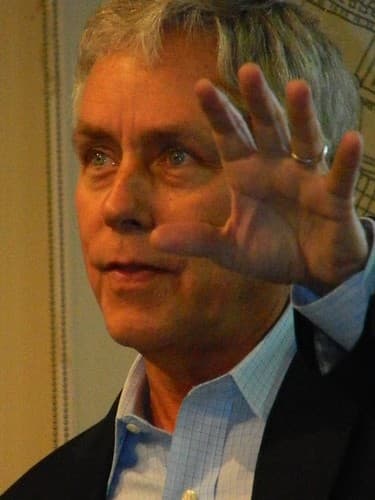
Carl Hiaasen is a celebrated American author known for his satirical crime novels often set in Florida. His works, including "Stormy Weather," "Hoot," "Scat," and "Flush," are characterized by their sharp wit, environmental themes, and eccentric characters. Hiaasen's distinctive voice has earned him a significant following and critical acclaim for his unique brand of Florida noir.







