“Do not meddle in the affairs of sorcerers, for you are crunchy and taste good with ketchup.”
— A humorous warning about the dangers of magic.

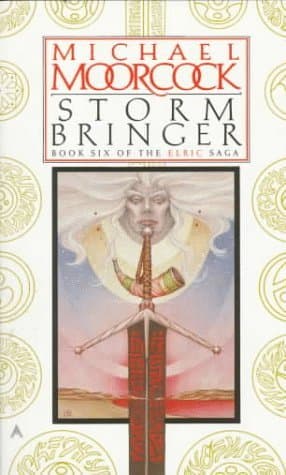
Michael Moorcock (1965)
Genre
Fantasy / Science Fiction
Reading Time
220 min
Key Themes
See below
Sign in to track this book
As the cosmos collapses, the albino prince Elric of Melniboné must wield the soul-devouring Stormbringer and sacrifice everything he loves to create a new age from the ashes of existence.
Elric of Melniboné, an albino emperor and sorcerer, struggles with his parasitic sentient sword, Stormbringer, which craves souls and keeps him alive. With his friend Moonglum, Elric follows prophetic dreams to the mythical city of Tanelorn, a place outside time and space. He believes reaching Tanelorn is key to understanding his terrible destiny. Their journey is dangerous, meeting many people from the Young Kingdoms and facing the growing chaos in the world. Elric's inner fight between his wish for peace and Stormbringer's hunger for blood grows, hinting at the coming cosmic war.
As the balance between Law and Chaos breaks across the multiverse, Elric returns to the ruins of his old capital, Imrryr, the Dreaming City. He finds it held by Chaos forces, preparing for a final war. Elric's return is not for his lost empire, but a grim acceptance that his fate is tied to the coming fight. He sees the Lords of Chaos gain power, trying to destroy the known world. This return forces Elric to face his past and the deep losses he has suffered.
Stormbringer's role in the cosmic drama becomes clearer. It is not just a magic weapon but a sentient being, a Black Sword of Chaos, one of several such blades across the multiverse, all meant to end an age. Its constant hunger and whispers further weaken Elric's will, pushing him to acts he might otherwise avoid. The sword's power is huge, letting Elric beat strong enemies, but each win costs greatly, taking the souls of his foes and sometimes his allies. This symbiotic, parasitic relationship is central to Elric's tragic life and his unwilling part in the coming end.
The long-foretold war between Law and Chaos begins. The multiverse becomes a battlefield, with armies of gods, demons, and mortals fighting across many realms. Elric, wielding Stormbringer, is a central figure in this war, often fighting for Law out of duty, even as Stormbringer itself is a tool of Chaos. He fights with and against various powerful beings, including the Lords of Law and the Dukes of Hell. The war is vast, threatening entire realities. Elric's actions, driven by his will and Stormbringer's influence, shift the balance in unexpected ways.
In a cruel twist, Elric finds his beloved cousin and former empress, Cymoril, who has been brought back to life. Their reunion is short and painful. As the war rages, Stormbringer, in its hunger and its role in cosmic balance, forces Elric to commit the ultimate betrayal. In a moment of horror and despair, Elric is made to kill Cymoril with Stormbringer. This act shatters what little hope and humanity Elric had left, marking him as a tool of destruction and fulfilling a terrible prophecy about his role in the world's end. Her death is a key moment, pushing Elric further into his destined role.
As the cosmic conflict peaks, the mythical city of Tanelorn, once a symbol of hope and stability outside of time, begins to disappear. Elric and Moonglum see its final, ghostly moments. Tanelorn's vanishing means the complete breakdown of the old order and the ultimate triumph of Chaos, or rather, the complete reset of the multiverse. Its disappearance shows the total nature of the apocalypse, leaving no safe place untouched by the coming doom.
During the final stages of the last battle, Moonglum, Elric's loyal companion and his last tie to humanity, is killed. His death is a deep blow to Elric, cutting his last emotional link to the world and leaving him in despair and alone. Moonglum's loyalty and practicality often kept Elric grounded, offering a contrast to Stormbringer's dark influence. His death leaves Elric completely isolated, a lone figure amidst the chaos, further solidifying his path as the doomed hero meant to see the end of all things. This sacrifice shows the deep personal cost of the cosmic war.
The war between Law and Chaos ends with the complete destruction of the Young Kingdoms. Continents break apart, oceans boil, and reality itself tears. All the lands, peoples, and cultures Elric has known are wiped out in a huge cataclysm. This is not just a battle but the literal unmaking of a universe. Elric, empowered by Stormbringer, takes part in this destruction, an unwilling agent of cosmic reordering. He sees the final moments of his world, a desolate landscape of ruin and emptiness, fulfilling the prophecies of a complete end.
With the Young Kingdoms destroyed and the cosmic balance reset, Stormbringer's true purpose is clear. After destroying the old world, the sentient sword turns on its master. In a final, terrible act, Stormbringer consumes Elric's soul and body, absorbing him. This is the ultimate betrayal and the final, personal tragedy for Elric, who had always been sustained and tormented by the blade. His life ends not in a glorious death, but in complete absorption, becoming one with the force that had controlled his life. Stormbringer then disappears, its task done, waiting for a new age and a new master.
After the old multiverse is destroyed and Elric is consumed by Stormbringer, a new, pure world is born. This new reality is untouched by the conflict of Law and Chaos, a blank slate, full of potential. The cycle of cosmic destruction and creation is complete, with Elric having played his unwilling part in this rebirth. The ending is both bleak and hopeful, suggesting that while Elric's individual tragedy is huge, his suffering cleared the way for a fresh start for existence itself. The universe is cleansed, ready for new life and new stories, free from the old conflicts that plagued the previous age.
The Protagonist
Elric begins as a reluctant emperor seeking to escape his destiny, becomes a chaotic wanderer, and ultimately accepts his role as the instrument of universal destruction, sacrificing everything he holds dear, including himself, for the rebirth of existence.
The Antagonist/Plot Device
Stormbringer is an unchanging force of destruction, serving its cosmic purpose to end an age and absorb its master, Elric, to complete the cycle.
The Supporting
Moonglum remains steadfastly loyal to Elric, serving as his foil and friend until his tragic death, which leaves Elric utterly alone.
The Supporting
Cymoril's arc is one of recurring tragedy, ultimately becoming a sacrificial figure whose death by Elric's hand solidifies his path as the doomed hero.
The Antagonist/Supporting
Arioch remains a powerful, unchanging force of Chaos, a constant manipulator who contributes to Elric's tragic destiny.
The Mentioned/Supporting
The Lords of Law participate in the final cosmic battle, ultimately giving way to the new age after the destruction of the old.
The Antagonist
The Lords of Chaos achieve their goal of ending the old age, paving the way for a new creation.
The Antagonist
Jagreen Lern rises to great power as an agent of Chaos before being defeated, signifying the end of mortal power in the face of cosmic forces.
Elric's life is a battle between his wish for peace and the grim fate given to him by his family, his albino condition, and most of all, Stormbringer. He often complains about his lack of choice, feeling like a puppet of higher powers (Law, Chaos, or the sword). The repeated prophecies and the steady march toward the world's end show how little control Elric truly has, ending with his unwilling role as his world's destroyer and his final absorption by Stormbringer. This theme explores if anyone can escape a fated path, especially when caught in cosmic wars.
“"I am a slave to fate, a pawn in the hands of gods and demons!"”
The novel questions traditional ideas of good and evil by showing Law and Chaos not as moral absolutes, but as cosmic forces needed for the multiverse's balance. The Lords of Law, representing order, can be as cold and uncaring as the Lords of Chaos, who embody change and destruction. Elric himself, though often fighting for what he sees as good, is forced to do terrible acts by Stormbringer, a tool of Chaos. This uncertainty makes the reader wonder if actions are good or evil, or just parts of a larger, amoral cosmic cycle. The 'good' of a new world requires the 'evil' of universal destruction.
“"There is no good, no evil, save that which men create themselves. And in the end, all that is created is destroyed. This is the great cycle."”
Elric's journey is a constant series of losses, each one taking away parts of his soul and his connection to the world. He loses his empire, his love (Cymoril, whom he kills), his friends (Moonglum), and finally, himself. These sacrifices are not made willingly for a noble cause, but are often forced on him by Stormbringer or cosmic destiny. The total weight of these losses shows the tragic nature of his heroism, where personal happiness is destroyed for a larger, impersonal cosmic renewal. The entire world is sacrificed for the birth of a new one.
“"I have learned that the greatest of all tragedies is to live a life with nothing left to lose, yet still be bound to live it."”
Elric's power, mainly from Stormbringer, comes at a huge cost. While the sword gives him great strength, it also drains his life force, corrupts his soul, and forces him to do terrible things. This theme explores the corrupting effect of ultimate power and the idea that some abilities are too awful for any mortal to wield without being completely consumed. Elric's need for Stormbringer to survive traps him in a cycle of destruction, showing that true power can be a curse, turning the wielder into a tool rather than a master.
“"The greater the power, the greater the price, and the Black Sword exacts the highest of all."”
The world of the Young Kingdoms, especially Elric's ancestral Melniboné, is shown as being in a state of advanced decay. Melniboné itself is a shadow of its past glory, a dying empire clinging to old, cruel traditions. This theme suggests that the old order is flawed and ready for destruction, making way for a new beginning. The decay of civilizations and their moral rot hint at the age's ultimate end, implying that the destruction is not just an act of Chaos, but a necessary cleansing of a world that has used up its potential.
“"The Dreaming City was a nightmare now, a monument to a race that had outlived its purpose."”
Sentient, soul-devouring weapons of Chaos that dictate fate.
Stormbringer is the most prominent of the Black Swords, a class of sentient, soul-devouring artifacts of Chaos. It acts as both Elric's life support and his tormentor, compelling him to commit acts of violence and manipulation. The sword is a living plot device, driving Elric's actions, ensuring his survival (at a cost), and ultimately guiding him to fulfill his role as the destroyer of the old world. Its sentience and parasitic nature are crucial to Elric's character arc and the overall cosmic narrative, as it is the primary catalyst for much of the plot's tragedy and progression.
Preordained events that guide characters and the cosmic conflict.
Prophecies about Elric's role in the end of the world and the clash between Law and Chaos are a constant undercurrent throughout the narrative. These prophecies remove much of Elric's free will, making him a pawn of destiny. The characters, especially Elric, are often aware of their grim fates, yet are powerless to alter them. This device heightens the sense of tragedy and inevitability, as events unfold exactly as foretold, leading to the ultimate destruction and rebirth of the multiverse. It underscores the theme of destiny's unbreakable grip.
The eternal struggle between Law and Chaos that governs the multiverse.
The Cosmic Balance is the overarching meta-narrative framework of the Eternal Champion cycle. It dictates that the forces of Law and Chaos must maintain a delicate equilibrium, and when one side becomes too dominant, a Champion (like Elric) is destined to restore balance, often through cataclysmic means. In 'Stormbringer,' this balance is severely skewed towards Chaos, necessitating the complete destruction of the old world to allow for a new beginning. This device explains the grand scale of the conflict and Elric's ultimate, tragic purpose within it.
The concept of infinite parallel realities and dimensions.
The story is set within a vast multiverse, implying countless parallel worlds and dimensions. This concept allows for the grand scale of the conflict between Law and Chaos, as their struggle affects not just one world, but entire realities. It also provides the setting for the mythical city of Tanelorn, which exists outside of normal space-time. The multiverse context elevates the stakes of the conflict, making Elric's actions resonate across an infinite tapestry of existence, rather than being confined to a single planet.
“Do not meddle in the affairs of sorcerers, for you are crunchy and taste good with ketchup.”
— A humorous warning about the dangers of magic.
“My destiny is a thing of doom, and I embrace it.”
— Elric contemplating his fated, often destructive, path.
“For good or ill, the age of gods and demons is over. The age of man has begun.”
— A reflection on the shift in cosmic power and the rise of humanity.
“I am Elric, called Womanslayer, Kinslayer, the Pale Prince, the White Wolf. I am the last emperor of Melniboné.”
— Elric's self-introduction, listing his many titles and burdens.
“There is no good. There is no evil. There is only what you choose to do.”
— A nihilistic or relativistic view on morality in a chaotic multiverse.
“Stormbringer, my black sword, my soul-stealer, my brother. We are bound.”
— Elric's complex and often tormented relationship with his sentient sword.
“The price of power is always paid, in blood or despair.”
— A grim observation about the cost of wielding great power.
“Sometimes the only way to save the world is to destroy it.”
— A paradoxical and extreme viewpoint on necessary destruction for rebirth.
“I seek an end to my suffering, but I fear it will only bring more.”
— Elric's constant quest for peace, knowing it is likely futile.
“The multiverse is a tapestry woven of chaos and order, and I am merely a thread caught in its design.”
— Elric's perspective on his place within the grand cosmic scheme.
“Better to die by my own blade than by the whim of a god.”
— Elric's defiance against the higher powers that manipulate his existence.
“There are always other worlds, other paths, other destinies. But mine is here.”
— Acknowledging the vastness of possibilities, yet bound by his own reality.
“The wind howled a dirge through the ruins of the world, a song of endings and beginnings.”
— A poetic description of the aftermath of cataclysmic events.
“My soul is a desert, and Stormbringer the only rain.”
— Elric's dependence on his sword, even as it drains his life force.
Ready to see how well you understood this book? Take our interactive quiz with 10 questions.
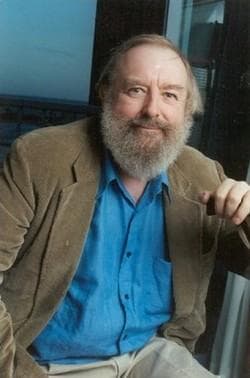
Biography coming soon.







