“The greatest battles are fought not with swords, but with words, and often, the most dangerous words are the ones we tell ourselves.”
— A reflection on inner conflict and self-deception.

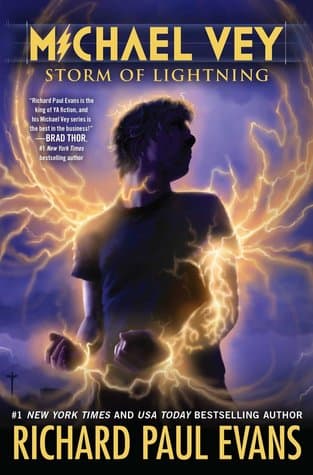
Richard Paul Evans (2015)
Genre
Fantasy / Children's / Science Fiction / Young Adult / Romance
Reading Time
6-8 hours
Key Themes
See below
Sign in to track this book
With their home destroyed and families' fates unknown, the Electroclan must use the growing unrest within the Elgen to stop Hatch's global takeover, all while facing their most dangerous challenges yet.
After the events in Peru, the Electroclan—Michael Vey, Taylor Ridley, Ostin Liss, Abigail, Tessa, McKenna, Nichelle, and Zeus—hide in a resistance safe house in Italy. But their location is found, forcing them to escape. During their flight, they learn of Dr. Hatch's latest move: an attack on the island nation of Tuvalu. This attack is the first step in Hatch's larger plan for global control, using Tuvalu as a base to control important shipping lanes and resources. The Electroclan realizes the urgency of their situation and the great danger Hatch poses to the world.
As news of the Elgen's harsh control of Tuvalu spreads, the Electroclan decides what to do next. The Voice, a mysterious leader of the resistance, contacts them and confirms Tuvalu's importance to Hatch's global plan. The Voice urges the Electroclan to go to Tuvalu, giving them information about the Elgen's operations there. Despite the extreme danger and not knowing their families' fates, Michael and the others agree to this mission, understanding that stopping Hatch in Tuvalu is essential to prevent more destruction.
The Electroclan, with help from the resistance, starts their trip to Tuvalu. They face many challenges and must travel secretly to avoid the Elgen. Their route involves careful planning and a network of resistance contacts. During this difficult journey, tensions rise as they face the huge risks and the chance of losing more friends. Michael and Taylor support each other, their bond growing stronger amid the constant threat, as they plan how to sneak onto the heavily guarded island.
Against great odds, the Electroclan reaches Tuvalu and sneaks onto the island. They immediately start scouting, observing the Elgen's military presence and the terrible situation of the local people. They see firsthand the harsh control Hatch's forces have and the damage they have caused. Ostin, with his intelligence, helps analyze the Elgen's defenses and find weak spots. The team sets up a hidden base, preparing to face Hatch's forces.
While watching the Elgen, the Electroclan notices small but important signs of trouble within Hatch's group. Some of Hatch's top commanders and scientists, especially those who have seen his increasingly wild and cruel behavior, start to show signs of disagreement and disloyalty. This internal conflict gives the Electroclan a chance, as a divided enemy is weaker. Michael and the others discuss how to use these divisions, realizing that working with or manipulating these unhappy Elgen could be their only hope against Hatch's power.
The Electroclan begins a bold mission to rescue a group of Tuvaluans held by the Elgen. During this operation, they meet Tara, an electric youth who used to be with Hatch but is now unhappy. Tara, along with a few other unhappy electric youths, offers to help the Electroclan, giving valuable information about Elgen strongholds and troop movements. This alliance is full of mistrust, as Tara's past actions make the Electroclan wary, but they know they must work together, however uncomfortably, against their common enemy.
The Electroclan, with Tara's information, plans a major attack against a key Elgen facility. This leads to a direct and brutal fight with Nicodemus, one of Hatch's most loyal and strong enforcers. Nicodemus proves to be a clever and ruthless enemy, pushing the Electroclan to their limits. The battle is intense, showing the electric youths' unique powers and their growing teamwork. The encounter results in big losses for the Elgen, but also leaves the Electroclan tired and aware of the great power they are up against.
Through gathering information and intercepted messages, the Electroclan learns the terrifying full extent of Dr. Hatch's plan. He plans to use Tuvalu as a model for his global takeover, setting up similar bases to control key resources, use populations, and eventually put his total rule over the entire world. This discovery strengthens the Electroclan, reminding them of how important their mission in Tuvalu is to stopping his larger goals.
In a big battle against many Elgen forces, a member of the Electroclan makes a great sacrifice to protect the others and ensure a vital goal is met. This act, while sad, changes everything, strengthening the remaining members and making them more determined. The loss weighs heavily on Michael, Taylor, and the rest, but it also strengthens their resolve to defeat Hatch, vowing that their friend's sacrifice will not be in vain. The event forces them to rethink their tactics and approach the final fight with new intensity.
With new resolve and a desperate plan, the Electroclan launches their final attack on the main Elgen stronghold in Tuvalu. It is a full-scale battle where every electric youth uses their unique abilities to their fullest. Michael confronts Hatch's most dangerous guards and tries to disable the Elgen's control systems. The battle is a chaotic and brutal fight for survival and freedom, with the fate of Tuvalu—and possibly the world—at stake. The Electroclan pushes past their limits, determined to end Hatch's rule on the island.
Despite the Electroclan's brave efforts and significant damage to his operations, Dr. Hatch escapes Tuvalu, though his control of the island is broken. The Elgen forces are badly hurt, and the local people are freed. The victory is bittersweet; while Tuvalu is free, Hatch is still at large, his global plans only delayed, not defeated. The Electroclan comes out of the conflict tired but united, understanding that this battle was just one fight in a much larger war. They have proven their strength and resilience, but the ultimate confrontation still waits.
The Protagonist
Michael evolves from a hesitant leader to a more confident and strategic commander, accepting the immense responsibility of his powers and role.
The Supporting
Taylor grows more confident in her unique powers and her role as a leader and emotional anchor for the Electroclan.
The Supporting
Ostin solidifies his role as the indispensable strategic mind of the Electroclan, proving that intellect can be as powerful as electric abilities.
The Antagonist
Hatch's megalomania intensifies, pushing him to increasingly extreme measures and revealing growing cracks within his empire.
The Antagonist
Nicodemus remains a steadfastly loyal and brutal antagonist, serving as a physical manifestation of Hatch's power.
The Supporting
Tara transitions from a loyal Elgen to a hesitant, but ultimately helpful, ally of the Electroclan, seeking redemption for her past actions.
The Supporting
The Voice continues to be a guiding, albeit unseen, force, orchestrating resistance efforts on a global scale.
The Supporting
Abigail continues to provide essential healing and emotional support, solidifying her role as the group's compassionate caregiver.
The Supporting
Zeus continues to integrate into the Electroclan, learning to control his power and proving his loyalty.
The novel continues to explore what it means to have great power. Michael and the Electroclan constantly struggle with using their electric abilities responsibly, setting themselves apart from Dr. Hatch, who uses his power for destruction and control. Scenes where Michael hesitates to kill, or where the group debates the ethics of manipulating unhappy Elgen members (like Tara), show this theme. The weight of their powers often leads to personal sacrifices and hard moral choices.
“With great power comes great responsibility. Not just what you can do, but what you *should* do.”
A main theme is the constant fight against a harsh government. Dr. Hatch's actions in Tuvalu—his brutal control and plan for global power—show tyranny. The Electroclan, though a small group of teenagers, embodies resistance. Their willingness to risk everything for the freedom of others, even strangers in Tuvalu, highlights the importance of fighting for justice and liberty. The existence of 'The Voice' and the larger resistance movement shows that this struggle is universal.
“Freedom isn't given; it's taken. And sometimes, you have to fight for it on someone else's soil.”
The theme of trust and betrayal is clear, especially with the introduction of internal disagreement within the Elgen and the risky alliance with Tara. The Electroclan constantly questions whom they can trust, as betrayal by former allies or even within their own group could mean disaster. Hatch's manipulation of his own followers, and their eventual unhappiness, further complicates this theme. The group's struggle to trust Tara, despite her help, shows the lasting pain of past betrayals and the difficulty of telling true allies from potential traps.
“In this war, the line between friend and foe is thinner than a live wire.”
The high stakes of the Electroclan's mission lead to moments of sacrifice and loss. The destruction of their safe house, the uncertainty about their families, and the sacrifice of a team member in Tuvalu show the harsh reality of their fight. These losses are not just plot points; they make the characters more determined, highlight the cost of their struggle, and emphasize how precious life and friendship are. The bittersweet victory in Tuvalu, with Hatch escaping, reinforces that their sacrifices, while important, have not ended the war.
“Some battles cost more than just blood. They cost pieces of your soul.”
A strategically vital location that drives the plot.
Tuvalu functions as a MacGuffin in 'Storm of Lightning.' While it's a real place, its specific strategic importance—as the first domino in Hatch's global conquest and a critical base for controlling shipping lanes—is the primary driver for the Electroclan's immediate actions. The island itself isn't the ultimate goal, but rather stopping Hatch's control over it is crucial to prevent his larger plans. It provides a concrete, immediate objective for the heroes, forcing them out of hiding and into direct conflict.
Cracks within the antagonist's organization create opportunities for the protagonists.
The emerging dissent within the Elgen ranks serves as a crucial plot device. It introduces an element of unpredictability to Hatch's seemingly monolithic power and provides potential avenues for the Electroclan to exploit. This internal strife, exemplified by characters like Tara, allows for intelligence gathering, temporary alliances, and the weakening of the enemy from within. It complicates the narrative, moving beyond a simple good vs. evil dynamic by showing that even the 'bad guys' can have moral quandaries or personal ambitions that clash with their leader's.
An enigmatic, unseen ally providing crucial guidance and resources.
The Voice acts as a classic mysterious benefactor, a plot device that provides the Electroclan with vital information, resources, and strategic direction without directly participating in the action. This figure maintains a sense of intrigue while also serving as a convenient way to move the plot forward, explain complex global events, and offer guidance when the heroes are at a loss. Their hidden identity also creates suspense and a broader sense of a larger, global resistance movement at play.
The antagonist escapes, leaving the overarching conflict unresolved to drive future installments.
The novel employs a cliffhanger ending by having Dr. Hatch escape Tuvalu, despite the Electroclan's success in liberating the island. This device ensures that the main antagonist remains a threat, preventing a complete resolution to the overarching series conflict. It leaves the reader with a sense of urgency and anticipation for the next installment, reinforcing that the war against the Elgen is far from over and that the stakes will continue to rise. It transforms a localized victory into a temporary reprieve.
“The greatest battles are fought not with swords, but with words, and often, the most dangerous words are the ones we tell ourselves.”
— A reflection on inner conflict and self-deception.
“Sometimes, the only way to find your true path is to get lost first.”
— A character grappling with uncertainty and an unknown future.
“Love isn't about finding someone perfect, it's about seeing an imperfect person perfectly.”
— A romantic conversation between two main characters.
“Fear is a powerful master, but hope, even a tiny spark, can be its undoing.”
— A moment of courage in the face of overwhelming odds.
“The past is a story we tell ourselves, but the future is a story we write.”
— A character contemplating their agency and destiny.
“Even the smallest light can banish the deepest shadow, if only someone is brave enough to light it.”
— A metaphor for the impact of individual actions.
“Magic isn't about waving a wand; it's about believing in the impossible until it becomes possible.”
— A mentor explaining the true nature of their world's magic.
“A true hero isn't someone who never falls, but someone who always gets back up.”
— A moment of resilience after a significant setback.
“The universe doesn't give you what you want, it gives you what you need to grow.”
— A character reflecting on a challenging experience.
“Sometimes, the bravest thing you can do is ask for help.”
— A character overcoming pride to seek assistance.
“The most beautiful melodies are often born from the greatest storms.”
— A metaphor for finding beauty and meaning after hardship.
“To truly live, you must be willing to risk everything you've ever known.”
— A pivotal decision point for the protagonist.
“Not all wounds are visible, and not all healing is immediate.”
— A character dealing with emotional trauma.
“The greatest power is not the ability to destroy, but the strength to protect.”
— A moral lesson imparted by an elder figure.
“Every ending is just a new beginning, disguised as a farewell.”
— The concluding thoughts of the book, offering a sense of continuity.
Ready to see how well you understood this book? Take our interactive quiz with 10 questions.

Biography coming soon.







