“Every time I think things can’t get any worse, they do.”
— Roberto's recurring thought as he faces increasingly dire situations.

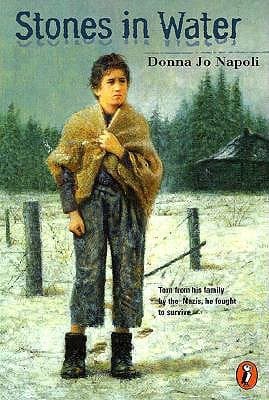
Donna Jo Napoli (1997)
Genre
Children's / Historical Fiction / Young Adult
Reading Time
250 min
Key Themes
See below
Sign in to track this book
When German soldiers raid a movie theater and conscript him into a brutal work camp, a young Italian boy must fight for survival and protect his best friend's dangerous secret amidst the horrors of war.
Roberto, a twelve-year-old boy from a small Italian village, sneaks out with his best friend Samuele to watch a movie at the local cinema, a rare treat. His younger sister, Assunta, tries to stop him, but he ignores her. As the film plays, German soldiers suddenly storm the theater. Panic erupts as the soldiers gather all the boys and young men, including Roberto and Samuele, forcing them into the street. They are roughly herded onto waiting trucks, their protests and the cries of their families unheard. Roberto clutches a small stone, a gift from Assunta, as they are driven away, ending his childhood freedom.
Packed into a dark, suffocating cattle car with dozens of other abducted boys, Roberto and Samuele begin a difficult journey. The train travels for days, stopping only occasionally. Food and water are scarce, and the boys suffer from hunger, thirst, and fear. Roberto, at first overwhelmed, finds some comfort in Samuele's presence, though Samuele seems more withdrawn. The older boys try to maintain order and share what little they have. During a brief stop, Roberto sees the casual brutality of the guards, confirming his understanding of their terrible situation. The destination remains unknown, adding to their terror and uncertainty.
The train finally stops in a desolate, snow-covered area. Roberto and Samuele, along with the other boys, are unloaded into what is clearly a German labor camp in Ukraine. They are immediately subjected to roll calls, harsh commands, and the constant threat of violence from the guards. The camp is bleak, with crude barracks and various workshops. The boys are stripped of their civilian clothes and given rough uniforms. Roberto quickly learns the camp's strict rules and the constant struggle for survival. He and Samuele are assigned to a barracks, where they meet other boys from various countries, all sharing the same grim fate.
As they settle into the harsh routine of the camp, Roberto notices Samuele's unusual behavior. Samuele avoids eye contact with certain guards and seems to be hiding something. One night, Roberto overhears Samuele speaking in a language he doesn't understand and realizes Samuele is Jewish. This is a shocking and terrifying discovery, as Jews face even harsher persecution and certain death if discovered in a German camp. Roberto vows to protect his friend, understanding the immense danger they are both in. They learn to navigate the starvation, cold, and relentless work, finding small ways to help each other survive, like sharing meager rations and looking out for each other during work details.
The boys are assigned to different workshops within the camp. Roberto works in a metalsmithing shop, learning to forge and repair tools under the supervision of a gruff but occasionally sympathetic German foreman named Herr Schmidt. Samuele, due to his smaller size and quick hands, works in a textile workshop, mending uniforms. This separation is agonizing for both boys, as their vow to stay together is challenged. Despite the physical distance, they find brief moments to see each other during meals or roll calls, exchanging whispered words of encouragement and reassurance, always aware of the watchful eyes of the guards and the constant threat of discovery.
As weeks turn into months, the conditions in the camp worsen, and hope fades. Roberto, Samuele, and a few other boys—especially an older, determined boy named Enzo—begin to secretly plan an escape. They share information gathered from their workshops, looking for weaknesses in the camp's security. Roberto, through his work, learns some of the camp's layout and patrol routes. Samuele, with his quiet observations, notices patterns in the guards' shifts. The plan is risky and dangerous, but the desire for freedom, especially for Samuele, outweighs the fear of punishment.
The boys put their escape plan into action one cold night, attempting to slip past the wire fences during a changing of the guard. However, their timing is off, or perhaps they were betrayed. Shots ring out, and chaos erupts. Several boys are caught, and some are killed. Roberto and Samuele, though terrified, manage to avoid immediate capture and hide. The failed attempt is a devastating blow, causing immense grief and increasing the guards' vigilance. The remaining boys are punished severely, and the dream of freedom seems more distant than ever. This event strengthens Roberto's resolve, but also makes him more cautious.
After the failed escape, Samuele's health quickly worsens due to starvation and the constant fear of his Jewish identity being discovered. He becomes increasingly withdrawn and frail. One evening, during a particularly brutal roll call where a guard eyes Samuele suspiciously, Samuele makes a quick decision. To divert attention from himself and prevent exposure, he deliberately causes a disturbance, drawing the guard's anger. This act of defiance results in a severe beating. While it saves him from immediate scrutiny regarding his heritage, it further weakens him, showing his selfless desire to protect Roberto and himself from the ultimate discovery.
Seeing Samuele's declining health and the increasing danger, Roberto knows they cannot wait. With the help of a sympathetic, though cautious, Herr Schmidt, who provides a small map and some provisions, Roberto and Samuele attempt another escape. They manage to slip away during a chaotic shift change, navigating through the snow-covered wilderness. The journey is arduous; they face extreme cold, hunger, and the constant threat of being recaptured. Samuele's strength fades, but Roberto, driven by their vow and his love for his friend, carries him when necessary, pushing them forward towards the distant hope of Allied lines and freedom.
As Roberto and Samuele draw closer to what they believe are Allied lines, Samuele's condition becomes critical. He develops a high fever and can no longer walk. Roberto tries everything to help him, sharing his last scraps of food and water, but it's not enough. In a heart-wrenching moment, Samuele dies in Roberto's arms, whispering words of gratitude and love. Roberto is devastated, his world shattered. He buries Samuele with the small stone his sister gave him, a symbol of their friendship and a promise of remembrance. Alone, grief-stricken but resolute, Roberto continues his journey, carrying the weight of his friend's memory.
After days of wandering alone, exhausted and near collapse, Roberto is discovered by a patrol of Allied soldiers. They are initially wary but quickly recognize his plight. He is taken to a field hospital, where he receives medical attention, food, and warmth. Though physically safe, Roberto is deeply traumatized by his experiences and the loss of Samuele. He struggles to speak and process the horrors he has witnessed. The kind care of the medical staff and soldiers slowly begins to break down his emotional walls, offering a glimmer of hope for healing and a return to a semblance of normal life, though he knows he will never be the same.
After a period of recovery and identification, Roberto is eventually sent back to Italy. The journey home is filled with mixed emotions—anticipation, fear, and deep sadness. He arrives back in his village, a place that seems both familiar and utterly alien after his experiences. His family, who had long given him up for dead, greets him with overwhelming joy and relief. However, Roberto carries the invisible scars of the war and the memory of Samuele. He is no longer the innocent boy who snuck off to the cinema, but a survivor, forever marked by the stones in water that represent the lives lost and the strength found in the darkest of times. He shares Samuele's story, ensuring his friend is remembered.
The Protagonist
Roberto evolves from an innocent, carefree boy into a traumatized but resilient survivor who carries the weight of his experiences and the memory of his lost friend.
The Supporting/Deuteragonist
Samuele begins as a secretive friend, then becomes a symbol of the war's hidden victims, ultimately making a profound sacrifice.
The Supporting/Mentioned
Remains a static symbol of home and the life Roberto lost.
The Supporting
Evolves from a stern foreman to a quiet, reluctant helper.
The Supporting
Serves as a catalyst for resistance and hope, demonstrating the spirit of defiance.
The Antagonist
Remain a static, oppressive force throughout the narrative.
The novel powerfully shows the sudden and brutal loss of innocence experienced by children during wartime. Roberto's journey begins with a simple, childlike act of sneaking out to a movie, and within hours, he is thrown into a world of unimaginable horror. The labor camp strips him of his childhood, forcing him to witness death, starvation, and cruelty. His change from a carefree boy to a hardened survivor, haunted by the memory of Samuele, shows how war robs children of their youth and leaves lasting scars. This is clear in the contrast between his initial eagerness for the movie and his later struggle to process his trauma upon returning home.
“He was no longer the boy who had snuck out to the cinema. The stones in the water had changed him forever.”
The unbreakable bond between Roberto and Samuele is the emotional core of the novel. Their vow to stay together, made early in their captivity, is a strong motivator for both boys. Roberto's firm commitment to protecting Samuele, even after discovering his friend's dangerous secret, highlights the depth of his loyalty. Samuele's desperate actions to divert attention from his Jewish identity, ultimately leading to his death, also show a deep, selfless love for his friend. Their friendship provides comfort, strength, and a reason to fight for survival in the face of overwhelming despair, proving that human connection can last even in the most inhumane conditions.
“We'll stay together, no matter what. That's a promise.”
The narrative shows the human spirit's capacity for survival and strength in the face of extreme difficulty. Roberto, Samuele, and the other boys endure starvation, brutal labor, freezing temperatures, and constant fear. They adapt to the harsh realities of the camp, learning to find food, navigate dangers, and maintain a sliver of hope. Roberto's repeated attempts to escape, his physical endurance, and his emotional strength after Samuele's death exemplify this theme. The story emphasizes that survival is not just about physical endurance but also about keeping one's spirit and finding reasons to live, even when everything seems lost.
“Even in the darkest places, a small flicker of hope could keep a person alive.”
The novel clearly portrays how war treats both its victims and its perpetrators as less than human. The German soldiers treat the boys as mere labor units, stripping them of their names, identities, and basic human dignity. The camp environment itself is designed to break spirits and reduce individuals to their most basic survival instincts. This dehumanization is further highlighted by the casual brutality and indifference displayed by many guards. However, the story also subtly suggests that even within this system, individual humanity can persist, as seen in the ambiguous character of Herr Schmidt, who offers small, reluctant acts of kindness that stand in sharp contrast to the prevailing cruelty.
“They were just numbers, just bodies, in the eyes of their captors.”
Memory is important, both as a source of comfort and pain, and as a duty. Roberto holds onto memories of his family and home, particularly the stone from Assunta, to sustain him. After Samuele's death, his memory becomes a heavy burden and a sacred trust. Roberto's survival ensures that Samuele's story, and the stories of countless others, will not be forgotten. The act of witnessing the horrors of the Holocaust and World War II, through the eyes of a child survivor, is central to the novel's purpose, stressing the importance of remembering history to prevent its repetition and honor those who suffered.
“He would carry Samuele's story, like a stone in his pocket, forever.”
A small, smooth stone given to Roberto by his sister, Assunta.
The stone is a powerful symbol of home, family, and the innocence Roberto leaves behind. Throughout his captivity, Roberto clutches the stone, finding comfort and a tangible connection to his past. It serves as a reminder of his promise to return home and the love that awaits him. After Samuele's death, Roberto buries the stone with his friend, transforming it into a symbol of their unbreakable bond and a memorial for Samuele, signifying that even in the bleakest circumstances, love and memory endure.
A dangerous secret that elevates the stakes and highlights the specific horrors of the Holocaust.
Samuele's concealed Jewish identity is a major plot driver, introducing an intense layer of peril and urgency to the narrative. It immediately raises the stakes for both boys, as discovery would mean certain death for Samuele and severe punishment for Roberto. This secret underscores the specific, genocidal nature of the persecution faced by Jews during World War II, differentiating their plight from that of other forced laborers. It fuels Samuele's desperation and ultimately leads to his selfless sacrifice, making his character a poignant representation of the Holocaust's victims.
Roberto and Samuele's shared promise to remain together, no matter what.
The vow made between Roberto and Samuele is a central motivational device. It establishes their deep bond and provides a continuous objective for both characters. This promise drives Roberto's protective instincts and encourages Samuele to endure. When they are separated by work assignments, the vow creates tension and longing. Its ultimate breaking, through Samuele's death, is the most tragic moment of the story, signifying the profound cost of war but also the enduring power of their connection, as Roberto carries on for both of them.
A German foreman who exhibits moments of humanity amidst cruelty.
Herr Schmidt serves as a nuanced plot device, preventing the German characters from being entirely monolithic villains. His intermittent acts of kindness – a word of advice, an extra ration, or ultimately, aid for the escape – introduce moral complexity and a glimmer of hope that not all individuals are irredeemably evil, even within a brutal system. This ambiguity challenges simplistic good vs. evil narratives and suggests the possibility of individual conscience. His actions are crucial to the boys' second escape attempt, making him a catalyst for their desperate bid for freedom.
“Every time I think things can’t get any worse, they do.”
— Roberto's recurring thought as he faces increasingly dire situations.
“The worst part about being hungry wasn't the pain in his stomach, it was the way it made him think.”
— Roberto reflecting on the mental toll of starvation.
“He learned that in war, a person could be a hero one moment and nobody the next.”
— Roberto observing the fickle nature of recognition and life during wartime.
“The silence was the loudest thing of all.”
— Describing the oppressive quiet after a bombing or a significant loss.
“You can lose everything, but you can’t lose who you are inside.”
— An older character offering wisdom to Roberto about enduring personal identity.
“He understood then that fear wasn't just about what might happen, but about what was already happening inside him.”
— Roberto's internal realization about the nature of fear.
“Water was life, and they were surrounded by stones.”
— A metaphorical summary of their dire situation, a central theme of the book.
“Some memories were like stones, heavy and sharp, always there.”
— Roberto reflecting on the enduring and painful nature of certain memories.
“Even in the darkest places, there were tiny flickers of light, if you knew how to look.”
— A hopeful thought amidst the despair, about finding small joys or hope.
“He was learning to read not just words, but faces, and the spaces between words.”
— Roberto's developing ability to understand people and unspoken communication.
“The world was a stage, and they were all just actors, playing parts they hadn't chosen.”
— A philosophical musing on the lack of control over their circumstances.
“Every step was a choice, even if it felt like there were no choices left.”
— Roberto's internal struggle to maintain agency despite overwhelming odds.
“The hardest part of being brave was not knowing if it would make a difference.”
— Roberto's contemplation on the uncertainty and effort of courage.
“He carried the weight of the war in his bones, not just his memories.”
— Describing the deep, physical, and psychological impact of war on Roberto.
Ready to see how well you understood this book? Take our interactive quiz with 10 questions.

Donna Jo Napoli is an award-winning author of children's and young adult fiction, known for her lyrical prose and deep exploration of complex themes. Her notable works include "Stones in Water," a historical novel exploring the lives of Jewish children during World War II, and "The Magic Circle." Napoli holds a Ph.D. in developmental psychology, which informs her sensitive and insightful storytelling.

Dan Gemeinhart
4.5

Kate O'Hearn
4.4

Jeanne Birdsall
4.4

Jen Wang
4.4

Wendelin Van Draanen
4.3

John Marsden
4.3

Chris Van Allsburg
4.3
Jennifer A. Nielsen
4.2