
Biography coming soon.
Archivist's Choice
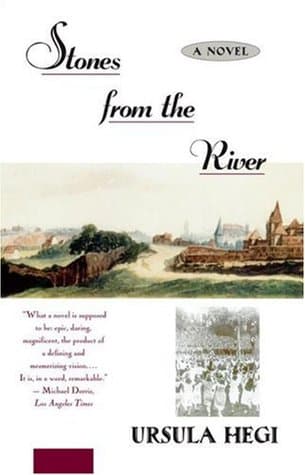
Stones from the River
Ursula Hegi (1994)
Genre
Literary Fiction / Historical Fiction
Reading Time
12 Minutes
Key Themes
See below
Track Your Reading
Sign in to track this book
Synopsis
Trudi Montag, a dwarf in the small German town of Burgdorf, navigates life as an outsider from childhood through the tumultuous years of World War II. Blessed with a sharp mind and an observant nature, Trudi becomes the unofficial keeper of Burgdorf's secrets, witnessing the hidden lives and quiet struggles of her neighbors. Her unique perspective allows her to see beyond appearances, understanding the universal human desire to belong and the various ways people cope with their own 'differences.' As the Nazi regime rises, Trudi's life, and the lives of those around her, are irrevocably altered, forcing her to confront prejudice, make difficult choices, and ultimately find strength in her own identity while harboring Jewish refugees in her cellar.
Difficulty
Medium
Pacing
Moderate
Mood
Reflective, poignant, historical, at times somber but ultimately resilient.
Plot Summary
A Dwarf's Birth and Early Life
Trudi Montag is born in the small German town of Burgdorf in 1915. She is a dwarf among people of average height. Her birth shocks her parents, Bertha and August Montag, who struggle to accept her condition. August, a gentle man who runs the local library, dotes on Trudi, reading to her and encouraging her love for stories. Bertha, however, battles her own mental health issues, often withdrawing into periods of fragility, made worse by how society views Trudi. Trudi's early years are shaped by her father's kindness and her mother's sometimes distant affection. She begins to understand her difference from others, especially from the children in Burgdorf.
Childhood Friendships and Societal Gaze
As Trudi grows, her closest friend is Georg, a boy her age who lives next door. Their bond is pure and strong, offering Trudi comfort from the often-harsh world. Georg's parents, the Kellers, are religious and somewhat strict, raising Georg in ways that make him feel like a girl, which adds another layer of difficulty to his life. Trudi's dwarfism makes her a constant spectacle in Burgdorf; children stare, adults whisper, and she often feels like an outsider. Despite the pain, Trudi develops a sharp mind and a keen eye for observation, using her perspective to understand the hidden lives and secrets of the townspeople. She often finds humor and strength in her daily interactions.
The Library and the Power of Stories
August Montag's library becomes Trudi's safe place and her world. From a young age, she helps her father, organizing books, assisting patrons, and immersing herself in stories. The library offers her an escape from the physical limits and social judgments of Burgdorf, allowing her to travel through the pages of countless books. Trudi's intelligence and love for reading grow, making her exceptionally knowledgeable. She develops a deep understanding of human nature through the characters and stories she encounters. The library also serves as a central point for the town, giving Trudi a unique position from which to observe the lives and secrets of its inhabitants, further sharpening her perceptive abilities.
Bertha's Struggles and Trudi's Growing Independence
Bertha Montag's mental health continues to worsen, with more frequent periods of withdrawal and a fragile hold on reality. These episodes often leave August distraught and Trudi feeling alone, yet they also force her to mature quickly. Trudi takes on more responsibilities, both at home and at the library, showing remarkable resilience and capability despite her young age and physical limitations. Her growing independence is not just necessary but a source of quiet pride, as she proves her worth and capacity to herself and, subtly, to the town. This period solidifies Trudi's role as a dependable and intelligent person, able to handle life's challenges with courage.
The Rise of Nazism and its Shadow
As the 1930s progress, the shadow of Nazism begins to fall over Germany and, inevitably, Burgdorf. The familiar routines of town life are slowly infiltrated by propaganda, swastikas, and an increasing sense of fear and conformity. Trudi, with her sharp observations, notices the subtle shifts in attitudes, the growing intolerance, and the way some townspeople eagerly embrace the new ideas while others shrink in fear. The library, once a place of free thought, becomes a battleground for ideas, as certain books are deemed undesirable. Trudi's position as an 'outsider' gives her a clearer, less biased perspective on the unfolding political drama, showing the dangerous currents beneath the town's surface.
Persecution and Resistance
The Nazi regime's persecution of Jewish people escalates, and its impact is felt even in Burgdorf. Jewish families, once part of the community, face increasing discrimination, violence, and forced removal. Trudi and August, deeply disturbed by these injustices, begin to take quiet but brave actions. August uses the library as a subtle means of resistance, providing forbidden books and a safe space for those seeking comfort. Trudi, with her sense of justice, becomes a silent observer and, later, helps protect those targeted by the regime. Their acts, though small, show a strong moral compass in the face of widespread complicity and terror.
Georg's Secret and Confession
Georg, Trudi's lifelong friend, struggles with a secret, made worse by his parents' unusual upbringing. He has always felt different, and as he grows older, this internal conflict becomes unbearable. One night, in a moment of deep vulnerability, Georg confides in Trudi, revealing that he feels he is a girl trapped in a boy's body. Trudi, an empathetic listener, accepts him without judgment, strengthening their unbreakable bond. This confession is a significant moment, highlighting the theme of hidden identities and the courage it takes to be oneself in a world that demands conformity. Trudi's unwavering support offers Georg a rare sense of acceptance and understanding.
Hiding in the Cellar
As the war rages and the Holocaust intensifies, Trudi and August make the brave and dangerous decision to hide Jewish refugees in their cellar. This act of bravery puts their own lives at immense risk, as discovery by the Gestapo would mean certain death. Trudi, with her sharp mind and resourcefulness, handles the practicalities, ensuring the refugees are fed, kept informed, and hidden from prying eyes. The cellar becomes a small representation of the larger struggle, a place of fear, hope, and human connection in the darkest of times. This period deeply affects Trudi, solidifying her commitment to justice and compassion, even in the face of extreme danger.
Loss and Survival
The war takes a heavy toll on Burgdorf and its inhabitants, and Trudi is not spared from personal loss. These losses are deeply felt, reinforcing the brutal realities of the conflict. Despite the grief and the constant threat of danger, Trudi continues to manage the library, which remains a source of hope and knowledge. Her resilience is remarkable, as she navigates the complexities of wartime life, protecting those she can and maintaining a semblance of normalcy amidst chaos. Trudi's ability to endure and adapt, while holding onto her humanity, shows the strength of the human spirit in the face of unimaginable hardship.
Aftermath and Lingering Shadows
When the war finally ends, Burgdorf, like the rest of Germany, is left to confront its shattered past and the immense task of rebuilding. The town struggles with collective guilt, denial, and the visible scars of conflict. Trudi, having witnessed firsthand the depths of human cruelty and kindness, grapples with the lingering shadows of the war. She dedicates herself to restoring the library, which she now runs independently, ensuring that knowledge and stories remain accessible. While the physical scars of war may heal, the emotional and psychological ones run deep, shaping Trudi's perspective and her unwavering commitment to truth and memory in a community striving to move forward.
Principal Figures
Trudi Montag
The Protagonist
Trudi grows from a sensitive child grappling with her difference into a strong, compassionate woman who uses her intellect and courage to resist injustice and provide solace to others, embracing her unique identity as a source of strength.
August Montag
The Supporting
August evolves from a somewhat passive intellectual to a man of quiet but profound moral courage, actively resisting the Nazi regime and becoming a pillar of strength for his family and community.
Bertha Montag
The Supporting
Bertha's arc is one of internal struggle against her mental illness and the societal pressures surrounding Trudi, showing her gradual decline but also fleeting moments of connection and love.
Georg
The Supporting
Georg's arc is one of internal struggle with his gender identity, culminating in a brave confession to Trudi, finding acceptance and a deeper understanding of himself through their unwavering friendship.
Herr and Frau Keller
The Supporting
Their arc remains largely static, representing the rigid societal norms and parental expectations that shape Georg's early life and internal conflict.
Frau Becker
The Supporting
Frau Becker remains largely static, serving as a representation of the small-mindedness and judgmental nature prevalent in the community, providing a constant external challenge for Trudi.
Pastor Johannes
The Supporting
Pastor Johannes struggles with the moral dilemmas posed by the Nazi regime, reflecting the internal conflict of institutional figures caught between faith and political pressure.
The Refugees
The Supporting
Their collective arc is one of desperate survival, representing the profound human cost of the Holocaust and the courage of those who helped them.
Themes & Insights
The Nature of Difference and Acceptance
This theme explores what it means to be 'different' in a society that values conformity, focusing on Trudi's dwarfism and Georg's gender identity. It addresses the pain of being an outsider, the societal judgments and cruelties, but also the unique perspective and resilience that difference can create. The novel suggests that true acceptance comes from within and from genuine human connection, rather than external validation. It highlights how everyone, in some way, carries a secret difference, making 'normal' an illusion. Trudi's journey is about finding strength and self-worth in her unique identity, and extending that acceptance to others.
“Every human being carries a secret, a difference, something that sets them apart. Trudi’s was just more visible.”
The Power of Stories and Literature
The library, run by August and later Trudi, is a central symbol of this theme. Stories provide escape, education, empathy, and a way to understand human nature. For Trudi, books are a sanctuary from a world that often judges her, allowing her to travel beyond Burgdorf's confines. During the Nazi era, literature becomes a form of resistance, as forbidden books are protected and shared. Reading and telling stories connect people across time and experience, preserving truth and humanity in the face of propaganda and censorship. The novel itself shows the lasting power of narrative.
“Books were Trudi’s windows to worlds beyond Burgdorf, and in their pages, she found herself, whole and limitless.”
Moral Courage and Resistance
This theme examines the different forms of courage shown by ordinary people in extraordinary times, particularly during the Nazi regime. It shows the bravery of August and Trudi in protecting Jewish refugees and forbidden books, acts that carry immense personal risk. The novel explores the range of resistance, from open defiance to quiet, everyday acts of humanity and kindness. It contrasts these acts with the complicity, fear, and indifference of others in the town, questioning what drives individuals to stand up for what is right, even when it means facing severe consequences. It celebrates the impact of even small acts of moral integrity.
“Courage wasn’t a roar, often it was the quiet voice at the end of the day, saying, 'I will try again tomorrow.'”
Memory, Truth, and History
The novel explores how individuals and communities deal with their past, particularly the difficult truths of the Nazi era. It addresses the selective nature of memory, the tendency towards denial, and the importance of remembering historical events accurately to prevent their repetition. Trudi, with her sharp memory and role in the library, becomes a keeper of stories and a witness to history. The theme questions how truth can be preserved and passed down through generations, and the responsibility of individuals to confront uncomfortable truths rather than succumb to collective amnesia. It emphasizes that understanding the past is essential for shaping a just future.
“History was not just dates and battles; it was the stories people chose to tell, and the ones they tried to forget.”
The Complexities of Family Love
This theme explores the dynamics within the Montag family, especially the relationship between Trudi and her parents. It addresses August's unconditional love for Trudi, contrasting it with Bertha's more complex, often strained affection, shaped by her mental illness and societal pressures regarding Trudi's dwarfism. The novel portrays the sacrifices made, the unspoken understandings, and the deep emotional bonds that hold a family together, even amidst personal struggles and external challenges. It highlights how love can appear in different ways, sometimes imperfectly, but remains a fundamental source of support and connection.
“Love, Trudi learned, was not always a soft blanket, sometimes it was a rough woolen coat that chafed but kept you warm.”
Plot Devices & Literary Techniques
The Library
A sanctuary, a symbol of knowledge and resistance.
The Burgdorf library, run by August and later Trudi, serves as a central symbol and plot device. It is Trudi's sanctuary, a place where she finds acceptance, education, and purpose. It represents the power of knowledge, imagination, and the enduring human spirit. During the Nazi era, the library transforms into a quiet hub of resistance, protecting forbidden books and acting as a subtle counterpoint to the regime's censorship and propaganda. It also functions as a central meeting point for the town, allowing Trudi to observe and understand the lives of Burgdorf's inhabitants, making it a crucial setting for character development and plot progression.
Trudi's Dwarfism
A physical difference that shapes perception and perspective.
Trudi's dwarfism is not just a character trait but a fundamental plot device that drives much of the narrative. It immediately sets her apart, making her an 'outsider' whose unique physical perspective allows for a sharper, less biased view of society. Her difference elicits varied responses—from cruel stares to profound empathy—highlighting themes of acceptance and prejudice. It shapes her relationships, her resilience, and her understanding of hidden truths. Her physical stature often makes her underestimated, allowing her to observe and act in ways others might not, subtly influencing events and revealing the true nature of the townspeople.
First-Person Perspective (Omniscient Narrator with Trudi's focus)
A narrative voice that provides deep insight into Trudi's world.
While the novel generally employs a close third-person omniscient narrator, it heavily filters events and observations through Trudi's unique perspective. This allows for deep insight into her thoughts, feelings, and interpretations of the world around her, particularly as an 'outsider.' This narrative choice enhances the themes of difference and observation, as the reader experiences Burgdorf through Trudi's keen, often witty, and empathetic eyes. It ensures that the emotional core of the story remains centered on her journey, making her struggles and triumphs profoundly personal and relatable, even against the backdrop of historical events.
The River
A symbolic representation of time, change, and memory.
The river that flows through Burgdorf serves as a powerful symbolic plot device. It represents the relentless passage of time, the flow of history, and the continuous changes that occur in life and within the community. Like memory, the river carries things away but also leaves traces behind. It symbolizes both continuity and transformation, witnessing the town's evolution from pre-war innocence to wartime horror and post-war reckoning. The river is a constant, enduring presence that underscores the transient nature of human lives and events, yet also the lasting impact of choices and experiences.
Critical analysis
Notable Quotes
Quiz
Test Your Knowledge
Ready to see how well you understood this book? Take our interactive quiz with 10 questions.
10
Questions
~5
Minutes
?
Best Score
Key Questions (FAQ)
Stones from the River tells the story of Trudi Montag, a dwarf living in a small German town during a time of great historical upheaval. The novel explores themes of difference, belonging, and the hidden secrets within ordinary lives.







