“The thing about being a photographer, even a good one, is that you still live in the world. You’re still a person. And people get lonely.”
— Early reflection on Rebecca's life and career.

Anna Quindlen (2014)
Genre
Literary Fiction / Relationships / Romance
Reading Time
300 min
Key Themes
See below
Sign in to track this book
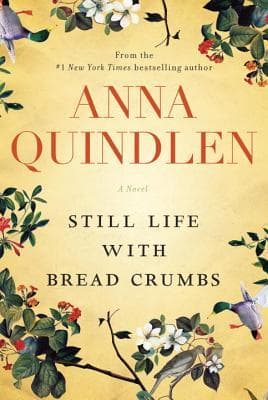
A photographer, facing a career slump and moving to the country, finds new love and inspiration with a roofer.
Rebecca Winter, once a known photographer for her 'Still Life with Bread Crumbs' series, finds herself low on money and ideas. She quickly rents a run-down cottage in a remote, unnamed rural town in upstate New York. She leaves her expensive Manhattan apartment after a scary incident with a perceived gunshot and her cat, Felicity. Her husband, Peter, a successful but distant lawyer, stays in the city, and their marriage is difficult. Rebecca hopes country life will bring new ideas and help her control her life again, even with the cottage's old features and isolated spot. She feels overwhelmed by the many repairs needed and her unfamiliar surroundings.
Soon after arriving, Rebecca realizes the cottage needs a new roof. She hires Jim Bates, a quiet but observant local handyman and roofer. Their first meetings show the clash of their different worlds; Rebecca, a city intellectual, finds Jim's directness and lack of showiness both unsettling and interesting. She also starts to meet her new neighbors: the curious but kind Mrs. Miller, who runs the local store, and the gruff but helpful townspeople. Rebecca struggles with simple country tasks and feels out of place, often looking at her new life as if through a camera lens, a habit from her professional past she wants to stop.
As Jim works on Rebecca's roof, they spend more time together, leading to an unexpected closeness. Rebecca finds herself drawn to Jim's quiet strength, his practical skills, and his real understanding of nature, which is very different from her intellectual, art-world friends. Jim, in turn, is interested in Rebecca's artistic feelings and her hidden sensitivity. Their talks, first about repairs, slowly move to personal stories and life views. Rebecca starts to see Jim as more than just a contractor, as a complex person, which challenges her old ideas about class and intelligence.
Her new surroundings and talks with Jim and the local community inspire Rebecca to take photos again. Her new work is different from her famous 'Still Life with Bread Crumbs' series, which focused on home decay. Instead, she captures the real beauty of the landscape, the aged faces of her neighbors, and the details of her simple cottage life. This change in her art shows a deeper personal change; she is no longer just watching life from afar but is part of it. Her new photographs show her changing understanding of beauty and meaning.
Peter, Rebecca's husband, visits the cottage sometimes, showing the growing distance between them. Their talks are polite but show a lack of real connection and understanding. Rebecca thinks about their long marriage, the compromises she made, and the emotional gap that has grown. She also thinks about her parents and her difficult relationship with her artist mother, whose career overshadowed Rebecca's childhood. These thoughts help Rebecca understand the patterns in her life and how she has defined herself through others, especially men.
During a dangerous job, Jim falls from a roof and gets badly hurt. Rebecca quickly goes to him, showing a deep worry that even surprises her. She stays with him at the hospital, giving comfort and help, and assists him while he recovers. This event makes her feelings for Jim clear, showing their relationship is more than just casual. It makes Rebecca admit her emotional connection to him and the big effect he has had on her life, breaking down her emotional walls and showing her ability for true, selfless love.
As Jim recovers, he tells Rebecca about his past, including the sad death of his wife years ago. He shares the pain and guilt he has carried, explaining the quiet strength and loneliness that have shaped his life since then. This story helps Rebecca understand Jim's character better, explaining his quiet resilience and his link to the land. It also shows how much he trusts her, as he rarely shares such personal details. Rebecca realizes that Jim, like her, has his own burdens and has found comfort in his work and his chosen life.
Rebecca's new photos, taken in the country and showing her changed view, start to get noticed. An exhibition opportunity comes up in a gallery, an important moment for her career. The new photographs are different from her previous work, with a sense of warmth, realness, and a less distant look at life. This exhibition marks a professional new start for Rebecca, showing she has found a new artistic voice that fits her true self, free from the pressures and expectations of her past fame.
With her career revived and her feelings for Jim clear, Rebecca faces the truth about her marriage to Peter. She realizes their life together is no longer working or fulfilling. She talks with Peter, leading to the end of their marriage. This decision is not easy, but it comes with clarity and a feeling of strength. Rebecca chooses to embrace her new life in the country and her growing relationship with Jim, accepting the unknown future with a hope and self-awareness she did not have before.
The book ends with Rebecca fully accepting her country life with Jim. The new tin roof on her cottage, a sign of stability and protection, is finally done. She is no longer just watching life but living it fully, finding happiness in simple, everyday moments with Jim. Her artistic view has grown, her relationships are real, and she has found a deep sense of belonging and happiness in an unexpected place. The imagined gunshot from the beginning has been replaced by the comforting sounds of her new home and the promise of a future built on real connection.
The Protagonist
Rebecca transforms from a detached, self-doubting artist to a woman who embraces life, love, and a renewed artistic vision.
The Love Interest / Supporting
Jim moves from a solitary existence defined by past grief to opening his heart and sharing his life with Rebecca.
The Supporting
Peter's character remains largely static, serving as a foil to Rebecca's transformation and a symbol of her past.
The Supporting
Mrs. Miller remains a consistent, supportive presence, representing the community that Rebecca slowly integrates into.
The Mentioned / Symbolic
Felicity's role is largely symbolic, representing Rebecca's emotional state and need for companionship.
The Mentioned / Symbolic
Rebecca gradually moves beyond her mother's influence to define her own artistic voice and self-worth.
The Mentioned / Symbolic
Rebecca's memory of her father contributes to her evolving understanding of love and family.
The Supporting
The gallery owner's support helps solidify Rebecca's professional comeback, affirming her new artistic path.
Rebecca's journey is about letting go of her old identity as a famous artist and a wife, to find out who she is without those roles. Her move to the country, her struggles with practical tasks, and her interactions with Jim and the locals make her face her weaknesses and redefine her values. She learns to value simplicity, physical work, and real connection over intellectual pursuits and surface fame. This idea is clear in her artistic change from distant observation to active experience, ending in her new photo series.
“What she saw through a camera lens was not all there was to life.”
The novel looks at different kinds of love: the distant, intellectual love between Rebecca and Peter; the quiet, practical, and deeply felt love that grows between Rebecca and Jim; and the strong love for a pet (Felicity). Rebecca learns that love can be found in surprising places and forms, often needing vulnerability and a willingness to try new things. Her relationship with Jim challenges her old ideas of what a partner 'should' be, showing a deep connection based on shared humanity and mutual respect, rather than shared intellectual or social groups.
“It was as if she had been looking at the world through a window for fifty years, and now she'd finally stepped outside.”
Rebecca's creative block and later renewal are central to the story. At first, she is defined by her past success, feeling pressure to copy her 'Still Life with Bread Crumbs' series. Her country retreat, however, lets her break free from these expectations. She finds new ideas in the raw beauty of nature, the aged faces of her neighbors, and the honest work of people like Jim. Her new photographs are less about decay and more about life, strength, and the beauty of everyday things, showing her own inner change and a new artistic truth.
“She had always photographed what was broken. Now she was photographing what was being made whole.”
The clear difference between Rebecca's fancy Manhattan life and her rustic country life shows ideas of class, intelligence, and practicality. Rebecca at first struggles with simple country tasks and finds the local customs and directness unsettling. However, she slowly starts to appreciate the simplicity, community, and groundedness of country life. The novel suggests that while city life offers intellectual stimulation, country life provides a different kind of wisdom and connection to basic human experiences, ultimately offering Rebecca a more real way of living.
“In the city, you were always somebody. Here, you just were.”
At fifty-four, Rebecca is dealing with the challenges of getting older, including a felt drop in her career and a reevaluation of her life choices. The novel shows aging not as an end but as a chance for deep reinvention and self-discovery. Rebecca tries new experiences, new relationships, and a new artistic path, showing that big personal growth and happiness are possible at any age. Her journey encourages readers to see later life as a time for new beginnings and pursuing true desires.
“It was never too late to begin again, to truly begin.”
A physical space symbolizing Rebecca's emotional state and potential for renewal.
The dilapidated rural cottage serves as a powerful symbol throughout the novel. Initially, its rundown state reflects Rebecca's own feelings of disarray, financial instability, and emotional brokenness. As Rebecca works to repair and inhabit the cottage, it mirrors her internal journey of rebuilding her life and self. The eventual completion of the new tin roof symbolizes her newfound stability, protection, and the promise of a secure future. The cottage is not just a setting but an active participant in Rebecca's transformation.
Rebecca's iconic past work, representing her former identity and artistic perspective.
Rebecca's famous photographic series, 'Still Life with Bread Crumbs,' which depicts domestic decay, serves as a significant plot device. It represents her past artistic success, but also her detached, observational approach to life and her focus on what is broken or left behind. The series acts as a benchmark against which her new, more vibrant and engaged photography is measured. Her eventual departure from this style signifies her personal and artistic growth, moving from an observer of decay to an active participant in life's creation.
A metaphor for Rebecca's initial way of seeing and her evolving perspective.
The camera lens is a recurring metaphor for Rebecca's way of perceiving the world. Initially, she views everything through a detached, artistic filter, analyzing and composing rather than simply experiencing. This artistic habit reflects her emotional distance and her tendency to intellectualize her life. As she integrates into rural life and connects with Jim, she gradually learns to put down the 'lens' and experience life directly, allowing for deeper emotional engagement and a more authentic understanding of her surroundings and herself.
A tangible symbol of stability, protection, and a new beginning.
The need for a new tin roof on Rebecca's cottage is the initial impetus for her meeting Jim and a recurring motif. The progress of the roof's construction parallels Rebecca's emotional and personal rebuilding. Its completion at the end of the novel symbolizes the stability, security, and protection she has found in her new life and relationship with Jim. It represents a physical and emotional shelter, signifying that her journey of reinvention has culminated in a solid, lasting foundation for her future.
An ambiguous inciting incident that propels Rebecca's flight from the city.
The ambiguous 'gunshot' incident involving Rebecca's cat, Felicity, in her Manhattan apartment is a crucial inciting incident. Whether real or imagined, it serves as a powerful trigger for Rebecca's flight to the country. This event symbolizes Rebecca's heightened anxiety, her feeling of being unsafe or unsettled in her old life, and her subconscious desire for radical change. It is less about the actual event and more about its psychological impact, pushing her towards a necessary transformation.
“The thing about being a photographer, even a good one, is that you still live in the world. You’re still a person. And people get lonely.”
— Early reflection on Rebecca's life and career.
“You can’t go back and change the beginning, but you can start where you are and change the ending.”
— Rebecca contemplating her past choices and future possibilities.
“It’s not just about what you see, but what you choose to show.”
— Rebecca reflecting on the power and responsibility of a photographer.
“Sometimes the most extraordinary things happen in the most ordinary places.”
— Rebecca discovering unexpected beauty and connection in her new, simpler life.
“Love isn't one big thing, it's a million little things.”
— Rebecca's evolving understanding of love and relationships.
“The hardest part of getting older is not the wrinkles, it’s the disappearing.”
— Rebecca's internal struggle with feeling overlooked as she ages.
“Maybe what you really need is not a new picture, but a new lens.”
— A metaphorical suggestion about changing perspective.
“You spend your whole life trying to be seen, and then suddenly you just want to disappear.”
— Rebecca's shifting desires regarding fame and anonymity.
“There are always new ways to see what’s right in front of you.”
— Rebecca finding fresh inspiration in familiar surroundings.
“The things you think are going to save you, often aren’t the things that do.”
— Rebecca's realization that her expectations about happiness were misplaced.
“You don't just take a picture, you make it. You build it with light and shadow and intention.”
— Rebecca's professional philosophy on photography.
“It was amazing, she thought, how much of life was just about showing up.”
— Rebecca reflecting on the simple act of presence and participation.
“Sometimes the greatest journey is the one you take to get back to yourself.”
— Rebecca's overall arc of rediscovering her identity and purpose.
“The quietest lives can hold the loudest stories.”
— Rebecca appreciating the depth and complexity of seemingly ordinary people.
Ready to see how well you understood this book? Take our interactive quiz with 10 questions.

Anna Quindlen is a celebrated American author and journalist known for her insightful fiction exploring themes of family, identity, and societal pressures. Her novels, including the bestseller "Black and Blue" and "Still Life with Bread Crumbs," have earned critical acclaim for their poignant storytelling and relatable characters. A former Pulitzer Prize-winning columnist for The New York Times, Quindlen brings a sharp, empathetic voice to her literary works.







