“I didn't know what to make of her, or how to act around her. She was like a wild thing, beautiful and dangerous.”
— Margaret's initial impression of Annie.

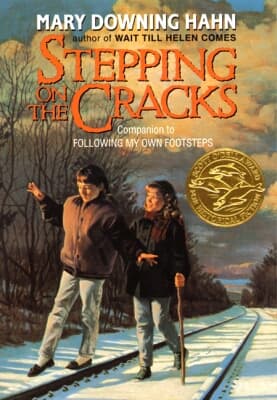
Mary Downing Hahn (1991)
Genre
Children's / Historical Fiction / Young Adult
Reading Time
200 min
Key Themes
See below
Sign in to track this book
During WWII, two best friends planning revenge against their bully uncover a secret that upends their black-and-white world, making them face hard truths about their community and themselves.
In the fall of 1944, eleven-year-old Margaret starts sixth grade with her best friend, Elizabeth. The war in Europe is always present; both girls have brothers serving overseas – Margaret's brother, Jim, in the Navy, and Elizabeth's brother, Robert, in the Army. Their small town is very patriotic, but their main worry is Gordy Smith, the notorious sixth-grade bully, and his friends, Toad and Doug. Gordy's constant teasing, name-calling, and hitting make school a daily problem for Margaret, who is especially afraid of him. He targets her and Elizabeth, often making their walk home miserable. Margaret tries to avoid Gordy, but it usually doesn't work, and she feels more and more frustrated and shamed by him. She wishes she could stand up to him but lacks the courage.
The bullying gets worse when Gordy and his friends corner Margaret and Elizabeth, stealing Elizabeth's new pencil box and breaking Margaret's glasses. This event pushes the girls too far. Determined to get even, they make a plan. Their idea is to lure Gordy and his friends into the old abandoned house known as the 'Widow's House,' rumored to be haunted, and scare them. They think that if they can make Gordy afraid, he will stop bothering them. Margaret is nervous about the plan, but Elizabeth's determination and the desire for revenge overcome her fear. They carefully plan the details, hoping to get back at their tormentors and end the constant bullying that has bothered their school year.
Margaret and Elizabeth put their plan into action. They leave a trail of clues, including a note written in 'ghostly' handwriting, meant to make Gordy curious and lead him and his friends to the Widow's House. The boys, at first doubtful but interested in the dare, follow the trail. Margaret and Elizabeth hide inside the old house, waiting for them. As Gordy, Toad, and Doug carefully enter, the girls use various items – a white sheet, rattling chains, and eerie moans – to create a scary experience. Their efforts work; the boys are truly frightened, especially Gordy, who shows a rare moment of weakness. The girls watch, hidden, as the boys panic and run from the house in terror, believing they have seen a real ghost.
After the boys run off, Margaret and Elizabeth come out of their hiding spot, feeling victorious. As they leave the Widow's House, Margaret sees a small, worn photograph on the floor, dropped by one of the boys. It's a picture of a young boy, clearly Gordy, with a woman. But what really surprises her is a small, hand-drawn swastika on the back of the photo. This symbol, linked to the enemy in the war, deeply bothers Margaret. She shows it to Elizabeth, and they are both confused and shocked. The discovery immediately changes how they see Gordy, making them wonder about their bully and what this symbol could mean in their patriotic, war-focused world.
Bothered by the swastika, Margaret decides to confront Gordy. She approaches him carefully, showing him the photograph. Gordy, at first defensive and angry, eventually breaks down and reveals a secret: his father is German, and his family has faced strong prejudice and discrimination because of their background, especially during the war. He explains that his father, Mr. Smith, had to change his name from Schmidt to avoid more harassment. The swastika, he clarifies, was drawn by another boy teasing him about his German background. Gordy's bullying, he admits, comes from his own pain, fear, and anger from being an outsider in his community, always targeted and misunderstood.
Gordy's revelation makes Margaret and Elizabeth rethink everything they thought they knew about him. They learn about the subtle and open ways he and his family are excluded – whispers, cold shoulders, and clear hostility from neighbors and even teachers. Mr. Smith, Gordy's father, is a kind, quiet man, but his German origins make him a target of suspicion and hate in their small, very patriotic town. Gordy explains how his family lives in constant fear of being reported or further persecuted. This new understanding makes the girls feel guilty for their part in tormenting him, realizing that their revenge was based on a shallow understanding of his situation. They start to see him not just as a bully, but as a victim of prejudice.
The girls' view changes greatly. Margaret, who had been terrified of Gordy, now feels great pity and a growing sense of responsibility. Elizabeth, at first more hesitant, also comes to terms with the unfairness Gordy faces. They realize that their own patriotic passion, while understandable given the war, had blinded them to the humanity of someone seen as 'other.' Their desire for revenge disappears, replaced by deep empathy. They start to see Gordy's bullying as a desperate act of self-preservation and a cry for help, a way to put his own pain onto others. This realization challenges their deep-seated beliefs about right and wrong, making them face the complexities of human behavior and the harm of prejudice.
Margaret and Elizabeth now face a moral problem: how can they help Gordy without revealing his secret and possibly putting his family in more danger? They understand that exposing his German background could lead to serious problems for the Smiths, especially during wartime when anti-German feelings are very high. They try to befriend Gordy, offering small acts of kindness, but they also realize that their individual efforts might not be enough. They discuss the situation, weighing the risks and benefits of speaking out versus staying silent. They feel the weight of this secret, understanding that their actions, or lack of action, could have big effects on Gordy and his family, testing their courage and their sense of justice.
Margaret gets a chance to act during a classroom discussion about the war. When a classmate makes a negative comment about Germans, implying they are all evil, Margaret, remembering Gordy's situation, can no longer stay silent. Despite her usual shyness and fear of conflict, she speaks up, saying that not all Germans are bad and that judging people by their nationality is wrong. Her unexpected words, though met with some confusion and discomfort from her peers and even her teacher, mark a big change in her character. It shows her growing courage and her commitment to supporting what she believes is right, even if it means going against popular opinion and risking her social standing.
As the war ends, the strong anti-German feeling in the town slowly lessens, though not completely. The community starts to focus on post-war rebuilding instead of wartime worries. Margaret and Elizabeth continue their quiet support of Gordy, and a hesitant friendship begins between them. While Gordy's family history mostly stays a secret, the girls' understanding and empathy help them with their relationship. Margaret, having found her voice and courage, feels a sense of personal growth. The story ends with the promise of a more tolerant future, as Margaret, Elizabeth, and Gordy, though still carrying their individual burdens, have learned about prejudice, compassion, and the complexities of human nature, hinting at a new chapter of understanding and acceptance.
The Protagonist
Margaret transforms from a fearful and passive victim to a courageous and empathetic individual who stands up against prejudice.
The Supporting
Elizabeth's initial impulsiveness and desire for revenge mature into a more nuanced understanding of empathy and justice.
The Antagonist/Supporting
Gordy evolves from a feared bully to a vulnerable boy who tentatively accepts friendship and understanding.
The Supporting
Remains a consistent figure of quiet dignity and resilience in the face of adversity.
The Supporting
Remains a minor character, reflecting the general sentiment of following a leader.
The Supporting
Remains a minor character, reflecting the general sentiment of following a leader.
The Mentioned
His presence is felt through his absence and the impact of his service on his family.
The Mentioned
His presence is felt through his absence and the impact of his service on his family.
The novel clearly shows how prejudice, fueled by wartime fear, can target innocent people. Gordy Smith and his family face strong discrimination because of their German heritage, even though they are loyal to America. This is shown through the whispers, cold shoulders, and clear hostility the Smiths experience, forcing them to live in fear and secrecy. Margaret and Elizabeth's initial anti-German feelings, born of patriotism, are challenged when they learn Gordy's secret, making them confront the unfairness of judging people by their ethnicity rather than their character. The scene where Margaret speaks up against a classmate's prejudiced remarks in class is a key moment showing the fight against this theme.
“It was one thing to hate Hitler and the Nazis, but it was another to hate all Germans.”
A main theme is how empathy can change things. Margaret and Elizabeth first see Gordy as just a bully, deserving of their revenge. But after learning his family's secret and the pain he suffers from prejudice, their hatred turns into deep understanding and compassion. This change in view allows them to see Gordy not as an enemy, but as another person suffering. Their new empathy makes them protect him and eventually leads Margaret to speak out against prejudice. This shows how understanding another's struggles can lead to a deeper sense of humanity and moral responsibility.
“I looked at Gordy Smith, the bully, and saw Gordy Smith, the boy who was afraid.”
The novel follows Margaret's journey from a shy, fearful girl to someone who finds the courage to stand up for justice. At first, she is too scared to confront Gordy about his bullying. But after learning his secret, her fear becomes a moral duty. Her act of speaking out against prejudice in class, despite her shyness and possible social consequences, shows her new courage. This theme highlights that true bravery isn't not being afraid, but choosing to act despite fear, especially when defending those who are vulnerable or unfairly targeted.
“It was harder to stand up for someone than to laugh at them.”
While the war is fought overseas, its effects strongly influence the small American town. The constant presence of brothers fighting, the patriotic feeling, and the collective anxiety shape the community's attitudes. This theme is clear in the strong anti-German sentiment that directly affects Gordy's family. The war creates an environment where fear and suspicion can easily turn into prejudice against those seen as 'other,' even loyal citizens. It shows how national conflicts can create divisions and unfairness within a seemingly unified society, making people deal with complex moral questions in their daily lives.
“The war was everywhere, even in our own town, even in our own school.”
A dilapidated, rumored-to-be-haunted house used as a setting for the girls' revenge and a place of discovery.
The Widow's House serves as a crucial setting for the story's turning point. Initially, it's a place of mystery and fear, a perfect backdrop for Margaret and Elizabeth's prank to scare Gordy. Its dilapidated state and local legends contribute to the eerie atmosphere. More importantly, it is within this house, after the prank, that Margaret discovers the photograph with the swastika, directly leading to the unraveling of Gordy's secret. The house thus functions as both a catalyst for the girls' revenge and the site of a shocking revelation that shifts the entire narrative.
A seemingly innocent photograph with a hidden, disturbing symbol that reveals Gordy's secret.
The photograph of Gordy with a woman, and specifically the swastika drawn on its back, acts as the primary inciting incident for Margaret's change of heart and the story's central conflict. It's a powerful symbol that initially evokes fear and confusion in Margaret, tying Gordy directly to the enemy in her mind. However, its true significance is only revealed through Gordy's explanation, transforming it from a symbol of hate into a tragic marker of his family's suffering and the prejudice they endure. It is the tangible evidence that forces Margaret to question her assumptions.
The story is told entirely through Margaret's eyes, allowing for intimate insight into her emotional and moral development.
Telling the story from Margaret's first-person perspective is a key device. It allows the reader to intimately experience her initial fear of Gordy, her internal struggles with the revenge plan, and her profound moral awakening after discovering Gordy's secret. This perspective makes her journey of empathy and courage deeply personal and relatable. We witness her changing perceptions of Gordy and her community firsthand, making her eventual decision to stand up against prejudice all the more impactful as it stems from her own evolving understanding.
The historical backdrop of World War II, which fuels patriotism and simultaneously intensifies prejudice.
World War II is not just a backdrop but a crucial plot device that shapes the characters' motivations and the story's central conflict. The war fosters intense patriotism in the town, which in turn fuels anti-German sentiment. This societal atmosphere directly leads to the discrimination faced by Gordy's family. The war provides the context for the initial hatred towards Gordy and the moral dilemma Margaret faces. Its eventual end also signals a potential for healing and a shift in societal attitudes, allowing for a more hopeful resolution for the characters.
“I didn't know what to make of her, or how to act around her. She was like a wild thing, beautiful and dangerous.”
— Margaret's initial impression of Annie.
“It's funny how some people just walk into your life and change everything, even when you don't want them to.”
— Margaret reflecting on Annie's impact.
“Sometimes the things you're most afraid of turn out to be the things that save you.”
— Margaret's realization about facing fears.
“The past isn't always gone. Sometimes it just waits for you to catch up.”
— Margaret grappling with hidden family secrets.
“There are some things you just know, deep down, even if no one tells you.”
— Margaret's intuition about unspoken truths.
“Being brave doesn't mean you're not scared. It means you do what needs to be done even when you are.”
— A lesson learned about courage.
“Grown-ups don't always tell you everything, even when they think they're protecting you.”
— Margaret's understanding of adult secrecy.
“Some cracks are too big to step over. You have to learn to live with them, or find a way around.”
— A metaphorical reflection on life's challenges.
“It was strange how a small house could hold so many secrets, so much sadness, and still stand.”
— Margaret observing Annie's dilapidated home.
“You can't really know someone until you know their story.”
— Margaret's growing understanding of Annie.
“The world doesn't stop just because your heart feels like it's broken.”
— Margaret dealing with personal grief and loss.
“Sometimes, the best way to find out who you are is to help someone else find out who they are.”
— Margaret's journey of self-discovery through helping Annie.
“It was like a puzzle, and Annie was the missing piece, the one that made everything else make sense.”
— Margaret's realization about Annie's role in her life.
“Silence can be louder than any scream when it's full of things left unsaid.”
— Margaret sensing the unspoken tension and secrets.
Ready to see how well you understood this book? Take our interactive quiz with 10 questions.

Biography coming soon.

Dan Gemeinhart
4.5

Kate O'Hearn
4.4

Jeanne Birdsall
4.4

Jen Wang
4.4

Wendelin Van Draanen
4.3

John Marsden
4.3

Chris Van Allsburg
4.3
Jennifer A. Nielsen
4.2