“Human life is a frightful, an abominable mess, and it is not to be endured unless one can at the same time feel an almost divine humor about it.”
— Harry Haller's reflections on the human condition and his own struggles.


Hermann Hesse (2010)
Genre
Literary Fiction / Psychology / Philosophy
Reading Time
166 min
Key Themes
See below
Sign in to track this book
A tormented intellectual battles his dual nature and seeks spiritual freedom in a world of conformity. This new translation faithfully presents Hesse's original German.
An unnamed editor, Harry Haller's landlady's nephew, finds Haller's manuscript, 'Records of Harry Haller (For Madmen Only),' after Haller disappears. The editor describes Haller as an eccentric, intellectual, and lonely man who rented a room for about ten months. He recounts Haller's sadness, his love for classical music and books, and his deep feeling of being separate from society. The editor feels both fascinated and sorry for Haller, acknowledging his genius and suffering. He decides to publish the manuscript to explain Haller's complex inner world, even though some parts are disturbing and hard to understand.
Harry Haller begins his 'Records' by calling himself the 'Steppenwolf,' a fifty-year-old intellectual who feels a deep split in his soul: one part human, spiritual, and refined; the other a wild, untamed wolf, driven by instinct. He describes his isolation and his dislike for superficial middle-class life, but also his desire for connection. Haller details his constant despair and his thoughts of suicide, which he calls 'the great escape.' He regrets his inability to bring these two opposing forces together, leading to a life of intense suffering and separation from both society and himself.
One evening, walking through the city, Harry Haller meets a strange man carrying an advertising board. This man, with an odd, almost evil smile, gives Haller a small pamphlet titled 'Treatise on the Steppenwolf: For Madmen Only.' The pamphlet's content is a shocking and insightful analysis of Haller's own divided personality, describing his struggle between human and wolf natures. It also hints at a 'Magic Theater' where his true self might appear. This meeting deeply unsettles and fascinates Haller, making him question reality and his own sanity, and sparking his curiosity about this mysterious theater.
Despairing and about to commit suicide, Harry Haller wanders into a smoky dance hall, drawn by the music. There, he meets Hermine, a young, confident woman who immediately sees his inner pain and seems to understand him. Hermine, with her sharp insight and unconventional wisdom, takes Haller under her wing. She promises to teach him how to live and find joy, but only if he follows her instructions, including falling in love with her. She also makes a cryptic demand that he will eventually have to kill her, which Haller finds both unsettling and intriguing.
Under Hermine's guidance, Harry Haller begins to change. Hermine introduces him to Maria, a beautiful and sensual woman who becomes Haller's lover and teaches him about physical pleasure and simple human connection, things he had long denied himself. Hermine also introduces him to Pablo, an enigmatic jazz saxophonist and drug dealer, who represents a different kind of spirituality—one based in sensuality, humor, and a rejection of pure intellect. Pablo challenges Haller's rigid views, suggesting his suffering comes from overthinking and his inability to embrace his soul's many parts. Through these relationships, Haller begins to let go of his inhibitions and engage more fully with life.
Hermine arranges a grand masquerade ball, where Harry Haller is encouraged to be anonymous and shed his intellectual limits. Dressed as a Pierrot, Haller experiences a night of celebration, dancing, and flirting. He meets many masked figures, including one he thinks is Hermine and another he suspects is Maria. The ball is a chaotic, dreamlike experience that blurs the lines between reality and illusion, challenging Haller's rational mind. Here he first truly feels a sense of belonging and joy, even amidst the superficiality, as he lets himself be carried away by the music and festive mood.
During the masquerade ball, Harry Haller receives a formal invitation to the 'Magic Theater – For Madmen Only. Entrance Not For Everybody.' Pablo, who acts as the doorkeeper, presents the invitation. This moment marks a major turning point, as Haller has now, through his experiences with Hermine, Maria, and Pablo, become 'ready' for the deeper revelations of the theater. He feels both anxious and eager, recognizing this as the culmination of his journey, a place where his fragmented self might finally be confronted and possibly integrated. The Magic Theater promises a journey into his own subconscious.
Harry Haller enters the Magic Theater, a hallucinatory space where reality is fluid and symbolic. Pablo guides him, presenting him with many doors, each labeled with a different, often absurd, scenario: 'All Girls Are Yours,' 'Joys of Hunting,' 'Suicide of the Steppenwolf,' 'Guidance in the Building of the Personality.' Haller passes through several doors, meeting various versions of himself and his desires. He experiences fragmented realities, confronts his fears, his suppressed desires, and his multiple personality traits, realizing his soul is not just divided into two, but made of countless 'selves.'
Inside the Magic Theater, Harry Haller encounters a symbolic 'chess game of the personality.' Pablo shows how Haller's personality, which he sees as fixed and dual, can actually be broken into hundreds, even thousands, of 'soul-pieces.' These pieces can then be rearranged and combined in endless ways, creating new and diverse personalities. This revelation challenges Haller's core belief in his 'Steppenwolf' identity, showing him his suffering comes from his strict adherence to a limited self-image. He is encouraged to play with these pieces, to embrace his fluid and multiple being.
In a climactic, hallucinatory scene within the Magic Theater, Harry Haller finds Hermine and Maria together, seemingly naked. Overwhelmed by a mix of jealousy, desire, and the fulfillment of Hermine's earlier prophecy, Haller stabs Hermine. This act is not a literal murder but a highly symbolic one. Pablo appears, criticizing Haller not for the 'killing,' but for taking it too seriously and using a real knife, showing his failure to grasp the playful, illusory nature of the Magic Theater. This act represents Haller's struggle to move beyond his romantic idealization of Hermine and to integrate the sensual and spiritual aspects of himself without being controlled by either.
After the 'killing' of Hermine, Harry Haller encounters a projection of Mozart, who appears as a humorous, almost mischievous figure. Mozart gently scolds Haller for his seriousness and for failing to understand the playful, non-literal nature of the Magic Theater. Mozart stresses the importance of humor, laughter, and the ability to overcome suffering through an artistic, detached view. He encourages Haller to learn to laugh at his own pain and life's absurdities, and to embrace the eternal, multifaceted nature of the soul. This encounter marks a change in Haller's understanding, moving him toward a more integrated and accepting view of existence.
Harry Haller gradually understands the main lesson of the Magic Theater: his fragmented self is not a curse but an opportunity for endless combination and change. He realizes his 'Steppenwolf' identity was just one of many possible arrangements of his soul, and that true freedom comes from accepting his multiple being, rather than trying to force unity. He understands the Magic Theater is a metaphor for the mind itself, a place to experiment with different identities and perspectives. The journey ends with Haller feeling a glimmer of hope, a sense that he can, through humor and play, learn to assemble the scattered pieces of his soul and achieve a more harmonious existence, even if the path is long and uncertain.
The Protagonist
Harry moves from rigid self-pity and dualism to a nascent understanding of his multifaceted personality and the liberating power of humor and play.
The Supporting
Hermine guides Haller through his initial transformation, embodying the path he needs to take before becoming a symbolic sacrifice for his ultimate liberation.
The Supporting
Pablo remains a consistent figure of playful wisdom, guiding Haller through the Magic Theater and revealing the true nature of the soul's multiplicity.
The Supporting
Maria helps Haller reconnect with his physical and emotional self, serving as a stepping stone in his journey towards embracing life's fullness.
The Mentioned
The editor's understanding of Haller deepens as he reads the manuscript, moving from simple observation to a more complex, if still incomplete, appreciation of Haller's inner world.
The Supporting
Mozart serves as a final, crucial guide, imparting the lesson of humor and artistic detachment that Haller needs for his ongoing self-integration.
The Mentioned
Goethe's presence in Haller's thoughts shifts from a distant, idealized figure to one whose wisdom Haller eventually begins to grasp through his own experiences.
The main theme is Harry Haller's struggle with his perceived dual nature—the 'Steppenwolf' (instinctual, wild) and the 'human' (intellectual, spiritual). He believes his soul is rigidly split, causing great suffering and loneliness. However, the novel gradually shows this duality is too simple; through the Magic Theater and Pablo's teachings, Haller learns his personality is not two-sided but made of countless 'soul-pieces' that can be endlessly rearranged. This challenges the idea of a fixed identity, suggesting that true integration means accepting this multiplicity and fluidity. This is clear in the 'chess game of the personality' scene, where Pablo shows Haller how to break down and reassemble his psychological parts.
“Man is not a being with two souls or with two selves, but with a thousand. The self of the Steppenwolf is not one and not two, but is a manifold world of possibilities, a world of dreams and illusions, of desires and fears, of love and hate.”
Harry Haller feels deeply separated from middle-class society, which he sees as superficial, complacent, and against true intellectual and spiritual life. His 'Steppenwolf' nature makes him feel fundamentally different and isolated, leading to intense loneliness and a desire for connection. This separation drives his initial despair and thoughts of suicide. His journey with Hermine, Maria, and Pablo, and especially his experience at the masquerade ball, shows his tentative steps toward engaging with others and finding a sense of belonging, even if temporary. The Magic Theater ultimately suggests that true belonging comes not from outside approval, but from an internal acceptance of one's own complex nature.
“I was a Steppenwolf, a lonely wanderer in the world, an outcast from the bourgeois world, a man who had no home, no family, no love.”
Art, especially classical music (Mozart) and jazz (Pablo's saxophone), plays an important role in Haller's journey. Music offers him comfort and a glimpse of harmony, but also highlights his suffering. Pablo's jazz represents a more visceral, uninhibited artistic expression that challenges Haller's intellectualism. Humor, particularly as taught by Pablo and the hallucinatory Mozart, emerges as a vital tool for overcoming suffering and embracing life's absurdities. Mozart teaches Haller that true mastery involves a playful, detached perspective, allowing one to laugh at one's own pain and life's tragicomic nature, rather than taking everything too seriously, including one's own identity.
“You are willing to die, you are willing to suffer, but you are not willing to laugh.”
Hesse, through Harry Haller, criticizes middle-class society. Haller views the middle class as complacent, intellectually stagnant, and emotionally repressed, valuing order and comfort over depth and passion. He sees their lives as lacking true meaning and artistic spirit, leading to his deep sense of alienation. This critique appears most clearly in Haller's internal monologues and his disdain for the 'philistine' world around him, which he feels stifles genuine individuality and spiritual growth. The novel suggests that while Haller's despair is extreme, the society he rejects contributes to his fragmentation by failing to accommodate complex, unconventional souls.
“The bourgeois is by nature a creature of the mean, a creature of the comfortable middle, a creature of the balanced average.”
Harry Haller's entire journey is a search for self-understanding, moving from a static, suffering existence to a dynamic grasp of his potential. Initially, he believes self-understanding means resolving his inner duality. However, his experiences with Hermine, Maria, Pablo, and especially the Magic Theater, reveal that it involves embracing his soul's multiplicity, acknowledging all its contradictory parts, and learning to play with them. The novel suggests that self-understanding is not a destination but an ongoing process of change, where one constantly breaks down and reassembles their personality, guided by humor, art, and an acceptance of life's complexities. It's about learning to live with, rather than eliminate, one's inner conflicts.
“You have to learn to play, Harry. You have to learn to laugh. You have to learn to listen to the radio music of life.”
A mysterious pamphlet that analyzes Haller's psyche.
This pamphlet, given to Harry Haller by a stranger, serves as a crucial expositional and meta-fictional device. It provides an objective, almost clinical, analysis of Haller's 'Steppenwolf' personality, articulating his internal conflicts and dualities more clearly than he himself could. It functions as a mirror, forcing Haller to confront his self-perception, and also foreshadows his journey by hinting at the existence of the 'Magic Theater' and the possibility of transcending his suffering. The treatise blurs the line between Haller's subjective experience and an external, authorial voice, making the reader question the nature of his reality.
A hallucinatory, symbolic space for psychological exploration.
The Magic Theater is the primary symbolic and allegorical device of the novel. It is not a literal theater but a metaphorical realm within Harry Haller's mind, accessed through altered states of consciousness (implied by Pablo's drug dealing). It allows Haller to confront and explore the fragmented aspects of his personality through a series of 'shows' or 'doors.' Each 'show' represents a different facet of his desires, fears, and potential selves. The Magic Theater functions as a psychological laboratory, enabling Haller to break down his rigid self-image and experience the multiplicity of his soul, ultimately teaching him to 'play' with his identity rather than be imprisoned by it.
Figures who embody specific aspects of Haller's psyche or the path to integration.
Hermine, Pablo, Maria, and Mozart are more than just characters; they function as symbolic representations of different aspects of Harry Haller's inner world and the various paths to self-integration. Hermine is a mirror and guide, embodying both the sensual and intellectual. Pablo represents the playful, sensual, and multi-faceted aspect of the soul, and the rejection of intellectual rigidity. Maria embodies simple physical pleasure and connection. Mozart symbolizes the 'Immortals,' humor, artistic transcendence, and the eternal. Through their interactions, Haller is forced to confront and integrate these diverse aspects of himself, moving beyond his initial dualistic worldview.
Narrative technique revealing Haller's unfiltered thoughts and feelings.
The novel heavily utilizes stream of consciousness and internal monologue, particularly in Harry Haller's 'Records.' This device allows the reader direct access to Haller's unfiltered thoughts, anxieties, philosophical musings, and emotional turmoil. It immerses the reader in his subjective experience, making his alienation and despair palpable. This technique is crucial for understanding the depth of his internal conflict and his intellectual processes. The 'Treatise' then offers a more structured, external analysis, providing a contrast to Haller's often chaotic and self-pitying internal narrative, and highlighting his journey from subjective suffering to a more objective understanding of his condition.
“Human life is a frightful, an abominable mess, and it is not to be endured unless one can at the same time feel an almost divine humor about it.”
— Harry Haller's reflections on the human condition and his own struggles.
“The way to innocence, to the unburdened, unsuspecting, and vital life, leads not backward to the wolf or child, but onward to the panther or the sage.”
— Hermine's wisdom regarding personal growth and escaping the 'Steppenwolf' identity.
“Most people do not want to swim before they are able to. Is not that witty? Of course, they do not want to swim because they are not able to.”
— Harry's cynical observation on human nature and fear of the unknown.
“I see that you are an artist, a seeker, a man who has not yet found his way. You have an ideal, and you are suffering from the reality.”
— Pablo describing Harry Haller's inner turmoil and artistic sensibility.
“You are willing to die, you suffer from the world, you suffer from yourself, you are a Steppenwolf. But you are not willing to live.”
— Hermine challenging Harry's despair and his reluctance to embrace life.
“There are times when a man does not want to think of anything, when he wants only to forget himself.”
— Harry reflecting on his desire for escape from his own thoughts and existence.
“You must learn to laugh. That is the great art. I have learned it, and I am happy. You must learn to laugh at yourself.”
— Pablo's advice to Harry, emphasizing the importance of humor and self-acceptance.
“What is important is to be able to love, to feel that love, and to be able to communicate it.”
— Maria reflecting on the essence of human connection and affection.
“Every age, every culture, every custom has its own form of madness.”
— Harry's observation on the pervasive nature of societal and individual irrationality.
“The true humorist has found the only means of being human at all. He alone knows how to live with himself and with others.”
— Harry's contemplation on the role of humor in navigating human existence.
“The 'Steppenwolf' was one of those lost souls who are torn between two worlds, unable to find a home in either.”
— The narrator's description of Harry Haller's fundamental internal conflict.
“You must be willing to go through hell, to die, to fall apart, to be born again. Only then can you find true freedom.”
— Pablo guiding Harry through the transformative experiences of the Magic Theater.
“Immortality is the capacity to laugh at yourself.”
— A profound statement made during Harry's experience in the Magic Theater.
“There are many roads to God, and one of them is called madness.”
— Harry's musings on the diverse paths to spiritual or existential understanding.
Ready to see how well you understood this book? Take our interactive quiz with 10 questions.
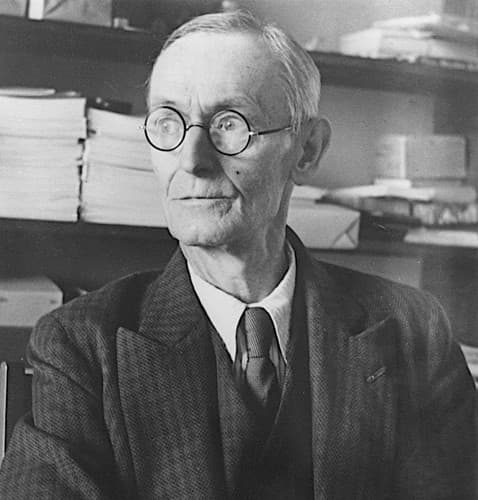
Hermann Karl Hesse was a German-Swiss poet, novelist, and painter. His best-known works include Demian, Steppenwolf, Siddhartha, and The Glass Bead Game, each of which explores an individual's search for authenticity, self-knowledge and spirituality. In 1946, he received the Nobel Prize in Literature.







