“How can we be so different and feel so much alike?”
— Stellaluna reflects on her friendship with the birds after discovering their differences.

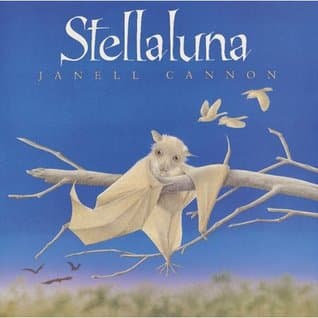
Janell Cannon (1993)
Genre
Fantasy / Children's
Reading Time
10 min
Key Themes
See below
Sign in to track this book
A baby bat, separated from her mother, learns to live among birds before an unexpected reunion teaches her the beauty of embracing her true, nocturnal nature.
The story begins with a mother fruit bat flying through the twilight jungle with her baby, Stellaluna, clinging to her. The mother bat is searching for ripe fruit to eat. As they fly, a large owl suddenly swoops down and attacks them. In the chaos, the mother bat lets go of Stellaluna, who tumbles through the air, her tiny wings too weak to fly. She falls through the dense leaves and branches of the forest, separated from her mother and her familiar bat world. Her mother mourns her lost baby, believing Stellaluna to be gone forever.
Stellaluna's long fall ends when she lands with a soft thud in a cozy, warm nest. Inside the nest, three tiny bird hatchlings are huddled together. Soon, their mother, a small gray bird, returns to the nest. She is surprised to find the strange, furry creature with leathery wings among her own babies. Despite her initial apprehension, the mother bird decides to take Stellaluna in, treating her like one of her own. She tells Stellaluna to eat bugs and sleep like a bird, behaviors very different from a bat's.
Under the care of the mother bird, Stellaluna tries to adapt to her new bird family. She learns the names of her bird siblings: Pip, Flap, and Flutter. She tries to eat the worms and insects the mother bird brings, even though they taste terrible. She struggles with sleeping upright on a branch, often falling headfirst when she tries to hang by her feet like a bat. She also tries to fly in the daytime with her bird siblings, but her large, dark wings are not suited for their quick movements, and the bright sun hurts her eyes. Stellaluna feels different and often clumsy, longing for her true home and her mother.
As Stellaluna and the bird siblings grow, it is time for them to learn to fly. The mother bird encourages them, and soon, Pip, Flap, and Flutter are soaring through the trees. Stellaluna, despite her initial difficulties, also manages to fly, though her style is different. One day, while flying with her bird siblings, Stellaluna notices ripe, purple figs hanging from a tree. Her instincts kick in, and she recognizes them as delicious food. She excitedly calls her bird siblings over, and they tentatively try the fruit. To their surprise, they find it quite tasty, a welcome change from their usual insect diet.
Despite her fondness for her bird family, Stellaluna still feels a strong pull towards her natural bat instincts. One evening, as the sun sets, Stellaluna feels an urge to fly. She slips away from her sleeping bird siblings and soars into the twilight sky. She finds the experience exhilarating, feeling truly free and graceful for the first time. However, she flies so far and for so long that she loses track of her bird family's nest. When the sun begins to rise, she realizes she is lost once again, alone in the jungle, far from both her bird family and her original home.
As Stellaluna hangs upside down from a branch, tired and sad after her night flight, she sees a strange sight. Other creatures are flying in the night sky, just like her. They are dark, winged, and gracefully move through the moonlit jungle. Curious and hopeful, Stellaluna approaches them. To her astonishment and joy, she realizes they are bats! They are hanging upside down, eating fruit, and flying at night, just as she instinctively knew she should. She feels an immediate sense of belonging and kinship with these new friends, a feeling she hadn't fully experienced with her bird family.
Stellaluna introduces herself to the group of fruit bats and shares her story of falling from her mother, being raised by birds, and learning their ways. As she describes her mother's appearance, one of the older bats listens. Suddenly, the older bat cries out, recognizing the description. It is Stellaluna's own mother, who had been mourning her lost baby for weeks! The reunion is emotional and joyous. Stellaluna and her mother embrace, their hearts filled with relief and happiness at finding each other. Stellaluna is finally home with her true family.
Filled with happiness, Stellaluna wants to introduce her bat family to her bird siblings. She flies back to the bird's nest with her mother and the other bats. Pip, Flap, and Flutter are initially frightened by the strange, large creatures, but Stellaluna reassures them. Stellaluna shows how bats hang upside down to sleep and eat fruit at night, while her bird siblings show the bats how they perch and eat insects during the day. The two families observe each other's very different lifestyles, marveling at the unique ways each species lives. They try to understand each other's perspectives, seeing the differences and similarities.
Stellaluna now fully embraces her identity as a bat, flying with her mother and the other fruit bats at night, eating delicious fruit, and hanging upside down to sleep. However, she does not forget her bird siblings. She continues to visit Pip, Flap, and Flutter during the day, sharing stories and experiences. While they still find each other's habits peculiar — the birds cannot imagine flying at night, and the bats cannot imagine eating bugs — they have learned to appreciate and respect their differences. Stellaluna, in particular, carries the lessons of both worlds, understanding that even though they are different, they are all friends.
The Protagonist
Stellaluna transforms from a lost, confused baby trying to fit in, to a confident bat who embraces her true self while cherishing her unique experiences.
The Supporting
She begins as a grieving mother and ends as a joyfully reunited parent, reinforcing the theme of enduring maternal love.
The Supporting
She remains a consistent figure of nurturing care, demonstrating unconditional love and acceptance.
The Supporting
Pip learns to accept and appreciate differences through his relationship with Stellaluna.
The Supporting
Flap's understanding of the world expands as he interacts with Stellaluna, learning about different ways of life.
The Supporting
Flutter grows to appreciate and respect the unique qualities of Stellaluna, fostering cross-species friendship.
The Antagonist/Mentioned
N/A
The Supporting
N/A
Stellaluna's central struggle is her search for identity and a place where she truly belongs. Separated from her bat family, she tries to fit in with the birds, but her bat nature clashes with their ways. She feels 'different' and 'clumsy' when trying to act like a bird. Her discovery of other bats and reunion with her mother allows her to fully embrace her bat identity, finding comfort and belonging among her own kind. The story explores the idea that true belonging comes from accepting one's innate self.
“"How can we be so different and feel so much alike?"”
Stellaluna shows adaptability and resilience throughout her ordeal. After falling into the bird's nest, she quickly learns to mimic bird behaviors, despite them being unnatural and uncomfortable for her. She tries to eat insects, sleep upright, and fly during the day. This ability to adapt to a foreign environment, along with her spirit to survive and eventually find her true home, shows her inner strength and capacity to overcome problems. Her journey shows how she navigates changes and eventually thrives.
“"Stellaluna was a good bat, and she tried very hard to be a good bird."”
The story shows different forms of family and the strength of unconditional love. Stellaluna's Mother Bat shows deep, enduring maternal love, tirelessly mourning and searching for her lost baby. The Mother Bird, despite Stellaluna's unusual appearance, gives unconditional love and care, raising her as one of her own. Stellaluna herself forms strong bonds with her bird siblings, showing that family can be found in unexpected places. The reunion between Stellaluna and her birth mother is the emotional climax, reinforcing the strong connection of biological family.
“"Oh, how my heart aches for Stellaluna," sighed the Mother Bat. "Will I ever see my baby again?"”
A main theme is accepting and appreciating differences. The birds and bats have fundamentally different ways of life — eating, sleeping, flying patterns. Initially, these differences cause confusion and some mild frustration. As the story goes on, both Stellaluna and her bird siblings learn to respect and marvel at each other's unique qualities. The ending message states that despite their differences, they can still be friends and love each other, promoting tolerance and understanding in a diverse world.
“"You sleep all day!" cried Stellaluna. "You fly all night!" said Pip. "How can we be so different and feel so much alike?" whispered Stellaluna. "How can we be so alike and be so different?" wondered Pip.”
Stellaluna lives a 'bird life' and a 'bat life' simultaneously, highlighting contrasts.
The narrative effectively uses parallel lives by having Stellaluna experience life first as a 'bird' and then as a 'bat.' Her time in the bird's nest forces her to adopt bird behaviors, which are in stark contrast to her natural bat instincts. This device allows the author to explicitly compare and contrast the two species' habits, emphasizing their differences (eating bugs vs. fruit, sleeping upright vs. upside down, flying by day vs. night). It also underscores Stellaluna's internal conflict and her journey of self-discovery as she navigates these two distinct worlds, ultimately embracing her true nature while retaining lessons from her adoptive family.
Animals are given human-like emotions and the ability to communicate.
Anthropomorphism is central to making the story relatable and emotionally resonant. Stellaluna, her mother, the mother bird, and the bird siblings all exhibit human-like emotions such as fear, sadness, joy, curiosity, and love. They communicate with each other in language, express longing, and engage in thoughtful reflection about their differences. This device allows young readers to connect with the characters' experiences of being lost, adapting, and finding belonging, making complex themes accessible and engaging through the animals' relatable feelings and interactions.
The contrast between night and day represents different ways of living and identity.
The contrast between night and day is a strong symbolic element in Stellaluna. Day represents the world of the birds – bright, active, and focused on insects. Night represents the world of the bats – dark, mysterious, and centered around fruit. Stellaluna's struggle to adapt to the day (sun hurting her eyes) and her instinctive pull towards the night symbolize her innate bat identity trying to emerge. Her nighttime flight, where she feels truly free, signifies her embracing her true self. The eventual understanding between the birds and bats, despite their day/night differences, symbolizes the acceptance of diverse lifestyles and identities.
A classic narrative structure of separation, ordeal, and joyful return.
The story follows a classic 'fall and reunion' or 'hero's journey' arc, particularly common in children's literature. Stellaluna is abruptly separated from her mother (the 'fall' or 'departure'), experiences a period of trial and adaptation in an unfamiliar world (her time with the birds, the 'ordeal'), and then, through her own actions and a stroke of luck, is reunited with her original family (the 'reunion' or 'return'). This structure provides a clear, satisfying emotional journey for the protagonist, emphasizing themes of loss, resilience, and the ultimate triumph of family bonds. The journey reinforces the idea that true home and identity can be found even after great challenges.
“How can we be so different and feel so much alike?”
— Stellaluna reflects on her friendship with the birds after discovering their differences.
“I'm a bat, not a bird!”
— Stellaluna realizes her true identity after trying to fit in with the birds.
“We are friends. And that is a fact.”
— Stellaluna reassures her bird friends despite their differences.
“Hanging by my feet felt so strange, but I soon got used to it.”
— Stellaluna adapts to her natural bat behavior after living with birds.
“Mother Bat will find me. I know she will.”
— Stellaluna expresses hope while separated from her mother.
“Bats don't hang by their thumbs, and birds don't hang at all!”
— Stellaluna explains the differences between bats and birds to her friends.
“I was so happy to be with my own kind again.”
— Stellaluna reunites with other bats after her adventure.
“We can do things differently and still be friends.”
— Stellaluna and the birds agree to accept their unique ways.
“The night is beautiful when you have wings to fly.”
— Stellaluna enjoys flying at night, embracing her bat nature.
“I may eat fruit, but I'm still a bat.”
— Stellaluna clarifies her diet while maintaining her identity.
“Friends are friends, no matter how different they are.”
— A moral lesson from the story about Stellaluna and the birds.
“She taught me to fly, and I taught her to hang.”
— Stellaluna and the birds share skills, highlighting mutual learning.
Ready to see how well you understood this book? Take our interactive quiz with 10 questions.







