“War is a terrible thing, but it's not the only thing.”
— Alfie reflects on the broader impact of World War I beyond the battlefield.

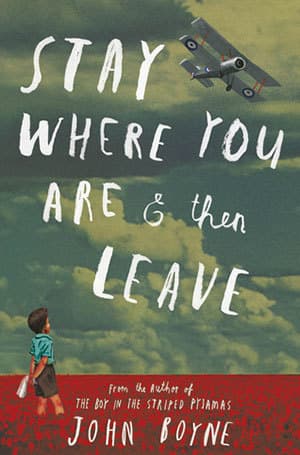
John Boyne (2013)
Genre
Children's / Historical Fiction / Young Adult
Reading Time
210 min
Key Themes
See below
Sign in to track this book
A determined young shoe-shine boy uncovers his father's hidden trauma in a war hospital, forcing him to confront the silent battles fought far from the trenches.
The story begins in London in August 1914, on Alfie Summerfield's fifth birthday, the day World War I breaks out. His father, Georgie, a milkman, tells Alfie he will never go to war, a promise Alfie believes. However, the next day, Georgie enlists in the army, upsetting Alfie's mother, Margie. Alfie does not understand why his father left, holding onto the idea that his father is on a 'special, secret mission' as his mother explains. Life continues in London, with Alfie's mother working long hours in a factory and Alfie taking on odd jobs to help financially.
Four years pass, and Alfie is now nine years old. He is a regular shoe-shine boy at King's Cross Station, a busy place with soldiers and civilians. One day, while shining the shoes of a military doctor, Alfie sees a familiar name on a stack of papers: G. Summerfield. This is his father's name. Hearing parts of a conversation, Alfie learns that his father is not on a secret mission abroad but is in a hospital, suffering from an unknown condition. This news breaks Alfie's long-held belief and makes him desperate to find his father.
Using the information from King's Cross, Alfie carefully follows the doctor's movements and finds Oak Lodge Hospital, not far from his home. He learns that it is a place where soldiers suffering from 'shell shock' are treated. Without his mother knowing, Alfie starts visiting the hospital, at first watching from a distance. He sees other soldiers who seem distant and withdrawn, which makes him more confused about his father's condition. He starts to plan how to get inside and see Georgie.
Alfie's determination leads him to find a way to look into the hospital windows. He sees his father, Georgie, looking thin and distant, staring blankly. This sight is a shock, as his father is nothing like the strong man he remembers. He tries to get closer but is seen by a strict nurse, Nurse Nightingale, who warns him away. She explains the patients' conditions are sensitive and they need peace. Despite this, Alfie is more resolved than ever to reach his father, convinced he can help him.
Knowing he cannot enter directly, Alfie makes a plan. He uses his shoe-shining money to buy a new suit and flowers, hoping to look like a legitimate visitor. He practices looking older and more confident, aiming to get past the guards and nurses. His strategy is to say he is a relative, perhaps a nephew, of one of the patients, to get into the wards. He understands the risks but believes it is the only way to get close to his father and truly understand what is happening.
Alfie's disguise works, and he manages to get past reception and into the wards. The hospital atmosphere is eerie, with a heavy silence broken by occasional moans or distant shouts. He sees many soldiers, some staring blankly, others pacing. He learns that many have lost their voices, memories, or minds because of the trenches. This experience is unsettling for Alfie, as he sees firsthand the psychological cost of the war, a reality very different from the heroic stories he had heard.
Alfie finds his father in one of the wards. Georgie Summerfield is there, but he is a shadow of his former self. He is unresponsive, cannot speak, and stares blankly, his mind trapped in the war's trauma. Alfie tries to talk to him, speaking about home, his mother, and their old life, but Georgie shows no sign of recognition or response. This silent reunion is heartbreaking for Alfie, who had hoped for a joyful embrace and explanations. He realizes the true depth of his father's suffering and the severe impact of shell shock.
Alfie continues his secret visits to Oak Lodge, bringing small comforts and trying to get a response from his father. Meanwhile, his mother, Margie, becomes suspicious of Alfie's secret behavior and his new clothes. She eventually follows him and discovers his trips to the hospital. The truth about Georgie's shell shock and his location at Oak Lodge shatters Margie, who had also believed the 'secret mission' story. Her initial anger at Alfie turns to grief and a shared understanding of their painful reality.
With the truth known, Alfie and Margie begin to visit Georgie together. They bring him his favorite foods, tell him stories from home, and play music, hoping to trigger a memory or a response. They learn more about shell shock from the nurses and doctors, understanding that recovery is a long and uncertain process. Despite the doctors' doubts, Alfie and Margie do not give up hope, believing their love and presence can make a difference. These visits become a new routine, a shared mission to bring Georgie back.
The armistice is declared, and the war ends, bringing relief and celebration. However, for Alfie and Margie, their personal war continues in the silent wards of Oak Lodge. During one of their visits, as the celebrations echo outside, Alfie plays a tune on his harmonica. Georgie, who has been unresponsive for so long, shows a flicker of recognition, a slight movement, a barely noticeable sound. It is a small, fragile sign, but for Alfie and Margie, it is a powerful glimmer of hope that their father and husband might, one day, truly return to them.
The Protagonist
Alfie transforms from an innocent boy holding onto a comforting lie to a determined young man confronting the harsh realities of war's psychological toll, ultimately becoming a source of unwavering hope and support for his family.
The Supporting
Initially a loving father who goes to war, Georgie's arc is one of tragic regression into the silence of shell shock, with only a faint glimmer of hope for recovery by the story's end.
The Supporting
Margie evolves from a mother protecting her son with a white lie to a grieving but resilient partner in facing the harsh realities of her husband's illness.
The Supporting
Dr. Henderson remains a static character, representing the medical establishment's perspective on shell shock at the time.
The Supporting
Her character is largely static, serving as an initial obstacle for Alfie, though she later represents the dedicated if sometimes rigid hospital staff.
The Mentioned
Joe's character remains consistent as Alfie's loyal friend.
The Supporting
Her character is largely static, providing consistent neighborly support.
The novel explores the psychological impact of World War I, specifically 'shell shock' (now known as PTSD). Georgie Summerfield's condition at Oak Lodge Hospital shows this theme, as he is physically unharmed but mentally shattered, unable to speak or respond. Alfie's initial confusion and eventual understanding highlight the lack of societal knowledge about mental illness at that time. The book shows the suffering of these soldiers, how their trauma affects their families.
“He wasn't wounded. He hadn't lost an arm or a leg or an eye like some of the men Alfie saw at the station. He was just...empty.”
Alfie Summerfield shows the resilience and determination of a child facing difficult circumstances. Despite his young age, he takes on adult responsibilities, works to support his family, and goes on a dangerous and emotionally taxing quest to find his father. His refusal to give up hope and his belief that his love can 'fix' his father drives the story. This theme shows the strength children can have when faced with hardship and their capacity for loyalty.
“He knew it was a big secret, but he was Alfie, and he was good at secrets.”
A central theme is the contrast between comforting illusions and the harsh realities people must eventually confront. Margie at first tells Alfie that Georgie is on a 'special, secret mission' to protect him from the truth of war. Alfie himself believes this story until his discovery at King's Cross. The journey to Oak Lodge forces both Alfie and Margie to let go of their illusions and face the grim reality of Georgie's shell shock. This shows the pain of lost innocence and the need to confront difficult truths.
“The truth was a heavy thing, much heavier than the lie he'd lived with for four years.”
The power of family love and the sacrifices made for it are at the heart of the story. Georgie's enlistment, though a broken promise, was likely from a desire to protect his family and country. Margie's hard work and her attempts to shield Alfie show her maternal love. Alfie's relentless search for his father, his secret visits, and his belief that his presence can heal Georgie, show a child's love and willingness to sacrifice his own safety and peace for his parent. The family's effort to bring Georgie back shows their strong bond.
“He had to get to his father. He had to make him remember. He had to bring him home.”
A pivotal setting that facilitates the plot's central discovery.
Alfie's shoe-shine stand at King's Cross Station serves as a crucial plot device. It places Alfie in a position to encounter a diverse range of people, including military personnel, and to overhear snippets of conversation. More importantly, it is here that he spots Dr. Henderson's papers with his father's name, providing the first concrete clue to Georgie's whereabouts and condition. Without this specific setting and Alfie's occupation, the central mystery of his father's fate would likely remain unsolved, thus propelling the entire narrative forward.
A narrative device used to maintain suspense and highlight the impact of war on children.
The 'special, secret mission' that Margie tells Alfie his father is on serves multiple functions. For the first four years of the war, it protects Alfie's innocence and provides a comforting, heroic narrative. For the reader, it establishes the initial mystery surrounding Georgie's true fate. When Alfie discovers the truth, this lie highlights the painful contrast between wartime propaganda/family protection and the grim reality of mental trauma, emphasizing the profound shock and disillusionment Alfie experiences.
A symbolic setting representing the hidden suffering of WWI soldiers.
Oak Lodge Hospital functions as more than just a physical location; it is a powerful symbol of the invisible casualties of war. It represents the societal attempt, however flawed, to deal with shell shock, and the isolation experienced by those suffering from it. Its guarded nature and the silent, withdrawn patients within underscore the hidden and often misunderstood trauma that soldiers endured, making it a confined world where the true horrors of the trenches are reflected in the minds of its inhabitants.
A symbol of hope, connection, and memory.
Alfie's harmonica is a recurring symbolic object throughout the story. It represents the simple joys of childhood and the pre-war innocence of the family. When Alfie plays it for his unresponsive father in the hospital, it becomes a tool for connection, a non-verbal language of love and memory. The fact that Georgie shows a slight reaction to the harmonica at the end signifies a glimmer of hope for recovery and the enduring power of familiar sounds and family bonds to penetrate the fog of trauma.
“War is a terrible thing, but it's not the only thing.”
— Alfie reflects on the broader impact of World War I beyond the battlefield.
“Sometimes the bravest thing you can do is stay where you are.”
— Alfie's mother advises him about courage during uncertain times.
“You don't have to be a soldier to be a hero.”
— Alfie realizes the quiet bravery of civilians during the war.
“Memories are like ghosts; they haunt you when you least expect it.”
— Alfie thinks about his father's absence and the lingering effects of war.
“A lie can be a kindness if it protects someone you love.”
— Alfie's mother explains why she hides the truth about his father's condition.
“The world doesn't stop for one boy's troubles.”
— Alfie feels overwhelmed by his personal struggles amid the larger war.
“Hope is the last thing to die, even in the darkest times.”
— Alfie clings to hope while searching for his father.
“War changes everyone it touches, even those far from the front lines.”
— Observation on how World War I affected civilians in London.
“Sometimes the smallest acts of defiance are the most powerful.”
— Alfie's quiet resistance against the war's injustices.
“You can't run away from your problems; you have to face them where you are.”
— Alfie learns to confront his fears instead of escaping.
“A father's love doesn't disappear, even when he's gone.”
— Alfie reflects on his bond with his absent father.
“In war, the truth is often the first casualty.”
— Comment on how information is manipulated during the conflict.
“Courage isn't about being fearless; it's about acting despite the fear.”
— Alfie's realization as he undertakes a risky journey.
“Home isn't just a place; it's the people who make you feel safe.”
— Alfie understands the meaning of home during his father's absence.
Ready to see how well you understood this book? Take our interactive quiz with 10 questions.

John Boyne is an Irish novelist. He is the author of fourteen novels for adults, six novels for younger readers, two novellas and one collection of short stories. His novels are published in over 50 languages. His 2006 novel The Boy in the Striped Pyjamas was adapted into a 2008 film of the same name.

Dan Gemeinhart
4.5
Kate O'Hearn
4.4

Jeanne Birdsall
4.4

Jen Wang
4.4
Wendelin Van Draanen
4.3

John Marsden
4.3

Chris Van Allsburg
4.3
Jennifer A. Nielsen
4.2