“The thing about being in the middle of a story is that you don't know the end. You don't know how it's going to turn out. You're just there, in the middle of it.”
— Marina Singh reflecting on her journey and the unknown outcome of her mission.

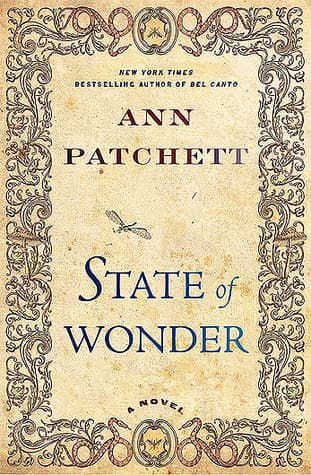
Ann Patchett (2011)
Genre
Literary Fiction / Mystery
Reading Time
450 min
Key Themes
See below
Sign in to track this book
In the Amazon, Dr. Marina Singh searches for her vanished mentor, confronting scientific marvels and personal demons, uncovering a mystery that blurs groundbreaking medicine with ethical sacrifice.
Dr. Marina Singh, a research pharmacologist at Vogel, a Minnesota pharmaceutical company, learns her colleague, Anders Eckman, died in the Amazon. Eckman had gone to Brazil to check on Dr. Annick Swenson, a reclusive scientist developing a fertility drug from a native tree. Vogel has invested much in Swenson's research. Eckman's death, said to be from a fever, causes immediate concern. Marina is affected because she and Eckman had a brief, complicated romantic history. Her boss, Mr. Fox, sends her to Manaus, Brazil, to find out what happened to Eckman and to bring back Swenson, or an update on the drug. This mission makes Marina confront her past with Dr. Swenson, who was her mentor in medical school.
Marina arrives in Manaus, a busy city in the Amazon, but immediately faces problems. Dr. Jackie Bovender, a young doctor working with Dr. Swenson, tells Marina that Swenson lives deep in the jungle, far from roads or airstrips, and is hard to reach. Jackie also says she has not seen Dr. Swenson in months, only getting supplies and messages through others. Marina's attempts to get clear answers about Anders Eckman's death are met with evasiveness, and she senses secrecy around Swenson's work. She learns the Mbande tribe, central to Swenson's research, protect their privacy and land, making her mission harder. The first days in Manaus are spent trying to arrange passage upriver.
After much effort, Marina gets passage on a small boat up the Rio Negro, a journey of several days into the dense jungle. The landscape is overwhelming, with unfamiliar sounds, insects, and humidity. She is with a local guide and eventually reaches the remote Mbande village where Dr. Swenson is supposed to be. The village is surprisingly developed, with a small clinic and a sense of order, but also a mysterious air. Marina notices the health of the Mbande women, especially their ability to have children into old age, a key part of Swenson's research. She learns the tribe is essential to the drug's development, as they know about the specific tree and its properties.
Marina finally meets Dr. Annick Swenson, who is older and more formidable than Marina remembers. Swenson is initially dismissive and resistant to Marina, making it clear she dislikes Vogel's interference. She gives little information about Anders Eckman's death, vaguely saying it was a fever, and shows no interest in returning to the US or providing detailed reports. Swenson is completely focused on her research, living a simple life among the Mbande. Marina observes Swenson's almost parental relationship with the tribe, especially the children. The tension between them is clear, a mix of old mentor-mentee dynamics and current professional conflict. Swenson's secrecy and vague answers about Eckman make Marina more suspicious, determined to find the truth.
As Marina spends more time in the village, she gathers the details of Anders Eckman's last days. She learns Eckman had a severe infection, possibly malaria or another jungle disease, and became delirious and violent. To stop him from harming himself or others, and to keep their operation secret, Dr. Swenson decided to heavily sedate him. Eckman died from an overdose of sedatives, given by Swenson to end his suffering and prevent him from disrupting her research with the Mbande. This revelation shocks Marina, who struggles with the moral implications of Swenson's actions and the pressure Swenson must have been under. The truth about Eckman's death is more complicated and tragic than a simple fever.
Marina looks deeper into Swenson's research, observing the Mbande women and their fertility. She discovers the drug Swenson is developing is not just a fertility enhancer, but a compound that lets women stay fertile for decades longer than normal, enabling them to have children into their sixties and seventies. The Mbande women are not just research subjects; they show the drug's effectiveness and Swenson's radical approach. Marina realizes the ethical implications of such a drug, especially its potential to change global demographics and societal norms. Swenson sees the Mbande women as partners in her scientific work, not just patients, and protects their way of life and the secrecy of the drug's source.
Through talks and observations, Marina learns about Dr. Swenson's past, especially her personal tragedy of losing a child. This loss greatly influenced Swenson's dedication to her fertility research. Marina also discovers that many children in the Mbande village, specifically a boy named C.J., are not entirely Mbande. C.J. is Swenson's biological son, conceived with Anders Eckman, and many other children in the village are the offspring of Swenson and her previous researchers. Swenson has created a community where she raises these children, giving them a safe, nurturing environment, free from outside societal pressures. This revelation adds another layer to Swenson's character, showing her not just as a cold scientist, but as a woman driven by a maternal instinct and a desire to create a new kind of family.
Marina confronts Dr. Swenson about C.J.'s parentage and the ethical implications of her hidden 'family' in the jungle. Swenson, in turn, challenges Marina's ideas of ethics and scientific progress, arguing that her work helps humanity, though through unconventional means. Swenson makes it clear she will not abandon her research or the children. She offers Marina a choice: return to Vogel with a made-up story and a promise of a future drug, or stay and join her in the jungle, becoming part of her work and community. Marina is torn between her professional duties, her moral compass, and a growing understanding of Swenson's vision. She feels drawn to the life Swenson has created, a sense of belonging she has not felt elsewhere.
Marina ultimately decides to return to Manaus, unable to fully commit to Swenson's life. She leaves the Mbande village with an understanding of Swenson's work, the truth about Anders Eckman's death, and the existence of the children, including C.J. She knows she cannot tell Vogel all the details without endangering Swenson and the Mbande community. Back in Manaus, she meets with Mr. Fox and gives a careful, partial report, emphasizing the drug's potential but downplaying immediate availability and hiding the ethical problems. She struggles with her secrets and the realization that her life has changed forever from her journey into the Amazon. The jungle, and Swenson's world, continue to affect her.
Upon returning to Minnesota, Marina cannot fully rejoin her old life at Vogel. The corporate world seems dull and unimportant compared to the complex reality she experienced in the Amazon. She realizes she cannot continue her work knowing the secrets she holds. Marina eventually leaves Vogel, choosing a different path. She stays in contact with Dr. Jackie Bovender, who continues to send updates and supplies to Swenson. Marina’s Amazon experience has changed her view on life, ethics, and motherhood. She carries the weight of the secrets and the impact of Swenson's work, changed forever by her journey into Swenson's world. The novel ends with Marina having found a new direction, but the implications of Swenson's drug and the fate of her Amazonian family remain open.
The Protagonist
Marina transforms from a detached scientist into a woman deeply connected to the ethical and human dimensions of her work, ultimately choosing a path aligned with her conscience.
The Antagonist/Supporting
Swenson remains largely unchanged in her convictions but reveals the depths of her personal motivations and the unique community she has built.
The Supporting/Mentioned
Eckman's arc is primarily revealed posthumously, as Marina uncovers the tragic circumstances of his death and his hidden connection to Swenson.
The Supporting
Mr. Fox remains largely static, serving as a foil to Marina's evolving moral perspective and representing the external pressures she faces.
The Supporting
Jackie serves as a bridge between Swenson's world and Marina's, providing support and insight while remaining loyal to Swenson's mission.
The Supporting
C.J. represents the future and the ethical questions surrounding Swenson's work, a living embodiment of her choices.
The Mentioned
Her story, though told in retrospect, illustrates the long-standing nature of Swenson's project and personal choices.
The Supporting
The Mbande represent the natural world and an alternative way of life, untouched by Western societal norms, but also the potential beneficiaries and subjects of scientific intervention.
The novel explores the moral limits of scientific advancement, especially in Dr. Swenson's work on the fertility drug. Marina constantly deals with the ethical problems of Swenson's methods, including using research subjects (the Mbande women), the secrecy around her findings, and the decision to end Anders Eckman's life. The theme asks if a groundbreaking medical discovery justifies unconventional or morally questionable means, and how corporate interests complicate these problems.
“What Swenson had done was, by any measure, a crime. But what if it had saved them all?”
Motherhood is a central theme, shown through Swenson's unconventional 'family' in the jungle, Marina's thoughts on being childless, and the Mbande women's fertility. Swenson, driven by a past personal loss, creates a unique family with her researchers and their children, blurring the lines between science and maternal instinct. The drug itself challenges traditional ideas of family and the biological clock, making characters and readers consider what a family is and the lengths one might go to create or protect it.
“How many children had this woman brought into the world? How many had she taken as her own?”
The Amazon jungle represents the unknown, both physically and figuratively. Marina's journey into its depths is her descent into unknown territory, facing the literal dangers of the environment and the moral problems of Swenson's hidden world. The 'state of wonder' refers to the scientific marvel of the fertility drug and the profound, sometimes unsettling, beauty and mystery of the jungle. The theme explores humanity's drive to explore, discover, and conquer the unknown, and the consequences of such actions.
“The jungle was not a place to conquer; it was a place to surrender.”
Marina's journey is one of self-discovery. Away from Vogel's corporate world, she must re-evaluate her values, her past, and her understanding of herself. Her meeting with Dr. Swenson, a figure from her past, makes her revisit her ambitions and ethical compromises. The Amazon's isolation and beauty remove her preconceived notions, leading her to question her career, her relationships, and her place in the world. She emerges from the jungle a changed woman, with a clearer sense of her moral compass and desires.
“She had come to find Swenson, but she had found herself instead.”
The novel explores colonialism and exploitation through scientific research. Vogel, a Western pharmaceutical company, seeks to take a valuable resource (the drug) from an indigenous community (the Mbande) for profit. While Swenson's relationship with the Mbande is complex and seems respectful, there are questions about power dynamics and whether the tribe is truly a partner or just a resource. The story questions the ethics of outsiders imposing their will or taking knowledge from indigenous cultures, even with seemingly good intentions.
“It was another form of taking, wasn't it? Even if the intention was good.”
The setting acts as a living, oppressive, and transformative force.
The Amazon is not merely a backdrop but an active participant in the story. Its vastness, danger, beauty, and isolation profoundly impact Marina, challenging her resilience and altering her perspective. The jungle's oppressive heat, insects, and unpredictable nature create a constant sense of suspense and threat, while its lushness and hidden wonders mirror the complex and mysterious nature of Swenson's work. It forces characters to shed their conventional lives and confront raw, primal realities, pushing them beyond their comfort zones both physically and morally.
A MacGuffin and a central ethical dilemma.
The fertility drug, referred to as 'Lacuna' (a gap or missing part), serves as both the primary MacGuffin driving the plot and the central ethical dilemma of the novel. Initially, it's the corporate prize Vogel seeks, but as Marina delves deeper, its true nature—allowing women to conceive into old age—unveils profound moral, societal, and personal implications. It symbolizes humanity's desire to control nature and overcome biological limitations, while simultaneously raising questions about the consequences of such power and the definition of life itself. The drug is the catalyst for all the scientific and ethical conflicts.
A complex dynamic that shapes the protagonist's past and present.
The strained and complex mentor-mentee relationship between Dr. Annick Swenson and Dr. Marina Singh is a crucial plot device. Swenson's past influence on Marina, particularly a traumatic incident during medical school, colors Marina's perceptions and actions throughout her journey. This dynamic creates both an emotional connection and a deep-seated conflict, as Marina simultaneously admires and fears Swenson. It forces Marina to confront her own professional history and the ethical compromises she might have once considered, ultimately defining her moral awakening and final choices.
A narrative hook that propels the initial investigation and reveals deeper secrets.
The mysterious death of Anders Eckman serves as the primary narrative hook, drawing Marina into the Amazon and initiating her investigation. What begins as a quest for answers about a colleague's demise quickly unravels into a much larger mystery involving scientific secrets, ethical breaches, and hidden personal lives. The gradual revelation of the true circumstances of his death provides crucial plot twists and deepens the moral complexities of Dr. Swenson's character, forcing Marina (and the reader) to re-evaluate what they believe about justice, compassion, and the pursuit of scientific progress.
Represents hope, future, and ethical boundaries.
Children and the concept of fertility are potent symbols throughout the novel. The Mbande children, particularly C.J., represent the tangible outcomes of Swenson's radical research and her unconventional family. They symbolize the future, both in terms of human longevity and the potential societal shifts caused by the drug. The extraordinary fertility of the Mbande women highlights themes of natural cycles versus scientific intervention. This symbolism forces a constant consideration of life's value, the definition of family, and the ethical responsibilities that come with altering fundamental biological processes, anchoring the abstract scientific questions in very human terms.
“The thing about being in the middle of a story is that you don't know the end. You don't know how it's going to turn out. You're just there, in the middle of it.”
— Marina Singh reflecting on her journey and the unknown outcome of her mission.
“She had come to believe that love was a force, not a feeling, and that it could be harnessed and directed, like a river.”
— Describing Dr. Swenson's profound and unconventional view of love.
“It was the quiet that got to her, the sheer, unbroken hum of the jungle, a sound so vast it swallowed all others.”
— Marina's initial overwhelming sensory experience upon arriving in the Amazon.
“There was a line between what was possible and what was not, and most people didn't know where it was.”
— Dr. Swenson's perspective on human limitations and potential.
“The jungle was not a place to be understood, but to be endured.”
— A recurring sentiment about the Amazon's unforgiving nature.
“Grief, she was learning, wasn't a condition but a landscape, changing with the light, with the weather, with the seasons.”
— Marina processing the death of her colleague and mentor, Anders Eckman.
“Every life was a story, and every story was different, but the good ones all had a beginning, a middle, and an end.”
— A reflection on narratives and the structure of human existence.
“What was the point of living forever if you were alone?”
— A poignant question raised in the context of the Lydian tribe's longevity and isolation.
“Science was about proving what was true, but love was about believing what was possible.”
— Contrasting the rational and emotional approaches to understanding the world.
“The hardest part was not knowing what you didn't know.”
— Marina grappling with the vast unknowns and mysteries surrounding Dr. Swenson's work.
“She understood then that the world was full of people who were doing the best they could, and that sometimes their best was not enough.”
— A moment of empathy and realization about human fallibility.
“Memory was a tricky thing, always changing, always reordering itself to make sense of the present.”
— Marina reflecting on how her past memories are influenced by new information and experiences.
“Sometimes the greatest discoveries were made by accident, by simply being in the right place at the right time.”
— A thought about serendipity and the nature of scientific breakthrough.
“There was a cruelty to hope, a way it could lift you up only to drop you harder.”
— Marina experiencing the emotional rollercoaster of anticipation and disappointment.
Ready to see how well you understood this book? Take our interactive quiz with 10 questions.
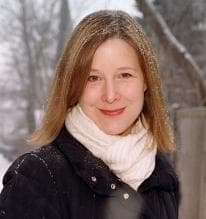
Ann Patchett is an American author. She received the 2002 PEN/Faulkner Award and the Orange Prize for Fiction in the same year, for her novel Bel Canto. Patchett's other novels include The Patron Saint of Liars (1992), Taft (1994), The Magician's Assistant (1997), Run (2007), State of Wonder (2011), Commonwealth (2016), and The Dutch House (2019). The Dutch House was a finalist for the 2020 Pulitzer Prize for Fiction.







