“The moon is missing from the sky, and no one knows why.”
— Opening line setting the central mystery of the story.

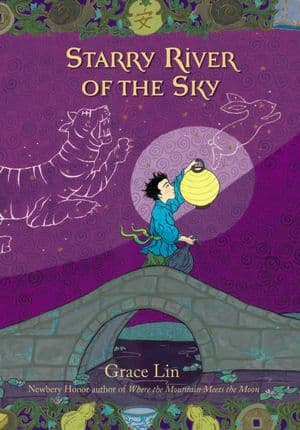
Grace Lin (2012)
Genre
Fantasy / Children's / Young Adult
Reading Time
300 min
Key Themes
See below
Sign in to track this book
In a village where the moon is gone and strange things happen, a runaway chore boy finds that a mysterious traveler's stories, and his own past, hold the key to every puzzle.
Rendi, a young runaway boy, arrives at the remote Village of Clear Sky, seeking work and a place to hide. He finds employment as a chore boy at the desolate Village Inn, run by the strict Ma and her quiet husband, Ba. Rendi immediately notices that the moon is missing from the night sky, a fact that bewilders him as no one else in the village seems to acknowledge its absence. The villagers are strange: the constantly bickering Master Chao and Widow Yan, the forgetful Mr. Shan who can't identify his pet, and the innkeepers themselves, who seem to harbor a deep sadness. Rendi feels isolated by his observation of the missing moon, convinced that he is the only one who sees the empty sky.
One day, an elegant woman named Madame Chang arrives at the Village Inn. She takes an interest in the villagers and, specifically, in Rendi. Madame Chang tells stories, often from ancient Chinese folklore, and these tales begin to weave into daily life at the inn. Her stories include those of the Cowherd and the Weaving Girl, and tales of celestial beings and earthly problems. Rendi, initially skeptical, finds himself drawn to her narratives, which often seem to hold a deeper meaning relevant to the strange happenings and unspoken sorrows within the Village of Clear Sky.
As Madame Chang continues to tell stories, Rendi starts to notice how they connect with the villagers' lives. She tells the story of the Cowherd and the Weaving Girl, separated by the Milky Way, which seems to parallel the innkeepers' grief over their missing son. The tales also touch on themes of forgetfulness, loss, and memory, subtly hinting at why the villagers might not remember the moon. Rendi begins to connect clues: the arguments between Master Chao and Widow Yan, the sadness of Ma and Ba, and Mr. Shan's confusion over his pet. He suspects that these individual problems are linked to the larger mystery of the missing moon and the village's odd state.
Rendi often hears a faint, sorrowful crying sound that seems to come from within the inn or nearby, but he can never find its source. Madame Chang's stories often help him understand these strange occurrences. He also helps Mr. Shan finally identify his pet as a toad, not a rabbit, a small victory that brings a moment of clarity to the old man. Through these interactions, Rendi learns more about the villagers' pasts and their deep sorrows. He discovers that Mr. Shan's confusion is not just old age but part of a larger pattern of forgetfulness that affects the entire village, especially regarding the moon's disappearance.
Madame Chang tells the story of the Moon Goddess, Chang'e, who consumed the elixir of immortality and went to the moon, leaving her husband, Hou Yi, behind. This tale deeply affects the villagers, especially Ma and Ba, and Rendi notices their sadness. The story highlights separation, longing, and the results of choices. Rendi begins to wonder if the village's missing moon and the villagers' collective memory loss are tied to a similar, grand story, and if Madame Chang is more than just a traveling storyteller. He senses that her stories are not just for fun but an attempt to awaken memories.
Rendi learns that Ma and Ba's son, Little Ba, went missing some time ago, and their grief is clear. Madame Chang tells a story about a Celestial Dragon who, in a fit of pique or sorrow, might have caused a significant disruption. This story, combined with the innkeepers' sorrow, makes Rendi suspect a connection. He realizes that the village's problems are not separate but part of a larger, interconnected event. The crying sound he keeps hearing seems to intensify, and he starts to believe it's linked to Little Ba's disappearance and the missing moon.
Madame Chang finally reveals the truth: the Village of Clear Sky is not a normal village. It is a place where celestial beings come to live out their sorrows or punishments, forgetting who they really are. The villagers are, in fact, stars, constellations, and other heavenly bodies who have fallen from the sky due to a cosmic imbalance or a great sorrow. The missing moon is not just an oversight; it is a direct result of this celestial disruption. The innkeepers, Ma and Ba, are the guardians of this forgotten realm, and their son, Little Ba, is a celestial being whose distress is central to the moon's absence. Rendi is stunned by this revelation, realizing the fantastical nature of his surroundings.
Madame Chang reveals that Rendi is not just a runaway boy. He is the Star of the Jade Emperor, a celestial being who fell to Earth, losing his memories and identity. His presence in the Village of Clear Sky is not accidental but fated. The missing moon and the villagers' memory loss are all connected to a great sorrow that caused the Star of the Jade Emperor to fall, taking the moon with him. The crying sound Rendi has been hearing is the sorrow of the fallen moon, and the only way to restore it is for Rendi to remember who he is and what he must do. He must complete a task or make a choice that will set things right.
It is revealed that the Celestial Dragon, who is Little Ba, the innkeepers' son, is distraught because he lost his celestial pearl. This pearl is not just an object; it is the source of his power and the key to balancing the heavens. The dragon's sorrow and the loss of his pearl caused the moon to fall and the stars (villagers) to descend. Rendi's task, as the Star of the Jade Emperor, is to help the Celestial Dragon find this lost pearl. Only by returning the pearl to the dragon can the celestial order be re-established, the moon returned to the sky, and the villagers regain their true forms and memories.
Guided by Madame Chang and his awakening memories, Rendi helps Little Ba, the Celestial Dragon, find his lost pearl. This act of restoration brings immense relief and power back to the dragon. As the pearl is returned, the moon slowly reappears in the night sky, its light growing stronger. The villagers, one by one, remember who they are as stars and constellations. With their memories and celestial forms restored, they begin to ascend back into the heavens, their sorrow lifting. Rendi, having finished his purpose, watches them go, including Ma, Ba, and Little Ba. Madame Chang, revealed to be the Weaving Girl, also prepares to return, leaving Rendi with a sense of peace and belonging, even as he remains on Earth, his own journey of self-discovery complete.
The Protagonist
Rendi transforms from a lonely, cynical runaway into a self-aware celestial being who accepts his destiny and helps restore cosmic balance.
The Supporting/Mentor
Madame Chang completes her mission of guiding Rendi and the villagers, ultimately returning to her celestial home.
The Supporting
Ma transitions from a grieving, stern innkeeper to remembering her true identity as a celestial guardian and reuniting with her son.
The Supporting
Ba moves from quiet sorrow to remembering his celestial identity and reuniting with his son.
The Supporting
Little Ba is restored from a sorrowful, lost state to his full power as a Celestial Dragon, reuniting with his parents and helping to restore cosmic order.
The Supporting
Mr. Shan's confusion is resolved as he, like the other villagers, remembers his true celestial identity.
The Supporting
Master Chao's bickering ceases as he remembers his true self and makes amends with Widow Yan.
The Supporting
Widow Yan's bickering ceases as she remembers her true self and makes amends with Master Chao.
The central theme is Rendi's journey of self-discovery, from a cynical runaway to realizing his true celestial identity. This theme is mirrored by the villagers, who are all celestial beings living with forgotten memories. Madame Chang's stories help them remember who they are. The book explores how identity is shaped by memory, purpose, and the stories we tell ourselves and others.
“"Perhaps it is his own story that holds the answers to all those questions."”
The entire premise of the Village of Clear Sky relies on the villagers' collective memory loss, especially regarding the missing moon and their celestial origins. The book explores the power of memory, both individual and collective, and how its loss can lead to confusion, sorrow, and stagnation. Madame Chang's stories are not just for fun; they are a deliberate way to jog forgotten memories, showing how stories can act as vessels for truth and remembrance, ultimately restoring order and identity.
“"Sometimes, the truth is so strange, it takes a story to make it believable."”
Storytelling is the most important plot device and thematic element in the book. Madame Chang uses ancient Chinese folktales to heal, inform, and awaken the villagers' dormant memories. Each story she tells directly or indirectly relates to the problems of the Village of Clear Sky and its inhabitants, guiding Rendi and the others toward understanding their true natures and the cosmic events that led to their current state. The stories provide context, hope, and a path to resolution.
“"Stories are like rivers, Rendi. They flow and they change, but the water is always the same."”
The pervasive atmosphere of sorrow in the Village of Clear Sky, especially among Ma and Ba over their missing son, highlights the theme of loss and grief. The missing moon itself is a symbol of a great cosmic loss. The villagers' bickering and Mr. Shan's confusion also show underlying sorrow and unresolved pasts. The book explores how grief can lead to forgetfulness and stagnation, and how acknowledging and working through that grief is essential for healing and restoration.
“"A sorrow so deep that it shook the heavens."”
Rendi's journey is deeply connected to destiny. He is not just a runaway but the Star of the Jade Emperor, fated to be in the Village of Clear Sky to help restore the moon and balance. The entire village's existence is part of a larger cosmic plan or consequence. The book suggests that even when one has forgotten their purpose, destiny can guide them, and that fulfilling one's true purpose brings profound meaning and resolution.
“"You were always meant to be here, Rendi."”
Ancient tales used as allegories to reveal the truth of the story.
Grace Lin masterfully weaves in traditional Chinese folktales and mythological figures, such as the Cowherd and the Weaving Girl, and the Moon Goddess Chang'e. These stories are not merely decorative but serve as allegorical keys, providing clues and insights into the true identities of the villagers and the cosmic events that led to the moon's disappearance. Madame Chang's retelling of these tales gradually reveals the fantastical reality of the Village of Clear Sky, making the complex mythology accessible and integral to the plot's unfolding.
A central mystery symbolizing lost truth and collective amnesia.
The missing moon is the primary catalyst for the plot and a powerful symbol. Its absence is glaring to Rendi but unnoticed by the villagers, highlighting their collective amnesia and the profound disruption that has occurred. The moon represents truth, memory, and celestial order. Its return signifies the restoration of balance, the recovery of memories, and the healing of the village, directly linking the physical world's anomaly to the spiritual and mythological predicament of the characters.
A liminal space where fallen celestial beings reside, forgetting their true identities.
The Village of Clear Sky functions as a purgatorial or transitional space. It is a place where celestial beings, having fallen from the heavens, live out their existence stripped of their memories and true forms. The village's isolation, its peculiar inhabitants, and their individual sorrows are all symptoms of this underlying magical reality. It is a setting that is both mundane and fantastical, acting as a stage for the recovery of lost identities and the restoration of cosmic order.
A magical object whose loss caused the moon to fall and whose recovery restores balance.
The Celestial Dragon's lost pearl is a crucial magical object that serves as the ultimate goal for Rendi. Its loss is revealed to be the direct cause of the moon's disappearance and the subsequent fall of the stars (villagers). The pearl symbolizes the dragon's power, emotional stability, and the cosmic balance of the heavens. Its recovery by Rendi is the climactic act that reverses the celestial disruption, allowing the moon to return and the villagers to regain their true forms and ascend.
“The moon is missing from the sky, and no one knows why.”
— Opening line setting the central mystery of the story.
“A story is like the wind—it comes from a far-off place, and we feel it.”
— Old Man of the Moon explaining the power of stories.
“Sometimes, the things we are looking for are right in front of us.”
— Rendi realizing a truth about his journey.
“The sky is a river of stars, and we are all boats floating upon it.”
— Metaphor used to describe the night sky and life's journey.
“Anger is like a stone in your shoe—it only hurts the one who carries it.”
— Village elder advising Rendi to let go of his resentment.
“Home is not a place, but a feeling of belonging.”
— Rendi reflecting on his search for home.
“The stars are the tears of the sky, weeping for lost things.”
— Poetic description linking the stars to emotion and loss.
“A true friend is like a star—you don't always see them, but you know they are there.”
— Rendi thinking about his friendships in the village.
“We are all stories in the end, waiting to be told.”
— Narrative theme emphasizing the importance of personal stories.
“The moon will return when the heart is ready.”
— Mystical insight about the connection between emotions and nature.
“Courage is not the absence of fear, but the decision to move forward despite it.”
— Rendi mustering bravery to face his past.
“In the silence of the night, we hear the whispers of our own souls.”
— Reflective moment during a quiet night in the village.
“The river of stars flows forever, carrying our dreams and memories.”
— Closing imagery tying together the book's themes.
Ready to see how well you understood this book? Take our interactive quiz with 10 questions.
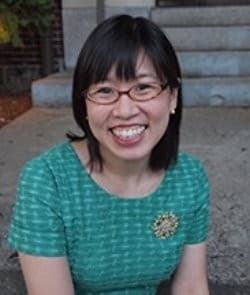
Biography coming soon.







