““I think you’re a little bit of a mess, but a beautiful mess. Like a constellation.””
— Zorie describing Lennon, highlighting her chaotic yet captivating nature.

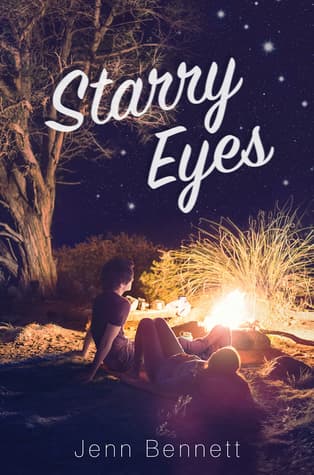
Jenn Bennett (2018)
Genre
Young Adult / Romance
Reading Time
9-10 hours
Key Themes
See below
Sign in to track this book
Stranded in the Northern Californian wilderness, two feuding, stargazing teens must navigate treacherous terrain and their own explosive chemistry, discovering that some connections are as inevitable as the constellations.
Zorie Everhart, a meticulous and introverted astronomy enthusiast, struggles with her strained friendship with childhood best friend and former crush, Lennon Mackenzie. Their families, owners of rival outdoor gear shops in their small California town, have a feud that escalated after last year's homecoming dance. Zorie's best friend, Joy, and her boyfriend, Tristan, try to convince Zorie to join a group camping trip to the remote backcountry of Northern California, hoping it will help her reconnect with friends and ease her social anxieties. Zorie, hesitant due to her discomfort with large groups and her desire to avoid Lennon, agrees, unaware that Lennon has also been invited by their mutual friend, Iris.
The camping trip begins with tension when Zorie discovers Lennon is part of the group. Awkwardness and thinly veiled hostility define their interactions. During a planned stargazing excursion, Zorie, Lennon, and the rest of their friends—Joy, Tristan, Iris, and Silas—hike to a remote spot. A heated argument erupts between Zorie and Lennon, fueled by their unresolved issues and their families' animosity. The argument escalates until the rest of the group, tired of their constant bickering, decides to play a prank. They abandon Zorie and Lennon, taking their supplies and leaving them alone in the unfamiliar wilderness with only a small backpack of essentials.
Left alone and furious, Zorie and Lennon realize the seriousness of their situation. With no cell service and limited supplies, they must work together to find their way back to civilization. Their initial attempts at cooperation are filled with bickering and blame. As night falls, they set up a makeshift camp, and the forced closeness begins to break down their defenses. Through their conversations, painful memories of their past friendship, unacknowledged feelings, and the specific events of the homecoming dance that led to their estrangement start to resurface, setting the stage for a reluctant truce as they face the wilderness.
The next few days test their survival skills and their ability to tolerate each other. They encounter various challenges, including navigating dense forests, crossing treacherous terrain, and dealing with dwindling food and water. Zorie's knowledge of constellations helps with navigation at night, while Lennon's outdoor skills, honed from working at his family's shop, are essential for making fires and setting up shelter. During these trials, they must rely on each other, leading to moments of shared vulnerability and reluctant respect. They start to see beyond their current animosity, recalling the strengths and qualities they once admired in each other.
Their journey takes a dangerous turn when they have a terrifying encounter with a black bear. The close call forces them to react instinctively, protecting each other in danger. This shared experience of fear and survival intensifies their bond, breaking down more of their emotional walls. The incident highlights their individual strengths and weaknesses, showing how they complement each other in a crisis. It also reminds them of the unforgiving nature of the wilderness and their isolation, deepening their reliance and trust in one another.
One night, while stargazing, the quiet intimacy of their surroundings allows Zorie and Lennon to truly open up. Zorie confesses her long-held feelings for Lennon and the pain she felt when he seemed to ignore her after homecoming. Lennon, in turn, reveals his own feelings and the misunderstanding that led to their estrangement: he had been trying to protect Zorie from his family's disapproval and was struggling with his own insecurities. The truth about the homecoming dance, a misunderstanding involving a misinterpreted text and fear of rejection, finally comes to light, clearing the air and paving the way for a deeper, more honest connection.
Just as their emotional bond solidifies, their physical ordeal continues. Running low on supplies and increasingly desperate, they push forward. Meanwhile, the friends who abandoned them, filled with guilt and worry, have alerted authorities, and a search party is sent out. After several days of arduous travel, Zorie and Lennon are spotted by a search helicopter. The relief is immense, but also bittersweet, as their time together in the wilderness, which had become a bubble of honesty and rediscovered affection, is about to end. They are rescued and brought back to civilization, where their families and friends are anxiously waiting.
Upon their return, Zorie and Lennon are met with relief, anger, and concern. Their families, still caught in their rivalry, immediately clash over the incident, each blaming the other. Zorie and Lennon must confront their friends, Joy and Iris, who are remorseful but also defensive about their prank. The confrontation is difficult, as Zorie and Lennon try to explain the severity of what happened while also navigating their renewed feelings for each other in the context of their friends' betrayal and their families' ongoing feud. The comfortable illusion of their wilderness bubble is shattered by the realities of their lives back home.
Despite external pressures, Zorie and Lennon are determined to make their rekindled relationship work. They spend time together, trying to bridge the gap between their wilderness intimacy and their complicated lives. They face challenges from their families' rivalry, which creates tension, and awkwardness with their friends, who struggle to understand what Zorie and Lennon experienced. They must decide if their connection was just a product of the extreme circumstances or if it is strong enough to withstand the real world, with all its complexities and expectations, forcing them to be open and honest about their feelings and intentions.
Zorie, determined to pursue her passion, organizes a public stargazing event, a significant step out of her comfort zone. Lennon, wanting to show his support and commitment, attends the event. During the event, a confrontation arises between their families, reigniting the old feud. However, instead of retreating, Lennon publicly stands by Zorie, defending their relationship and challenging the long-standing animosity between their parents. This public declaration marks a turning point, signaling their refusal to let their families' past dictate their future, and showing the strength of their bond forged in the wilderness.
Following the stargazing event, Zorie and Lennon continue to navigate their relationship with renewed confidence. They work on mending fences with their friends and slowly, painstakingly, begin to bridge the divide between their families. While the family feud does not disappear overnight, their unwavering commitment to each other makes their parents reconsider their animosity. Zorie embraces her passion for astronomy, and Lennon continues to support her, showing a maturity and understanding that goes beyond their past. They make plans for their future, showing that their love, born under the starry eyes of the wilderness, is strong enough to thrive in the real world.
The Protagonist
Zorie transforms from an anxious, guarded individual into a more confident person willing to take risks, embrace her passions, and openly pursue love.
The Protagonist
Lennon evolves from being emotionally guarded and prone to miscommunication to openly expressing his feelings and standing up for his relationship with Zorie against family pressures.
The Supporting
Joy learns the consequences of her actions and grows in her understanding of Zorie's needs and the seriousness of their friendship.
The Supporting
Iris comes to understand the gravity of her actions and the potential harm caused by her misguided attempts to mediate conflict.
The Supporting
Tristan's character arc is less pronounced, but he shares in the collective guilt and eventual remorse of the friends.
The Supporting
Silas's arc involves realizing the seriousness of his actions and the impact of his behavior on others.
The Supporting
Mrs. Everhart slowly begins to soften her stance on the Mackenzie family as she witnesses Zorie's happiness and determination.
The Supporting
Mr. Mackenzie, like Mrs. Everhart, gradually begins to reconsider his animosity as he sees Lennon's commitment to Zorie.
The wilderness is a crucible, stripping away societal pressures and distractions, forcing Zorie and Lennon to confront their true selves and feelings. Away from their feuding families and judgmental friends, the raw, beautiful, and dangerous environment of Northern California's backcountry allows them to shed their defenses. Scenes like their shared vulnerability during the bear encounter or their heart-to-heart under the starry sky show how nature helps honesty and connection, serving as a backdrop for their emotional growth and the rekindling of their love.
“Maybe the stars had real magic. Maybe being under them, with no other distractions, had allowed us to finally see each other clearly again.”
A central theme is the impact of poor communication and unchecked assumptions. The entire conflict between Zorie and Lennon stems from misunderstandings, especially around the homecoming dance and their estrangement. They both harbor unexpressed feelings and fears, leading to resentment and a breakdown in their friendship. Their time in the wilderness forces them to finally articulate their thoughts, feelings, and the truth of past events, showing how open and honest communication is essential for resolving conflict and building genuine relationships.
“We'd been talking around each other for so long, using insults as shields, that we'd forgotten how to just... talk.”
Zorie and Lennon are burdened by the long-standing, seemingly irrational feud between their families, who own rival outdoor gear shops. This generational animosity creates pressure and expectations, making their burgeoning relationship feel almost forbidden. The theme explores the challenge of forging one's own path and identity, separate from inherited conflicts. Their journey in the wilderness allows them to step outside this legacy, and upon their return, they must actively choose to defy these expectations and build a future based on their own choices, rather than their families' past.
“Our families were like two warring tribes, and we were just the latest casualties.”
Both Zorie and Lennon grow significantly throughout their ordeal. Zorie, initially held back by social anxiety and a need for control, learns to embrace spontaneity, trust her instincts, and assert herself. She discovers a deeper resilience within herself. Lennon, who often hid his true feelings behind a charming facade, learns the importance of vulnerability and honest expression. Their shared struggle pushes them beyond their comfort zones, forcing them to confront their fears and insecurities, leading to a more mature understanding of themselves and their desires.
“I was still me, but a slightly different me. A me who knew she could survive, even thrive, in the unexpected.”
Zorie, with her meticulous nature and love for order, initially believes she can control every aspect of her life. The unplanned, dangerous wilderness trip shatters this illusion. She must adapt to chaotic circumstances, embrace uncertainty, and rely on instinct rather than rigid plans. This theme explores the liberating, if terrifying, realization that not everything can be planned or controlled, and that sometimes the most profound growth comes from surrendering to the unknown and trusting the process.
“My carefully constructed world of plans and contingencies had been blown apart, and surprisingly, I wasn't entirely devastated.”
A remote and challenging natural environment that isolates the protagonists.
The Northern California backcountry serves as a critical plot device. It acts as a 'pressure cooker,' stripping Zorie and Lennon of their usual comforts, social masks, and external influences (like their families and friends). This isolation forces them into constant interaction and collaboration, accelerating the process of confronting their past, communicating their feelings, and rebuilding their relationship. The inherent dangers of the wilderness (wildlife, lack of supplies, navigation challenges) also create external conflicts that they must solve together, forging a deep bond through shared survival.
The act of abandonment by their friends that initiates the main conflict.
The prank orchestrated by Joy, Iris, and the others is the inciting incident that thrusts Zorie and Lennon into their predicament. While initially motivated by a misguided attempt to force them to reconcile, it inadvertently puts them in genuine danger. This device not only isolates the protagonists but also introduces a secondary conflict upon their return to civilization, as they must confront their friends about the betrayal and the severity of their actions. It highlights themes of responsibility and the consequences of careless actions.
A long-standing rivalry between the Everhart and Mackenzie families.
The generational feud between Zorie's and Lennon's families acts as a significant external obstacle to their relationship. It provides a strong 'forbidden love' element, making their connection more challenging and emotionally charged. This device explains much of Lennon's initial reticence and Zorie's hurt, as the family animosity directly impacted their past friendship. Overcoming this feud becomes a crucial part of their character arcs and a test of their commitment to each other in the 'real world' after their wilderness experience.
Zorie's passion for astronomy, used for navigation and emotional connection.
Zorie's deep knowledge and love for astronomy serve multiple purposes. Practically, it aids in their navigation through the wilderness, providing a tangible skill that contributes to their survival. Symbolically, stargazing becomes a metaphor for clarity, perspective, and the vastness of their shared experience. It's during these moments under the night sky that Zorie and Lennon often have their deepest, most honest conversations, connecting their emotional journey to the cosmic backdrop. It also represents Zorie's individuality and passion, which Lennon comes to appreciate and support.
““I think you’re a little bit of a mess, but a beautiful mess. Like a constellation.””
— Zorie describing Lennon, highlighting her chaotic yet captivating nature.
““Some things are just meant to be. Like stars and constellations. Like you and me.””
— A romantic sentiment shared between Zorie and Lennon, emphasizing their connection.
““The universe is full of mysteries, but the biggest one is how I ever lived without you.””
— Lennon expressing his deep feelings for Zorie, using a cosmic metaphor.
““Sometimes, the only way to find your way back is to get completely lost.””
— A reflection on the journey of self-discovery and finding direction after being adrift.
““Maybe the stars don’t just shine. Maybe they whisper secrets to those who listen.””
— Zorie contemplating the deeper meaning and magic of the night sky.
““It’s amazing how much you can learn about someone when you’re stuck in the wilderness with them.””
— A realization about the bonding experience of their unexpected adventure.
““Fear is just excitement without the breathing.””
— Lennon's philosophical take on facing daunting situations.
““We were two halves of a whole, constantly orbiting each other, waiting for the right moment to collide.””
— A description of Zorie and Lennon's on-again, off-again relationship.
““Home isn’t a place, it’s a feeling. It’s wherever you are.””
— A poignant realization about where true belonging lies, often with a person.
““Sometimes, the most beautiful things are the ones you have to work the hardest to find.””
— Reflecting on the effort required to achieve something truly meaningful, like their relationship.
““The best kind of adventures are the ones you never planned for.””
— Zorie's evolving perspective on spontaneity and unexpected experiences.
““You can’t fix what’s broken if you don’t acknowledge it’s broken in the first place.””
— A moment of truth about facing difficult realities in relationships or personal issues.
““We all have our own constellations of flaws and perfections, making us uniquely us.””
— A celebration of individuality and the acceptance of one's whole self.
““It’s funny how a single moment can change the entire trajectory of your life.””
— Contemplating the butterfly effect of small decisions or events.
Ready to see how well you understood this book? Take our interactive quiz with 10 questions.