“There are some people who can’t stand to see other people happy.”
— Early observation about human nature in Elmwood Springs.

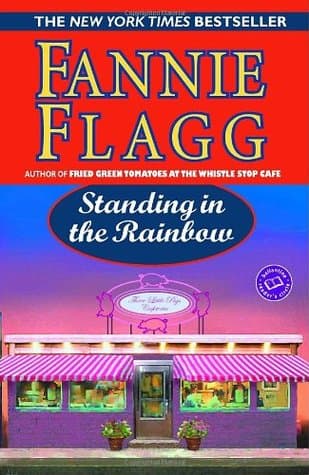
Fannie Flagg (2001)
Genre
Historical Fiction
Reading Time
12-15 hours
Key Themes
See below
Sign in to track this book
From 1946 to the present, small-town dreamers, broadcasters, and eccentrics navigate life in post-war Missouri, all while experiencing progress and imagination.
In 1946, Elmwood Springs, Missouri, is shown through Neighbor Dorothy, a beloved local radio personality. Her daily broadcasts from her home kitchen, 'The Neighbor Dorothy Show,' become the town's center, sharing recipes, local gossip, and comforting stories. Her ten-year-old son, Bobby Smith, a sensitive and imaginative child, often listens, taking in the world through his mother's voice and stories. Dorothy's show provides a sense of community and normalcy as the town moves from the post-war era, setting the stage for the connected lives of Elmwood Springs' residents. Her husband, Jack, a kind but reserved man, supports her, while Bobby's inner life grows.
Macky Warren, a young man in Elmwood Springs, deals with his identity and expectations, especially from his great-aunt, Elner Shimfissle. Elner, a spirited and outspoken ninety-eight-year-old, lives with Macky and his mother, Norma. She gives wisdom, often without being asked, and greatly influences Macky's upbringing. Macky becomes close friends with Bobby Smith, sharing adventures and secrets. The early years in Elmwood Springs feature small-town life, community events, and the developing personalities of its younger residents, as Macky learns to navigate his world under Elner's watchful, often funny, eye, while Norma tries to keep things in order.
The charismatic and ambitious Hamm Sparks arrives in Elmwood Springs, quickly making an impression. His charm and intelligence attract many, including Norma Warren, Macky's mother, and Minnie Oatman, a local businesswoman. Hamm's political goals are clear from the start, and he begins to engage with the community, giving passionate speeches and promising a brighter future. Norma feels increasingly drawn to Hamm, despite her own life's complexities and some townsfolk's disapproval. Minnie also sees something special in Hamm, recognizing his potential and, in her own way, falling for his drive, creating a romantic triangle.
As Bobby Smith grows, his imagination becomes a main part of his life. He creates detailed inner worlds and characters, often escaping into books and stories. He continues to listen to his mother's radio show, which is a constant background to his childhood. Bobby's friendships, especially with Macky Warren, deepen, and they share experiences that shape their understanding of Elmwood Springs and its people. His sensitivity and observation skills allow him to notice the details of adult relationships and the hidden parts of small-town life, preparing him for a future where he will use these observations in creative work. He develops an early interest in film and storytelling.
Elmwood Springs experiences a loss with the unexpected death of Neighbor Dorothy. Her passing leaves a deep void in the community, as her radio show was a daily source of comfort and connection. The town mourns together, showing her impact on their lives. Bobby, now a young man, is especially devastated by his mother's death, struggling to cope with her absence. The event forces him to face grief and life's impermanence, pushing him further into his imaginative world as a way to cope. The community comes together, showing their resilience and strength, even in sorrow.
Hamm Sparks' political career grows, taking him beyond Elmwood Springs. His ambition leads him to higher office, and he becomes a public figure. Throughout his rise, both Norma Warren and Minnie Oatman remain involved in his life, though in different ways. Norma, still in love with Hamm, deals with the demands of his public life and the sacrifices it requires. Minnie, practical and clever, offers him support and advice, recognizing his potential and keeping a complex relationship with him that goes beyond simple romance. His growing fame and distance test their relationships and their expectations of him, as he focuses on his political goals.
Inspired by his imagination and his mother's storytelling, Bobby Smith pursues a career in entertainment. He eventually moves to Hollywood, where he finds success as a writer and producer, mainly in television. His experiences growing up in Elmwood Springs, observing the unique characters and their connected lives, provide material for his creative work. Despite his success and distance, Bobby stays connected to his roots and the people of Elmwood Springs. His work often reflects the warmth, humor, and charm of his hometown, allowing him to connect his past and present, and to honor his mother's legacy through his own storytelling.
Aunt Elner Shimfissle, despite her age, remains a lively and important figure in Elmwood Springs. Her sharp wit, uncommon wisdom, and strong spirit continue to shape the lives of those around her, especially Macky and Norma. She gives advice, shares colorful stories, and sometimes creates good-natured trouble. Her presence connects to the town's past and reminds them of its lasting character. Elner's ability to adapt and find joy in everyday life, even as the world changes, makes her a beloved and memorable character, embodying the resilience and charm of the small-town community. She lives a long and full life, observing generations.
Macky Warren's life unfolds, marked by personal growth, relationships, and professional pursuits. He navigates love, friendship, and family expectations. His relationship with his mother, Norma, and his great-aunt, Elner, continues to change. Macky eventually finds his own path, establishing a family and a career, though not without challenges and moments of doubt. His journey reflects the universal experiences of finding one's identity and purpose within a close community, always carrying the lessons and influences of his Elmwood Springs upbringing. He strives to build a fulfilling life, often thinking about his childhood and the people who shaped him.
As the story moves into the present day, the surviving characters reflect on their lives, their choices, and the changes Elmwood Springs has seen. Bobby, now a successful adult, often revisits his memories of his mother and the town that inspired him. Norma, Macky, and Elner, along with other characters like Tot Whooten and Cecil Figgs, continue to live their lives, their stories connected. The novel emphasizes the lasting power of community, the impact of individual lives on the whole, and the comforting sense of belonging that defines Elmwood Springs. The story ties up loose ends, showing how each character's journey contributed to the town.
The Protagonist/Supporting
Her arc is primarily as a foundational character whose presence shapes the early years of the town and whose eventual absence leaves a lasting impact on her son and the community.
The Protagonist
Bobby develops from an imaginative child into a successful storyteller, using his childhood experiences to fuel his creative career while remaining connected to his roots.
The Protagonist/Supporting
Macky grows from a boy influenced by strong female figures into a responsible adult, establishing his own life and family within the community.
The Supporting
Norma navigates a complex romantic relationship and the challenges of motherhood, learning to balance her desires with her responsibilities.
The Supporting
Elner remains a constant, wise, and humorous presence, observing and influencing generations with her unique perspective, embodying the resilience of the human spirit.
The Supporting
Hamm rises from a local figure to a successful politician, his ambition shaping his relationships and his life trajectory.
The Supporting
Minnie maintains her independence and business acumen while navigating a complex, long-term relationship with Hamm Sparks, proving her resilience and understanding.
The Supporting
Tot remains a consistently kind and gentle presence, embodying the enduring warmth and community spirit of Elmwood Springs.
The Supporting
Cecil continues his role as the town's funeral director, providing a consistent, albeit macabre, presence and witnessing the cycles of life and death in Elmwood Springs.
The novel shows Elmwood Springs as a close community where individuals are deeply connected. Neighbor Dorothy's radio show acts as the central point, broadcasting local news and creating a sense of belonging. Even as characters like Bobby move away, Elmwood Springs' pull remains strong, showing how shared experiences and relationships shape identities. The town comes together during times of joy and sorrow, such as Dorothy's death, emphasizing the comfort and resilience found in collective support.
“And it was on this radio show that Neighbor Dorothy truly found her voice, a voice that became the comforting, familiar sound of Elmwood Springs.”
The story spans decades, showing how past events and relationships continue to affect the present. Characters often reflect on their childhoods, the advice of elders like Aunt Elner, and the foundational experiences of Elmwood Springs. Bobby's writing career is directly inspired by his upbringing and the unique characters he observed. The novel suggests that while time moves forward, the roots of one's identity and community remain deeply embedded, shaping choices and perspectives across generations.
“You can take the boy out of Elmwood Springs, but you can't take Elmwood Springs out of the boy.”
Bobby Smith's character highlights imagination as a coping mechanism and a source of creativity. From his childhood, he escapes into detailed inner worlds, which later fuels his successful career in storytelling. The novel explores how imagination can enrich life, offering comfort and an alternative perspective to often difficult realities. It also subtly contrasts the idealized versions of life presented on Dorothy's radio show with the messier realities faced by characters like Norma and Hamm.
“He lived a thousand lives in his imagination, most of them more interesting than the one he was actually living.”
The complex relationships between Norma, Minnie, and Hamm Sparks explore different aspects of love and the sacrifices made for ambition. Norma's love for Hamm is passionate but often challenged by his political goals, while Minnie's affection is more practical and supportive. Hamm's ambition drives him to success but also creates emotional distance. The novel examines how love can be both a powerful motivator and a source of heartache when confronted with personal goals and societal expectations, showing the compromises in such dynamics.
“Love was a complicated thing, especially when mixed with ambition and the desire for something more.”
Fannie Flagg elevates the everyday experiences and seemingly ordinary lives of the Elmwood Springs residents. The novel finds humor, sadness, and meaning in the small-town gossip, community events, and unique personalities. Characters like Tot Whooten and Cecil Figgs, though not central, contribute significantly to the town, showing that every individual's story holds value and contributes to the collective human experience.
“Life, she often said, was a series of little things, and it was in those little things that you found the big ones.”
A narrative frame and unifying force for the community.
The 'Neighbor Dorothy Show' serves as a primary narrative device, initially introducing characters and events in Elmwood Springs. It acts as a unifying thread, connecting disparate lives and providing context for the town's atmosphere and social fabric. Her broadcasts often foreshadow events, introduce new characters, or recap developments, offering a comforting and consistent voice that anchors the story. After her death, the memory and legacy of her show continue to influence Bobby and the town, symbolizing the enduring power of connection and storytelling.
A mosaic of individual stories building a collective portrait.
The novel employs a shifting narrative perspective, moving between various characters and presenting their individual stories as vignettes. This mosaic-like structure allows the reader to gain a comprehensive understanding of Elmwood Springs through multiple viewpoints. It emphasizes the interconnectedness of the community, even when focusing on a single character's experiences. This device creates a rich, multi-layered portrait of the town, allowing for both intimate character studies and a broad overview of its social dynamics over time.
Spans decades to show character development and societal change.
The narrative frequently jumps forward in time, sometimes years or even decades, covering the period from 1946 to the present. This device allows the author to depict significant character development, track the long-term consequences of decisions, and illustrate the evolution of Elmwood Springs and American society as a whole. It emphasizes the passage of time and the enduring nature of human relationships and community, without dwelling on every detail of intervening years, focusing instead on pivotal moments and their lasting impact.
Hints at future events and reflects on past impacts.
The novel uses both foreshadowing and retrospection to enrich its narrative. Early mentions of Bobby's vivid imagination hint at his future as a writer, while the descriptions of Hamm Sparks' charisma suggest his political ascent. Conversely, characters frequently reflect on past decisions, relationships, and the wisdom of elders like Aunt Elner, providing context and depth to their present circumstances. This dual approach creates a sense of continuity and consequence, allowing the reader to appreciate the long-term arcs of the characters and the town.
“There are some people who can’t stand to see other people happy.”
— Early observation about human nature in Elmwood Springs.
“You can always tell a lot about people by the way they treat animals.”
— Mrs. Otis's wisdom regarding character assessment.
“Life is like a roll of toilet paper. The closer you get to the end, the faster it goes.”
— A humorous and poignant reflection on aging.
“Sometimes the most important things in life are the ones you can’t see.”
— Reflecting on intangible values and connections.
“It’s funny how you don’t appreciate what you have until it’s gone, and then it’s too late.”
— A common lament after a loss or change.
“The only thing that ever stays the same is that everything changes.”
— A philosophical observation on the nature of existence.
“You never know what someone is going through unless you walk a mile in their shoes.”
— A classic call for empathy and understanding.
“A good laugh and a long sleep are the two best cures for anything.”
— Practical advice for well-being.
“Small towns have a way of keeping secrets, but they also have a way of spilling them.”
— Observations about community dynamics in Elmwood Springs.
“The past is never really gone. It just changes shape.”
— Thoughts on memory and the lingering effects of history.
“It takes all kinds of people to make up the world, and most of them are right here in Elmwood Springs.”
— A celebration of diverse characters in the town.
“Sometimes you have to let go of the life you planned, to have the life that is waiting for you.”
— A theme of embracing unexpected paths and resilience.
“Happiness is not something you postpone for the future; it is something you design for the present.”
— A reminder to find joy in the everyday.
“The greatest gift you can give someone is your time, because when you give your time, you are giving a portion of your life that you will never get back.”
— A profound statement on the value of presence and connection.
Ready to see how well you understood this book? Take our interactive quiz with 10 questions.

Biography coming soon.







