BookBrief
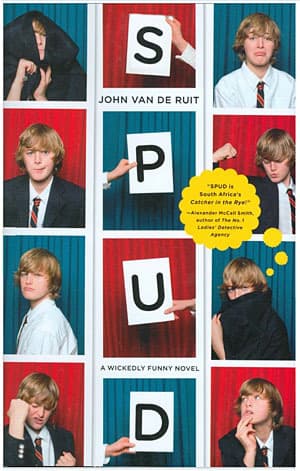
Spud cover
Archivist's Choice

Spud

John van de Ruit (2007)

Genre

Young Adult

Reading Time

352 min

Key Themes

See below

Track Your Reading

Sign in to track this book

In 1990, against the backdrop of post-Apartheid South Africa, thirteen-year-old Spud navigates the chaotic world of an elite boarding school, armed with his diary, a crush on Julia Roberts, and a dysfunctional family.

Synopsis

Thirteen-year-old John 'Spud' Milton navigates his first year at an elite, all-boys boarding school in South Africa in 1990. Leaving a dysfunctional home and dealing with prepubescent angst, Spud enters a world of eccentric teachers, strange traditions, and constant hazing from his dorm-mates, 'The Crazy Eight.' He struggles with raging hormones, an unrequited crush on Debbie, and the pressure to fit in while keeping his individuality. Through his witty diary, Spud records his misadventures, from disastrous family visits and illegal midnight swims to his unexpected success in the school play, which gives him a glimmer of confidence. By the end of the year, Spud has formed friendships, endured rivalries, and survived the chaos. He emerges less naive and ready for what comes next, having found his place, however awkward, within the school's unique environment.
Reading time
352 min
Difficulty
Easy
Pacing
Moderate
Mood
Humorous, Nostalgic, Awkward, Lighthearted
✓ Read this if...
You enjoy coming-of-age stories, boarding school antics, and laugh-out-loud humor with a touch of South African history.
✗ Skip this if...
You dislike adolescent humor, stories with a strong focus on male friendships, or narratives driven by diary entries.

Plot Summary

Arrival at Michaelhouse

Thirteen-year-old John 'Spud' Milton arrives at Michaelhouse, a boarding school in rural KwaZulu-Natal, in 1990. He is quickly overwhelmed by the new environment, strict rules, and the antics of his dorm mates, especially the 'Crazy Eight' led by Rambo. Spud struggles to fit in, feeling like an outsider due to his awkwardness, his family, and his late arrival to puberty. He tries to navigate the complex social hierarchy and strange rituals of boarding school, all while writing in his secret diary.

The Crazy Eight and Early Hazing

Spud soon becomes a target for the Crazy Eight, older boys in his dorm. He experiences hazing, including having his bed 'short-sheeted,' being forced into midnight pranks, and constant teasing about his immaturity and family. He forms an uneasy friendship with the equally awkward Robert 'Roast Chicken' Siboto and Alan 'Boggo' Green, finding comfort in their shared misery. Spud's attempts to impress his peers or blend in often fail, leading to more embarrassment and solidifying his place as the dorm's 'spud,' a term for his immaturity.

First Encounters with Girls and Hormones

Spud's awakening hormones become a main theme as he develops crushes, notably on Amanda and Debbie. His interactions with them are always awkward and comical, often leading to misunderstandings or public humiliation. At the school dance, Spud's attempts to dance with Amanda are disastrous, and he spends most of his time with the younger 'Little Ann,' showing his social ineptitude. These encounters fill his diary entries, where he expresses his confusion about love and girls.

The Drama Club and Mrs. Eve

Seeking an escape from sports and dorm pressures, Spud reluctantly joins the drama club, led by Mrs. Eve. He is cast in 'The Pirates of Penzance' and initially struggles with stage fright. However, with Mrs. Eve's guidance and the camaraderie of other drama students, Spud begins to find a sense of belonging and even a talent for performance. The drama club provides a safe place where his awkwardness is more accepted, and he experiences a different social dynamic away from the jock-dominated dorm.

Family Visits and Holidays

Spud's family, consisting of his well-meaning but often embarrassing parents and his senile grandmother 'Wombat,' visit him at school and during holidays. These interactions are both comforting and mortifying for Spud. His parents' unconventional behavior, like his mother's 'spiritual' phases and his father's attempts to connect, often clash with Michaelhouse's sophisticated environment. Wombat's unpredictable actions, including wandering off and making inappropriate comments, add to Spud's adolescent angst, making him feel more like an outsider compared to his peers with their 'normal' families.

The Fire and Near Expulsion

Spud, Roast Chicken, and Boggo go on a forbidden midnight adventure to a nearby dam, breaking many school rules. Their escapade turns dangerous when they accidentally start a small fire near the dam. Though the fire is quickly put out, the boys are caught and face severe punishment, including the threat of expulsion. This incident forces Spud to face the results of his actions and the seriousness of the school's rules. It also strengthens the bond between the three friends as they navigate the fear of potential punishment together.

The Play's Success and a Glimmer of Confidence

Despite earlier disciplinary issues, the school play, 'The Pirates of Penzance,' is a success. Spud, initially a timid performer, delivers a strong performance, earning applause from peers and teachers. This experience boosts his self-confidence, showing him he can succeed outside of traditional boarding school sports. The play's success balances his earlier struggles and embarrassments, giving him a sense of achievement and belonging within the school community, even if not among the 'cool' crowd.

Friendships and Rivalries

Throughout the year, Spud's friendships with Roast Chicken and Boggo deepen as they navigate school challenges, offering each other support. He also develops a complex relationship with the Crazy Eight, especially Rambo, who, despite his bullying, sometimes shows a surprising side. Spud's rivalry with more popular boys continues, highlighting his struggle to find his place. These evolving dynamics teach Spud about loyalty, betrayal, and the complexities of human relationships in a confined environment, shaping his understanding of himself and others.

The End of the First Year

As the first year at Michaelhouse ends, Spud reflects on his many experiences. He has endured bullying, navigated awkward crushes, survived disciplinary actions, and found a niche in the drama club. Still awkward and prepubescent, he has grown, gaining a stronger sense of self and a deeper understanding of the world. He packs his bags, ready to go home, but with new resilience and a clearer view of his first year's challenges and triumphs, looking forward to what comes next, diary in hand.

Principal Figures

John 'Spud' Milton

The Protagonist

Spud begins as a naive, fearful boy and gradually gains confidence and a stronger sense of self, learning to navigate the complexities of his new environment and embrace his individuality.

Robert 'Roast Chicken' Siboto

The Supporting

Roast Chicken remains largely consistent in his personality, providing a stable, relatable presence for Spud, while also growing slightly more resilient through their shared trials.

Alan 'Boggo' Green

The Supporting

Boggo's character remains a source of mischief and loyalty, growing in his understanding of consequences through shared experiences with Spud.

Rambo (Simon Brown)

The Supporting/Antagonist

Rambo's character remains largely a bully, but his interactions with Spud occasionally reveal a more nuanced individual, subtly hinting at the complexities of adolescent power dynamics.

Mrs. Eve

The Supporting

Mrs. Eve remains a consistent, positive influence, providing a stable source of encouragement and artistic outlet for Spud.

Spud's Mom (The Guv)

The Supporting

The Guv remains a consistently eccentric but loving maternal figure, a source of both comfort and mortification for Spud.

Spud's Dad (The Old Man)

The Supporting

The Old Man remains a consistent, if somewhat emotionally distant, paternal figure, representing a different generational perspective.

Wombat (Spud's Gran)

The Supporting

Wombat's character remains a source of comic relief and underlying pathos due to her senility.

Amanda

The Supporting

Amanda remains an object of Spud's affection, a symbol of his romantic aspirations rather than a developed character.

Themes & Insights

Coming of Age/Loss of Innocence

The novel shows Spud's transition from childhood to adolescence. He arrives at Michaelhouse as a naive boy and is quickly exposed to boarding school life, including bullying, sexual awakening, and social hierarchies. His experiences, from hazing to first crushes and disciplinary action after the fire, force him to face the less innocent parts of the world and himself. This theme is central to Spud's diary entries, where he grapples with his changing body, emotions, and understanding of the world.

“I was thirteen, prepubescent and about to enter the gates of hell. Or Michaelhouse, as it was more commonly known.”

Spud (narrator)

The Search for Identity and Belonging

Spud's main struggle is to find his place within Michaelhouse's social structures. He feels like an outsider due to his awkwardness, his family, and his late development. The 'Crazy Eight' constantly remind him of his 'spud' status. His joining the drama club with Mrs. Eve, however, gives him a community where he feels more accepted. His friendships with Roast Chicken and Boggo are important to this theme, as they form a small, supportive unit of fellow misfits, allowing Spud to feel a sense of belonging.

“The truth is, I wanted to belong. I wanted to be one of them, but I just couldn’t seem to crack the code.”

Spud (narrator)

Friendship and Loyalty

Despite the harsh environment, friendship is a strong theme. Spud's bond with Roast Chicken and Boggo deepens throughout the year. They support each other through hazing, share secrets, and face disciplinary action together after the fire. Their loyalty provides emotional stability and a sense of shared experience, making boarding school challenges more bearable. These friendships are vital for survival and personal growth in a setting that often feels isolating.

“We were the three musketeers of misery, but at least we were miserable together.”

Spud (narrator)

Dysfunctional Families

Spud's family, while loving, is eccentric and a source of embarrassment for him. His mother's spiritual fads, his father's awkward attempts at connection, and his senile grandmother Wombat's unpredictable behavior highlight the comedic and painful aspects of family life. These interactions often clash with Spud's desire to appear 'normal' at school, emphasizing his feeling of being different. However, despite the dysfunction, the family's unconventional love provides a grounding force for Spud.

“My family was a freak show, and I was the main attraction. At least, that’s how it felt when they visited.”

Spud (narrator)

Hormonal Awakening and First Love

The novel explores Spud's budding sexuality and his first crushes. His obsession with Julia Roberts, followed by his awkward attempts to interact with girls like Amanda and Debbie, are central to this theme. His diary entries show the confusion, excitement, and frustration of adolescent hormones. This theme is handled with humor and genuine emotion, capturing the universal experience of teenage romantic angst.

“My hormones were a battlefield, and I was losing the war.”

Spud (narrator)

Plot Devices & Literary Techniques

Spud's Diary

The primary narrative device, offering an intimate, first-person perspective.

Spud's diary serves as the central narrative device, allowing the reader direct access to his thoughts, feelings, and unvarnished observations. Written in a highly personal, conversational style, it captures the authentic voice of a thirteen-year-old boy. The diary entries provide a confessional space for Spud to process the chaotic events around him, express his anxieties, and indulge in his fantasies. This device not only drives the plot forward but also deepens characterization, allowing for a rich blend of humor, pathos, and adolescent introspection, making Spud a highly relatable protagonist.

The Crazy Eight

A group of older, dominant boys who embody the challenging social hierarchy.

The Crazy Eight function as both antagonists and a benchmark for Spud's social struggles. Led by Rambo, they represent the established power structure and the often-cruel rites of passage within the boarding school. Their hazing and teasing create conflict for Spud, forcing him to adapt and develop resilience. However, they also serve as a catalyst for his friendships, as Spud, Roast Chicken, and Boggo bond over their shared experiences of being targeted. The Crazy Eight exemplify the complex dynamics of bullying and peer pressure in an enclosed environment.

The School Play ('The Pirates of Penzance')

A symbolic setting that offers Spud an alternative path and a sense of achievement.

The school play serves as a crucial plot device by offering Spud an escape from the sports-dominated culture of Michaelhouse and a chance to find an alternative form of success. Initially, it's another source of anxiety, but under Mrs. Eve's guidance, it becomes a space for self-discovery and confidence-building. Spud's performance and the play's eventual success provide a significant moment of triumph and recognition for him, demonstrating that self-worth can be found outside of traditional masculine pursuits. It highlights the importance of finding one's own niche and passion.

The Fire at the Dam

A turning point that forces Spud and his friends to confront serious consequences.

The accidental fire started by Spud and his friends during their forbidden midnight excursion to the dam is a critical plot device. It represents a significant escalation of their rule-breaking and introduces serious consequences, including the threat of expulsion. This event forces Spud to mature, confront his fears, and take responsibility for his actions. It also solidifies the bond of friendship between Spud, Roast Chicken, and Boggo, as they face the repercussions together, marking a transition from innocent mischief to a more profound understanding of their choices.

Critical analysis

Notable Quotes

Dear God, please let me be popular. Not like the really popular boys, because they are a bit scary, but just popular enough so that I don't get picked last for cricket.

Spud's opening prayer, setting the tone for his insecurities and aspirations.

The thing about being a teenager is that you're always waiting for something to happen. You're waiting for your life to start, for the girl to notice you, for the exam results, for the holidays.

Spud's internal monologue reflecting on the nature of being a teenager.

I often think that the best way to get a girl's attention is to ignore her. But then I remember that I'm not good at ignoring things, especially if they're pretty.

Spud's humorous and relatable struggle with adolescent romance.

When you're a thirteen-year-old boy, everything is a potential disaster.

Spud's general outlook on life and his propensity for overthinking situations.

The greatest tragedy of my life is that I am not a genius. Or even slightly above average.

Spud's self-deprecating humor about his academic performance.

It's a strange thing, friendship. You meet someone, you like them, and suddenly they're a part of your life. Like a limb, but without the pain of amputation if they leave.

Spud reflecting on the nature of his friendships at boarding school.

Being a Prefect is like being a god, only without the omnipotence and the ability to turn water into wine. More like turning water into lukewarm tea.

Spud's observation on the perceived power and actual limitations of prefects.

There's a fine line between bravery and stupidity, and I'm often on the wrong side of it.

Spud's internal thought after a particularly ill-advised action.

The truth, I've discovered, is a slippery thing. It changes depending on who's telling it, and who's listening.

Spud grappling with different perspectives and narratives within the school.

Boarding school is a bit like a microcosm of the real world, only with more rules and less privacy.

Spud's general description of his boarding school experience.

Sometimes I think my life is a series of unfortunate events, punctuated by moments of extreme awkwardness.

Spud's characteristic self-assessment of his often-embarrassing experiences.

Happiness, I'm learning, isn't about getting everything you want. It's about wanting what you've got.

A rare moment of genuine introspection and wisdom from Spud.

The greatest lessons are often learned in the most unexpected places, usually involving a lot of embarrassment.

Spud reflecting on his various misadventures and their outcomes.

Quiz

Test Your Knowledge

Ready to see how well you understood this book? Take our interactive quiz with 10 questions.

10
Questions
~5
Minutes
?
Best Score

Key Questions (FAQ)

Spud Milton, a thirteen-year-old, prepubescent boy, navigates his tumultuous first year at an elite, all-boys boarding school, Michaelhouse, in 1990 South Africa. He struggles to adapt to the strict regimen, eccentric teachers, and the often-brutal social hierarchy of his dorm, all while dealing with dysfunctional family life and burgeoning adolescent desires.

About the author