“All, all, are sleeping, sleeping, sleeping on the hill.”
— The opening lines of the poem, setting the scene for the graveyard.


Edgar Lee Masters (2010)
Genre
Historical Fiction
Reading Time
112 min
Key Themes
See below
Sign in to track this book
Through a chorus of candid epitaphs, the deceased residents of Spoon River reveal the secret passions, betrayals, and quiet desperation that simmered beneath the veneer of their idyllic small town.
The anthology opens with 'The Hill,' a poem introducing the dead speaking from their graves in the Spoon River cemetery. It establishes the setting and the unique narrative structure. Each subsequent poem is an epitaph, a first-person monologue from a deceased resident, revealing their life story, secrets, regrets, and perspectives on the small town. This initial section sets the melancholic and confessional tone, inviting the reader to listen to the collective voice of the departed and begin to piece together the hidden history and interconnected lives of Spoon River. The poems are short, direct, and often show a stark contrast between public perception and private reality.
Minerva Jones, a sensitive and artistic young woman, speaks from her grave, lamenting the town's cruelty and misunderstanding. She recounts her passion for poetry, which was mocked and dismissed by the practical Spoon River inhabitants. Her epitaph reveals she was raped by Butch Weldy, became pregnant, and died during a botched abortion performed by Dr. Meyers. Her story highlights the vulnerability of artistic and unconventional people in a conservative community, and the devastating consequences of societal judgment and a lack of empathy. Her unfulfilled potential and the injustice of her death are central to her monologue, painting a bleak picture of small-town hypocrisy.
Reuben Pantier's epitaph explores his past as a promising young man, a student of philosophy and literature, who fell into alcoholism and squandered his potential. He speaks of his love for Emily Sparks, a teacher who tried to guide him, and his eventual descent into a life of despair. His poem reveals the internal struggle between his intellectual aspirations and his destructive habits, and the regret he carries for the choices he made. His story is a poignant exploration of wasted talent and the grip of addiction, showing how personal failings can lead to an unfulfilled life, observed by a community that both pitied and judged him.
Anne Rutledge, a historical figure often associated with Abraham Lincoln, shares her simple yet profound epitaph. She speaks of her brief life, her connection to Lincoln (though not explicitly named, the context strongly implies him), and her belief that her spirit became intertwined with his, inspiring his greatness. Her poem shows the enduring power of love and influence, even in death. It offers a glimpse into the emotional experience of a woman whose life was short but whose impact, in her own estimation, resonated through history. Her quiet dignity and sense of purpose stand out amidst the more tumultuous confessions of other residents.
Fiddler Jones's epitaph contrasts with the often-bitter or regretful tones of other Spoon River residents. He recounts a life lived for the joy of music, prioritizing his fiddle and the simple pleasures of nature over farming or accumulating wealth. He expresses no regrets, finding contentment in his art and the beauty of the world around him. His story celebrates a life lived authentically, free from the material pressures and social expectations that burdened many others in Spoon River. He represents a spirit of artistic freedom and a rejection of conventional success, embodying a different kind of wisdom.
Petit, the Poet, speaks from his grave, lamenting the town's indifference and hostility towards his artistic endeavors. He describes his attempts to create meaningful poetry, only to be met with derision and misunderstanding. He critiques the townspeople's preference for simple, sentimental verses over complex, truthful art. His epitaph reflects the struggle of the artist in a philistine environment, where commercial success is valued over genuine creative expression. Petit's bitterness highlights the theme of artistic alienation and the painful realization that his work was never truly seen or appreciated by his community.
Lucinda Matlock's epitaph is a powerful counterpoint to many of the more despairing voices in Spoon River. She lived a long, full life of 96 years, marked by hard work, eleven children, and a deep love for her husband, Davis. She speaks with a robust, unsentimental wisdom, criticizing the younger generations for their 'waning life' and lack of resilience. Her poem celebrates the beauty and strength found in embracing life's hardships and joys, and the contentment that comes from a life well-lived. She embodies the spirit of endurance and offers a challenging perspective on what truly constitutes a meaningful existence.
Judge Selah Lively's epitaph exposes the hypocrisy and corruption lurking beneath the surface of Spoon River's respectable facade. He confesses to having accepted bribes and making decisions based on personal gain rather than justice. He implicates the town itself, suggesting that his corruption was an open secret, tolerated and even encouraged by those who benefited from it. His poem dismantles the illusion of a morally upright community, revealing how power, money, and social standing could warp the legal system and undermine true justice. He is a symbol of institutionalized deceit.
Daisy Fraser, a prostitute, speaks with a defiant and unrepentant voice, challenging the moral judgment of Spoon River. She reveals that many of the town's 'respectable' men were her clients, exposing the hypocrisy of a society that condemned her publicly while secretly seeking her services. She argues that she was simply providing a service, and that her life, though unconventional, was perhaps more honest than the double lives led by many others. Her epitaph is a powerful critique of societal double standards and the way women, particularly those outside conventional roles, are often scapegoated and shamed.
George Gray's epitaph is a poignant reflection on a life lived in perpetual fear and hesitation. He speaks of standing on the shore, longing to sail the sea but never daring to. He was always held back by an unseen dread. His poem is a metaphor for a life unlived, a soul that never embraced risk or pursued its true desires. He regrets his timidity and the opportunities he let slip away, recognizing too late that 'to live is to risk it all.' His story is a powerful exploration of regret, the paralysis of fear, and the sadness of unfulfilled human potential, a common thread among many Spoon River residents.
Editor Whedon's epitaph reveals the manipulative power of the press in Spoon River. He confesses to having twisted facts, sensationalized stories, and used his newspaper to control public opinion and serve his own interests, rather than to inform truthfully. He admits to having ruined reputations and shaped narratives to suit his agenda, demonstrating a profound cynicism about truth and journalistic integrity. His poem is a scathing critique of media ethics and the way information can be used as a weapon in a small community, highlighting how easily public perception can be distorted for personal or political gain.
Doctor Meyers's epitaph offers a complex and morally ambiguous confession. He admits to having performed abortions for many women in Spoon River, including Minerva Jones, and carries the burden of these actions. He doesn't explicitly express regret in the conventional sense, but rather a weariness and a sense of being caught in a difficult, necessary role. His poem sheds light on the hidden lives and desperate choices of women in the community, and the secret services provided by figures like him. It explores the ethical dilemmas faced by medical professionals and the untold stories behind closed doors in a seemingly moral town.
Richard Bone, the tombstone carver, reveals a unique perspective on the town's history: he was the one who inscribed the epitaphs, often knowing them to be lies. He confesses to having carved words of praise and virtue for individuals he knew to be corrupt, cruel, or hypocritical. His poem highlights the discrepancy between public image and private reality, and the way history itself can be manipulated and sanitized, even in death. He acts as a silent witness to the town's deceptions, acknowledging his complicity in perpetuating the 'false chronicles' of Spoon River, a powerful statement on collective self-deception.
Frank Drummer's epitaph is a short, poignant reflection from a man considered simple or 'dim-witted' by the town. He speaks of his quiet life, his love for nature, and his deep, if unarticulated, understanding of the world. He contrasts his inner richness with the town's perception of him, suggesting that true wisdom isn't always recognized or valued. His poem offers a perspective from the margins, challenging the reader to look beyond superficial judgments and appreciate the quiet dignity and observations of those often overlooked. He finds peace in his own way, despite societal dismissal.
The Spoon River, a recurring motif throughout the anthology, is personified in several poems as a silent witness to the town's history, secrets, and tragedies. It flows ceaselessly, carrying away the debris of lives, but never truly erasing the memories or the truths hidden beneath the surface. It symbolizes the continuous flow of life and death, and the enduring nature of the town's collective story. The river represents the underlying currents of human experience that persist despite individual lives ending, holding the unspoken truths that the epitaphs finally bring to light, serving as a powerful, silent repository of all that has transpired.
The Supporting
Minerva's arc is tragically cut short, showcasing the destruction of innocence and potential by a judgmental society.
The Supporting
Reuben's arc shows a descent from promise to ruin, ending in profound regret for his unlived potential.
The Supporting
Lucinda's arc is one of enduring strength and contentment, finding wisdom in a life fully lived.
The Supporting
Fiddler Jones's arc is one of consistent joy and artistic fulfillment, unburdened by societal expectations.
The Supporting
George Gray's arc is a tragic realization of a life unlived, ending in profound regret for his fear and inaction.
The Supporting
Editor Whedon's arc reveals a life of calculated manipulation, ending with a cynical admission of his actions.
The Supporting
Daisy Fraser's arc is one of defiant self-acceptance, exposing the hypocrisy of her accusers.
The Supporting
Richard Bone's arc is one of observation and quiet complicity, revealing the constructed nature of public memory.
The Supporting
Anne's arc is one of quiet influence, believing her spirit contributed to a greater historical legacy.
The Supporting
Doctor Meyers's arc is one of quiet burden, performing a necessary but morally ambiguous service.
The pervasive theme of hypocrisy runs throughout *Spoon River Anthology*, revealing the stark contrast between public perception and private reality in the small town. Many epitaphs expose the hidden vices, secret affairs, and moral failings of individuals who were publicly revered. Judge Selah Lively confesses to corruption, while Daisy Fraser exposes the 'respectable' men who were her clients. Richard Bone, the tombstone carver, explicitly states how he inscribed lies on graves, perpetuating the town's collective deception. This theme highlights the artificiality of social facades and the deep-seated secrets that lie beneath a seemingly virtuous surface.
“And I who carved such epitaphs as this / Was chisel, point and mallet in the hand / Of some master-builder, God or Death. / For all you know, I was the stone itself.”
A recurring and poignant theme is the tragedy of unfulfilled lives and wasted potential. Many characters lament the choices they didn't make, the dreams they abandoned, or the talents they failed to cultivate. Reuben Pantier, a promising intellect, succumbs to alcoholism. George Gray speaks of a life paralyzed by fear, never daring to 'sail the sea.' Minerva Jones, a gifted poet, is crushed by the town's indifference and dies tragically, her potential unrealized. This theme explores the sadness of regret and the corrosive effect of societal pressures or personal weaknesses that prevent individuals from achieving their true selves.
“I was a poet, yes, but not of Spoon River, / But of the universe, and all it means. / And I stood for the truth, against the lie / Of Spoon River, and its empty, hollow sky.”
The anthology frequently explores the plight of artists and sensitive souls who are misunderstood, mocked, or destroyed by the pragmatic and often hostile environment of Spoon River. Minerva Jones, a poetess, is scorned for her creativity and ultimately victimized. Petit, the Poet, laments the town's inability to appreciate true art, preferring sentimental verses over profound truth. This theme highlights the conflict between artistic sensibility and a community that values conformity and material success over creative expression, leading to feelings of isolation and despair for those who dare to be different.
“They laughed at me and called me 'poetess' / And said I was a fool to waste my time / On such a thing. And so I died, / Unloved, unwept, and unremembered.”
Despite each poem being a distinct monologue, the anthology skillfully weaves a complex web of interconnected lives, revealing how the fates and secrets of individuals are deeply intertwined. Characters frequently mention each other, offering different perspectives on shared events or relationships. One person's confession often sheds light on another's hidden truth, creating a mosaic of the town's history. For example, Minerva Jones's story is expanded upon by Doctor Meyers. This theme emphasizes that no one lives in isolation and that the collective narrative of a community is built from countless overlapping personal stories, often revealing surprising connections and mutual influences.
“And the Spoon River still flows on, / Bearing the secrets of the dead / To the great sea, where all is known.”
The pursuit and denial of justice are central to many epitaphs. The anthology exposes instances of injustice, such as the rape and death of Minerva Jones, and the corrupt practices of Judge Selah Lively. However, it also explores the complexities of moral judgment, as seen in Doctor Meyers, who performs abortions, acknowledging his role without simple remorse. This theme explores the failures of legal and social systems, the subjective nature of morality, and the yearning for a higher form of justice, often found only in the truth revealed from the grave, long after earthly courts have rendered their verdicts.
“I made the laws, and I broke them, / For the good of the people, so I said. / But the people knew, and they kept silent. / For silence is consent, in Spoon River.”
First-person confessions from the deceased.
The primary plot device is the use of epitaphs as first-person monologues delivered by the deceased residents of Spoon River. Each poem is a direct address from the grave, allowing characters to reveal their true lives, secrets, regrets, and perspectives without fear of judgment from the living. This device creates a sense of intimacy and authenticity, as the dead are free to speak candidly about their experiences. It allows for multiple, often conflicting, viewpoints on shared events and relationships, compelling the reader to piece together the town's complex narrative from these fragmented confessions.
Stories that overlap and shed light on each other.
While each epitaph is a standalone poem, the narratives are intricately interconnected. Characters frequently mention each other, refer to shared events, or offer different perspectives on the same incident. For example, Minerva Jones's tragic story is complemented by Doctor Meyers's confession, and other characters might allude to the same town scandal. This device creates a mosaic effect, where the reader gradually builds a comprehensive, multi-faceted understanding of Spoon River's history and its inhabitants. It highlights the profound interconnectedness of human lives within a small community, where no one's story truly exists in isolation.
Discrepancies between public image and private reality.
Irony and contrast are pervasive plot devices used to expose the hypocrisy of Spoon River. The epitaphs frequently reveal a stark discrepancy between a character's public reputation and their private reality, or between their stated beliefs and their actual actions. A 'respectable' judge might confess to corruption, or a 'pious' citizen might have led a life of secret vice. This device serves to shatter the idyllic myth of small-town American life, highlighting the facade of morality and the hidden truths that lie beneath the surface. It forces the reader to question appearances and delve deeper into the human psyche.
The river symbolizes the flow of life, death, and enduring secrets.
The Spoon River itself functions as a significant metaphor throughout the anthology. It is a silent, enduring witness to the town's history, carrying away the debris of individual lives but never truly erasing the collective memory or the hidden truths. It symbolizes the continuous flow of life and death, the passage of time, and the underlying currents of human experience that persist despite individual tragedies and triumphs. The river represents the repository of all the town's secrets, eventually brought to light through the voices of the dead, serving as a powerful backdrop for the unfolding human drama.
“All, all, are sleeping, sleeping, sleeping on the hill.”
— The opening lines of the poem, setting the scene for the graveyard.
“Life was a struggle with the sea, and I was drowned.”
— From the epitaph of 'Tom the Sailor', reflecting on his life and death.
“I was the editor: I wrote the editorials, I wrote the news-stories, I wrote the poems, I wrote the obituaries.”
— From 'Editor Whedon', highlighting his control over the town's narrative.
“It takes life to love Life.”
— From 'Lucinda Matlock', a character who lived a full and resilient life.
“And the world always will be the world—never changed.”
— From 'Richard Bone', the epitaph carver, observing the unchanging nature of humanity.
“For I was not a woman, I was a man, And I found my freedom in my death.”
— From 'Julia Miller', expressing a sense of liberation only found in passing.
“And I say to you now, as I said to you then, There is no joy in the world like the joy of being oneself.”
— From 'Fletcher McGee', reflecting on authenticity and self-acceptance.
“My life was like a torch, and I burned it out.”
— From 'Reuben Pantier', a character who lived intensely and perhaps recklessly.
“I was a judge, and I judged the living and the dead.”
— From 'Judge Selah Lively', highlighting his perceived authority and role.
“They buried me in Spoon River, and I am here with the rest.”
— A recurring sentiment, emphasizing the communal aspect of death in Spoon River.
“For the world is a stage, and all the men and women merely players.”
— From 'Percy Bysshe Shelley', an allusion to Shakespeare, used by a character with literary aspirations.
“I was a fool to think that I could escape the town.”
— From 'Petit, the Poet', expressing the inescapable influence of one's origins.
“The Spoon River is a dark stream, and it flows through all our lives.”
— A metaphorical statement from 'Hod Putt', suggesting the underlying darkness in the town.
“And I, who loved life, was denied it.”
— From 'Anne Rutledge', lamenting a life cut short.
Ready to see how well you understood this book? Take our interactive quiz with 10 questions.
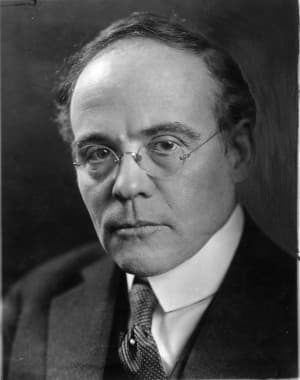
Edgar Lee Masters was an American poet, biographer, and dramatist best known for his groundbreaking work, Spoon River Anthology (1915). This collection of linked free-verse poems, presented as epitaphs from the residents of a fictional graveyard, offered a candid and often unflinching look at small-town American life. Masters's innovative use of free verse and its frank portrayal of human nature significantly influenced subsequent American poetry.







