“She was a creature of the now, and the now was a blur of information.”
— Hollis Henry observing someone processing a lot of data.

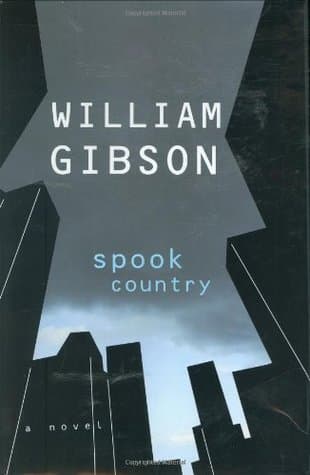
William Gibson (2006)
Genre
Thriller / Mystery / Science Fiction
Reading Time
450 min
Key Themes
See below
Sign in to track this book
A journalist, an information specialist, a high-end junkie, and a military navigation troubleshooter find their lives linked in a conspiracy where information is manipulated, and the line between real and digital blurs.
Hollis Henry, a former rock star and now a journalist, is approached by Node, a new magazine with no public presence, to write about 'locative art.' Her contact, Odile Richard, asks her to interview Bobby Chombo, a reclusive figure known for his military navigation systems and unusual lifestyle. Hollis travels to Los Angeles to begin her investigation, finding Chombo hard to track. She interviews artists and tech figures in the locative art scene, slowly understanding the world of augmented reality and GPS-based installations, while sensing something strange about her assignment and the magazine.
Tito, a young Cuban-Russian 'cutter' in New York, specializes in discreetly transferring sensitive information. A shadowy figure named Jonbe hires him for a series of encrypted data transfers. These jobs involve receiving packages and delivering them to drop-off points, often under surveillance. Tito is skilled and careful, using his intuition and street smarts to navigate the dangerous world of corporate espionage. He generally does not know the content or purpose of the data, focusing only on the precision and security of his operations, which grow in complexity and risk.
Milgrim, an intelligent but addicted Russian translator, receives his prescription drugs from a man named Brown. Brown rescued Milgrim from a drug dealer and now employs him for his language skills. Milgrim's tasks involve translating intercepted Russian communications, often related to military or intelligence. He is a captive, relying on Brown for his daily fix and survival, which allows Brown to exploit his abilities. Milgrim's world is confined to his apartment and Brown's controlled environments, leaving him paranoid and desperate to escape.
Hollis continues her search for Bobby Chombo. Her investigation reveals that Chombo is not just an artist but a sought-after expert in military navigation and anti-surveillance technology. She learns about his reputation for avoiding detection and his unusual nomadic life. Hollis's attempts to contact him meet dead ends and cryptic messages, suggesting Chombo is either actively avoiding her or is protected. Her journey takes her through tech hubs and underground art scenes, blurring the lines between art, technology, and national security.
As Tito continues his assignments, he starts to notice patterns in the data he transfers. He realizes the information is not random but seems related to surveillance and tracking. His suspicion grows as the methods for protecting the data become more sophisticated and his handlers take extreme precautions. He becomes aware of a larger, unseen network, hinted at by cryptic messages and the sheer volume of information he handles. Tito's skills are being used in a game far larger and more dangerous than he first understood.
Milgrim's translation work for Brown leads him to uncover fragmented but critical information about a covert operation involving advanced military technology. He pieces together details about a 'cube' — a sophisticated data storage and transmission device — and a network of 'cutters' like Tito. He realizes the communications he is translating are part of a larger, highly sensitive intelligence operation, possibly involving a rogue element or black ops team. Milgrim's understanding of Russian nuances allows him to extract context and intent others might miss, putting him in a dangerous position as he learns too much.
Hollis learns more about locative art through various artists. She learns how artists use GPS, augmented reality, and other technologies to create experiences that overlay digital information onto the physical world. These artists show how technology can reveal hidden histories, political narratives, or new ways of seeing space. Hollis begins to see how this art form, seemingly harmless, touches on surveillance, data privacy, and the manipulation of perception, mirroring the concerns emerging in her investigation into Bobby Chombo and Node.
The 'cube' Milgrim has been translating references for is a highly encrypted, portable data storage device containing crucial intelligence. It is a focal point for various groups, including Brown's employers and the forces pursuing Tito. The cube's contents are hinted to be very valuable, possibly related to national security or a powerful corporation's secrets. Its transfer and retrieval become the main goal of the clandestine operations, driving the actions of Tito, Milgrim, and indirectly, Hollis. The cube is the ultimate prize in the ongoing information war.
Hollis finally tracks Bobby Chombo to Vancouver, where she also meets people connected to the clandestine operations. Tito, following his latest instructions, also arrives in Vancouver, unaware of the converging interests. Milgrim, increasingly desperate and aware of his danger, tries to escape Brown's control, also seeking refuge or information in Vancouver. The city becomes the place where Hollis's journalism, Tito's deliveries, and Milgrim's translations collide, setting the stage for the climax as the various parties close in on the 'cube' and its secrets.
In Vancouver, the characters' paths cross. Hollis, through her persistence, finally meets Bobby Chombo, who reveals parts of the conspiracy. Tito, realizing he is a pawn, uses his skills to navigate the chaos. Milgrim, having escaped Brown's control, tries to use his knowledge for survival. A confrontation happens involving the 'cube,' various intelligence operatives, and Brown's organization. The nature of Node, the significance of locative art, and the web of surveillance and information control are exposed, leading to a violent resolution and a new understanding of the forces at play.
The Protagonist
Hollis evolves from a somewhat jaded journalist to a key figure in uncovering a complex conspiracy, finding a new purpose beyond her musical past.
The Protagonist
Tito transforms from an unwitting pawn to a proactive agent, understanding and reacting to the larger conspiracy he's entangled in.
The Protagonist/Supporting
Milgrim struggles for autonomy, using his intellect to escape his addiction-fueled servitude and gain a measure of freedom.
The Supporting
Chombo remains largely consistent in his enigmatic nature, serving as a catalyst for revelation rather than undergoing significant personal change.
The Antagonist/Supporting
Brown remains a consistent antagonist, representing the pervasive threat of unseen forces.
The Supporting
Jonbe serves as a functional character, facilitating Tito's involvement without significant personal development.
The Supporting
Odile's role is primarily functional, representing the initial interface of the conspiracy.
The Mentioned
Not applicable as a mentioned character.
The novel explores how information, especially digital data, is the ultimate currency and tool for control. Tito's role as a 'cutter' shows the value of secure, untraceable data transfer. Milgrim's forced translation of intercepted communications shows how raw intelligence can be used as a weapon. The 'cube' itself embodies this theme, a physical representation of valuable, secret information. The characters' lives are shaped by the flow and control of data, showing how knowledge (or lack thereof) dictates power in a networked society.
“He was a cutter, a ghost in the machine, and his job was to move information.”
Gibson examines the widespread nature of surveillance, from GPS tracking to monitoring digital communications. Bobby Chombo's expertise in anti-surveillance technology and his nomadic life are direct responses to this threat. Hollis's investigation into 'locative art' initially seems harmless but soon reveals how technology can overlay reality with hidden data, blurring public and private lines. The constant feeling of being watched, the difficulty of staying anonymous, and the erosion of personal privacy are central anxieties in the story, reflecting a world where every action leaves a digital trace.
“Privacy was a luxury, increasingly unavailable to anyone who wasn't actively trying to avoid it.”
The novel questions what 'reality' means in an age of digital overlays and manipulated information. Locative art, as Hollis explores it, literally layers digital data onto physical space, inviting viewers to see their environment differently. This artistic concept mirrors the larger conspiracy, where 'truth' is constantly built, hidden, or revealed through fragmented data and controlled stories. The characters struggle to tell real information from disinformation, and their understanding of events is often incomplete, showing how perception can be shaped by the information presented to them.
“Locative art was about seeing the invisible, the data ghosts haunting the physical world.”
Milgrim's character arc explores addiction as a tool for control. His drug dependency makes him a captive of Brown, who exploits his language skills. This theme shows how personal weaknesses can be weaponized by those seeking power and information. Milgrim's struggle for sobriety and independence is linked to his fight for freedom from Brown's manipulation, highlighting the insidious nature of control through chemical dependency. His journey underscores the psychological cost of being a pawn in a high-stakes game.
“His addiction was his leash, and Brown held the other end.”
Spook Country blurs the lines between art, technology, and intelligence operations. Hollis's assignment on 'locative art' directly leads her into a world of military tracking and data espionage. Bobby Chombo, a 'producer' of military navigation tech, is also a key figure in this convergence. The novel suggests that tools and concepts developed in one area, like GPS for art, can be repurposed for others, especially for surveillance and information warfare. This mixing reflects a contemporary reality where technological innovation often has dual-use potential, making it hard to separate harmless applications from more sinister ones.
“The art was a mirror, reflecting the invisible infrastructure of control.”
A highly encrypted, portable data storage and transmission device.
The 'cube' serves as the primary MacGuffin of the novel. Its contents are unknown for much of the story but are understood to be of immense value and sensitivity, making it the object of desire for multiple factions. It drives the plot by motivating Tito's transfers, Milgrim's translations, and the overall pursuit by various intelligence operatives. The cube symbolizes the power of information and the lengths to which people will go to acquire or protect it, acting as a focal point for the converging narratives.
Art that uses GPS and digital overlays to create augmented reality experiences.
Locative art functions as a narrative lens through which the themes of surveillance, perception, and digital reality are explored. Hollis's initial assignment to cover this art form slowly reveals its deeper connections to military technology, data tracking, and the manipulation of information. It's a clever device that grounds the abstract concepts of digital espionage in a tangible, artistic context, allowing the reader to understand how digital information can profoundly alter our perception of the physical world and serve as a cover for more sinister operations.
The story is told through the alternating viewpoints of three seemingly unconnected protagonists.
This device creates suspense and slowly builds a complex tapestry of the overarching conspiracy. By presenting events through Hollis's journalistic investigation, Tito's 'cutting' operations, and Milgrim's forced translations, the reader, like the characters, pieces together the larger picture. This narrative structure emphasizes the theme of information control and the difficulty of perceiving the full truth in a world of obscured data. It forces the reader to actively engage in connecting the dots, mirroring the characters' own struggles to understand their entangled realities.
Shadowy, ill-defined organizations that manipulate the characters.
These organizations, particularly Node and the group employing Brown, serve to underscore the pervasive and often invisible nature of power in the digital age. They operate with unclear motives and vast resources, manipulating individuals like Hollis, Tito, and Milgrim as pawns. Their lack of clear identity enhances the sense of paranoia and the difficulty of fighting against unseen forces. They represent the corporate and governmental entities that control information and technology, blurring the lines between legitimate business and covert operations.
“She was a creature of the now, and the now was a blur of information.”
— Hollis Henry observing someone processing a lot of data.
“The future is already here—it's just not very evenly distributed.”
— A classic Gibson line, often attributed to him, reflecting on technological disparity.
“He'd always found the internet to be a place where the present was constantly being rewritten by the past.”
— Hollis Henry's thoughts on the nature of online information and its malleability.
“You don't just walk away from a certain kind of money. It walks with you.”
— A character reflecting on the persistent influence of wealth and its entanglements.
“The past wasn't dead, wasn't even past. It was just a different kind of present, one you could still trip over.”
— Hollis Henry's internal monologue about how past events continue to affect the present.
“Every object has a story, if you know how to look for it.”
— A character's appreciation for the hidden narratives within everyday items.
“He felt, in some obscure way, that the world was always trying to tell him something, if only he could learn to listen.”
— A character's sense of an underlying order or message in the chaos of reality.
“The more you knew, the more you realized you didn't know.”
— Hollis Henry's experience as she delves deeper into the mystery.
“It was the kind of city where the future had arrived, but hadn't quite unpacked.”
— Describing a setting where advanced technology coexists with older structures or habits.
“He understood that some secrets weren't meant to be kept, but to be found.”
— A character's realization about the nature of certain hidden truths.
“The true currency of the twenty-first century was attention.”
— A commentary on the value of human attention in the digital age.
“There was a certain aesthetic to information, a beauty in its flow and its patterns.”
— A character's appreciation for the structure and movement of data.
“She was learning that the most dangerous things often looked the most innocuous.”
— Hollis Henry's growing awareness of hidden threats.
“The past was like a foreign country, but one you could never truly leave.”
— Reflecting on the enduring impact of personal and collective history.
Ready to see how well you understood this book? Take our interactive quiz with 10 questions.
William Ford Gibson is an American-Canadian speculative fiction writer and essayist widely credited with pioneering the science fiction subgenre known as cyberpunk. Beginning his writing career in the late 1970s, his early works were noir, near-future stories that explored the effects of technology, cybernetics, and computer networks on humans—a "combination of lowlife and high tech"—and helped to create an iconography for the information age before the ubiquity of the Internet in the 1990s. Gibson coined the term "cyberspace" for "widespread, interconnected digital technology" in his short story "Burning Chrome" (1982), and later popularized the concept in his acclaimed debut novel Neuromancer (1984). These early works of Gibson's have been credited with "renovating" science fiction literature in the 1980s.







