“There are some things that can't be fixed by good intentions. Some things that can only be made worse.”
— Ember reflects on the consequences of her father's actions.

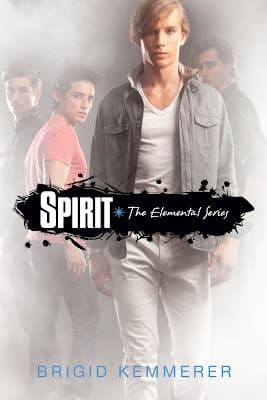
Brigid Kemmerer (2013)
Genre
Fantasy / Young Adult / Romance
Reading Time
300 min
Key Themes
See below
Sign in to track this book
Hunted by those who want his growing powers and surrounded by shifting loyalties, a reclusive teen must decide if the fiery new girl is an ally or just another predator in the supernatural storm around him.
Hunter Garrity, a powerful Spirit-user, tries to keep a low profile at school despite his grandfather, Silas, always pushing him to use his abilities and confront threats. Hunter's life is complicated by the Merrick brothers, especially Quinn, who blame him for their father's arrest. A new girl, Kate Sullivan, arrives at school, immediately drawing Hunter's attention with her lively personality. Hunter does not know that Kate is an Empath sent by the Spirit Council to investigate the rise in Spirit activity in their town, specifically targeting Hunter and his family. Her first interactions with Hunter are a mix of real curiosity and subtle questions, as she tries to gather information without revealing her true purpose.
Hunter's suspicions about Kate grow after several times where her knowledge of Spirit-users seems too specific. During a tense encounter with the Merrick brothers, Kate accidentally uses her Empathic abilities, showing a flicker of power that Hunter recognizes as Spirit-related. Pressing her for answers, Hunter eventually corners Kate, who admits she is an Empath working for the Spirit Council. She explains that the Council sent her to investigate the high concentration of Spirit-users in Hunter's town and to assess if Hunter is a threat or an ally against a growing darkness.
Calla, a manipulative and powerful Spirit-user with a history of instability, makes herself known. She approaches Hunter, trying to get him to join her plans to gather more power and control other Spirit-users. Calla shows a frightening disregard for human life and a clear ambition to control the Spirit world, seeing other users, especially weaker ones, as mere tools. Hunter, wary of her unpredictable nature and destructive tendencies, rejects her advances, making Calla a main antagonist who sees Hunter as both a rival and a potential tool.
Silas Garrity, Hunter's grandfather, continues to be a demanding and mysterious figure. He constantly pushes Hunter to train and master his Spirit abilities, often through harsh methods. Silas reveals bits of information about the history of Spirit-users and the delicate balance they must keep, hinting at a coming threat that requires Hunter to be at his strongest. He speaks of an ancient evil returning and the need for powerful Spirit-users to unite. Hunter, while frustrated by his grandfather's secrecy, understands the urgency and trains hard, recognizing the increasing danger in their town.
Despite their initial mistrust, Hunter and Kate rely on each other more and more. Kate, seeing Hunter's true desire to protect others and his struggle to control his immense power, begins to see him as more than just a target for her investigation. Hunter, in turn, values Kate's intelligence, her Empathic insights, and her steady support. They start sharing information, combining Kate's Council knowledge with Hunter's understanding of local Spirit-users. This growing trust is important as they realize the threat from Calla is far greater than either of them first understood, requiring a united front.
The Merrick brothers, especially Quinn, increase their harassment of Hunter. Still believing Hunter caused their father's arrest, they launch a series of physical and Spirit-based attacks. Their actions, driven by misguided loyalty and a desire for revenge, make them tools in Calla's larger scheme. Calla subtly manipulates the brothers, using their anger and offering false promises of power or protection, further fueling their conflict with Hunter. Hunter must defend himself and Kate from their growing aggression, showing that their personal vendetta is getting out of control.
Calla starts her sinister plan. She begins to gather other, weaker Spirit-users, luring them with promises or forcing them through fear. Hunter and Kate discover Calla's true goal: to perform a dangerous ritual that will let her absorb the Spirit energy of multiple individuals, greatly increasing her own power to an unmatched level. This ritual threatens not only the lives of the trapped Spirit-users but also the delicate balance of Spirit energy in the region, risking disaster. Hunter and Kate realize they must act quickly to stop Calla from completing her dark design.
Hunter, Kate, and Silas track Calla to a powerful Spirit nexus, the chosen place for her ritual. A fierce battle begins, with Calla showing her formidable and terrifyingly amplified powers. She unleashes devastating attacks, using the absorbed Spirit energy against her opponents. Hunter, guided by Silas's training and determined to protect Kate and the innocent Spirit-users, fights with new intensity. Kate uses her Empathic abilities to disrupt Calla's focus and provide strategic insights, while Silas provides powerful defensive support, creating a desperate three-way struggle for the fate of the Spirit world.
In the battle's climax, Calla is almost unstoppable. To stop her from completing the ritual and unleashing her full, destructive power, Silas makes a selfless sacrifice, using a powerful, ancient Spirit technique that drains his own life force to severely weaken Calla and disrupt her ritual. This act of immense power leaves Calla vulnerable, allowing Hunter to deliver a decisive blow that incapacitates her. Calla is defeated, but Silas is gravely wounded. The Spirit energy, previously absorbed by Calla, disperses, causing a temporary imbalance but preventing a greater disaster. Hunter is left with the heavy burden of his grandfather's sacrifice.
After the intense confrontation, Hunter and Kate work to stabilize the chaotic Spirit energy in the town and help the affected Spirit-users recover. Hunter deals with the loss of his grandfather, understanding the great responsibility now on his shoulders as one of the most powerful Spirit-users. Kate, having seen Hunter's strength, compassion, and the true threat Calla posed, reports back to the Spirit Council, supporting Hunter and a more balanced approach to Spirit-user management. Their shared experience forms a deep bond between them, suggesting a future where they will face challenges together, both personal and supernatural.
The Protagonist
Hunter evolves from a self-isolated, reluctant user of power to a more confident and accepting leader, embracing his abilities and responsibility after his grandfather's sacrifice.
The Love Interest/Supporting Protagonist
Kate's initial objective-driven assessment of Hunter transforms into genuine trust and affection, leading her to become a staunch ally and advocate for him.
The Supporting
Silas remains steadfast in his role as a mentor and protector, ultimately making a heroic sacrifice to save Hunter and stop Calla.
The Antagonist
Calla's relentless pursuit of power escalates to a dangerous ritual, leading to her eventual defeat.
The Supporting/Antagonist
Quinn remains largely unchanged in his antagonistic role, serving as a foil and a manipulated pawn in Calla's schemes.
The Supporting/Antagonist
Michael's arc is tied to Quinn's, largely remaining a follower in their family's vendetta.
The Mentioned
The Council's perception of Hunter likely shifts from a potential threat to a valuable ally after Kate's report.
This theme explores the great responsibility and isolation that comes with having extraordinary abilities. Hunter constantly struggles with his volatile Spirit powers, fearing their destructive potential and the attention they bring. He first wants to suppress them and live a normal life, but the growing threats force him to face his true nature. The story shows how power can be a curse as much as a gift, leading to difficult choices and sacrifices, as seen in Silas's final act. Hunter's journey is about learning to control and use his power for good, rather than letting it control him or wishing it away.
“"Power isn't a gift, Hunter. It's a weight. And you either learn to carry it, or it crushes you."”
The story greatly features the struggle to build trust in a world full of hidden agendas and dangerous people. Hunter is initially wary of everyone, including Kate, because of past betrayals and the constant threat from enemies like Calla and the Merrick brothers. Kate, too, begins her relationship with Hunter under false pretenses. The gradual development of trust between Hunter and Kate is central to their ability to confront Calla. Conversely, Calla's manipulation of the Merrick brothers and her deceptive nature show the destructive power of betrayal and self-interest, highlighting the importance of choosing allies wisely.
“"Everyone has an agenda, Hunter. The trick is figuring out if theirs aligns with yours."”
The theme of family is explored through Hunter's complex relationship with his grandfather, Silas. Silas represents a legacy of Spirit-users, passing down not just powers but also knowledge, responsibility, and the weight of past conflicts. Their dynamic is often strained by Silas's demanding nature and secrecy, yet it is based on deep love and a shared purpose. Silas's ultimate sacrifice highlights the theme of family loyalty and how far one will go to protect their own, shaping Hunter's understanding of his place within this lineage and the responsibilities that come with it. The Merrick brothers' actions, driven by a misguided loyalty to their own family, provide a darker contrast to this theme.
“"Some things, Hunter, you carry in your blood. And some burdens, you carry for your blood."”
The story presents a clear struggle between good and evil, mainly shown by Hunter and Calla. However, it also explores the moral complexities within the Spirit world. Characters like Kate, initially acting for a detached 'Council,' and the Merrick brothers, driven by understandable if misguided revenge, make the story less black and white. The choices characters make, particularly Hunter's struggle to use his power responsibly, show the fine line between protecting and harming. The story questions whether power inherently corrupts or if it is the individual's choices that define their morality.
“"It's not the power that makes you good or evil, Hunter. It's what you choose to do with it."”
A location of concentrated Spirit energy, often used for rituals.
The Spirit Nexus is a crucial plot device, serving as a focal point for significant Spirit-related events. It's a place where Spirit energy is naturally abundant and concentrated, making it ideal for powerful rituals, both benign and malevolent. In 'Spirit,' Calla chooses a nexus for her dangerous ritual to absorb more power, amplifying its significance. The nexus acts as a magnet for Spirit-users and a battleground, intensifying the stakes of the climax. Its existence explains why the town is a hotspot for Spirit activity and provides a tangible goal for Calla's ambition.
Characters possess supernatural abilities that they must conceal from the mundane world.
This device creates tension and conflict as characters like Hunter and Kate must navigate their everyday lives while hiding their extraordinary abilities. Hunter's struggle to keep his powers secret from schoolmates and the general public adds to his isolation and fear of exposure. Kate's initial secret identity as an Empath from the Spirit Council introduces an element of mystery and mistrust. This device drives much of the early plot, as characters try to discern who can be trusted and who is aware of the supernatural world, heightening the stakes of their interactions and the consequences of accidental revelations.
An experienced character who guides and trains the protagonist.
Silas Garrity serves as the classic mentor figure for Hunter. He possesses vast knowledge and experience of the Spirit world, having faced similar challenges in his past. His role is to train Hunter, push him to develop his powers, and impart wisdom about the responsibilities that come with being a powerful Spirit-user. The mentor figure often acts as a protector and a source of exposition, revealing crucial details about the world and the antagonist. Silas's ultimate sacrifice also fulfills a common trope of the mentor making a profound impact on the protagonist's development.
A desired object or goal that drives the antagonist's plot.
While not a tangible object, Calla's ritual to absorb Spirit energy functions as a MacGuffin. It is the primary goal that drives her actions and, by extension, the central conflict of the story. The ritual itself, and the immense power Calla seeks to gain from it, is what Hunter and Kate must prevent. Its significance lies in its ability to motivate the antagonist and create a clear, urgent objective for the protagonists, propelling the plot forward towards a climactic confrontation. The specific details of the ritual are less important than its function as the ultimate prize Calla desires.
“There are some things that can't be fixed by good intentions. Some things that can only be made worse.”
— Ember reflects on the consequences of her father's actions.
“Every secret has a weight. The longer you carry it, the heavier it gets.”
— Ember struggles with keeping the truth from those she cares about.
“Sometimes the greatest strength isn't in holding on, but in letting go.”
— Ember grapples with her past and the need to move forward.
“Fear can make you do terrible things. But it can also make you brave.”
— Ember confronts her fears and makes difficult choices.
“The past isn't a cage, Ember. It's a foundation. What you build on it is up to you.”
— A mentor figure offers advice to Ember about her future.
“Love isn't about perfect. It's about finding someone who sees your imperfections and still chooses you.”
— Ember contemplates her feelings for the male lead.
“Sometimes the monsters aren't in the shadows. They're standing right in front of you, wearing a smile.”
— Ember realizes who the true threats are in her life.
“Hope is a fragile thing. But even the smallest spark can light the darkest night.”
— Ember holds onto hope amidst overwhelming challenges.
“Trust is earned, not given. And once broken, it's never quite the same.”
— Ember deals with betrayal and its aftermath.
“You can't save everyone, Ember. But you can try to save the ones who matter most.”
— Ember faces difficult decisions about who to protect.
“The world isn't fair. But that doesn't mean you have to stop fighting for what's right.”
— Ember's determination to fight injustice.
“Even the strongest walls can crumble if the foundation isn't true.”
— Ember reflects on the fragility of power built on lies.
“Sometimes the greatest battles are fought within ourselves.”
— Ember struggles with her inner demons and choices.
Ready to see how well you understood this book? Take our interactive quiz with 10 questions.

Brigid Kemmerer is a New York Times bestselling author known for her captivating young adult fantasy novels. Her "Cursebreakers" series, including "A Curse So Dark and Lonely" and "A Heart So Fierce and Broken," has garnered critical acclaim. Kemmerer also writes contemporary YA, often exploring themes of love, loss, and resilience with a distinctive voice.







