“There was a saying in my village: You can’t spin a thread from a broken heart.”
— Maia reflects on a village saying related to her craft.

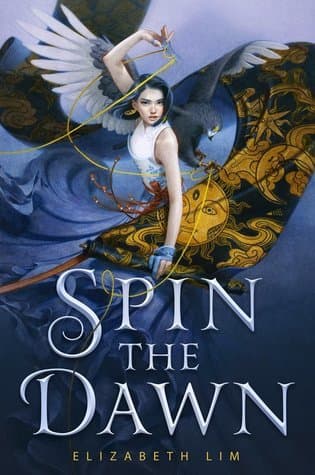
Elizabeth Lim (2019)
Genre
Fantasy / Young Adult / Romance
Reading Time
8-10 hours
Key Themes
See below
Sign in to track this book
In a kingdom where a needle is mightier than a sword, a young tailor disguised as a boy must craft three impossible gowns from the sun, moon, and stars while navigating courtly intrigue and a forbidden romance with a watchful magician.
Maia Tamarin, the youngest daughter of a famous tailor in A'landi, has an extraordinary talent for sewing, far exceeding her older brothers. Despite her skill, her dream of becoming a master tailor is impossible because of her gender; women cannot hold such positions. Her sick father, a celebrated imperial tailor, is now frail. Her three brothers are either incompetent or have left. Maia secretly practices her craft, making beautiful garments while her family struggles financially. This highlights the gap between her talent and limited opportunities.
A royal messenger arrives, calling Maia's father to the imperial palace to compete for the prestigious imperial tailor position. Knowing her father is too ill to travel, and that her family faces ruin if he refuses, Maia makes a life-altering decision. She cuts her hair, binds her chest, and pretends to be her eldest brother, Keton, who had run away. As 'Maia Tamarin,' she sets off for the capital, risking death if her deception is found out. All of this is to save her family's honor and pursue her forbidden dream.
Maia arrives at the imperial palace in the capital city of Bai. She is one of twelve tailors competing. The competition is intense and ruthless, with rivals like the arrogant Lord Khan and the seemingly kind Lady Sarnai. Maia quickly shows her skill with innovative designs and careful stitching. However, her disguise is constantly threatened by Edan, the powerful imperial enchanter. His magic and observations seem to pierce through her facade, making her increasingly nervous.
The first challenge requires tailors to make a robe for the young Emperor, known for his simple tastes. While other tailors focus on elaborate designs, Maia remembers her father's advice about understanding the wearer. She crafts a simple-looking robe from plain grey fabric, but it has a subtle, intricate pattern visible only in certain light. This reflects the Emperor's hidden complexities. Her creation deeply impresses the Emperor and judges, earning her victory in the first round. Edan watches her with unsettling intensity, his interest growing.
The second challenge asks the remaining tailors to create a garment for General Ammi, known for her fierce warrior spirit. Maia designs a flexible, protective leather battle tunic that includes hidden compartments for weapons and a symbolic phoenix. During the challenge, Lord Khan secretly sabotages her materials. Maia, with quick thinking and resourcefulness, adapts and uses an unconventional method to finish her garment. Her ingenuity and the functional beauty of her creation again secure her victory, eliminating more rivals and narrowing the field.
Having defeated all other competitors, Maia is declared the winner of the tailoring competition. However, her real test is still to come. The Emperor's betrothed, Lady Ummi, demands three impossible dresses for her wedding: one from the sun's laughter, one from the moon's tears, and one from the blood of stars. This legendary task, called 'Shiori's Challenge,' is thought to be a myth. Edan, who protects ancient magic, is assigned to go with Maia on her dangerous quest to gather these mythical ingredients.
Maia and Edan begin their journey, first traveling to the scorching Endless Desert to find the sun's laughter. They face treacherous sandstorms, mirages, and harsh elements. Edan's magic is essential for navigating dangers, while Maia's resilience and resourcefulness keep them alive. During this quest, their initial mistrust slowly turns into a fragile alliance and growing respect. Maia starts to see past Edan's distant manner, and he, in turn, sees her determination and talent, despite his suspicions about her true identity.
Their quest continues to the dangerous, snow-capped Mountains of the Moon to gather the moon's tears. Here, they meet ancient, sorrowful spirits and dangerous magical creatures. Maia uses her tailoring skills to create a garment that can withstand the extreme cold, while Edan's magic protects them from the mountain's enchantments. Their close proximity and shared dangers intensify their unspoken feelings. Maia struggles with her growing attraction to Edan, knowing her disguise forbids romance. Edan grapples with the truth he suspects about her.
The final ingredient, the blood of stars, leads them to a hidden celestial temple, guarded by a powerful, star-devouring beast. Maia must use her wit and courage, along with Edan's magic, to defeat the creature and get the starlight. During a moment of extreme danger, Maia's disguise is accidentally compromised, revealing her true gender to Edan. Instead of judgment, Edan's reaction is understanding and a deeper bond. This confirms his suspicions but also his acceptance of her.
Maia, with Edan's help, successfully creates the three mythical gowns. They return to the imperial palace, where Maia presents the dresses to Lady Ummi. However, Lady Ummi's true nature is revealed: she is not just the Emperor's bride but an ancient demoness named Amulet. Amulet plans to use the dresses to seize control of the kingdom and cause chaos. Edan, whose past is linked to Amulet, reveals his true role as a guardian tasked with preventing her rise, having been cursed by her in the past.
A fierce magical battle begins between Amulet, Maia, and Edan. Amulet, empowered by the dresses she partly possesses, unleashes dark magic. Maia, using her tailoring skills and quick thinking, strategically alters the dresses to disrupt Amulet's power, understanding the magic woven into them. Edan, despite his cursed limitations, fights alongside her, using his remaining magical strength. The fight is climactic, pushing both Maia and Edan to their limits as they try to stop Amulet's devastating plans for the empire.
Through Maia's ingenuity in unraveling the dresses' magic and Edan's sacrifice to weaken Amulet, the demoness is defeated and banished. Maia's true identity as a woman is now known to the Emperor and the court. Instead of punishment, her bravery and skill are recognized. The Emperor, grateful for her service, makes her the Imperial Tailor, a groundbreaking achievement for a woman. Maia and Edan, now free of their curses and deceptions, can finally acknowledge their love and look towards a future together. Maia proudly embraces her true self and her dreams.
The Protagonist
Maia transforms from a hidden talent constrained by gender into a celebrated imperial tailor, embracing her true identity and finding love.
The Love Interest / Supporting Protagonist
Edan moves from a cursed, isolated guardian to a redeemed, loving partner, finding freedom from his past.
The Antagonist
Amulet's arc is one of attempted resurgence and ultimate defeat, failing to achieve her destructive goals.
The Supporting
The Emperor grows in wisdom and discernment, learning to trust his own judgment and value merit over tradition.
The Supporting / Minor Antagonist
Khan's arc is one of initial confidence followed by bitter defeat and elimination from the competition.
The Supporting
His arc is largely static, serving as a catalyst and a source of inspiration for Maia.
The Mentioned
Keton's arc is off-page and static, primarily serving as a narrative catalyst.
The novel examines rigid gender roles in the fictional world, where women are denied opportunities based solely on their sex. Maia's main struggle is against the patriarchal system that forbids her passion for tailoring. Her disguise as a boy, Keton, directly challenges these expectations, showing how arbitrary such restrictions are. Through her journey, the story argues for individual talent over gender-based limitations. It shows a woman achieving a traditionally male role and being celebrated for it, as seen when the Emperor appoints her Imperial Tailor despite her gender.
“"In A'landi, girls could not be tailors. We could only be wives, mothers, or courtesans."”
Maia's journey is one of self-discovery. Her initial deception forces her to adopt a new identity, 'Keton,' which allows her to explore her true self and talents without gender constraints. Throughout the dangerous quest for the magical dresses, she develops her skills and confronts her fears, desires, and ambition. By the end, she sheds her disguise and fully accepts her identity as Maia, the skilled tailor and a woman in love. This shows that true strength comes from authenticity.
“"I was Keton at the palace, but I was Maia in my heart, and Maia was a tailor."”
Love is explored through Maia's romantic relationship with Edan, which develops amidst deception and danger. Their growing affection involves sacrifice; Maia risks her life and identity for her family and dream, while Edan sacrifices his freedom and bears a curse to protect the empire. Their love blossoms through shared challenges and mutual respect, requiring them to overcome personal barriers and external threats. Their willingness to sacrifice for each other and for the greater good strengthens their bond and helps them defeat Amulet.
“"He was the sun, the moon, and the stars all wrapped into one, and I was falling for him."”
The book blends intricate craftsmanship with powerful magic. Maia's tailoring is depicted as an art form with a touch of magic, able to influence fate and reality. The challenges, especially making the three mythical dresses, elevate tailoring to a magical act. Edan's enchantment complements Maia's craft, showing how magic and human skill can work together. This theme suggests that true artistry can have a magical quality, and that magic, in turn, can be shaped through human hands and imagination. This is seen when Maia manipulates the magic within the dresses to defeat Amulet.
“"Magic was in every stitch, every thread, waiting to be woven into existence."”
The story explores the tension between preordained destiny and individual choice. Lady Ummi/Amulet represents a force trying to fulfill a dark prophecy, suggesting a fixed, destructive path. However, Maia, through her choices to defy societal norms, pursue her dream, and fight for her loved ones and the empire, actively shapes her own destiny. Her journey, initially driven by circumstance, becomes proof of her free will. She ultimately alters the course of the empire and creates a future she chose for herself, rather than one dictated by tradition or prophecy.
“"Perhaps destiny was not a path to be followed, but a garment to be woven, stitch by stitch."”
Maia's cross-dressing as a boy to enter the competition.
Maia's disguise as her brother Keton is the central plot device, driving the initial conflict and her journey. It allows her to bypass societal gender restrictions, enabling her to compete as a tailor. The disguise creates constant tension and risk of exposure, propelling the narrative forward and fostering her complex relationship with Edan, who suspects her secret. It also serves as a metaphor for hidden potential and the restrictive nature of gender roles.
The impossible task of sewing gowns from the sun, moon, and stars.
This legendary challenge acts as the main quest of the second half of the novel. It transforms the tailoring competition into an epic fantasy adventure, requiring Maia and Edan to travel across the land. The dresses are not merely garments but conduits of ancient magic, serving as both a test of Maia's skill and a key element in Lady Ummi/Amulet's nefarious plans, ultimately becoming central to the final confrontation.
The imperial enchanter's magical powers and his binding curse.
Edan's magical abilities are crucial for Maia's survival during the quest for the dresses, providing protection and guidance. His curse, inflicted by Amulet, links him directly to the main antagonist and provides a personal stake in defeating her. It also explains his initial aloofness and adds layers to his character, making his journey towards freedom and love more poignant. His magic is a necessary complement to Maia's craft in overcoming magical obstacles.
A series of challenges to determine the kingdom's finest tailor.
The competition serves as the inciting incident and the initial framework for Maia's journey. It establishes the stakes, introduces rival characters like Lord Khan, and provides a platform for Maia to showcase her exceptional talents. The progressively difficult challenges build suspense and allow Maia to develop her skills and confidence under pressure, ultimately leading to the grand 'Shiori's Challenge' which propels the story into its magical quest phase.
“There was a saying in my village: You can’t spin a thread from a broken heart.”
— Maia reflects on a village saying related to her craft.
“A dress can be a disguise, a declaration, a dream. It can be a weapon. It can be a shield. But above all, it must be a reflection of the soul.”
— Maia thinks about the power and meaning of the dresses she creates.
“Fear is a powerful motivator, but love is stronger.”
— Maia considers the forces driving her actions.
“The greatest stories aren’t found in books, but in the stitches of a garment, in the memories woven into its fabric.”
— Maia's perspective on storytelling through her craft.
“Sometimes, the bravest thing you can do is to be yourself, even when the world expects you to be someone else.”
— Maia grapples with her disguise and true identity.
“Magic, like silk, can be beautiful and dangerous, soft and strong.”
— Maia contemplates the dual nature of magic.
“Hope, like a single thread, can be fragile, but it can also be the start of something magnificent.”
— Maia holds onto hope amidst challenges.
“A true emperor does not rule through fear, but through the loyalty of his people.”
— A discussion about leadership and governance.
“The heart wants what it wants, even if it’s foolish.”
— Maia reflects on her growing feelings for Edan.
“Don’t let anyone tell you what you can or cannot do. Your destiny is your own to weave.”
— An empowering message about self-determination.
“The world is not always fair, but that doesn’t mean you stop fighting for what’s right.”
— Maia's resolve in the face of injustice.
“Sometimes, the strongest armor is not made of metal, but of courage and unwavering will.”
— Maia's inner strength is highlighted.
“To truly see someone, you must look beyond the surface, beyond the roles they play.”
— Maia and Edan's developing understanding of each other.
“Every stitch tells a story, every thread a secret.”
— Maia's intimate connection to her craft and its narrative potential.
Ready to see how well you understood this book? Take our interactive quiz with 10 questions.







