“Every life is a mystery, and every death too, but the greatest mystery of all is the one we live with, day in and day out, the mystery of our own selves.”
— Stephen's reflection on the nature of identity and existence.

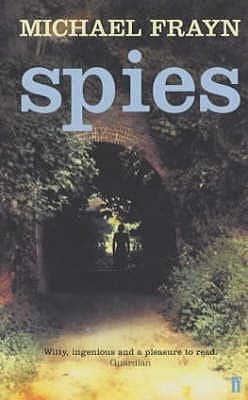
Michael Frayn (2007)
Genre
Literary Fiction / Historical Fiction / Mystery
Reading Time
210 min
Key Themes
See below
Sign in to track this book
In the quiet of post-war suburbia, two young boys turn their ordinary neighborhood into a spy game, only to uncover a darker, adult secret hidden beneath their innocent play.
An aging Stephen Wheatley, a retired man, returns to The Close, the suburban street where he grew up during World War II. The familiar yet changed landscape of his childhood home in suburban London brings back strong memories of a specific summer. The war, though distant, affected their lives. Stephen’s narration moves between his current observations and the clear memories of his ten-year-old self, setting the scene for the mystery. He thinks about how his childhood perception of events was shaped by innocence and imagination, comparing it with what he now understands.
Young Stephen and his best friend, Keith Hayward, are always together. Keith, who is more imaginative and dominant, convinces Stephen that they are spies. Their mission, Keith says, is to find a German spy in their quiet, seemingly ordinary Close. Keith's main suspect is his own mother, Mrs. Hayward, a mysterious and elegant woman who often leaves the house and has strange visitors. Stephen, who is more timid and easily influenced, accepts Keith's elaborate ideas, finding excitement and purpose in their secret operations, which involve watching and decoding messages.
The boys start 'watching' Mrs. Hayward. They notice her frequent trips to the shops, her quiet phone calls, and how she sometimes stares into the distance. Keith sees every ordinary action as a coded message or a secret meeting. They follow her discreetly, hiding behind hedges and peeking through windows, sure they are about to uncover a big wartime secret. Stephen, despite his initial worry, becomes more involved in the game, wanting to please Keith and be part of something important. Their observations, however, are filtered through their childhood imaginations.
Keith leads Stephen to a drainpipe that runs under their houses, calling it a secret tunnel used by spies. He explains its importance for hidden movements and gathering information. Stephen, though a bit scared, is excited by the discovery, which further validates their spy game. They use the tunnel for their own secret meetings and as a base for their operations, believing it connects to various houses in The Close. This 'tunnel' becomes a strong symbol of their hidden world and the deeper secrets they believe are beneath the surface of their ordinary lives.
The boys watch Mrs. Hayward take a mysterious package wrapped in brown paper to a garden plot just outside The Close. This act becomes a main 'clue' in their investigation. They believe the package contains secret documents or supplies for her spy activities. Their spying increases around the garden, where they hide and watch her. Stephen is especially struck by the ordinary yet secretive nature of her actions, wondering what she could possibly be doing in such a normal place. This event further confirms their belief that Mrs. Hayward is indeed a spy.
Stephen's Uncle Peter visits, and the boys try to 'spy' on him, suspecting he might be involved. More importantly, a wounded airman, Mr. Fraser, stays with the Haywards, recovering from an injury. The boys are fascinated by him, seeing him as a possible spy or a victim of espionage. Mr. Fraser is kind to Stephen, but his presence adds more intrigue to their game. Keith suspects Mr. Fraser might be Mrs. Hayward's contact or handler, further twisting their views of the adults around them.
Following Mrs. Hayward, the boys find a hidden 'lair' in a wooded area near The Close. It's a small, secluded spot, and they immediately assume it's Mrs. Hayward's secret meeting place or a drop-off point for her spy activities. They find small, seemingly harmless items there, which they interpret as spy gear. This discovery excites them, confirming their suspicions and making them believe they are close to a major breakthrough. Stephen's fear and excitement grow as they go deeper into the perceived plot.
Stephen's mother, worried about his secretive behavior and the time he spends with Keith, confronts him. Around this time, Stephen sees a deeply unsettling scene: his mother and Uncle Peter together in a compromising way, suggesting an affair. This incident shatters his innocent view of his own family and the adults around him, bringing a different kind of 'secret' into his world. The shock of this personal revelation starts to unravel his belief in the simple spy game Keith created, making him question the nature of all secrets.
Driven by his own growing unease and a new sense of independent investigation, Stephen returns to the garden alone. He discovers that Mrs. Hayward isn't planting secret messages, but is growing food to help with wartime rations, a common practice during the war. He also finds evidence of a secret, more personal activity: she is preparing food and supplies for someone in hiding. This discovery starts to break down the elaborate spy story he and Keith had built, replacing it with a more moving and human truth about survival and compassion during wartime.
Stephen eventually understands the real story: Mrs. Hayward is not a German spy, but is secretly hiding a wounded German soldier, an escapee, in the 'lair' in the woods and possibly at the garden. This act of deep human kindness and defiance of wartime beliefs is the true 'secret' she is protecting. The 'package' was food, the 'lair' was his shelter. This revelation completely changes all their 'spy' observations, turning a thrilling game into a complex moral problem. Stephen struggles with this knowledge, understanding the immense danger Mrs. Hayward is in.
The German soldier is eventually found, though the exact circumstances are somewhat unclear, suggesting a possible accidental reveal by the boys or an anonymous tip. The soldier is taken away, and Mrs. Hayward faces severe consequences, including social shunning and legal action. The perfect summer ends suddenly, and Stephen and Keith's friendship is permanently damaged. Stephen feels deep guilt and betrayal, realizing their innocent game had devastating, real-world effects, and that he played a part in exposing Mrs. Hayward's compassionate act.
The summer's events mark the definite end of Stephen's childhood innocence. The lines between play and reality, good and evil, become blurry and complex. He learns that adults have their own secrets, often far more profound and morally unclear than any spy game. The experience leaves him with a lasting sense of responsibility and a deep understanding of human cruelty and compassion. The friendship with Keith, once central to his world, never fully recovers, and Stephen carries the weight of that summer into his adult life.
The Protagonist
Stephen transforms from a naive follower into a more discerning and morally burdened individual, grappling with the real-world consequences of perceived innocence.
The Narrator
The adult Stephen seeks to understand and reconcile with the past, finding meaning in the events that shaped his life.
The Co-protagonist/Antagonist
Keith remains largely static in his conviction, but his actions inadvertently lead to significant destruction and the end of his friendship with Stephen.
The Central Figure/Victim
Mrs. Hayward's true character is revealed through Stephen's investigation, transforming her from a suspected villain into a tragic heroine.
The Supporting
Mr. Fraser's role is primarily to serve as a catalyst for suspicion and provide a quiet counterpoint to the boys' escalating game.
The Supporting
Her character reveals the theme of hidden adult lives and the shattering of childhood illusions.
The Supporting
His character primarily serves to illustrate the theme of adult secrets and the disillusionment of childhood.
The Mentioned
His presence drives the central conflict, revealing the true nature of Mrs. Hayward's 'spying'.
The novel's central theme, shown through Stephen's journey from a naive child to a disillusioned young boy. His spy game, initially an innocent fantasy, slowly meets the harsh realities of adult secrets and wartime morality. Discovering Mrs. Hayward's true actions, along with witnessing his mother's affair, shatters his idealized view of the world. The summer's events force Stephen to confront the complexities of human behavior, the gray areas between right and wrong, and the devastating effects of misunderstanding, fundamentally changing his perception of himself and the world.
“What I remember is that it was a time of perfect happiness, when nothing had yet been spoiled. And what I know is that it was the time when everything was spoiled.”
The novel carefully examines different kinds of secrets: the imagined secrets of childhood games, the personal secrets of infidelity, and the deep, dangerous secrets of wartime morality. The boys' 'spy' game is built on misinterpreting ordinary events as secret operations. The true secrets – Mrs. Hayward sheltering a German soldier and Stephen's mother's affair – are far more complex and important than their childish fantasies. The story explores how perception shapes truth, and how revealing hidden realities can be both enlightening and destructive. It questions if some truths are better left hidden.
“Secrets were everywhere, under every stone, behind every door. The world was made of secrets.”
Frayn contrasts the boundless, often self-serving, imagination of childhood with the stark, complex realities of the adult world. Keith's elaborate spy story comes from this imagination, turning everyday events into thrilling conspiracies. Stephen at first participates willingly, finding excitement in this made-up reality. However, as the story continues, the adult world's hidden truths – wartime compassion, infidelity, and the dangers of exposure – slowly break down the boys' fantasy, making them face a reality more nuanced and unforgiving than their games. The novel shows how imagination can both enrich and distort understanding.
“We were spies, and the world was our theatre of operations, and everyone in it was either an agent or a suspect.”
The novel explores the difficult moral choices made during wartime. Mrs. Hayward's decision to shelter a German soldier is an act of deep compassion that goes against nationalistic hatred and legal consequences. This act, seen as treason by society, is shown to be deeply humane. The story questions the simple 'us vs. them' mentality of war, showing a situation where an 'enemy' is a fellow human in need. It makes Stephen, and the reader, consider the complexities of right and wrong when conventional morality clashes with personal ethics and empathy.
“It was not a game. It was a matter of life and death, and it was not a game for children.”
The entire novel is framed by the adult Stephen's return to The Close, emphasizing how memory is subjective and reconstructed. His adult perspective provides important insights, filling in gaps and reinterpreting events his child-self misunderstood. He constantly compares what he 'remembered' as a child with what he 'knows' as an adult, showing how time and experience reshape our understanding of the past. The narrative itself is an act of memory, an attempt to make sense of a key period that defined his life, acknowledging how memory can be flawed and selective.
“Memory is not a film, but a reconstruction, and it is always a reconstruction of a reconstruction.”
An adult Stephen recounts childhood events with mature insight.
The entire novel is narrated by an older Stephen Wheatley, looking back at the summer of 1943. This device allows for a dual perspective: the immediate, naive understanding of the child and the informed, reflective insight of the adult. The adult narrator constantly interjects, questioning his younger self's perceptions, filling in crucial details, and providing the emotional and thematic depth that a child's perspective alone could not achieve. It highlights the gap between innocence and experience, and the way memory shapes our understanding of the past.
The reader understands more than the child characters.
Dramatic irony is prevalent throughout the novel. The reader, guided by the adult Stephen's narration, quickly grasps the true nature of Mrs. Hayward's actions and the mundane reality behind the boys' 'clues,' while the child Stephen and Keith remain blissfully unaware, interpreting everything through their spy-game lens. This creates tension and pathos, as the reader anticipates the tragic consequences of their misinterpretations. For example, the 'secret tunnel' being a drainpipe or the 'spy' parcel being food for a hidden soldier are clear instances where the reader knows the truth long before the child characters do.
The boys' spy game mirrors the real-world complexities of secrets and war.
The spy game initiated by Keith serves as a powerful metaphor for the larger themes of the novel. It represents the way children attempt to make sense of a confusing adult world, imposing a narrative structure on chaotic events. It also functions as a microcosm of wartime paranoia and the search for enemies. As the game progresses, it blurs the lines between fantasy and reality, ultimately leading to real-world consequences, demonstrating how innocent play can inadvertently tap into dangerous truths and contribute to real-life tragedy.
The cul-de-sac represents a seemingly safe, contained world.
The Close, the cul-de-sac where the story takes place, functions as a powerful symbol. It represents a seemingly idyllic, safe, and contained world, insulated from the direct horrors of World War II. Its physical layout, a dead-end street, suggests a microcosm where secrets are easily hidden but also easily observed by its inhabitants. The unraveling of its 'secrets' – both the Haywards' and Stephen's family's – signifies the intrusion of the complex, often dark, realities of the outside world into this sheltered childhood haven, demonstrating that even in seemingly safe spaces, profound human dramas unfold.
“Every life is a mystery, and every death too, but the greatest mystery of all is the one we live with, day in and day out, the mystery of our own selves.”
— Stephen's reflection on the nature of identity and existence.
“Memory is not a impartial record, but a storyteller, sometimes a fantasist, and always a loyal servant to the present.”
— Stephen muses on the unreliability and reconstructive nature of memory.
“The past is a foreign country; they do things differently there.”
— A common quote, but here used to emphasize the alien nature of childhood and its perspectives.
“Children are not innocent, not entirely. They are merely unformed, and capable of both great cruelty and great kindness, without fully understanding either.”
— Stephen's mature reflection on the moral ambiguity of childhood actions.
“We were playing a game, as children do, and like all children's games, it had a serious undercurrent, a hint of the adult world it mimicked.”
— Describing the children's spy game and its hidden depths.
“The world, as seen from a child's height, is a place of giants and whispers, where every shadow holds a potential secret.”
— Evoking the heightened perception and imagination of a child.
“Sometimes the greatest betrayals are not acts of malice, but simply the slow, quiet erosion of trust.”
— Stephen reflects on the subtle ways relationships can break down.
“The truth, like a small, stubborn weed, will always find its way through the cracks, no matter how carefully you pave over it.”
— A metaphor for the eventual emergence of hidden facts.
“We spend our lives trying to make sense of the past, to fit the pieces together, but some gaps remain, stubbornly empty.”
— Stephen's struggle to fully comprehend the events of his childhood.
“The ordinary, when viewed through the lens of suspicion, becomes extraordinary, fraught with meaning and menace.”
— Illustrating how the children's spy game distorts their perception of their surroundings.
“Adulthood is not a destination, but a state of perpetual negotiation with the ghosts of our younger selves.”
— Stephen's realization about the enduring influence of childhood on adult life.
“What we remember is not what happened, but what we remember remembering.”
— Further emphasizing the subjective and layered nature of memory.
“The past is not dead. It is not even past. It is merely waiting, like a coiled spring, to surprise us again.”
— A variation on a famous quote, highlighting the enduring impact of past events.
“We build our lives on assumptions, on the unspoken understandings between people, and when those foundations crumble, the world shifts.”
— Reflecting on the fragility of social constructs and personal relationships.
Ready to see how well you understood this book? Take our interactive quiz with 10 questions.

Biography coming soon.







