“Humanity is a disease. It's the only cancer that can metastasize across the universe.”
— Spoken by Miro, reflecting on humanity's destructive tendencies.

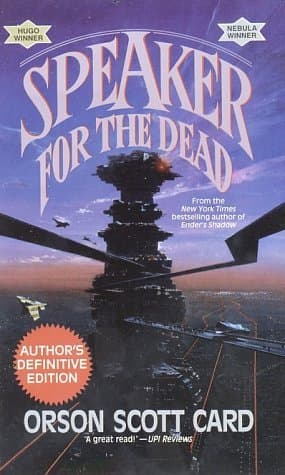
Orson Scott Card (1986)
Genre
Fantasy / Science Fiction / Young Adult
Reading Time
9-10 hours
Key Themes
See below
Sign in to track this book
Haunted by his past as the 'Xenocide,' Ender Wiggin, now the Speaker for the Dead, must unravel the deadly mysteries of a new alien race to prevent humanity from repeating its genocidal history.
Andrew 'Ender' Wiggin, now the Speaker for the Dead, is called to Lusitania to speak the deaths of Pipo and Libo. They were human xenologers brutally killed by the planet's native sentient species, the Pequeninos (or 'piggies'). The human colony, mostly Catholic, follows strict rules about xenological study, forbidding contact that could harm the 'piggies.' Ender finds a community divided by the deaths and the ongoing mystery of Pequenino culture. Some people, especially Novinha, Pipo's daughter and Libo's wife, are suspicious of him. Novinha is a brilliant xenobiologist and was the one who first asked for a Speaker.
Novinha, burdened by guilt and a complex past, tells Ender her life story during his speaking. She says she was the one who first asked for a Speaker, feeling responsible for the deaths. She describes her childhood interest in the Pequeninos, her close bond with Pipo, and her later marriage to Libo, which was more duty than love. She admits she knew more about the Pequeninos' customs than she let on, especially their tree-worship and the meaning of 'third life.' Her confession suggests she had a deeper understanding of Pipo and Libo's deaths, implying they were not accidents or malicious acts but possibly ritualistic.
To truly speak for the dead, Ender realizes he must understand the Pequeninos. He goes into the forbidden forest and meets two Pequeninos, whom he names Human and Rooter. Through careful communication with a universal translator, Ender starts to understand their complex biological and spiritual life cycle. He learns about their 'first life' as small, mobile creatures, their 'second life' as tree-like beings, and 'third life,' which happens when a 'second life' Pequenino dies and becomes part of a larger, sentient tree-network. This discovery is key to understanding why Pipo and Libo were killed: the Pequeninos, out of deep respect and love, were trying to 'gift' them a 'third life' by planting them as trees.
During his speaking for Pipo and Libo, Ender also reveals a truth he has carried for millennia: the true story of the Bugger War. He explains that the Buggers were not evil invaders but a hive-minded species unable to understand individual consciousness in other races. Their attacks were a form of exploration and communication, misunderstood by humans. Ender, the only one who truly communicated with the Hive Queen, reveals he accidentally committed xenocide, wiping out an innocent species. This confession deeply affects the human colonists on Lusitania, showing the dangers of misunderstanding alien cultures and creating a parallel with the Pequenino situation.
With his new understanding of Pequenino customs, Ender mediates a tense meeting between the human colonists and the Pequeninos. He explains the Pequenino concept of 'third life' and how their act of 'gifting' Pipo and Libo a tree-death was an act of deep love and honor, not malice. He also clarifies the human understanding of death, emphasizing that humans do not become trees. This difficult conversation, helped by Ender's ability to bridge species, starts to break down barriers of misunderstanding and fear, opening the way for peaceful coexistence and mutual respect.
Ender, as Speaker, also 'speaks' the death of Novinha, revealing her complicated past, her scientific skill, her guilt over Pipo and Libo, and her deep fear of intimacy. This act of empathy and understanding helps Novinha finally let go of her past burdens and begin to heal. Through this process, Ender realizes his deep love for Novinha, a love grown from understanding and shared vulnerability. Their relationship, first built on shared pain and the need for truth, becomes a genuine connection, offering a possible future together.
Throughout his journey, Ender has secretly carried the last egg of the Bugger Hive Queen, a gift from the Queen herself after the xenocide. As he reconciles the past and helps understanding on Lusitania, the Hive Queen's consciousness begins to stir within the egg. She starts communicating with Ender telepathically, expressing her sorrow, her wish for understanding, and her hope for a new beginning. This return of the Hive Queen's voice offers a chance for redemption and for the Bugger species to be reborn and understood by humanity, thanks to Ender's efforts.
The Starways Congress, the governing body of human space, views the situation on Lusitania with great alarm. Fearing another potential xenocide, either by humans against Pequeninos or vice-versa, and recognizing the danger of the 'third life' concept, they order Lusitania to be quarantined and eventually destroyed. This decision comes from a deep fear of alien species and a desire to prevent more conflicts like the Bugger War. Ender, having just forged a fragile peace and understanding, again finds himself fighting against prejudice and ignorance to protect an alien species.
Ender, supported by the human colonists and the now-communicative Pequeninos, rushes to plead with the Starways Congress. He argues for the Pequeninos' right to exist and for the possibility of peaceful coexistence between humans and aliens. His powerful advocacy, using his past as the Xenocide and his present as the Speaker for the Dead, challenges the Congress's fear-driven policies. The future of Lusitania, the Pequeninos, and the possible rebirth of the Buggers hangs in the balance as Ender tries to convince humanity to choose understanding over destruction, hoping to prevent another tragic mistake like the Bugger War.
While the immediate threat from the Starways Congress remains, Ender and Novinha commit to each other and to Lusitania's future. With Novinha's scientific skill and Ender's ability to communicate across species, they begin to build a truly integrated society. The Hive Queen's egg is ready to hatch, offering a new beginning for the Buggers, and the Pequeninos are learning to communicate with humans on their own terms. The book ends with hope, suggesting that humanity, guided by Ender, might finally learn to coexist with other sentient beings, embracing diversity instead of fearing it.
The Protagonist
Ender moves from a solitary, guilt-ridden existence to finding love and purpose, actively working towards interspecies understanding and redemption for humanity.
The Supporting/Love Interest
Novinha undergoes a profound journey of healing and self-acceptance, moving from a state of intense guilt and emotional shutdown to finding love and purpose with Ender.
The Mentioned/Catalyst
His death, though occurring before the main narrative, serves to propel the plot and reveal the complex nature of interspecies contact.
The Mentioned/Catalyst
His death, occurring before the main narrative, reinforces the central mystery and the cultural chasm between humans and Pequeninos.
The Supporting
Human's character arc involves learning to trust and communicate with humans, moving from initial curiosity to genuine friendship with Ender.
The Supporting
Rooter's arc is part of the larger Pequenino journey of learning to interact and trust humans, facilitated by Ender.
The Supporting
Miro learns to understand and forgive his mother, moving from resentment to empathy as Ender reveals Novinha's past.
The Supporting
Ouanda's arc involves coming to terms with her family's past and finding her own voice amidst the interspecies conflict.
The Supporting
The Hive Queen's arc is one of rebirth and a second chance for her species, facilitated by Ender.
The main theme is the difficulty and importance of truly understanding alien cultures. Pipo and Libo's deaths are not evil acts but acts of love and honor from the Pequenino view, showing how human assumptions can lead to tragedy. Ender's role as Speaker for the Dead is to bridge these gaps, making both humans and Pequeninos see beyond their own ways of thinking. The history of the Bugger War, which Ender reveals, reminds us of the terrible results of failing to communicate. The novel argues that true understanding requires empathy and a willingness to move past one's own species' biases.
“I will tell you the story of your life, and speak the truth for you, because you are dead and cannot speak for yourself. You will be remembered. You will be known.”
Ender Wiggin's life is shaped by his search for redemption for the xenocide he committed. His role as Speaker for the Dead is his penance, an attempt to make amends by ensuring no other species suffers the same fate as the Buggers. The novel explores whether true forgiveness is possible, both for oneself and from others. Novinha's journey also shows this, as she seeks redemption for her perceived role in the deaths on Lusitania. The possible rebirth of the Hive Queen symbolizes ultimate forgiveness and a second chance, not just for the Buggers, but for humanity to learn from its past mistakes.
“Humanity has been called to account for its crimes. And I am the witness.”
The Pequeninos' unique life cycle, with their 'first life,' 'second life,' and 'third life' as sentient trees, challenges human ideas of what it means to live and die. Their ritual of 'gifting' humans with 'third life' makes humans confront their own mortality and the spiritual meaning they give to death. The novel suggests that different species can have entirely different, yet equally valid, understandings of existence beyond individual biological life. This theme is central to the conflict and its resolution, as both species must learn to respect these basic differences.
“For the Pequeninos, death is not an end, but a transformation. A gift of eternal consciousness.”
The Speaker for the Dead tells the complete, honest truth of a person's life, including their darkest secrets and reasons. This radical honesty is shown as essential for healing and understanding, both for the living and for the memory of the dead. The novel contrasts this with official, often cleaned-up or biased, historical accounts. Ender's telling of the Bugger War's true story, and his speaking for Pipo, Libo, and Novinha, shows how narrative can change understanding, challenge prejudice, and help emotional and societal progress. Truth, even painful truth, is presented as the way to freedom.
“The purpose of the Speaker for the Dead is to speak the whole truth of a human life, to forgive nothing, and to conceal nothing.”
The human colony on Lusitania, despite its scientific mission, shows elements of colonial power, imposing its rules and interpretations on the native Pequeninos. The Starways Congress's decision to quarantine and possibly destroy Lusitania out of fear of another xenocide highlights humanity's deep-seated xenophobia. The novel criticizes the tendency to demonize or destroy what is not understood, drawing parallels to past human atrocities. It advocates for a more enlightened approach, one of respectful coexistence rather than domination or destruction, especially when encountering other sentient beings.
“We came here to study them, not to destroy them. But our fear is a powerful weapon.”
A religious and philosophical role dedicated to speaking the complete truth of a deceased person's life.
This is the central plot device and Ender's primary role in the novel. A Speaker for the Dead conducts an investigation into the life of the deceased, gathering all available information, including secrets and hidden motivations, and then publicly 'speaks' their life, revealing the full, unvarnished truth. This process is intended to bring understanding, forgiveness, and peace to the living, and to honor the true essence of the dead. It serves as a narrative vehicle for exposition, character development, and the uncovering of central mysteries, particularly regarding Novinha's past and the Pequenino deaths.
A device allowing instantaneous communication across interstellar distances.
The ansible is a crucial piece of technology that enables real-time communication between different star systems. This device is fundamental to the plot as it allows Ender to travel vast distances while still being able to communicate with the Starways Congress and receive requests for his services as a Speaker. It also highlights the immense distances involved in interstellar travel and the isolation of colonies like Lusitania, even with instantaneous communication. The ansible also facilitates the eventual, albeit limited, communication between the human and Pequenino species through translation programs.
The last surviving egg of the Bugger species, carried by Ender, containing the Hive Queen's consciousness.
This device represents Ender's deepest guilt and his greatest hope for redemption. The egg is a tangible link to the xenocide he committed and a symbol of the potential for rebirth and reconciliation. Its presence allows the Hive Queen to communicate telepathically with Ender, providing crucial insights into the Bugger species' true nature and fostering a unique interspecies bond. The egg's eventual hatching signifies a second chance for the Buggers and a profound step towards interspecies understanding for humanity, serving as a powerful symbol of hope and atonement.
A unique, sentient virus native to Lusitania that is vital to the Pequenino lifecycle and dangerous to humans.
The Descolada virus is a defining biological element of Lusitania. It is essential for the Pequenino lifecycle, enabling their 'first,' 'second,' and 'third' lives. However, it is lethal and highly contagious to humans, making close contact with the Pequeninos incredibly dangerous. This biological threat creates a natural barrier between the species and is a major concern for the Starways Congress, who fear its spread. The virus underscores the unique and alien nature of Lusitania's ecosystem and the profound challenges of understanding a truly alien biology without causing harm.
“Humanity is a disease. It's the only cancer that can metastasize across the universe.”
— Spoken by Miro, reflecting on humanity's destructive tendencies.
“The most important thing is not the work you do, but the effect you have on people.”
— Ender's internal thought process regarding his role as Speaker.
“It is impossible to get a man to understand something if his salary depends on his not understanding it.”
— A general observation made by Ender, reflecting on political and scientific institutions.
“The greatest enemy is that which is inside you.”
— Ender grappling with his past actions and guilt.
“We are all the children of our own choices.”
— Novinha speaking about personal responsibility.
“Perhaps it's impossible to understand another's pain, but it is certainly possible to love another's pain.”
— Ender reflecting on his role as a Speaker and his connection to others.
“The truth is not always beautiful, nor beautiful words the truth.”
— Ender musing on the nature of truth and communication.
“To be a Speaker for the Dead is to know the life of a person so well that you can tell their story, not as they wish it had been, but as it was, with all its flaws and glories.”
— Explaining the core philosophy behind the Speaker for the Dead profession.
“All life is a struggle in the dark. We need each other to light the way.”
— Pipo's philosophical observation about existence.
“Love is not a thing that can be created or destroyed. It simply is.”
— Ender's contemplation on the enduring nature of love.
“The universe is not required to be in perfect harmony with human ambition.”
— A stark reminder of humanity's place in the cosmos, often linked to the alien perspective.
“There are times when the only way to be completely honest is to be silent.”
— Ender considering the weight of his words and the impact of truth.
“The greatest power is to be able to make someone else's life better, not just your own.”
— Ender's evolving understanding of true power and influence.
“It is not the crime itself, but the concealment of the crime, that destroys us.”
— Ender reflecting on Novinha's secrets and their consequences.
Ready to see how well you understood this book? Take our interactive quiz with 10 questions.
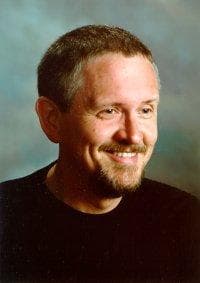
Orson Scott Card is an American writer known best for his science fiction works. He is the first and only person to win both a Hugo Award and a Nebula Award in consecutive years, winning both awards for both his novel Ender's Game (1985) and its sequel Speaker for the Dead (1986). A feature film adaptation of Ender's Game, which Card co-produced, was released in 2013. Card also wrote the Locus Fantasy Award-winning series The Tales of Alvin Maker (1987–2003).







