“It is not the crime itself that matters, but the motive behind it.”
— A character reflecting on the nature of murder.

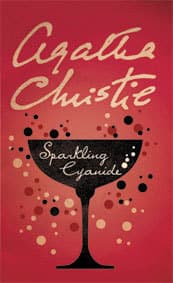
Agatha Christie (1945)
Genre
Thriller / Mystery
Reading Time
560 min
Key Themes
See below
Sign in to track this book
A year after Rosemary Barton's mysterious death, six acquaintances gather, each with secrets, to face the possibility that one of them is a killer.
Rosemary Barton, a beautiful and rich young woman, celebrates her 24th birthday at the Luxembourg restaurant with her husband George Barton, her sister Iris Marle, friends Stephen and Sandra Farr, Anthony Browne, and Lord and Lady Kidderminster. During the party, Rosemary toasts, then collapses and dies almost at once from cyanide poisoning. People first assume suicide because a small packet of cyanide is found in her handbag. However, George Barton, who loved his wife deeply, does not believe she would kill herself and suspects murder. This sets the stage for his own investigation.
Grief-stricken and convinced Rosemary was murdered, George Barton begins his private investigation. He interviews the guests from the birthday dinner, trying to piece together motives and opportunities. He finds that Rosemary had several secret relationships, including affairs with Stephen Farr and Anthony Browne, which complicates the case. George's search for the truth shows that Rosemary was not as innocent or well-liked as she seemed, making her death a puzzle with many possible culprits. He carefully considers each person's motive and alibi, determined to clear Rosemary's name from the idea of suicide.
Exactly one year after Rosemary's death, George Barton re-creates the birthday dinner at the same Luxembourg restaurant. He invites the original six guests: Iris Marle, Stephen and Sandra Farr, Anthony Browne, and Lord and Lady Kidderminster. He intends to make the murderer reveal themselves under the pressure of the re-created scene. During the dinner, George makes a toast, and soon after, he also collapses and dies from cyanide poisoning, exactly like Rosemary. This second, very public murder confirms that Rosemary was indeed murdered and that her killer is one of the people George invited.
With George Barton's dramatic death, the police, led by Superintendent Kemp, are fully involved, with help from Colonel Race. The case changes from a possible suicide to a clear double murder. Kemp and Race systematically interview all suspects, looking into their backgrounds, their relationships with Rosemary and George, and their actions on both nights. They focus on the six guests present at both dinners, knowing the killer must be one of them. The investigation uncovers more secrets and resentments, showing the complex connections surrounding the dead couple.
After George Barton's death, his will is read, showing that his entire fortune goes to his sister-in-law, Iris Marle. This sudden inheritance puts Iris in a dangerous position. She is now the wealthiest person in the group and, importantly, the only remaining link to Rosemary and George's family money. This makes her a target for the murderer, who might want to eliminate her to get the inheritance for themselves or someone else. Iris, at first a shy and unnoticed character, finds herself at the center of the dangerous mystery, realizing her life is now at risk.
Anthony Browne, one of Rosemary's former lovers and a guest at both fatal dinners, begins to pursue Iris Marle intensely after she inherits George's money. His sudden and strong affection for Iris, along with his presence at both murder scenes and his known financial problems, makes him a key suspect to the police and Colonel Race. Iris herself is torn between her growing feelings for Anthony and the nagging suspicion that he might be involved in the murders, possibly seeing her as a way to get the inherited wealth. His motives are closely examined as he becomes more persistent in his pursuit of Iris.
The investigation uncovers the deep marital problems between Lord and Lady Kidderminster. It comes out that Rosemary Barton had an affair with Lord Kidderminster, which caused great pain and jealousy for Lady Alexandra Kidderminster. Lady Kidderminster's dislike for Rosemary was clear, providing a strong motive for the first murder. While Lord Kidderminster seems truly saddened by Rosemary's death, Lady Kidderminster's cold manner and known resentment make her a strong suspect, especially given her access to various substances through her social circle and her general disapproval of Rosemary's flirtatious nature.
Stephen Farr, George's business partner, also had an affair with Rosemary. His wife, Sandra Farr, knew about this and deeply resented Rosemary, though she acted polite. Sandra's calm demeanor and her deep anger over her husband's affair give her a strong motive for Rosemary's murder. The dynamic between Stephen and Sandra is closely examined, as Stephen's guilt and Sandra's quiet fury could both be reasons for the crimes. Their alibis for both nights are thoroughly checked by the police.
As the investigation continues and Iris Marle remains the only heir, she becomes the target of a series of suspicious 'accidents.' One dangerous event involves a heavy piece of masonry falling from a building, narrowly missing her. This event, clearly not accidental, confirms the police's belief that the murderer is trying to eliminate Iris for the inheritance. Colonel Race and Superintendent Kemp increase their surveillance and protection of Iris, realizing the killer is becoming desperate and will stop at nothing, confirming Iris's life is in immediate danger.
Seeing the pattern of attacks on Iris, Colonel Race and Superintendent Kemp plan to draw out the killer. They use Iris as bait, setting up a situation where the murderer will feel forced to try another attack on her life, believing they can succeed without being caught. The plan involves watching Iris closely and creating a scenario where the killer might think they have a clear chance. This strategy is risky but necessary to unmask the person who has been very clever and hard to find, leaving few direct clues in the double murder.
The trap works, and the murderer is revealed to be Iris Marle herself, or rather, a personality within her. It is discovered that Iris had a dissociative identity disorder, where a darker, more cunning personality, 'Rosemary,' had been inactive but was triggered by George's wealth and jealousy. This personality, mimicking Rosemary's manipulative traits, killed Rosemary for control of George and his money, and then killed George to get the inheritance for 'Iris.' The 'accidents' targeting Iris were staged by this other personality to divert suspicion. The revelation is a shocking twist, showing the psychological complexity behind the crimes.
With the shocking truth of Iris's dissociative identity disorder revealed, the police and Colonel Race understand the full scope of the tragedy. The 'Rosemary' personality within Iris was the killer, driven by greed and a twisted form of self-preservation. The book ends with the implications of this discovery, leaving the characters and reader to deal with the psychological complexity of the crime. The legal and medical outcomes for Iris are not fully detailed, but the horror of the situation, where the victim and the murderer are the same person, is deeply felt.
The Protagonist/Antagonist
From a timid, overshadowed sister, Iris is revealed to harbor a dormant, malevolent personality responsible for the murders, undergoing a shocking transformation from victim to killer.
The Victim
Rosemary's character is explored posthumously, revealing her manipulative nature and the widespread impact she had on those around her.
The Victim
Driven by grief and a desire for justice, George's relentless pursuit of the truth ultimately leads to his own demise, becoming a second victim in the same manner as his wife.
The Supporting
Colonel Race systematically unravels the intricate web of deceit and psychological complexity, leading to the shocking revelation of the killer's identity.
The Supporting
Kemp diligently pursues the facts and procedures, working in tandem with Colonel Race to build the case against the eventual culprit.
The Suspect
Anthony's initial role as a charming, opportunistic lover of Rosemary shifts to that of a suspicious suitor of Iris, with his motives constantly questioned.
The Suspect
Stephen's character reveals the strain of a secret affair on his professional and personal life, making him a plausible suspect throughout the investigation.
The Suspect
Sandra's character evolves from a quietly suffering wife to a strong suspect, her suppressed anger providing a compelling motive for murder.
The Suspect
Lord Kidderminster's character reveals the societal hypocrisy surrounding his affair, positioning him as a suspect with a motive to preserve his status.
The Suspect
Lady Kidderminster's character embodies the bitter resentment of a betrayed wife, providing a clear and compelling motive for Rosemary's murder.
The novel shows how outward appearances can mislead, especially about character and motive. Rosemary Barton, seemingly a lively socialite, is revealed as manipulative and promiscuous. Iris Marle, first seen as timid and innocent, is ultimately unmasked as the unwitting murderer through an alternate personality. The respectable appearance of the suspects often hides secret affairs, jealousies, and money troubles, showing that true motives and identities are rarely what they seem. The 'accidents' meant to deflect suspicion from Iris exemplify this.
“One never knows, does one? People are so different from what they seem.”
Jealousy and resentment are strong forces throughout the story, providing motives for almost every suspect. Lady Kidderminster's intense jealousy over Rosemary's affair with her husband, and Sandra Farr's hidden anger over Stephen's infidelity, are clear. These emotions build under polite social interactions, eventually leading to violence. The desire for what others have—whether affection, social standing, or wealth—drives the tension and suspicion among the characters, making it hard to find the killer until the final revelation that jealousy, in a twisted way, also drove Iris's alternate personality.
“Jealousy is a terrible thing. It can turn a human being into a monster.”
The novel explores the line between seeking justice and taking personal revenge. George Barton's first investigation comes from deep love for Rosemary and a wish to clear her name, showing a pursuit of justice. However, his decision to re-create the fatal dinner, setting a trap, borders on personal vengeance, leading to his own death. The various suspects, each with grievances against Rosemary, show how personal feuds can be mistaken for or mixed with a desire for justice, complicating the police investigation and causing misdirection until Colonel Race brings a more objective approach.
“He wanted justice for Rosemary. And perhaps, a little, revenge.”
A main theme is the deep psychological complexity of the human mind and the idea of hidden identities. The final revelation of Iris Marle's dissociative identity disorder, where a separate personality commits the murders, challenges common ideas of guilt. This theme looks at the idea that people can have darker, unconscious parts of themselves capable of extreme acts. It makes the reader question sanity and madness, suggesting that the most dangerous secrets can be those hidden within one's own mind, making the killer also a victim of their own condition.
“The human mind is a strange and terrifying place.”
A dramatic recreation of the original murder scene to ensnare the killer.
George Barton's decision to recreate Rosemary's fatal birthday dinner exactly one year later is a pivotal plot device. It serves to confirm that Rosemary was murdered, not suicidal, and immediately leads to George's own death, escalating the stakes. This device is designed to flush out the killer by recreating the circumstances, putting pressure on the suspects, and demonstrating the killer's audacious willingness to repeat the crime under identical conditions, thereby narrowing the field of suspects to those present at both events.
The reader's perception is shaped by limited and potentially misleading character viewpoints.
While not a first-person narrative in the traditional sense, the story heavily relies on the perspectives and interpretations of various characters, particularly Iris and the police investigators. The initial assumption of Rosemary's suicide, George's certainty of murder, and the shifting suspicions regarding each guest all contribute to an unreliable understanding of events. This device keeps the reader guessing and allows for the shocking twist ending concerning Iris's true nature, as her own perspective is unknowingly unreliable due to her psychological condition.
The sudden transfer of wealth that places Iris in danger and provides a clear motive.
The inheritance of George Barton's substantial fortune by Iris Marle after his death is a crucial plot device. It immediately places Iris in direct danger, as she becomes the most logical next target for a killer motivated by greed. This device provides a clear and compelling motive that can be attributed to several suspects, diverting attention from the true killer. It also explains the subsequent 'accidents' targeting Iris, reinforcing the idea that the murderer seeks to eliminate her to secure the wealth, unknowingly for their own alternate personality.
The mirroring deaths of Rosemary and George Barton, confirming foul play.
The fact that George Barton dies in the exact same manner, using the same poison, and in the same setting as Rosemary, is a powerful plot device. It immediately dismisses any lingering doubts about Rosemary's death being a suicide and firmly establishes a calculated, audacious murderer. This mirroring of crimes not only heightens the tension but also provides a distinct signature for the killer, suggesting a meticulous and bold individual who is confident in their ability to evade detection, and also narrows the pool of suspects to those present at both events.
“It is not the crime itself that matters, but the motive behind it.”
— A character reflecting on the nature of murder.
“Human nature is a curious thing. Given the right circumstances, anyone can be driven to anything.”
— Colonel Race pondering the psychological aspects of the case.
“The past, my dear, is never truly dead. It merely lies dormant, waiting for the opportune moment to spring back to life.”
— Iris Marle being warned about old secrets.
“One can always find a reason to hate, if one looks hard enough.”
— A cynical observation about human relationships.
“A woman's intuition, my boy, is often more accurate than a man's logic.”
— Colonel Race acknowledging the value of female insight.
“Money, they say, is the root of all evil. But love, too, can be a powerful corrupting force.”
— A character discussing potential motives for murder.
“The most dangerous lies are the ones we tell ourselves.”
— Iris Marle's internal thought about self-deception.
“Every secret has a shelf life. Eventually, it spoils.”
— Colonel Race reflecting on the inevitability of secrets being revealed.
“It's astonishing how little one really knows about the people one thinks one knows best.”
— A character's realization about the hidden lives of others.
“Revenge, like certain poisons, works slowly but surely.”
— A discussion about the long-term effects of grudges.
“The truth is often inconvenient, which is precisely why so many prefer to avoid it.”
— A character lamenting the human tendency to ignore facts.
“There are some things, my dear, that are better left undisturbed, like ancient graves.”
— A warning against digging too deeply into past events.
“The greatest trick the devil ever pulled was convincing the world he didn't exist, and the greatest trick a murderer pulls is convincing everyone it was an accident.”
— Colonel Race musing on the deceptive nature of crime.
“Even the most placid surface can hide the most turbulent depths.”
— A metaphor used to describe the hidden complexities of characters.
Ready to see how well you understood this book? Take our interactive quiz with 10 questions.
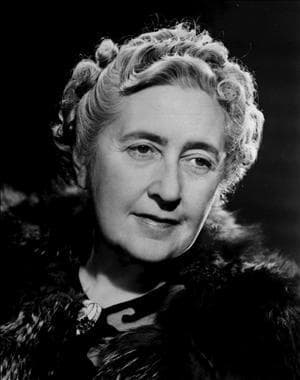
Dame Agatha Mary Clarissa Christie, Lady Mallowan, was an English writer known for her 66 detective novels and 14 short story collections, particularly those revolving around fictional detectives Hercule Poirot and Miss Marple. She also wrote the world's longest-running play, the murder mystery The Mousetrap, which has been performed in the West End since 1952. A writer during the "Golden Age of Detective Fiction", Christie has been called the "Queen of Crime". She also wrote six novels under the pseudonym Mary Westmacott. In 1971, she was made a Dame (DBE) by Queen Elizabeth II for her contributions to literature. Guinness World Records lists Christie as the best-selling fiction writer of all time, her novels having sold more than two billion copies.







