“Maybe it was the grand gesture, the sweep of a hand across a room, or the way a woman could hold a man’s gaze and make him feel like the only person in the world.”
— Describing the allure of cinema.

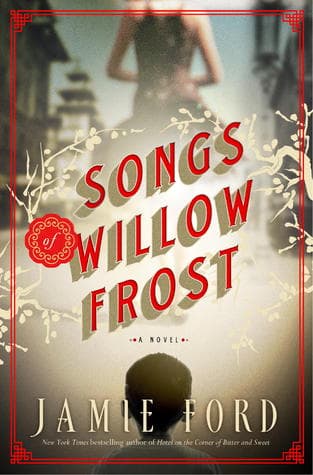
Jamie Ford (2013)
Genre
Literary Fiction / Historical Fiction
Reading Time
319 min
Key Themes
See below
Sign in to track this book
A determined Chinese-American orphan escapes 1930s Seattle to chase a film star he believes is his mother, uncovering a complex past.
It's 1934, and twelve-year-old William Eng lives at the Sacred Heart Orphanage in Seattle. For his birthday, he and the other orphans are taken to the Moore Theatre to see a movie. On screen, William sees a glamorous Chinese-American actress named Willow Frost. Her face, mannerisms, and a small scar on her wrist convince him: this woman is his mother, Liu Song, who he believed had died five years earlier. The memory of his mother being taken away in a hearse has haunted him, but this discovery ignites a desperate hope. The experience leaves him restless and determined to confirm his suspicions.
Believing Willow Frost is his mother, William tells his best friend at the orphanage, Charlotte, a resourceful girl. Charlotte, also an orphan, understands William's desire for family and agrees to help him. Together, they plan their escape from Sacred Heart. One night, they slip away, navigating Seattle's dark streets. Their immediate goal is to find information about Willow Frost, starting with the movie studio or any place she might be staying, hoping to confront her and learn the truth about William's past.
Now on their own, William and Charlotte face the realities of Depression-era Seattle. They find food, shelter in abandoned buildings, and avoid authorities. William, still driven by his quest, searches for any mention of Willow Frost in newspapers or movie posters. They eventually meet a kind, elderly Chinese woman who runs a small shop. After some questioning, she gives them a small clue about Willow Frost's past connection to a local laundry. This small lead, though vague, strengthens William's resolve and gives their search direction.
Through a series of events and some luck, William and Charlotte find Willow Frost. The meeting is tense. Willow Frost, initially guarded, is confronted by William's certainty and their undeniable resemblance. After a heartbreaking moment of recognition, she confirms William's belief: she is Liu Song, his mother. The revelation overwhelms William, but it also brings many questions about why she left him and became a movie star. This encounter is a turning point, shifting the story into the past to explain her journey.
The story moves back to the 1920s, showing Liu Song's early life. Born into a traditional Chinese family in Seattle, she experiences cultural restrictions and expectations as a young woman. Her family, struggling financially, arranges a marriage for her to an older, wealthy Chinese man she does not love. Desperate to escape this fate and wanting a different life, Liu Song decides to run away from her family home. This act of rebellion sets her on a path of independence and hardship, far from the life her parents envisioned.
After running away, Liu Song is alone and vulnerable in Seattle during Prohibition. She finds work as a singer in a speakeasy, a hidden jazz club. Here, she begins to leave her old identity and embrace a new, independent persona. She discovers a talent for singing and performing, captivating audiences with her voice and beauty. During this time, she starts to be known by a different name, a step toward her stage name, Willow Frost, as she transforms from a dutiful daughter into a performer.
While working at the speakeasy, Liu Song meets a kind and charming musician, William's father. They fall in love, finding comfort and happiness together. For a time, Liu Song experiences a sense of belonging and joy she had never known. Their love leads to the birth of their son, William. This period represents a brief but deep happiness for Liu Song as she builds a small, loving family. However, this happiness ends tragically, foreshadowing the eventual separation from her son.
Liu Song's happiness ends with a tragedy: William's father dies suddenly, leaving her a single mother in a difficult situation. Without his income and support, Liu Song is in dire poverty, unable to provide for herself and her young son. Facing impossible choices and fearing for William's future, she makes the agonizing decision to place him in the Sacred Heart Orphanage. The scene William remembers, of his mother being carried away, was an act of feigning death to escape further scrutiny and ensure William's placement, a sacrifice she believed was for his own good.
After the separation from William, Liu Song, now fully embracing the persona of Willow Frost, puts her grief and determination into her performing career. She leaves Seattle and eventually goes to Hollywood, driven by the need to earn enough money to reclaim her son. Her unique beauty and talent help her enter the film industry. She works hard, enduring Hollywood's competitive nature, all while carrying the secret burden of her past and the constant ache of separation from William. Her success as a movie star is both a triumph and a reminder of her sacrifice.
Back in 1934, after the shock of their reunion, William deals with the truth of his mother's past. He struggles to see the glamorous movie star, Willow Frost, as the mother he remembers and the woman who seemingly abandoned him. Willow, in turn, must confront her choices and explain her sacrifice. Charlotte helps William process the complex emotions. Slowly, through difficult conversations and shared memories, a fragile understanding forms between mother and son. They begin the process of rebuilding their relationship, bridging years of secrets.
With William reunited with her, Willow Frost faces a decision about her life and career. Hollywood's demands and public attention conflict with her desire to be a mother to William. She realizes she cannot truly have both lives at once. After much thought for William's well-being, she makes a significant choice that will affect both their futures. This decision shows her changing priorities and her commitment to making amends for the past, putting her son before her celebrity.
The story ends with William, Willow Frost, and Charlotte starting a new chapter together. Willow has made sacrifices in her career to create a stable home for William. While past wounds may not fully heal, a foundation of love and understanding has been laid. William, no longer an orphan, has found his mother, and Charlotte, a loyal friend, has also found a form of family and security. They face an uncertain future, but they do so together, having navigated identity, sacrifice, and the enduring power of family love during challenging times.
The Protagonist
William transforms from a hopeful but naive orphan to a boy who understands the complexities of his mother's past and begins to build a new, albeit imperfect, family.
The Protagonist/William's Mother
Willow Frost's arc involves confronting the painful choices of her past, revealing her true identity, and reconciling with her son, ultimately prioritizing family over fame.
The Supporting
Charlotte remains steadfast in her loyalty to William, finding a sense of belonging and family through her connection with him and eventually with Willow Frost.
The Supporting
Sister Mary Margaret's role is largely static, representing the institutional authority William rebels against, though her underlying care for the children is subtly revealed.
The Mentioned
His arc is limited to flashbacks, showcasing his role in Liu Song's brief happiness and his tragic death.
The Supporting
Auntie acts as a benevolent guide, offering temporary aid and crucial information, without a personal character arc.
Both William and Liu Song seek to define themselves and find where they belong. William, as an orphan, explores his past and present, desperately seeking his mother to understand his origins and find a family. His identity depends on finding Liu Song. Liu Song creates a new identity as Willow Frost to survive and achieve her goals, but her true self, Liu Song, longs for the family she sacrificed. The novel explores how circumstances force people to create new identities and the human need for connection and a 'home,' whether a physical place or a family bond. This is clear in William's pursuit of Willow Frost and Liu Song's internal conflict between her public persona and her private grief.
““Home wasn't a place, it was a feeling; and sometimes, it was all you had.””
A main theme is the sacrifices a mother makes for her child, especially in difficult times. Liu Song's decision to fake her death and place William in an orphanage, while seeming like abandonment, is revealed as a heartbreaking act of self-preservation and a desperate attempt to secure a better future for him. Her career as Willow Frost is driven by the hope of earning enough money to one day reclaim her son. The novel explores the complex morality of such a choice, showing the painful lengths a mother will go to protect her child, even if it means years of separation and public misunderstanding. This theme is strongly shown in the flashbacks detailing Liu Song's struggles after William's father dies.
““Sometimes, the hardest thing and the right thing are the same.””
The novel explores the American Dream, especially for immigrants and marginalized communities during the Great Depression. Liu Song, a Chinese-American woman, faces significant barriers, yet she achieves a version of the American Dream through her success as a movie star. However, this dream comes at a great personal cost: the sacrifice of her family and her true identity. Hollywood's glamour, represented by Willow Frost, contrasts with the realities of poverty, prejudice, and the compromises needed for success. William's initial view of Willow Frost as magical is slowly replaced by understanding the sacrifices behind the illusion. The story reveals that the 'dream' often hides a more complex and painful reality.
““The movies were a lie. A beautiful, wonderful lie, but a lie nonetheless.””
The characters, especially William and Liu Song, show resilience in the face of adversity. William and Charlotte survive on Seattle's streets, relying on their wits and bond. Liu Song navigates a difficult childhood, escapes an arranged marriage, endures poverty, and rises in Hollywood, all while carrying emotional pain. Their ability to adapt, endure, and maintain hope despite challenges shows the human spirit. The Great Depression setting further highlights the need for resilience for survival, both physically and emotionally. Each character's journey shows their will to overcome their circumstances.
““Sometimes the only way to survive was to keep moving, even when you didn't know where you were going.””
Alternating timelines between William's present and Liu Song's past.
The novel employs a dual narrative structure, alternating between William's 1934 quest to find Willow Frost and Liu Song's backstory in the 1920s. This device is crucial for gradually revealing the complex truth behind Willow Frost's identity and her connection to William. The past narrative provides context, explaining Liu Song's motivations and sacrifices, while the present narrative builds suspense around William's search and the eventual reunion. This interweaving allows the reader to understand the full scope of the tragedy and the love that binds them, creating a richer, more empathetic reading experience by delaying full disclosure.
The movie screen represents illusion, hope, and the unattainable.
The silver screen acts as a powerful symbol throughout the novel. For William, it initially represents a miraculous hope – the possibility that his mother is alive and glamorous. It embodies the idealized, often deceptive, nature of dreams and celebrity. For Liu Song, the screen is both a vehicle for her survival and a barrier, allowing her to create the illusion of Willow Frost while hiding her true self and her painful past. It highlights the stark contrast between the public persona and private reality, and the way art can both conceal and reveal truth. The screen is where William first sees his mother, but also where he sees the 'lie' she had to become.
The Sacred Heart Orphanage serves as a starting point for William's journey and a symbol of his displacement.
The Sacred Heart Orphanage is more than just a setting; it's a catalyst for William's entire journey. It represents his displacement, his lack of family, and the structured, often impersonal, environment he feels compelled to escape. His life within its walls fuels his longing for a mother and provides the motivation for his desperate search. The orphanage also emphasizes the harsh realities faced by children during the Great Depression, highlighting the vulnerability of those without families. By escaping it, William asserts his agency and begins his quest for identity and belonging.
A distinctive physical mark that serves as a key identifier.
The small, distinctive scar on Willow Frost's wrist is a crucial plot device. It is the specific detail that solidifies William's conviction that Willow Frost is his mother, Liu Song, serving as an undeniable physical link to his past. This detail acts as a concrete piece of evidence that cuts through the glamour and illusion of the movie star, providing a tangible connection to the woman he remembers. It prevents the reader, and William, from dismissing his belief as mere childish fantasy, making the reunion all the more impactful and believable.
“Maybe it was the grand gesture, the sweep of a hand across a room, or the way a woman could hold a man’s gaze and make him feel like the only person in the world.”
— Describing the allure of cinema.
“The past was like a movie you’d already seen, but still, you had to watch it again, hoping for a different ending.”
— Pondering the inescapable nature of one's history.
“He knew what it was like to be an orphan, to have a hole in your heart the size of a missing mother.”
— Referring to William's deep-seated longing for his mother.
“Sometimes the greatest love story is the one you write for yourself.”
— A reflection on self-reliance and finding personal happiness.
“Secrets were like ghosts; they haunted you, even if you didn't believe in them.”
— Discussing the lingering impact of hidden truths.
“Life had a way of bringing you back to where you started, sometimes with a few more scars, but always with a little more wisdom.”
— Reflecting on life's cyclical nature and personal growth.
“The world was full of people who wanted to tell you who you were, but it was up to you to decide if you believed them.”
— Emphasizing the importance of self-identity.
“Even in the darkest times, there was always a flicker of light, a song to be sung, a story to be told.”
— A hopeful message about perseverance.
“Memory was a tricky thing. It could be a comfort, a curse, or a broken record playing the same sad song.”
— Contemplating the complex nature of memory.
“He learned that sometimes, the bravest thing you could do was to simply keep going, even when every fiber of your being wanted to stop.”
— William's internal struggle and determination.
“A photograph was a moment stolen from time, a whisper of a life that once was.”
— Reflecting on the power and poignancy of photographs.
“The greatest performance wasn't on a stage, but in the quiet acts of kindness that went unnoticed.”
— Highlighting the value of genuine compassion.
“Family wasn't always blood. Sometimes it was the people who held your hand when you were lost.”
— Defining family beyond biological ties.
“Sometimes, the hardest part of letting go was realizing you never really had it in the first place.”
— A poignant realization about attachment and loss.
Ready to see how well you understood this book? Take our interactive quiz with 10 questions.

Biography coming soon.







