“Freedom ain't free, child. It's paid for in blood and tears, and sometimes, it's paid for with your very soul.”
— Hattie's grandmother speaking about the cost of freedom.

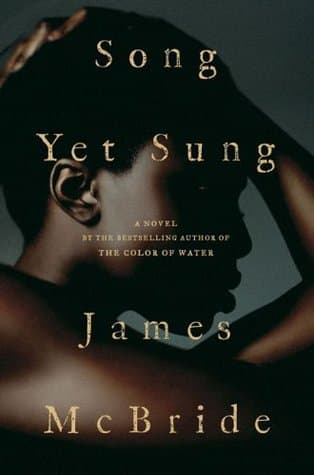
James McBride (2008)
Genre
Historical Fiction
Reading Time
613 min
Key Themes
See below
Sign in to track this book
In the dangerous antebellum South, a runaway slave with a secret code and visions of the future starts a fight for freedom and an unexpected destiny in the Maryland swamps.
In 1850, Liz Spocott, a young enslaved woman, is caught after an earlier escape attempt and is being transported by slave catchers. During the journey through the dangerous Blackwater River swamps on Maryland's Eastern Shore, she breaks free from her shackles and runs into the dense marshland. Injured and confused, Liz begins to have strong, unsettling visions of the future. These fragmented and often violent visions show her scenes from a time long after her own, including modern objects and events like cars and television. Her escape starts a series of events, involving various people who live and work in the complex society of the Eastern Shore, including other runaways, free blacks, plantation owners, and the persistent slave catchers pursuing her.
Liz's escape quickly gets the attention of Patty Cannon, a well-known and cruel slave catcher who works efficiently, using a network of informants and enforcers. Patty, along with her nephew Bill and the strong Roo, begins a relentless hunt for Liz through the dangerous swamps. Liz is not just a runaway; she also knows 'the Code,' a complex, oral communication system used by enslaved people to share information, plan escapes, and stay connected across plantations. This Code is very important to the underground network, and keeping it secret is crucial. Her knowledge makes her a particularly dangerous and valuable target for both sides.
Wounded and tired, Liz finds a community of free black watermen who live on the edge of society, making a living from the Chesapeake Bay. These men, very independent and wary of outsiders, are at first hesitant but eventually offer Liz shelter and help. They understand the dangers she faces and the constant threat of recapture. Among them is a kind man named Jim, who gives her food and a safe place to rest, despite the risk to his own freedom. Their help shows the fragile network of support that existed for runaway slaves, often at great personal danger to those who offered it.
During her flight, Liz hides on a plantation, where she watches the daily lives of the enslaved people and their interactions with the white owners and overseers. She sees the harsh realities of their existence, the subtle acts of resistance, and the constant fear. Here, she meets Mrs. May, the plantation mistress, a woman who, while bound by the customs of her time, shows a bit of empathy and humanity towards the enslaved people, including Liz. Mrs. May's inner conflict and quiet acts of kindness offer a nuanced view of human behavior within the brutal system of slavery, sharply contrasting with Patty Cannon's cruelty.
As Liz continues her dangerous journey, her visions of the future become stronger and more detailed. She sees images of advanced technology, different clothes, and a world where the racial dynamics of her own time seem to have changed, though not perfectly. These visions are both terrifying and a strange comfort, giving her glimpses of a future where her struggles might eventually lead to something better. The dreams often appear as a mix of sounds, colors, and unfamiliar objects, leaving her confused but also driven by an unexplained sense of purpose. She begins to understand them, sensing they hold a key to her survival and the future of her people.
In an important event, Roo, the imposing and often brutal enforcer for Patty Cannon, is unexpectedly captured by a group of abolitionists. This event highlights the complex and dangerous web of alliances and conflicts on the Eastern Shore. Roo's capture shows the risks taken by those fighting against slavery and demonstrates that even the strongest figures in the slave-catching network are not invincible. It also briefly stops Patty Cannon's relentless pursuit of Liz, offering a short break for the runaway and her allies, and emphasizing the constant battle of wits and force between slave catchers and those who try to undermine them.
Liz meets a charismatic and wise preacher, an important figure in the underground network. This preacher uses spirituals, sermons, and subtle elements of 'the Code' to share messages of hope, strength, and resistance with enslaved people. His words offer spiritual and practical guidance, helping them deal with their oppressive reality and plan for freedom. He recognizes the importance of Liz's visions and the Code she carries, urging her to continue her journey and fulfill her role as a symbol of hope, connecting the past, present, and future through her unique experiences and knowledge.
As Liz gets closer to what she hopes will be true freedom, she faces a devastating betrayal from someone she thought she could trust. This highlights the constant threat of informants and the difficulty of knowing who to trust. This betrayal leads to a final confrontation with Patty Cannon and her gang. In a desperate fight, one of Liz's allies makes a great sacrifice, showing the immense personal cost of fighting for freedom. This moment emphasizes the brutal realities of the era, where life was cheap and seeking liberty often demanded the ultimate price, leaving Liz to deal with the consequences and the weight of her journey.
After the sacrifices and betrayals, Liz's visions come together into a clearer understanding of the 'song yet sung.' This is not a literal song, but a powerful metaphor for the ongoing struggle for freedom, justice, and equality that goes far beyond her own time. She realizes that her journey is part of a larger, continuous story, and that the fight for human dignity will continue for generations. Her visions show her that while progress will be made, the 'song' of struggle and hope will always need to be sung, passed down through time, inspiring future generations to continue the fight for a better world.
Liz Spocott's final fate remains somewhat unclear, but her journey and her unique connection to 'the Code' and the future leave a lasting impression. Her story, though mysterious, becomes a legend among enslaved and free black communities, a testament to courage, resilience, and the lasting human spirit. She becomes a symbol of the fight for freedom, her 'song' continuing to be heard through the generations. Her experiences, especially her visions, suggest that the seeds of future change are planted in today's struggles, offering a powerful message of hope that today's sacrifices will contribute to a more just tomorrow, even if the full realization is 'yet sung.'
The Protagonist
Liz transforms from a desperate runaway into a symbolic figure whose visions and actions contribute to the enduring 'song' of freedom, connecting past struggles with future hopes.
The Antagonist
Patty remains steadfastly cruel and unyielding, serving as the relentless force of oppression against which Liz and others struggle.
The Supporting
Roo's primary role is to embody the physical threat of the slave-catching apparatus; his capture briefly disrupts this force.
The Supporting
Jim acts as a temporary safe harbor for Liz, embodying the quiet heroism of those who aid the enslaved.
The Supporting
The Preacher serves as a spiritual and strategic guide, reinforcing the importance of collective memory and the 'song' of freedom.
The Supporting
Mrs. May's character subtly challenges monolithic portrayals of slave owners by showing a nuanced, albeit limited, capacity for empathy.
The Supporting
Bill remains a consistent threat as part of Patty's relentless pursuit, embodying the pervasive nature of the slave-catching institution.
The Mentioned
The Code Keepers collectively ensure the survival and transmission of a crucial tool for freedom, representing the power of communal knowledge.
Liz Spocott's prophetic visions are central to the story, showing glimpses of a future with cars, televisions, and changed racial dynamics. These visions are both terrifying and a guide. They suggest that past struggles are closely linked to the future, offering a broader view of the fight for freedom. For example, her visions of a modern world, though confusing, implicitly promise that current injustices will not last forever, giving her strength in moments of despair. They embody the idea that true liberation is a long, generational journey.
“She saw things. Things that had not happened yet, but would. Things that would change the world.”
The novel powerfully shows the relentless and many-sided struggle for freedom. This includes physical escapes by runaways like Liz, the dangerous work of abolitionists, the hidden support networks among free blacks and sympathetic whites, and the psychological battle against being treated as less than human. The 'song yet sung' metaphor captures this theme, suggesting that freedom is not a single event but an ongoing process, a continuous melody of resistance and hope that spans generations. The sacrifices made by characters like Liz and her allies emphasize the high cost of this struggle and its lasting impact.
“Freedom was not a place, but a song. A song that had not yet been fully sung.”
Amidst the brutality of slavery, the novel highlights the important role of community and shared communication in survival and resistance. 'The Code' is a powerful example of this – a complex, oral system of messages, songs, and signals that allows enslaved people to communicate, plan, and protect each other. It represents cleverness, collective memory, and a defiant act of cultural preservation. The watermen who shelter Liz and the Preacher who uses the Code in his sermons show how these networks, built on trust and shared purpose, were essential lifelines against overwhelming oppression.
“The Code was their breath, their secret language, the very air they breathed when no one was watching.”
While Patty Cannon embodies pure evil, the novel explores the complexities of human morality. Characters like Mrs. May, the plantation mistress, are not entirely bad, showing brief moments of empathy despite their involvement in slavery. Similarly, even within the abolitionist movement, there are different approaches and personalities. This theme challenges simple divisions, suggesting that individuals exist on a spectrum, and that slavery corrupted and complicated human behavior in many ways. It forces readers to confront the grey areas of history.
“There was good and evil, yes, but mostly there was just folks trying to get by, doing what they had to do.”
Liz's visions directly connect her 19th-century reality to a distant future, making this theme central. The story suggests that the struggles and sacrifices of those in the past set the stage for future generations. The 'song yet sung' implies that the fight for justice is a continuous melody, with each generation adding its verse. This provides a powerful message of continuity and hope, indicating that the pain and efforts of Liz and her contemporaries are not wasted but contribute to an evolving story of human progress and liberation. The novel posits that history is not static but a living, breathing continuum.
“The future was not a destination, but a journey, and they were all on it, whether they knew it or not.”
Liz Spocott's ability to see fragmented glimpses of the future.
Liz's visions are a central plot device, driving her actions and providing a unique narrative lens. They serve several functions: they provide foreshadowing, create a sense of urgency, and connect the historical narrative to a broader, timeless struggle for justice. The anachronistic details (cars, television) ground the 'future' in the reader's present, making the historical struggle feel directly relevant. This device elevates Liz's personal journey into a symbolic one, suggesting a continuity of human experience and the long arc of moral progress.
A secret, oral communication system used by enslaved people.
'The Code' is a vital plot device, representing the ingenuity and resilience of the enslaved community. It facilitates communication, planning, and resistance, functioning as a hidden language within plain sight. Its secrecy and complexity are crucial for survival, making Liz's knowledge of it both a powerful asset and a dangerous liability. This device highlights the power of collective knowledge and cultural preservation as forms of resistance against an oppressive system, demonstrating how information itself can be a tool for freedom.
The labyrinthine, treacherous landscape of Maryland's Blackwater River swamps.
The swamps serve as more than just a setting; they are a crucial plot device. They are both a refuge and a danger, a place where runaways can hide but also face starvation, exposure, and the constant threat of slave catchers. The swamps' complexity makes tracking difficult, aiding Liz's escape, but also isolating her. This environment mirrors the moral and social labyrinth of the era, where lines between freedom and slavery, good and evil, are often blurred and perilous. The landscape itself becomes a character, dictating much of the action and atmosphere.
A recurring metaphor for the ongoing, unfinished struggle for freedom and justice.
This metaphor encapsulates the novel's core message. It suggests that freedom is not a finite destination but a continuous process, a melody that generations contribute to but never fully complete. It links Liz's personal fight to a larger, historical, and even future struggle for human rights. This device provides a sense of hope and continuity, implying that even if full liberation isn't achieved in Liz's lifetime, her efforts are a vital part of a grander, enduring narrative that will eventually 'be sung.'
“Freedom ain't free, child. It's paid for in blood and tears, and sometimes, it's paid for with your very soul.”
— Hattie's grandmother speaking about the cost of freedom.
“The past ain't never really past. It's just a whisper in the wind, waiting to be heard again.”
— Hattie reflecting on the lingering impact of history.
“Sometimes the only way to get through a thing is to go right on through it.”
— A pragmatic piece of advice given to Hattie.
“Love ain't always pretty. Sometimes it's a fight, a struggle, a journey through the dark.”
— Hattie's understanding of complex relationships.
“A body can forget a lot of things, but a body don't never forget how to be free.”
— Emphasizing the innate human desire for liberty.
“The Lord works in mysterious ways, and sometimes those ways involve a whole lot of trouble.”
— A character's observation on divine intervention and hardship.
“Music, child, it's the language of the soul. It can heal you, hurt you, and set you free.”
— The importance of music in the lives of the characters.
“There's a song for everything. A song for joy, a song for sorrow, and a song for the journey.”
— Highlighting the universality of music in human experience.
“You can't outrun your past, child. It'll always be there, breathing down your neck.”
— A warning about facing one's history and consequences.
“Hope is a powerful thing. It can keep you alive when everything else wants to kill you.”
— The enduring power of hope in dire circumstances.
“The world ain't fair, but that don't mean you gotta give up trying to make it better.”
— A call to action despite the injustices of the world.
“Sometimes the greatest strength is knowing when to bend, not break.”
— A lesson in adaptability and survival.
“Every person carries a story, and some stories are heavier than others.”
— Acknowledging the unique burdens and experiences of individuals.
“The truth has a way of finding its way out, no matter how deep you try to bury it.”
— The inevitability of truth being revealed.
Ready to see how well you understood this book? Take our interactive quiz with 10 questions.

Biography coming soon.







