“The city was a monument to the triumph of the profane over the sacred.”
— Paul's initial impressions of Calcutta.

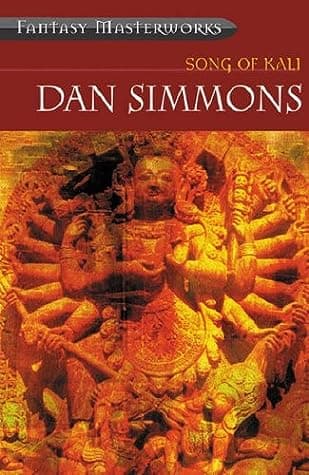
Dan Simmons (1985)
Genre
Thriller / Fantasy / Mystery / Science Fiction
Reading Time
6-8 hours
Key Themes
See below
Sign in to track this book
An American poet's search for a resurrected literary figure in the decaying, Kali-worshipping heart of Calcutta drags him into a nightmarish labyrinth of human sacrifice and ancient, visceral terror.
Robert Luczak, an American poet and editor, arrives in Calcutta, India, with his wife, Amrita, and their infant daughter, Maya. He has been commissioned by Harper's magazine to investigate the reappearance of M. Das, a renowned Bengali poet presumed dead for eight years. Luczak is immediately struck by the city's oppressive heat, poverty, and sense of decay. His initial contact, a cynical journalist named Mr. Ghosh, warns him about the city's dangerous undercurrents and the strange circumstances surrounding Das's return. Luczak's family struggles to adjust to the harsh environment, and Amrita, a sensitive Indian-American woman, feels a growing unease.
Luczak begins his investigation, visiting the offices of Harper's local contact, the elderly and enigmatic Mr. Kulu. Kulu explains that M. Das is rumored to have been resurrected by a hidden cult dedicated to the goddess Kali, specifically the Thuggee sect, known for ritualistic human sacrifice. Luczak initially dismisses this as superstition, but Kulu provides unsettling evidence and warns him of the cult's pervasive influence. During his first days, Luczak experiences several disturbing incidents, including witnessing public acts of violence and feeling an inexplicable dread that seems to emanate from the city itself. Amrita becomes increasingly distressed by the environment, particularly the sight of beggars and the pervasive sense of suffering.
Luczak secures an interview with M. Das, but the encounter is deeply unsettling. Das, once an eloquent poet, is now a gaunt, hollow-eyed figure who speaks in cryptic, disturbing verses about Kali and the cycle of death and rebirth. He appears to be under the cult's influence, his mind fragmented and his personality almost entirely subsumed. Das provides no clear answers about his disappearance or return, only ominous pronouncements that hint at dark rituals and a transformation. Luczak leaves the interview deeply disturbed, realizing that his assignment is far more dangerous and supernatural than he initially imagined.
The cult's presence becomes more direct and threatening. Luczak, Amrita, and Maya are attacked in their apartment by a group of Thuggee cultists. The attack is brutal and swift. Luczak fights back but is overwhelmed. In the chaos, the cultists abduct Maya, leaving Luczak and Amrita devastated and desperate. This act shatters their sense of security and plunges them into a nightmare of fear and grief. The abduction transforms Luczak's mission from a journalistic assignment into a desperate personal quest to rescue his daughter from the clutches of the Kali cult.
Distraught, Luczak enlists the help of Mr. Ghosh and Mr. Kulu to find Maya. Ghosh, despite his cynicism, feels a degree of responsibility and uses his contacts in the city's underworld. Kulu, with his deep knowledge of the cult, guides them through the alleys and hidden corners of Calcutta. Their search takes them into the darkest parts of the city, revealing the true extent of the Thuggee's influence and the horrifying nature of their rituals. Luczak is forced to confront the grim realities of human sacrifice and the cult's belief in Kali's destructive power, all while battling his own despair and increasing paranoia.
As Luczak delves deeper, he uncovers evidence of the cult's gruesome rituals. He learns that Maya may be intended as a sacrifice to Kali, a pure offering to appease the goddess and grant power to the cult. He witnesses disturbing scenes, including the aftermath of sacrifices and the fanaticism of the cult members. The city itself seems to conspire against him, with its oppressive atmosphere and indifferent populace. Amrita, meanwhile, descends further into a state of shock and grief, her mental stability fragile. The pervasive evil of the cult and the city threatens to consume them both.
Luczak, guided by Kulu, tracks the cult to their hidden temple in the heart of Calcutta's slums. He confronts the cult's High Priest, a chillingly calm and intelligent man who reveals the cult's ancient lineage and their belief in Kali as a living, destructive force. The High Priest taunts Luczak, revealing the cult's plans for Maya and the power they believe they derive from their sacrifices. Luczak realizes the High Priest is not merely a fanatic but a true believer in a cosmic horror that transcends human understanding. The confrontation is tense, revealing the immense power and organization of the cult.
Luczak, fueled by desperation, infiltrates the cult's inner sanctum during a ritual. He finds Maya, alive but drugged, and attempts to snatch her away. A brutal struggle ensues against the cultists. Luczak fights for his life and his daughter's, using whatever means necessary. He is injured but manages to escape the immediate clutches of the cult, carrying Maya. The escape is chaotic and perilous, navigating the dark, dangerous alleys of Calcutta while being pursued by the fanatical cultists. He is aided by Ghosh, who creates a diversion, allowing Luczak a slim chance of escape.
Luczak, with Maya, eventually reunites with Amrita. They manage to secure passage out of Calcutta, leaving the nightmarish city behind. However, the ordeal leaves deep psychological scars. Maya is physically unharmed but traumatized. Amrita is irrevocably broken by the horror and the loss of her innocence. Luczak himself is haunted by the violence he witnessed and participated in, and the chilling realization of the evil that exists in the world. They carry the weight of their experiences, forever changed by their encounter with the Song of Kali. The novel ends with them fleeing, but not truly escaping, the psychological grip of Calcutta.
Back in America, the Luczak family attempts to resume a normal life, but the trauma of Calcutta continues to haunt them. Amrita struggles with severe depression and a sense of loss, her spirit broken. Maya, though an infant, shows subtle signs of distress, and Luczak himself is plagued by nightmares and a pervasive sense of dread. He finds himself unable to write poetry, his creative well poisoned by the horrors he witnessed. The experience has altered their perception of the world, leaving them with the chilling understanding that the malevolent forces of Kali are not confined to Calcutta but exist as a universal, destructive potential.
The Protagonist
Luczak transforms from an academic observer into a hardened survivor, forced to shed his intellectual detachment and confront primal evil. He loses his poetic voice but gains a brutal understanding of the world.
The Supporting
Amrita's initial unease about Calcutta escalates into profound psychological trauma, leaving her broken and unable to recover her former self.
The Supporting
Maya is a static character in terms of personality, but her abduction and rescue drive the entire plot and represent the ultimate prize in the conflict against the cult.
The Supporting
Ghosh moves from detached cynicism to active involvement, demonstrating a hidden sense of loyalty and justice.
The Supporting
Kulu remains largely static, a figure of ancient wisdom and dark knowledge, serving as a conduit for understanding the cult's true nature.
The Supporting
Das is presented as a tragic figure, his artistic soul corrupted and his identity subsumed by the cult, a warning of what awaits those who delve too deep.
The Antagonist
The High Priest is a static embodiment of ancient evil, a figure of unwavering conviction in Kali's destructive power.
The novel portrays Calcutta itself as a manifestation of pervasive evil, a city where human suffering and ancient malevolence intermingle. The Kali cult, with its ritualistic human sacrifices, is the most overt expression of this. However, the theme extends beyond the cult to the general atmosphere of despair, poverty, and violence that permeates the city. Luczak's initial intellectual curiosity is slowly eroded by the visceral horror, and his family, particularly Amrita, is irrevocably broken by the city's darkness, demonstrating how evil can corrupt not just individuals but entire environments and psyches. The evil is presented as an almost tangible force.
“Calcutta. The Black Goddess. The city was a living entity, a monstrous organism that fed on despair and death.”
Robert Luczak begins his journey as an intellectual and a poet, somewhat detached from the harsh realities of the world. His encounter with Calcutta and the Kali cult shatters this innocence. He is forced to confront unimaginable horrors, witness extreme violence, and even commit acts of violence himself to protect his family. His poetic sensibility is destroyed, replaced by a bleak understanding of human depravity and cosmic indifference. Amrita, too, loses her gentle spirit and is left profoundly traumatized, unable to reconcile her past with the horrors she experienced. The world, for them, becomes a darker, more dangerous place, stripped of its former beauty and meaning.
“He had come to Calcutta to find a poet and had found instead a charnel house for his own soul.”
The novel explores the friction between Western rationalism and Eastern mysticism, particularly the clash between Luczak's secular worldview and the ancient, supernatural beliefs of the Kali cult. Luczak initially dismisses the cult as superstition, but he is gradually forced to accept the horrifying reality of their power and the existence of forces beyond his comprehension. The story highlights the limits of rational thought when confronted with deeply ingrained spiritual beliefs, however dark. Amrita's struggle, as an Indian-American, further emphasizes this cultural tension, as she feels drawn to her heritage but repelled by its darker manifestations.
“He had thought of Kali as a metaphor, a symbol. Now he knew she was real, and she was hungry.”
At its core, the novel is a story of a father's desperate love and willingness to sacrifice everything for his child. Once Maya is abducted, Robert Luczak's journalistic assignment transforms into a primal quest for his daughter's survival. He risks his life, confronts extreme danger, and engages in acts of violence that are entirely alien to his former self. His love for Maya becomes the driving force that allows him to endure the horrors of Calcutta and face the cult's malevolence, demonstrating the profound and transformative power of parental devotion in the face of ultimate evil. This theme underscores the emotional stakes of the narrative.
“He would tear Calcutta apart with his bare hands if that was what it took to get his daughter back.”
The city of Calcutta acts as a character, an antagonist, and a physical manifestation of evil.
Calcutta is not merely a setting but a pervasive, almost sentient entity that actively works against the protagonists. Its oppressive heat, squalor, disease, and constant background noise create an atmosphere of dread and claustrophobia. The city's labyrinthine streets, hidden alleys, and indifferent populace serve to disorient Luczak and facilitate the cult's activities. It embodies the 'song of Kali,' a constant hum of suffering and death, and its very fabric seems to erode the sanity and spirit of those who dwell within it, becoming a primary antagonist in itself.
M. Das's cryptic verses and Mr. Kulu's warnings hint at future horrors.
Throughout the narrative, M. Das's fragmented, Kali-centric poetry and Mr. Kulu's enigmatic pronouncements serve as powerful tools of foreshadowing. Das's verses about death, rebirth, and the goddess's hunger subtly prepare the reader and Luczak for the gruesome realities of the cult's rituals. Kulu's warnings about the city's darkness and the cult's true nature, initially dismissed by Luczak, prove to be chillingly accurate. These elements build suspense and a sense of inevitable doom, reinforcing the idea that Luczak is stepping into a world far beyond his comprehension.
The initial objective, M. Das, serves as a catalyst for the true plot.
M. Das, the missing poet Luczak is sent to find, functions as a classic MacGuffin. While his reappearance and the circumstances surrounding it are the initial impetus for Luczak's journey to Calcutta, Das himself quickly becomes secondary to the overarching horror of the Kali cult and the abduction of Maya. His purpose is primarily to introduce Luczak to the cult's existence and to draw him deeper into the city's malevolent underbelly, shifting the narrative's focus from a journalistic inquiry to a desperate fight for survival.
Intense descriptions of sights, sounds, and smells immerse the reader in Calcutta's horror.
Simmons employs vivid and often repulsive sensory details to immerse the reader in the suffocating atmosphere of Calcutta. Descriptions of the oppressive heat, the stench of poverty and decay, the constant cacophony of the streets, and the graphic sights of suffering and violence create a powerful sense of verisimilitude and discomfort. This sensory overload mirrors Luczak's own experience, overwhelming his rational mind and making the city's horrors feel immediate and inescapable, contributing significantly to the novel's pervasive sense of dread and realism.
“The city was a monument to the triumph of the profane over the sacred.”
— Paul's initial impressions of Calcutta.
“There are some things in this world that are best left undisturbed, even if they promise great revelations.”
— A warning about delving too deeply into certain mysteries.
“The past is never truly dead. It merely sleeps, waiting for the right moment to awaken and claim its due.”
— Reflecting on the enduring influence of ancient cults and beliefs.
“Fear is a powerful intoxicant, and the more you drink of it, the harder it is to put down the glass.”
— Paul's growing sense of dread and its psychological impact.
“Calcutta is not a city; it is a living entity, with its own dark heart and hungry soul.”
— A vivid description of Calcutta's oppressive atmosphere.
“Sometimes, the greatest horror is not what you see, but what you only glimpse, what you only imagine.”
— Discussing the power of suggestion and unseen threats.
“The gods here are not benevolent. They are ancient, capricious, and demand their due in blood and suffering.”
— Describing the nature of the deities worshipped in Calcutta.
“There are no accidents in this city, only patterns waiting to be discovered by those with the courage to look.”
— A character's belief in the underlying order of chaotic events.
“To truly understand the darkness, you must first allow a piece of it to enter your own soul.”
— A dangerous philosophical thought on empathy with evil.
“Hope is a fragile thing in a city like this, easily crushed under the weight of despair.”
— Paul's diminishing optimism in the face of overwhelming odds.
“The dead do not always stay dead, especially when their names are whispered in the right places.”
— Hinting at necromancy and the cult's powers.
“Ignorance is not bliss when the monster is already at your door.”
— A pragmatic view contrasting with the desire to remain unaware.
“The true horror is not the death of the body, but the corruption of the soul.”
— A deeper reflection on the ultimate stakes of the conflict.
“Some truths are too terrible to be known, too destructive to be uttered.”
— Paul's realization about the dark secrets he uncovers.
Ready to see how well you understood this book? Take our interactive quiz with 10 questions.

Dan Simmons is an American science fiction and horror writer. He is the author of the Hyperion Cantos and the Ilium/Olympos cycles, among other works which span the science fiction, horror, and fantasy genres, sometimes within a single novel. Simmons's genre-intermingling Song of Kali (1985) won the World Fantasy Award. He also writes mysteries and thrillers, some of which feature the continuing character Joe Kurtz.







