“Never for the sake of peace and quiet deny your own experience or conviction.”
— A reflection on individuality and truth amidst conflict.

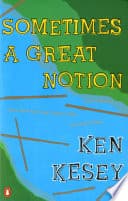
Ken Kesey (2006)
Genre
Literary Fiction / Thriller / Mystery
Reading Time
1280 min
Key Themes
See below
Sign in to track this book
In an Oregon logging town, the Stamper family, led by a defiant father and his sons, fights a strike and their own destructive past, ending in a clash of wills and unexpected revenge.
The novel begins with a logging strike in the Oregon coastal town of Wakonda. All independent loggers and union mill workers refuse to work, hoping to make the lumber companies agree to their demands. But the Stamper family—Henry Stamper and his son Hank—refuse to join the strike. They believe they have the right to work their own timber, regardless of the union. This defiance immediately isolates them, making them outcasts. Their decision comes from a deep Stamper pride and a rejection of group action, setting them against the town and the striking loggers.
Leland Stamper, Henry's younger, more intellectual son, returns to Wakonda from university after a breakdown. He arrives with a hidden plan: to understand and subtly undermine his family, especially his half-brother Hank and his father Henry, whom he resents. Leland is sensitive and thoughtful, a contrast to the rugged Stampers. His return is prompted by a manipulative letter from Hank's wife, Viv, inviting him back, though her true reasons are unclear. Leland's presence immediately creates tension in the already strained Stamper home. He observes his family critically, while fighting his own psychological problems.
Despite the strike, the Stampers are determined to fulfill their lumber contract. Their main challenge is a large raft of logs, stuck upstream in the Wakonda Auga River, that needs to go to the mill. The river is high and dangerous. Henry and Hank work hard, showing the Stamper way of brute force and strong will. Their fight against the powerful river is a central physical conflict, representing their larger battle against the town and nature. This hard work further isolates them but also strengthens their stubbornness in the community's eyes.
Vivian Stamper, Hank's wife, is increasingly unhappy with her life and marriage. She feels ignored and unappreciated, wanting a different kind of connection than Hank's stoic love. Her frustrations grow because of the strike and the intense atmosphere of the Stamper home. Leland's return offers her a perceived intellectual and emotional escape. She starts an affair with Leland, driven by a mix of revenge against Hank, a desire for intimacy, and a subconscious manipulation of family dynamics. This secret betrayal significantly deepens the emotional trouble within the Stamper family.
The union and striking loggers, angry at the Stampers' continued work, increase their actions. They commit sabotage, trying to destroy the Stampers' equipment and logs, and openly threaten the family. The townspeople, mostly supporting the strike, shun the Stampers, refusing them supplies and help. This outside pressure raises the stakes for Henry and Hank, forcing them to be constantly alert and strengthening their 'us-against-the-world' mindset. The conflict moves beyond an economic dispute to a personal, almost tribal, feud.
During a dangerous log-moving operation, Henry Stamper has a terrible accident, losing an arm. Despite the severe injury, he remains determined. He refuses to stop, continuing to direct operations and even trying to work with his remaining hand. This incident shows Henry's legendary toughness and his refusal to give in to physical limits or hardship. His injury, instead of stopping the Stampers, seems to strengthen their resolve to finish the job, becoming a symbol of their sacrifice and stubbornness.
As family tensions rise and his affair with Viv continues, Leland's fragile mental state worsens. He is torn between his desire for revenge and a growing, though conflicted, sense of loyalty and a strange admiration for his family's resilience. He is both a passive observer and an active participant in the unfolding tragedy, often feeling like a detached narrator of his own life. His inner thoughts reveal deep psychological issues, including a sense of alienation and a struggle to balance his intellectual nature with his family's raw physicality. He often questions his own sanity and purpose.
The simmering tensions finally explode when Hank discovers Viv's affair with Leland. This betrayal is a deep blow to Hank's pride and his view of his family. He confronts Leland in a brutal physical fight, a stark contrast to Leland's intellectual nature. The fight is not just about the affair but is the result of years of unspoken rivalry, resentment, and different views between the two brothers. The revelation shatters the already fragile unity of the Stamper household, pushing the family closer to its tragic end.
With Henry injured, Hank reeling from betrayal, and Leland lost in his own mental fog, the Stampers make a desperate final attempt to move their log raft downriver. The task is huge, requiring all their remaining strength and cleverness. They face not only the dangerous river but also the ongoing threat of sabotage from the striking loggers. This final push shows their strong determination and their refusal to be defeated, even against overwhelming odds. It becomes a symbolic act of defiance against the town and the forces against them.
The Stampers succeed in delivering their logs to the mill, but the victory comes at a high personal cost. The family is broken, Henry is permanently disabled, Hank is emotionally scarred, and Leland is psychologically shattered. The final scenes show the aftermath. The Stampers paid a high price for their stubborn independence. Their story is a warning, showing the destructive power of pride and the tragic results of defying an entire community. The novel ends with a sense of both triumph and deep loss, leaving the reader to consider their strong, almost mythic, struggle.
The Protagonist/Patriarch
Henry remains largely unchanged, a force of nature who defies all odds, even physical maiming, embodying an unyielding spirit until the end.
The Protagonist
Hank starts as a dutiful son, but betrayal and hardship force him to confront his own identity and the limitations of his inherited stoicism, leading to profound emotional scarring.
The Antagonist/Supporting
Leland's journey is one of psychological unraveling, as his attempts at revenge and understanding lead him deeper into his own mental instability and contribute to the family's demise.
The Supporting
Vivian's arc is one of increasing disillusionment and a desperate search for fulfillment, leading to actions that irrevocably break her marriage and family.
The Supporting
Joe Ben remains a steadfast and loyal presence, his character largely static but serving as a stable anchor in the tumultuous Stamper world.
The Antagonists
As a collective, their tactics escalate in response to the Stampers' defiance, but they ultimately fail to break the Stamper will, leading to a grudging, resentful stalemate.
This is the novel's central conflict, shown by the Stamper family's refusal to join the town-wide logging strike. Henry and Hank's decision not to join the union is not just economic but a deeply held belief: the right of the individual to work and live on their own terms, free from outside pressure. This theme is explored through the Stampers' isolation, the town's hostility, and the physical and psychological toll it takes on everyone. The river itself, the 'Wakonda Auga,' can be seen as a force of nature that only individuals can truly conquer, reflecting the Stampers' beliefs.
“Never give an inch!”
The Stamper family's legendary pride and stubbornness, while allowing their resilience, also cause their tragic isolation and internal conflict. Henry's refusal to compromise, Hank's need to prove himself, and Leland's vengeful pride all add to the family's suffering. Their inability to give in, even when it would help them, drives the plot to its painful conclusion. Henry's loss of his arm, while showing his will, also symbolizes the physical price of their unyielding nature. The emotional breaks within the family are the psychological cost.
“A man don't have to be a Stamper to have guts, but it sure helps.”
The novel looks closely at the complex and often destructive dynamics of the Stamper family. Henry's strength and independence cast a long shadow over Hank, who tries to both imitate and escape it. Leland's return is driven by a desire to understand and undo this legacy, leading to the affair with Viv and the family breaking apart. Loyalty within the family is strong, yet it also creates resentment, competition, and ultimately, betrayal. The family house, perched precariously, symbolizes their unstable emotional state and their isolation from the world.
“It was a family that had been born with its back against the wall, and it had stayed there.”
The struggle against nature, especially the powerful Wakonda Auga River and the vast forests, is a constant theme. The Stampers' livelihood depends on their ability to control nature, and their battle to move the log raft is a constant, epic fight against the river's power. This conflict highlights their physical strength and resilience but also shows the ultimate impossibility of total control over nature. The river, with its unpredictable currents and dangers, mirrors the uncontrollable forces within the family and the outside world.
“The river... was a beast, and they were trying to ride it.”
The story is told through an omniscient, often stream-of-consciousness, narrator who frequently shifts focus between characters' thoughts.
Kesey employs a highly experimental narrative style, jumping between the internal monologues of different characters (Henry, Hank, Leland, Viv) and an omniscient third-person perspective. This allows for a deep, intimate exploration of each character's motivations, fears, and resentments, providing a multi-faceted view of the unfolding tragedy. The shifting perspectives also create a sense of disorientation and subjectivity, mirroring the characters' own psychological states and making the reader question objective truth.
The powerful, unpredictable river that serves as both a literal and symbolic obstacle.
The Wakonda Auga River is more than just a setting; it is a character in itself. Literally, it is the treacherous path the Stampers must navigate to deliver their logs, presenting immense physical challenges. Symbolically, it represents the untamed forces of nature, the unstoppable flow of time, and the deep, often turbulent, undercurrents of emotion and conflict within the Stamper family and the community. Its power and indifference mirror the Stampers' own stubbornness and the relentless pressure they face.
Leland's introspective, often rambling, thoughts serve as a lens through which the family's dysfunction is analyzed.
Leland's highly analytical and self-conscious internal monologues, often presented as if he is writing a journal or an academic study of his family, function as a critical commentary on the Stamper ethos. This device provides a contrasting intellectual perspective to the raw physicality of the other Stampers, highlighting the psychological underpinnings of their actions. It also reveals Leland's own fractured mental state and his complex, often contradictory, feelings towards his family, while simultaneously advancing the plot through his observations and actions.
The physical act of logging and moving timber symbolizes the Stampers' struggle for survival and identity.
The intricate, dangerous process of felling trees and moving massive log rafts is rich with symbolism. It represents the Stampers' heritage, their connection to the land, and their brute-force approach to life's challenges. The individual logs, often struggling against the current, mirror the Stamper family's isolated struggle against the collective. The effort required to overcome these physical obstacles reflects the immense emotional and psychological strain the family endures in their fight for independence.
“Never for the sake of peace and quiet deny your own experience or conviction.”
— A reflection on individuality and truth amidst conflict.
“He knew that the only way to get rid of a temptation is to yield to it.”
— Hank pondering the nature of desire and its resolution.
“The only thing that's worse than being blind is having sight but no vision.”
— Leland Stamper's cynical observation on perception and purpose.
“Sometimes a great notion, an unfathomable, divine inspiration, moves a man to do something he would not ordinarily do.”
— The central theme of the book, explaining the motivations behind extraordinary actions.
“Nobody's going to tell you how to live your life. You've got to figure it out yourself.”
— An assertion of self-reliance and individual responsibility.
“The river, it's a living thing. It breathes, it groans, it gives and it takes away.”
— A description of the Snag River as a powerful, almost sentient force.
“You can't just stand there and let the world happen to you.”
— A call to action and engagement with life, rather than passive acceptance.
“Family, it's a rope that ties you up, but it's also a rope that holds you together.”
— A complex view on the binding and supportive nature of family ties.
“There are times when a man has to choose between what's right and what's easy.”
— A moral dilemma faced by the characters, highlighting ethical conflict.
“The past is never dead. It's not even past.”
— A reflection on the enduring influence of history and past events on the present.
“It takes a certain kind of stubbornness to make a life in these woods.”
— Describing the resilience and tenacity required to survive in a harsh environment.
“What good is a man if he doesn't stand for something?”
— A question about integrity and the importance of principles.
“The wind was a living thing, too, a cold, indifferent breath that scoured the land.”
— Another personification of nature, emphasizing its raw and uncaring power.
“Love is not a thing you can take or give; it's a place you can enter.”
— Vivian's nuanced understanding of love as an immersive experience rather than a transaction.
Ready to see how well you understood this book? Take our interactive quiz with 10 questions.
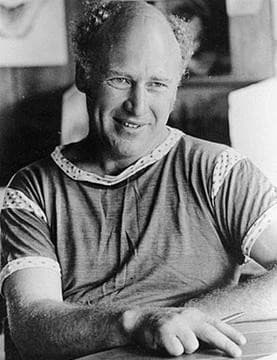
Ken Elton Kesey was an American novelist, essayist and countercultural figure. He considered himself a link between the Beat Generation of the 1950s and the hippies of the 1960s.







