“Sometimes the hardest thing to see is what's right in front of you.”
— Erin reflects on the hidden dangers in her seemingly perfect life.

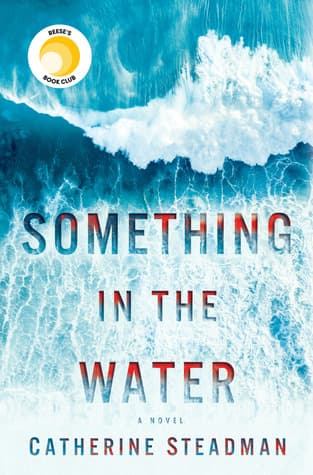
Catherine Steadman (2018)
Genre
Thriller / Mystery
Reading Time
6-8 hours
Key Themes
See below
Sign in to track this book
A newlywed couple finds millions in cash during their Bora Bora honeymoon, leading them into a dangerous secret and a fight for their lives.
The novel opens with Erin, the narrator, describing how hard it is to dig a grave, hinting at a dark event to come. The story then moves back in time to happier moments. Erin, a documentary filmmaker trying to finish a film about rehabilitating prisoners, is in love with her investment banker fiancé, Mark Roberts. Their wedding is happy, followed by a luxurious honeymoon to Bora Bora. They enjoy the beaches, resort, and each other's company, living a perfect dream. Mark surprises Erin with a scuba diving trip, an activity she first hesitates about but agrees to, setting the stage for the discovery that will change their lives.
During their scuba diving trip in the clear waters off Bora Bora, Erin and Mark find a sunken private plane. Inside, they find two dead bodies: a man and a woman. They also discover a waterproof briefcase with millions of US dollars and a list of names. Mark impulsively decides to take the briefcase, convincing a hesitant Erin. They take the money, leaving the bodies and the plane, agreeing to keep their discovery a secret from everyone.
When they return to London, their secret immediately strains Erin and Mark's relationship. They clean and dry the cash, hiding it in their attic, constantly worried about being found out. Despite their promise of secrecy, they start using the money to ease their financial problems. Mark buys a new car and invests, while Erin uses some to fund her documentary. The illegal money allows them to move into a new house, changing their lifestyle. However, anxiety and distrust overshadow their new wealth, as they constantly second-guess each other and fear exposure, leading to growing tension between them.
Erin starts having unsettling experiences. A mysterious, well-dressed man, later identified as George, appears in places she goes, seemingly watching her. This, along with strange phone calls and the feeling of being watched, increases her paranoia. She tells Mark, but he dismisses her worries, suggesting she is imagining things or stressed. This makes Erin feel more isolated and fuels her suspicion that Mark might be involved in something more serious than he says, or that he is not taking the threat seriously enough. The couple's distrust grows, harming their marriage as the secret threatens their sanity.
Because of her growing unease and Mark's evasiveness, Erin secretly investigates the plane crash. She finds news reports about a missing private jet belonging to Sergei Volkov, a Russian oligarch involved in illegal financial dealings. The bodies in the plane were Volkov's pilot and his mistress. The briefcase and the list of names are important evidence of Volkov's money laundering. Erin realizes they have stolen not just money, but sensitive information that could incriminate powerful and dangerous people, confirming her worst fears about the seriousness of their actions and the danger they are now in.
Erin confronts Mark with what she found, but he stays evasive, making her more suspicious. She eventually finds evidence that Mark had been in contact with someone about the money even before their honeymoon, suggesting he had a plan. It is revealed that George, the mysterious man following Erin, is a former MI6 agent named George Miller, who was working for Volkov's associates to get back the money and the list. He explains that Volkov's criminal group is large and ruthless, and that they are in great danger. Erin realizes the extent of Mark's lies and the true nature of the threat against them.
George Miller, now working with law enforcement, kidnaps Erin. He reveals that the authorities know about the money and the list, and that he needs her help to expose Volkov and take down his criminal network. He explains that Mark has been giving information to another group, making the situation more complicated. Erin is forced to cooperate, realizing that her life and Mark's depend on her ability to navigate this dangerous situation. She is given a dangerous mission to retrieve the list of names, which is key to stopping Volkov's operations, putting her directly in harm's way.
Erin, now working with George under pressure, confronts Mark. She discovers that Mark had been trying to use the money and the list for his own benefit, attempting to make a deal with a rival group to protect them, though mistakenly. The couple's distrust peaks, but facing the immediate threat from Volkov's people, they know they must work together. They make a desperate plan: to fake their own deaths to escape the constant pursuit. This involves staging a boat accident and disappearing, a risky move that requires careful planning and execution, relying on their combined cleverness to survive.
Erin and Mark carry out their plan to fake their deaths. They take a boat out, set it to explode, and then swim to a pre-arranged meeting spot. The authorities, along with Volkov's enforcers, believe they died in the explosion. The couple then takes on new identities and tries to start a new life in a remote place. However, their new life is filled with paranoia and the constant fear of being discovered. The psychological cost of their actions and the constant threat of exposure weigh heavily on them, stopping them from finding peace or happiness in their new, anonymous lives.
The story returns to the opening scene, revealing the truth about the grave. Erin discovers that Mark has been having an affair and, more importantly, has been secretly talking to Volkov's people, planning to betray her and escape with the money. Realizing how deeply he betrayed her and that he was willing to sacrifice her, Erin makes a final, desperate decision. She kills Mark, burying him in the grave she was digging. She then uses the remaining money and her planned alibi to truly disappear, leaving behind her old life, her husband, and the nightmare they created, finally achieving a twisted form of freedom and survival.
The Protagonist
From a morally conflicted newlywed, she evolves into a ruthless survivor willing to kill to protect herself.
The Antagonist/Protagonist's Husband
His ambition and initial love for Erin are corrupted by greed and fear, leading to his ultimate betrayal and death.
The Supporting
He transitions from a mysterious pursuer to a forced ally, revealing the true scale of the danger.
The Antagonist (off-screen)
Remains an unseen, constant threat, representing the pervasive danger of the criminal underworld.
The Supporting
Remains a constant, supportive friend to Erin, unknowingly witnessing Erin's descent into a life of secrets.
The Supporting
His initial role as a friend of Mark's shifts to a minor character in Erin's growing paranoia and investigation.
The Mentioned
Their deaths trigger the entire narrative conflict and the subsequent events for Erin and Mark.
The Mentioned
Represent Erin's initial professional and ethical ambitions, which are sidelined and corrupted by the plot.
The novel shows how suddenly getting a lot of illegal money corrupts people and relationships. Mark's immediate desire to take the money and his later reckless investments come from greed, leading him to make increasingly dangerous choices. Erin, at first unsure, also gives in to the idea of a better life, using the money to fund her film and buy a new house. This greed harms their morals, turning them against each other and leading to betrayal and murder. The stolen money, meant to solve their problems, instead creates an inescapable nightmare.
“The money was meant to be our escape, our freedom. Instead, it was a cage, tightening around us with every passing day.”
The idea of identity is important, as Erin and Mark must leave their old lives and identities to survive. After faking their deaths, they take new names and try to build new lives, but their true selves are forever marked by their actions. Erin's change from an idealistic filmmaker to a calculating killer is a radical change of self, driven by necessity. The book asks if someone can truly escape their past or the person they've become, even with a new name and place, suggesting that their core identity has been permanently changed by their choices.
“Who was I now, if not the girl who had once believed in happy endings, in truth, in justice?”
Trust is fragile in the novel, constantly tested and eventually destroyed. The initial agreement between Erin and Mark to keep their discovery secret quickly turns into suspicion and paranoia. Mark's growing secrecy, his affair, and his plan to betray Erin show the complete breakdown of trust in their marriage. Erin's act of killing Mark is the final, devastating betrayal, showing that under extreme pressure, even the strongest bonds can break, leading to self-preservation at any cost.
“We had sworn to protect each other, to keep our secret safe. But the secret was a poison, and it had seeped into every corner of our lives, especially into our trust.”
Erin and Mark consistently believe they can control the results of their actions, from taking the money to faking their deaths. However, the story repeatedly shows they lack true control. The criminal group they accidentally steal from is far more powerful and widespread than they imagine. Their attempts to manage the situation only lead to deeper involvement and greater danger. The idea of control is a recurring theme, showing how useless their efforts are against a larger, more ruthless force, finally ending in Erin's desperate, violent act as her only true act of self-determination.
“We thought we were in control, that we could outsmart them all. But we were just two fish in a very big, very dangerous ocean.”
Opening with a future event to create immediate suspense.
The novel begins with Erin describing the act of digging a grave, a chilling scene that immediately establishes a sense of foreboding and suspense. This opening acts as a flash-forward, hooking the reader and prompting questions about how the characters arrived at such a dark point. The rest of the story then unfolds chronologically, explaining the events that lead up to this grim beginning. This technique effectively builds tension and keeps the reader engaged, constantly wondering who is in the grave and what happened to cause it.
Told entirely from Erin's subjective and increasingly compromised viewpoint.
The entire story is narrated by Erin, providing an intimate and subjective account of the events. This first-person perspective allows the reader to experience Erin's paranoia, fear, and moral compromises directly. As the plot progresses and Erin becomes more desperate and ruthless, her reliability as a narrator comes into question. Her internal justifications for her actions, particularly the final one, force the reader to consider the subjective nature of truth and morality under extreme duress, adding complexity to her character and the story's themes.
MacGuffin driving the entire plot.
The briefcase filled with millions of dollars and, more importantly, a list of names, serves as the central MacGuffin of the story. It is the object that propels the entire narrative, triggering the couple's dangerous choices and the subsequent chain of events. The money represents temptation and a false promise of freedom, while the list represents critical, incriminating information that puts them in direct conflict with a powerful criminal organization. Its significance is not just monetary but also informational, making it the focal point of pursuit for multiple parties.
Contrast between idyllic honeymoon and the harsh reality of consequences.
The stark contrast between the idyllic, pristine setting of Bora Bora and the gritty, paranoid reality of London serves as a powerful metaphor. Bora Bora represents the couple's initial dream, their innocent love, and the beautiful facade that quickly shatters. The crystal-clear water, where they find the plane, symbolizes a deceptive transparency. London, in contrast, becomes a place of constant fear, suspicion, and moral decay, reflecting the true consequences of their actions. This geographical shift emphasizes their fall from grace and the inescapable nature of their predicament.
“Sometimes the hardest thing to see is what's right in front of you.”
— Erin reflects on the hidden dangers in her seemingly perfect life.
“We all have secrets. Some are just heavier than others.”
— Narrator contemplates the burdens of hidden truths.
“The ocean doesn't care about your plans. It just is.”
— Describing the indifferent power of nature during a pivotal scene.
“Trust is a luxury you can't afford when everything is on the line.”
— Erin debates who to rely on as tensions escalate.
“Money changes people. But so does desperation.”
— Observing how circumstances alter behavior.
“The truth isn't always a light. Sometimes it's a shadow that grows.”
— Reflecting on the unsettling revelations uncovered.
“You can run from a place, but you can't run from yourself.”
— Erin considers escape versus internal conflict.
“In the end, we're all just trying to stay afloat.”
— A metaphorical observation on human struggle.
“Fear is a compass pointing to what you value most.”
— Analyzing Erin's motivations under pressure.
“Some choices are like stones dropped in water—they ripple out forever.”
— Contemplating the long-term impact of decisions.
“The line between right and wrong blurs when you're drowning.”
— Describing moral ambiguity in desperate situations.
“What you find in the water can change everything.”
— Referencing the central mystery of the novel.
“Love isn't always enough to save you. Sometimes it's the anchor.”
— Reflecting on relationships under strain.
“Silence can be louder than any scream.”
— Describing tense, unspoken moments.
Ready to see how well you understood this book? Take our interactive quiz with 10 questions.







