“When Joseph was a baby, his grandmother made him a beautiful blanket. It was a wonderful blanket.”
— Introducing the blanket's origin and initial state.

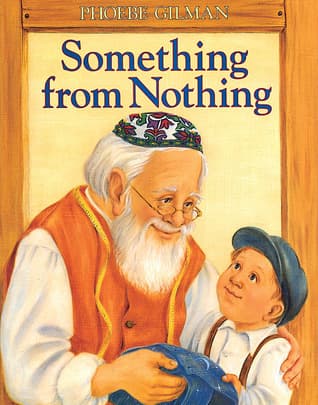
Phoebe Gilman (1989)
Genre
Children's
Reading Time
10-15 min
Key Themes
See below
Sign in to track this book
A cherished blanket, full of memories and love, goes on a journey of change, becoming a jacket, a vest, and even a button, showing that things like family and cleverness can last forever.
When Joseph was a baby, his Grandpa made him a wonderful blue blanket. It was a special blanket, with stars and moons, and it seemed to keep Joseph safe from bad dreams and warm. Joseph loved his blanket more than anything, taking it everywhere, through mud and puddles, and holding it during naps. His mother often worried about how worn and dirty it got, but Joseph always wanted it by his side, loving the comfort and security it gave him.
As Joseph grew, his blanket became more worn out. It got frayed, torn, and full of holes. Joseph's mother said it was too old to be a blanket anymore. She suggested throwing it away, but Joseph was very sad. Grandpa, always clever and understanding Joseph's feelings, took the blanket. With his scissors and needle, he skillfully cut and sewed, making the large, torn blanket into a perfectly fitting, nice jacket for Joseph. Joseph was happy, now having a new way to keep his special blanket close.
Joseph loved his new jacket and wore it all the time. He played in it, ate in it, and sometimes even slept in it. Soon, the jacket, like the blanket before it, started to show a lot of wear. It got holes, a sleeve ripped, and the fabric became thin in places. Joseph's mother again pointed out how ragged it was, saying it was time to get rid of it. But Joseph, still very attached, went to his Grandpa. Grandpa, with his usual wisdom and skill, took the worn jacket and, with a few snips and stitches, turned it into a smart, warm vest for Joseph, which made him very happy.
Joseph loved his vest and wore it everywhere, just as he had worn the blanket and jacket. But time and play took their toll, and soon the vest became too small and too worn, with loose threads and thin fabric. Joseph's mother, seeing its condition, said it was beyond repair and told Joseph to let it go. However, Joseph could not part with the last parts of his special blanket. He brought the vest to Grandpa, who, with his clever hands, carefully cut and sewed, making the torn vest into a stylish and unique tie for Joseph, allowing the memory of the blanket to continue.
Joseph was proud of his tie, wearing it for special events. But even a tie, with enough use, starts to fray. It eventually became too small and too worn to be a proper tie anymore. Joseph's mother, seeing its state, suggested it was finally time to throw it away, saying there was nothing left to make from it. Joseph still went to his Grandpa, who, with his never-ending creativity, took the small piece of fabric. With careful work, he trimmed and stitched, making the tie into a neat little handkerchief for Joseph, keeping the blanket's story alive in an even smaller form.
Joseph cherished his handkerchief, keeping it safe in his pocket. One day, while playing, he lost it. After looking everywhere, he found it, but it was just a tiny, torn piece of fabric, hard to recognize. Joseph's mother, frustrated, said that absolutely nothing more could be made from such a small piece. Yet, Joseph, still hoping, gave the tiny piece to his Grandpa. Grandpa, with his great skill and love, took the last remaining piece of fabric and, with a few final stitches, made it into a small, strong button, which he sewed onto Joseph's coat.
Joseph loved his button. It was a small, perfect circle, a clear reminder of his blanket, jacket, vest, tie, and handkerchief. He wore it on his coat with pride, knowing it held all the memories. One day, while playing outside with his friends, Joseph was running and jumping, full of energy. Suddenly, he saw the button was gone. He looked everywhere, going back over his steps, looking under leaves and stones, but the little blue button, the last piece of his special blanket, was nowhere. Joseph was heartbroken, feeling like he had lost a part of himself.
Even though the button was lost, Joseph still carried the memories of his special blanket. He sat down and thought about all the wonderful things his Grandpa had made from it: the blanket, the jacket, the vest, the tie, the handkerchief, and finally, the button. He realized that even though the items were gone, the love and the story behind them remained. Taking a pen and paper, Joseph began to write his own story, a story about 'Something from Nothing,' making sure that the magic of his blanket and his Grandpa's cleverness would live on through his words.
Throughout Joseph's story, another story happens under the floorboards of his house. A family of mice watches Grandpa's changes. Each time Grandpa cuts a piece from the blanket, jacket, vest, or tie, the mice quickly gather the discarded scraps. They carefully collect the blue fabric pieces and take them back to their cozy home. With the collected pieces, the mother mouse skillfully sews and stitches, making a warm and comfortable little blanket for her baby mouse, copying Grandpa's actions and adding to the idea of resourcefulness.
As Joseph's blanket got smaller through its many changes, the pile of scraps under the floorboards grew. The mother mouse, with her sharp eye and tiny needle, carefully put together all the discarded pieces of blue fabric. She worked hard, sewing them together patch by patch, until she had made a beautiful, patchwork blanket just the right size for her baby mouse. This new blanket, made from the 'nothing' left behind by Joseph's story, gave warmth and comfort to the baby mouse, completing the story's cycle of creation and repurposing.
The Protagonist
Joseph evolves from a child dependent on a physical object for comfort to an artist who can immortalize its essence through storytelling.
The Supporting
Grandpa remains a consistent figure of wisdom and resourcefulness, never changing but rather serving as the catalyst for Joseph's journey.
The Supporting
Her character remains consistent, serving as a foil to Joseph and Grandpa, emphasizing the conflict between practicality and sentimentality.
The Supporting
The mice's arc is circular, starting with nothing and ending with a new blanket, reinforcing the story's central theme.
This is the main idea, clearly shown by Grandpa's ability to always repurpose Joseph's blanket. Each time the blanket gets too worn, Grandpa takes the 'nothing' of a torn item and turns it into 'something' new and useful—a jacket, a vest, a tie, a handkerchief, and finally a button. This idea is also shown by the mice, who gather the discarded scraps to make a blanket for their baby. It highlights the value of creativity, cleverness, and not wasting things, showing that even the smallest piece can have potential.
“Grandpa took the piece of cloth, snipped and clipped, and turned it into something new.”
Joseph's strong attachment to his blanket, and then to every item made from it, shows the idea of love and sentiment. The blanket is not just fabric; it represents his Grandpa's love and gives comfort and security. Joseph's refusal to part with even the smallest piece shows how emotional connections can give objects great value, beyond their material worth or use. His wish to keep a piece of his history, and his Grandpa's love, drives all the transformations.
“Joseph loved his blanket. He loved it when it was new and he loved it when it was old.”
Even after the button, the last physical piece of the blanket, is lost, the story does not end in sadness. Joseph realizes that the most important part of the blanket is not the item itself, but the memories and the story linked to it. By writing his own story, 'Something from Nothing,' Joseph ensures that the legacy of his blanket and his Grandpa's cleverness continues. This idea emphasizes that stories keep history, lessons, and emotional connections alive, making them last even when physical objects disappear.
“He took a pencil and paper and he wrote his own story. 'Something from Nothing,' he called it.”
The constant change of the blanket reflects the natural cycle of life, growth, and change. Just as Joseph grows from a baby to a boy, the blanket changes from a large item to smaller ones, adapting to his needs and the effects of time. Each change means an end and a new start, showing that nothing truly vanishes but instead changes. This idea suggests that change is unavoidable, but with creativity and love, new purpose and beauty can always come from what seems to be an end.
“But Grandpa always said, 'There's always something from nothing.'”
A recurring pattern of wear, transformation, and renewed love.
The story employs a clear repetitive structure where Joseph's blanket (or its subsequent form) gets old and worn, his mother suggests throwing it away, Joseph takes it to Grandpa, and Grandpa transforms it into a new, smaller item. This pattern reinforces the central theme of resourcefulness and Joseph's enduring attachment. The repetition makes the narrative predictable in a comforting way for young readers and emphasizes the grandfather's consistent ingenuity and love.
A secondary storyline featuring mice repurposing discarded scraps.
A clever parallel narrative runs alongside Joseph's main story, depicting a family of mice living beneath the floorboards. Each time Grandpa cuts a piece from the blanket, the mice collect the discarded scraps. This subplot provides a visual and thematic reinforcement of the 'something from nothing' theme, showing another instance of repurposing and resourcefulness in a different scale and context. It adds depth and a touch of humor to the main story without distracting from it.
The blanket represents love, security, and the passage of time.
The blue blanket is more than just a piece of fabric; it symbolizes Grandpa's love, Joseph's childhood security, and the passage of time. As it transforms, it represents the enduring nature of these values, even as their physical manifestation changes. Its eventual loss and Joseph's decision to write a story about it elevate its symbolism to represent the power of memory and storytelling over tangible objects, making the 'something from nothing' a creative and intellectual act.
“When Joseph was a baby, his grandmother made him a beautiful blanket. It was a wonderful blanket.”
— Introducing the blanket's origin and initial state.
“But as Joseph grew, the wonderful blanket grew too, or rather, Joseph grew out of it. It got tattered, and torn, and full of holes.”
— Describing the blanket's natural wear and tear as Joseph ages.
“So Joseph's mother said, 'Joseph, look at your blanket. It's time to throw it out.'”
— Mother's practical suggestion about the worn blanket.
“'No!' said Joseph. 'It's still good.'”
— Joseph's immediate refusal to part with his beloved blanket.
“Joseph's grandfather took the blanket. Snip, snip, snip, snip, snip! And out of the good parts of the blanket, he made Joseph a wonderful jacket.”
— Grandfather's first act of transformation, turning the blanket into a jacket.
“When the jacket got old and worn, Joseph's grandfather took it. Snip, snip, snip, snip, snip! And out of the good parts of the jacket, he made Joseph a wonderful vest.”
— The repeated pattern of transformation, jacket to vest.
“When the vest got old and worn, Joseph's grandfather took it. Snip, snip, snip, snip, snip! And out of the good parts of the vest, he made Joseph a wonderful tie.”
— The vest is transformed into a tie, continuing the sequence.
“When the tie got old and worn, Joseph's grandfather took it. Snip, snip, snip, snip, snip! And out of the good parts of the tie, he made Joseph a wonderful handkerchief.”
— The tie is transformed into a handkerchief, getting smaller.
“When the handkerchief got old and worn, Joseph's grandfather took it. Snip, snip, snip, snip, snip! And out of the good parts of the handkerchief, he made Joseph a wonderful button.”
— The handkerchief is transformed into a button, the smallest item yet.
“When the button got lost, Joseph's mother said, 'Joseph, look at your button. It's gone!'”
— The button is lost, signaling the end of physical transformation.
“Joseph thought and thought and thought... and out of the good parts of his memory, Joseph made a wonderful story.”
— Joseph's final act of creation, turning memories into a story.
“And that is what this book is about.”
— The meta-narrative conclusion, connecting the story to the book itself.
Ready to see how well you understood this book? Take our interactive quiz with 10 questions.

Dan Gemeinhart
4.5

Kate O'Hearn
4.4

Jeanne Birdsall
4.4

Jen Wang
4.4
Wendelin Van Draanen
4.3

John Marsden
4.3

Chris Van Allsburg
4.3
Jennifer A. Nielsen
4.2