“It was a dark and stormy night.”
— The opening line of Angeline's story, a classic literary cliché.

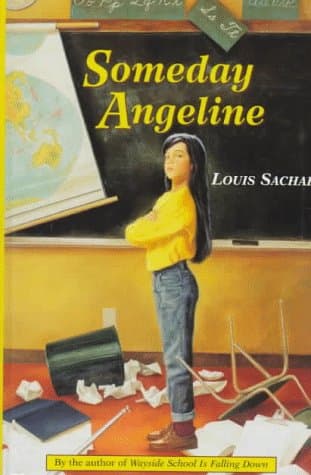
Louis Sachar (1983)
Genre
Children's / Young Adult
Reading Time
90 min
Key Themes
See below
Sign in to track this book
An eight-year-old girl wants a normal life, but her extraordinary gifts make her an outcast. She finds acceptance with an outsider boy and an unusual teacher.
Angeline Persopolis is an eight-year-old girl with an astonishing intellect. She reads complex books easily, plays piano by ear, and predicts the weather accurately. Her father, Mr. Persopolis, a struggling writer, is confused by her gifts and often distracted. At school, her advanced abilities make her an outcast. Her third-grade teacher, Mrs. Casey, is frustrated by Angeline's unusual learning style and her habit of correcting the teacher or reading during lessons. Other children, especially the popular Mary Beth and her friends, mock Angeline, calling her 'freak' and 'weirdo,' isolating her further. Angeline wants to be normal and accepted.
Mrs. Casey is temporarily replaced by an unusual substitute teacher, Mr. Bone. Mr. Bone is known for his unconventional teaching methods and gruff manner, earning him his nickname from students. Unlike Mrs. Casey, Mr. Bone quickly sees Angeline's intelligence. Instead of stopping it, he encourages her to use her unique abilities. He asks her to read from complex books and lets her sit at the back of the class to read independently when she finishes assignments quickly. This change in class begins to give Angeline hope for acceptance and mental stimulation.
Angeline finds another ally in Edgar, a boy in her class who is also an outcast. Edgar is often called 'Goon' by other children because he is quiet and seems slow. However, Angeline recognizes a similar spirit in him. Edgar is fascinated by Angeline's intelligence, especially her ability to predict the weather. They start spending time together, sharing secrets and finding comfort in each other's company. Their friendship gives Angeline her first real connection at school, showing her she is not alone in her uniqueness, and that some people can appreciate her for who she is.
Mr. Bone decides the class will put on a play based on Angeline's original story, 'The Princess and the Pea-Brain.' This announcement causes a stir. Mary Beth, the most popular girl, expects to be the star, while Angeline is at first hesitant to share her creative work. Mr. Bone's decision to use Angeline's story validates her abilities, but it also increases tension between her and other students, especially Mary Beth, who dislikes Angeline's new attention and influence. The play becomes a main focus for the class, showing different personalities and social dynamics.
As rehearsals for 'The Princess and the Pea-Brain' continue, Mary Beth's jealousy grows. She wants to undermine Angeline and steal the spotlight. Mary Beth purposely misinterprets her lines, tries to trip Angeline during scenes, and spreads rumors about her. She tries to get other students to join her in bothering Angeline. Despite Mary Beth's attempts, Angeline finds strength in her friendship with Edgar and subtle support from Mr. Bone, who often intervenes with his dry humor to stop Mary Beth from completely disrupting the play. Rehearsals become a fight for social power.
One day, while exploring the school library, Angeline finds a hidden room behind a bookshelf. This secret room, filled with old books and a comfortable chair, becomes her private sanctuary. It is a place where she can read, think, and be herself without judgment. This discovery is important for Angeline, as it gives her a physical space that mirrors her inner world—a place of intellectual freedom and peace. The secret room symbolizes her escape from school pressures and her father's neglect, offering her a needed haven for self-discovery.
The day of the play arrives. Despite Mary Beth's continued attempts to disrupt the performance, the play goes on. Angeline, at first nervous, performs her role with quiet confidence. During the performance, Edgar, as the 'pea-brain,' delivers his lines with surprising clarity, earning applause. Mary Beth's plans backfire, drawing more attention to Angeline's talent. Mr. Bone watches the performance with a knowing smile, proud of his students. The play, a reflection of Angeline's unique view, is a success, allowing her to shine in a new way and subtly changing how the class sees her.
Mr. Persopolis attends the play. Seeing Angeline on stage, along with conversations he's had about her intelligence, starts to open his eyes. He begins to understand his daughter's genius and, more importantly, how much he has neglected her and failed to understand her. He feels regret and a desire to connect with her. This realization is a turning point for Mr. Persopolis, as he begins to think about how to be a more supportive and present father, rather than just being overwhelmed by her extraordinary gifts.
Angeline, through her sharp observation and finding a specific book in her secret room, puts together clues about Mr. Bone's true identity. She realizes that Mr. Bone is the author of a children's book series she loves, a series that subtly includes philosophical ideas. This revelation deepens Angeline's respect and admiration for him, as she understands that he, too, is a misunderstood genius who has found a way to connect with children deeply. His eccentricities are not just quirks but a deliberate way of teaching and inspiring.
By the end of the story, Angeline has changed significantly. She has found true friendship with Edgar, gained validation from Mr. Bone, and her father is starting to understand her. She no longer feels pressure to fit in or hide her intelligence. She embraces her unique abilities, realizing that being different is a gift. Her journey ends in quiet self-acceptance, knowing she can be herself and still find happiness and connection in the world. She has learned that 'someday' she would find her place, and that day is now.
The Protagonist
Angeline transforms from an isolated and misunderstood genius into a self-accepting individual who embraces her unique abilities and finds genuine connections.
The Supporting
Mr. Bone acts as a catalyst for Angeline's growth, revealing himself to be a kindred spirit in his own unique intelligence.
The Supporting
Edgar finds his voice and confidence through his friendship with Angeline, demonstrating quiet strength.
The Supporting
Mr. Persopolis moves from bewilderment and slight neglect to a dawning realization and desire to understand his daughter.
The Supporting
Mrs. Casey's inability to adapt highlights the challenges faced by gifted children in conventional educational settings.
The Antagonist
Mary Beth remains largely unchanged, serving as a foil to Angeline's quiet strength and growth.
Angeline's extraordinary intelligence, instead of being a gift, at first causes isolation and misunderstanding. Her ability to read advanced books or predict weather sets her apart, leading to her being called a 'freak' by peers and a 'troublemaker' by her traditional teacher, Mrs. Casey. This theme explores how society often struggles to accept and support exceptional talent, unintentionally punishing those who are different. Angeline's journey is about learning to handle and eventually accept this burden.
“She didn't want to be a genius. She just wanted to be like everyone else.”
A main theme is Angeline's strong desire for acceptance, from both her peers and her father. Her intelligence makes her an outcast, and she wants someone to understand her without judgment. This is met through her friendship with Edgar, who accepts her fully, and Mr. Bone's mentorship, who validates her abilities. Finding the secret library room also symbolizes finding a place where she belongs, a sanctuary for her unique mind. Her journey is about finding her own place in the world.
“All Angeline wanted was for someone to understand her.”
The novel contrasts Mrs. Casey's strict, traditional teaching methods with Mr. Bone's open, understanding approach. Mrs. Casey sees Angeline's intelligence as a problem, while Mr. Bone recognizes and supports it, allowing Angeline to read independently and encouraging her creative writing. Mr. Bone is an important mentor, giving Angeline the intellectual and emotional support she needs to do well. This highlights the importance of teachers who can adapt to individual student needs, especially those with exceptional gifts.
“Mr. Bone didn't seem to care if Angeline read during class. In fact, he seemed to encourage it.”
Angeline's friendship with Edgar, called 'Goon,' is central to her emotional growth. Both are outcasts, and their shared experience of being misunderstood creates a strong bond. Edgar's quiet acceptance and loyalty give Angeline her first real connection at school, helping her feel less alone. This friendship gives Angeline the courage to be herself and deal with social challenges from bullies like Mary Beth, showing that even unlikely connections can provide deep support and understanding.
“He was the only one who didn't think she was weird.”
A hidden sanctuary in the school library.
Angeline discovers a hidden room behind a bookshelf in the school library. This room, filled with old books, serves as a private sanctuary for her. It functions as both a physical and symbolic refuge from the pressures of school and her father's neglect. In this space, Angeline can read, think, and simply 'be' without judgment, allowing her intellectual and emotional self to flourish. It represents her inner world and the freedom she seeks from external constraints.
Angeline's uncanny ability to predict the weather.
Angeline possesses an unusual ability to predict the weather with remarkable accuracy. This serves multiple functions in the story: it highlights her extraordinary intelligence and intuitive understanding of patterns, further setting her apart from her peers. It also becomes a point of connection with Edgar, who is fascinated by this skill, and a source of irritation for Mrs. Casey. The weather predictions are a tangible manifestation of her genius that others can observe, making her gifts undeniable.
A play written by Angeline that becomes a catalyst for conflict and growth.
The class play, based on Angeline's original story 'The Princess and the Pea-Brain,' serves as a central plot device. It provides a platform for Angeline's creativity to be recognized by Mr. Bone, but also intensifies the social dynamics, particularly Mary Beth's jealousy. The play's rehearsals and performance force characters to interact and reveal their true natures, ultimately allowing Angeline to shine and gain confidence in her abilities, while also exposing the pettiness of her antagonist.
The mystery of Mr. Bone's background as a renowned author.
The subtle revelation that Mr. Bone is a famous children's author, specifically one whose books Angeline deeply admires, serves as a significant plot device. It deepens Angeline's understanding of him as a kindred spirit – another intelligent individual who chooses to interact with the world in an unconventional way. This discovery solidifies his role as her mentor and provides a deeper layer of meaning to his seemingly eccentric behavior, revealing his wisdom and his deliberate methods of teaching and inspiring children.
“It was a dark and stormy night.”
— The opening line of Angeline's story, a classic literary cliché.
“You can't just make things up. You have to tell the truth.”
— Mrs. Brubeck's constant refrain to Angeline about her imaginative stories.
“Everybody has a secret.”
— A general observation in the book, reflecting the hidden lives of characters.
“The world is full of interesting things if you just pay attention.”
— Angeline's perspective on finding wonder in ordinary situations.
“Maybe it wasn't a lie if you really believed it.”
— Angeline's internal justification for her elaborate stories.
“Sometimes the things you imagine are more real than the things that actually happen.”
— A reflection on the power of imagination and its impact on perception.
“It's hard to be yourself when no one wants you to be.”
— Angeline grappling with the pressure to conform to others' expectations.
“A good story makes you feel like you're there.”
— Angeline's philosophy on what makes a compelling narrative.
“Even a small thing can make a big difference.”
— Reflecting on the butterfly effect of actions and choices.
“You don't have to be a grown-up to know things.”
— Angeline's assertion of her own wisdom despite her age.
“Sometimes the best way to find out who you are is to pretend to be someone else.”
— Angeline's method of exploring identity through her fictional personas.
“The truth is always somewhere in between.”
— A nuanced view on truth, acknowledging complexity and different perspectives.
“You can't fix everything, but you can try.”
— A pragmatic outlook on problems and the importance of effort.
“Every person is a story waiting to be told.”
— A profound statement on the inherent narrative in every individual's life.
Ready to see how well you understood this book? Take our interactive quiz with 10 questions.

Biography coming soon.

Dan Gemeinhart
4.5

Kate O'Hearn
4.4

Jeanne Birdsall
4.4

Jen Wang
4.4

Wendelin Van Draanen
4.3

John Marsden
4.3

Chris Van Allsburg
4.3
Jennifer A. Nielsen
4.2