“There’s no such thing as a bad dog, just a bad owner.”
— Stanley's belief about dogs, reflecting his own experience and the novel's themes.

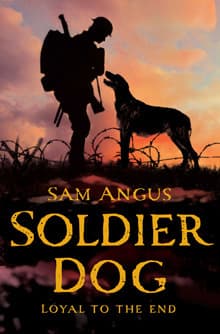
Sam Angus (2012)
Genre
Children's / Historical Fiction / Young Adult
Reading Time
280 min
Key Themes
See below
Sign in to track this book
An orphaned boy and his Great Dane form an unbreakable bond while serving in the brutal trenches of World War I, finding family and purpose together.
Stanley lives a lonely life in rural England with his distant father, Mr. Elton. Since his mother's death and his older brother Tom's enlistment in the Great War, Mr. Elton has grieved, finding comfort only in his greyhound, Rocket. Stanley often feels ignored and unloved, his only solace coming from quiet moments with Rocket. He wants purpose and connection, often dreaming of the war, but his father dismisses his hopes as childish. The tension at home pushes Stanley to seek an escape from his sad reality.
After a particularly harsh talk with his father, who belittles his desire to help the war and dismisses his feelings, Stanley makes a drastic choice. He secretly packs a small bag, takes a last look at Rocket, and slips away from home in the dark. He heads to the nearest recruitment office, hoping to enlist. Though underage, Stanley, driven by desperation, patriotism, and a deep need to escape his stifling home life, believes he can pass for older. He is determined to find a place where he feels valued and useful, like his brother Tom.
Stanley, using a false age, convinces the recruiting officer he is old enough for the army. To his surprise, he is assigned to the new War Dog School, not the infantry. Here, he finds a chance to combine his love for animals with his desire to serve. At this training camp, he meets Bones, a large, clumsy, but gentle Great Dane. Bones is hard to handle at first, with more enthusiasm than discipline, but Stanley feels an instant connection. He commits to training Bones, seeing a reflection of his own awkwardness and potential in the dog.
Life at the War Dog School is tough, with training sessions designed to prepare handlers and dogs for the realities of the front lines. Stanley quickly shows he is a natural dog handler, with patience and understanding many peers lack. He and Bones spend hours together, learning obstacle courses, commands, and how to carry messages. Their bond deepens daily, becoming a strong friendship. Bones becomes Stanley's confidant and anchor, providing the unconditional affection Stanley has longed for. Their mutual trust becomes key to their team's effectiveness.
After training, Stanley and Bones are sent to the Western Front in France. The journey is long, and upon arrival, Stanley immediately faces the terrifying reality of trench warfare. The constant shelling, mud, stench, and fear are far from the training grounds. Bones, despite his size, stays calm and focused, sensing Stanley's anxiety and offering quiet comfort. Their first jobs involve carrying messages between trench positions, often through dangerous, shell-pocked land. Stanley relies on Bones's sharp senses and loyalty to navigate the treacherous landscape and deliver important communications.
Stanley and Bones quickly become important to their unit. Their first missions are dangerous, requiring them to cross 'No Man's Land' under fire to deliver critical messages. Bones's speed and agility, with Stanley's careful planning, help them succeed where human runners often fail. They have several close calls, including dodging shell fragments and gas attacks. During one intense mission, Bones gets a minor injury, causing Stanley great distress and showing the constant danger they face. Their shared experiences in the face of death strengthen their bond.
Amidst the war, Stanley receives bad news: his brother, Tom, is missing. Overwhelmed with worry and a desperate need to find his only remaining family member, Stanley becomes even more determined. He starts asking about Tom's last known location, using every chance during his missions to gather information. The search for Tom adds urgency to Stanley's already dangerous life. Bones, sensing Stanley's deep distress, remains a constant source of comfort and strength, always by his side as they navigate the battlefields and emotional turmoil.
Stanley learns Tom's unit was in a fierce fight and Tom might be injured and trapped behind enemy lines. Against orders and risking court-martial, Stanley, with Bones, begins a dangerous, unauthorized mission to find his brother. They go deep into a heavily shelled, abandoned area, relying on Bones's sense of smell and Stanley's map knowledge. The journey is full of danger, from hidden snipers to unexploded bombs. Bones's courage and Stanley's resolve are tested as they push into the desolate land, driven by hope and brotherly love.
After hours of searching, Bones leads Stanley to a collapsed trench where they find a severely wounded and disoriented Tom. The reunion is brief but emotional, marked by their urgent situation. Tom is barely conscious. Stanley, with Bones's help, improvises a way to help Tom, using his uniform and a makeshift stretcher. They begin the perilous journey back, now slower and more vulnerable with Tom. Enemy patrols are near, and they must rely on Bones's stealth and Stanley's wits to navigate the dangerous terrain and get back to Allied lines alive.
Against all odds, Stanley, Tom, and Bones avoid capture and reach Allied lines. Tom immediately gets medical attention, his life saved by Stanley and Bones's bravery. Stanley, though initially facing discipline for his unauthorized mission, is commended for his heroism. The war ends, and Stanley, now a decorated veteran, prepares to return home with Bones. The bond between the boy, the dog, and the recovering brother is stronger than ever. They have faced humanity's worst and emerged with their humanity intact, ready to rebuild their lives.
Stanley returns to his family home in England, no longer the lonely, overlooked boy who ran away. He is with Bones, who has become a part of his life. His father, Mr. Elton, is changed. News of Tom's survival and Stanley's heroism has softened his grief and awakened him to his sons' sacrifices. The war has made Mr. Elton confront his emotional distance, and he greets Stanley with a warmth and pride that was absent before. The family, though scarred by war and loss, begins to heal and reconnect, with Bones as a quiet, comforting presence in their new dynamic.
With the war over, Stanley, Tom, and Mr. Elton begin a new future. Tom, recovering, is home, and the family is reunited. Stanley's relationship with his father has become one of mutual respect and affection. Bones, the loyal Great Dane, settles into civilian life, a beloved member of the Elton household. Stanley, no longer searching for purpose, has found it in his courage, compassion, and bond with Bones. He looks forward to a future of home, family, and the companionship of his soldier dog, carrying the lessons and resilience from his experiences.
The Protagonist
Stanley transforms from a neglected, insecure boy seeking escape into a courageous, self-assured war hero who finds his place and purpose.
The Supporting
Bones evolves from an untrained, enthusiastic dog into a disciplined, courageous war hero and Stanley's most trusted companion.
The Supporting
Mr. Elton moves from a state of withdrawn grief and emotional neglect to one of proud and loving fatherhood, re-engaging with his family.
The Supporting
Tom's journey is one from an idealistic soldier to a wounded survivor, prompting his brother's heroic actions.
The Mentioned
Rocket remains a static symbol of home and early comfort, a touchstone for Stanley's past.
The Supporting
Sergeant Davies serves as a mentor, guiding Stanley's transformation into a capable soldier without significant personal arc.
A main theme is the strong and life-saving connection between humans and animals, especially Stanley and Bones. Their bond is more than just training; it becomes a source of emotional support, courage, and survival in war. Bones gives Stanley unconditional love and purpose, filling the void left by his family's grief. Stanley's care and trust allow Bones to do amazing things. This theme is clear during their dangerous missions in 'No Man's Land' and during Tom's rescue, where their combined efforts are vital. Their relationship shows how animals can offer comfort and heroism in the darkest times.
“He didn't need to speak. Bones knew. Bones always knew.”
The novel explores how loss and grief affect individuals and families. Stanley's home life is defined by his father's deep grief over his wife's death and Tom's enlistment, which leads to emotional neglect of Stanley. War itself is a constant source of loss, from missing soldiers like Tom to countless casualties. Stanley's journey is partly about healing his own emotional wounds and mending his broken family. The reunion of Stanley and Tom, and Mr. Elton's softened demeanor, mark the start of a long healing process, showing that while scars remain, life can move forward.
“Grief, Stanley knew, was a heavy cloak his father wore, and it smothered everything else.”
Stanley's journey is about self-discovery and finding purpose. Feeling unvalued at home, he runs away to join the army, seeking a place where he can contribute and be recognized. His assignment to the War Dog School and his bond with Bones give him a clear identity as a dog handler and an important part of the war effort. The challenges he faces on the front lines make him mature quickly and find inner strength he didn't know he had. His heroism in rescuing Tom solidifies his identity as a courageous and capable young man, different from the overlooked boy he once was.
“He wasn't just Stanley anymore. He was Stanley, the soldier dog handler, and he had a job to do.”
While a children's book, 'Soldier Dog' shows the grim realities of World War I. The trenches, 'No Man's Land,' gas attacks, constant shelling, and the constant threat of death are clearly shown through Stanley's experiences. The novel highlights the physical and psychological toll of war on soldiers, including Tom's severe injuries and the widespread fear. It shows how war takes away innocence and forces young men to face unimaginable brutality, emphasizing the great sacrifices made. The use of messenger dogs also shows the desperate and new methods used in such a devastating conflict.
“The world here was mud, blood, and the constant, deafening roar of the guns.”
Hints at future events or character developments.
The early scenes of Stanley's bond with Rocket, his father's greyhound, subtly foreshadow his profound connection with Bones and his aptitude for dog handling. Stanley's initial longing for purpose and his interest in his brother's military service hint at his eventual enlistment. The descriptions of the harsh home environment also foreshadow Stanley's decision to run away. These early details prepare the reader for Stanley's journey and his ultimate role as a soldier dog handler.
Objects or characters representing deeper ideas.
Bones, the Great Dane, symbolizes loyalty, courage, and unconditional love, representing the emotional anchor Stanley finds amidst the chaos of war. 'No Man's Land' symbolizes the terrifying, desolate space between safety and danger, life and death, reflecting the psychological and physical chasm Stanley must repeatedly cross. Rocket, the greyhound, symbolizes Stanley's lost innocence and the quiet comfort of home he leaves behind. The trenches themselves symbolize the brutal, dehumanizing nature of the war.
A character's physical and emotional progression.
Stanley's story is structured as a classic journey motif. It begins with his physical departure from his unhappy home, leading him on a literal journey to the War Dog School and then to the battlefields of France. This physical journey is mirrored by his profound emotional and psychological transformation. He journeys from a lonely, insecure boy to a courageous, purposeful young man, discovering his identity and strength along the way. The journey culminates in his return home, a changed individual who has found his place in the world.
Similar situations or characters highlighting comparisons.
The relationship between Stanley and Bones parallels Stanley's earlier, albeit less profound, connection with Rocket, highlighting Stanley's innate ability to bond with animals. The 'missing in action' status of Tom parallels the emotional 'absence' of Stanley from his father's attention, creating a symmetry of longing and loss within the family. Both Stanley and Tom are young men thrust into the harsh realities of war, representing different facets of the soldier's experience and the sacrifices made.
“There’s no such thing as a bad dog, just a bad owner.”
— Stanley's belief about dogs, reflecting his own experience and the novel's themes.
“Sometimes you have to be brave for someone else, even when you're scared yourself.”
— Stanley's inner thoughts about his role in protecting his dog and others.
“A dog's loyalty is a precious thing, not to be taken for granted.”
— Reflecting on the bond between Stanley and Zero, and the sacrifices dogs make.
“War makes strange bedfellows of us all.”
— Observing the unlikely friendships and alliances formed during wartime.
“The trenches were a world unto themselves, a muddy, bloody, noisy purgatory.”
— Describing the horrific conditions of the Western Front.
“Hope was a tiny flicker, easily extinguished, but impossible to live without.”
— Stanley's struggle to maintain optimism amidst the devastation of war.
“Even in the darkest places, there can be a light.”
— Finding moments of solace and connection despite the grim realities.
“A good dog hears what you don't say.”
— Highlighting the intuitive understanding between Stanley and Zero.
“You never truly know what you're capable of until you have no other choice.”
— Stanley's growth and adaptation to the extreme challenges of war.
“The greatest battles are often fought within ourselves.”
— Stanley's internal struggles with fear, loss, and morality.
“Home isn't a place, it's a feeling, and sometimes it's carried in your heart.”
— Stanley's longing for home and the comfort of his bond with Zero.
“Every life lost was a world extinguished.”
— Reflecting on the profound and personal impact of war's casualties.
“Sometimes the smallest creatures carry the biggest hearts.”
— Referring to Zero's immense courage and loyalty despite his size.
“The silence after the guns was often more terrifying than the noise.”
— Describing the psychological impact of ceasefires and the anticipation of renewed fighting.
Ready to see how well you understood this book? Take our interactive quiz with 10 questions.

Biography coming soon.

Dan Gemeinhart
4.5

Kate O'Hearn
4.4

Jeanne Birdsall
4.4

Jen Wang
4.4

Wendelin Van Draanen
4.3

John Marsden
4.3

Chris Van Allsburg
4.3
Jennifer A. Nielsen
4.2